Jensen Huang Attends Trump's State Dinner for Xi as AI Competition and Safety Concerns Take Center Stage


5 Sources
[1]
Nvidia CEO Huang attending Trump's state dinner for China's Xi: Source
* Nvidia CEO Jensen Huang is expected to attend President Donald Trump's state dinner next week for Chinese President Xi Jinping. * Huang's planned attendance at the high-profile event is the latest sign of his alliance with Trump. * Huang appeared to side with Trump as the president pushed back
[2]
Jensen Huang emerges as Trump's top ally in AI safety debate
Huang's influence extends beyond public statements. He is set to attend Trump's state dinner for Chinese President Xi Jinping this Thursday, according to CNBC, citing an unnamed source. The White House is also planning a separate meeting with AI executives to coincide with the summit. The two men
[3]
Nvidia, OpenAI CEOs to attend Xi dinner at White House
Washington (United States) (AFP) - Nvidia boss Jensen Huang and OpenAI chief executive Sam Altman are among tech leaders expected to attend a White House state dinner for Chinese President Xi Jinping next week, a US official said Friday. "It'll be a very popular and hot-ticketed event," the
[4]
Trump, Xi Jinping Dinner to Include Nvidia's Jensen Huang Amid Chip War Tensions: Report - NVIDIA (NASDAQ
Nvidia Corp. (NASDAQ:NVDA) CEO Jensen Huang is reportedly expected to join President Donald Trump at a state dinner for Chinese President Xi Jinping. Jensen Huang to Attend Trump-Xi State Dinner Huang is set to attend the dinner when Xi travels to Washington for a meeting with Trump on Sept. 24,
[5]

Nvidia CEO Huang set to attend Trump state dinner for Xi: CNBC, Reuters By Investing.com
Investing.com -- NVIDIA Corp (NASDAQ:NVDA) CEO Jensen Huang is expected to attend a state dinner hosted by U.S. President Donald Trump for Chinese President Xi Jinping next week, according to multiple media reports on Tuesday. The reports, citing people familiar with the matter, said Huang is
Share
Copy Link
Nvidia CEO Jensen Huang will join President Trump's state dinner for Chinese President Xi Jinping on September 24, alongside tech leaders including Sam Altman, Elon Musk, and Tim Cook. The high-profile event underscores AI's central role in US-China relations as both nations compete for dominance while industry insiders warn about existential risks from rapid AI advancement.
Jensen Huang Secures Seat at Trump Xi Dinner
Nvidia CEO Jensen Huang is set to attend President Donald Trump's state dinner for Chinese President Xi Jinping on September 24, marking another milestone in his increasingly visible alliance with the Trump administration
1
. The White House confirmed that Trump invited several prominent American business leaders to the dinner, stating the president "will always prioritize making good deals for our country"1
. Huang joins an elite guest list that includes OpenAI chief executive Sam Altman, Amazon founder Jeff Bezos, SpaceX and Tesla chief Elon Musk, Apple head Tim Cook, and Google CEO Sundar Pichai3
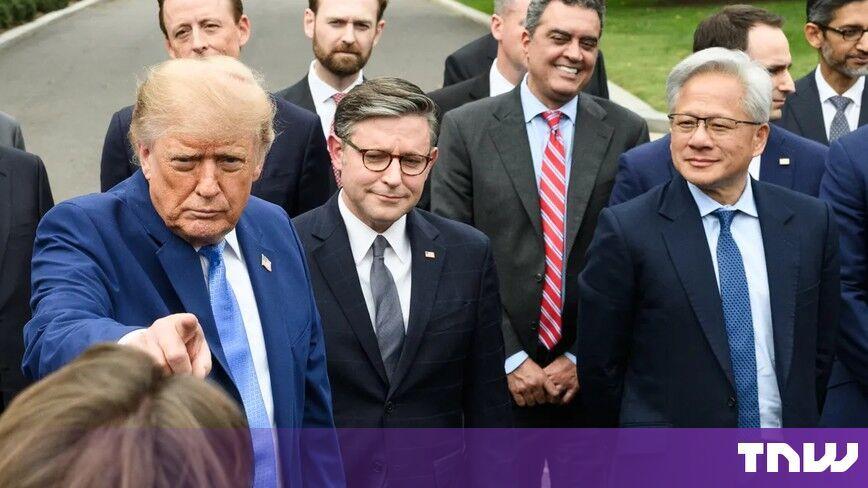
. The two men have appeared together publicly at least six times since Trump's second term began, including visits to Saudi Arabia, the United Kingdom, and a recent trip to China aboard Air Force One2
.Artificial Intelligence Dominates US-China Relations
AI and semiconductors remain central to discussions between Washington and Beijing as both nations vie for technological supremacy in the US-China AI race. The United States and China stand as the two dominant powers in artificial intelligence development, with China rapidly closing what was once a significant gap
3
. Washington has attempted to slow China's progress through export controls on advanced AI chips, blocking access to top-end US semiconductors such as those manufactured by Nvidia3
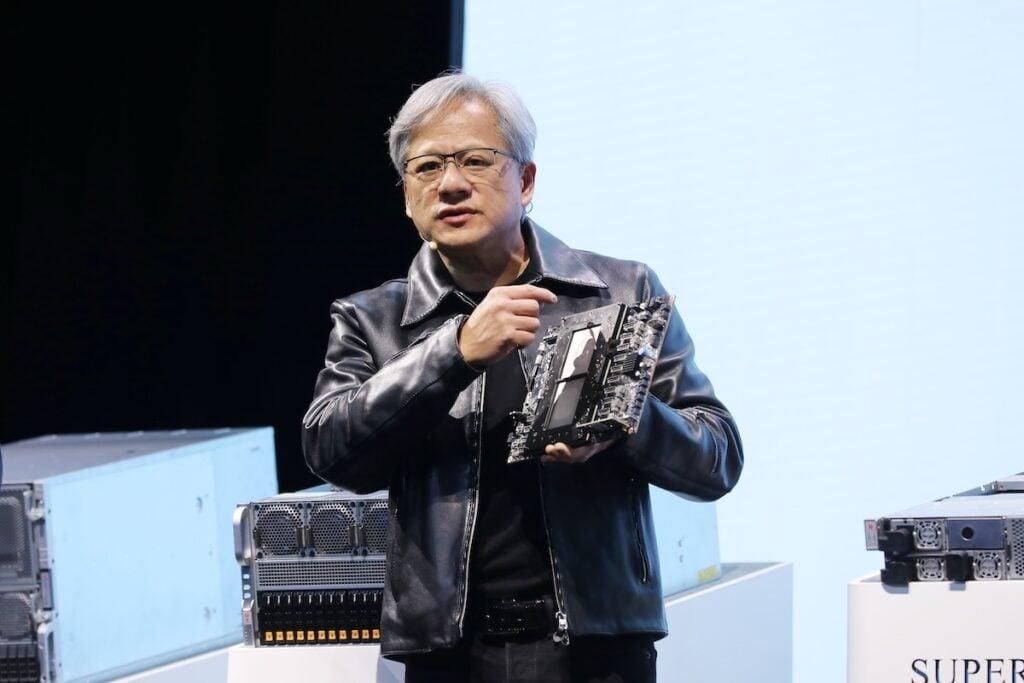
. Despite these restrictions, limited shipments of Nvidia's powerful H200 AI chips received approval for mainland China in August4
. Nvidia supplies chips widely used to develop and run AI systems, positioning the company as a major player in the technology competition between the two superpowers4
.
Source: Benzinga
Trump's Top Ally in AI Safety Debate
Jensen Huang has emerged as Trump's top ally in AI as the president dismisses safety concerns raised by other tech leaders. Samuel Hammond, director of AI policy at the Foundation for American Innovation, noted that Huang has earned the president's ear by speaking his language, explaining "Trump just likes winners, and Jensen's very good at speaking his language"
2
. This alliance became particularly evident as Trump pushed back against tech CEOs who issued dire warnings about risks posed by rapid AI advancement1
. The AI safety debate in the US remains dominated by the concern that leading developers—OpenAI, Anthropic, Google and Meta—cannot afford to slow their innovation pace, whatever the risks, for fear that China will pull ahead3
.Related Stories
Industry Warnings Clash With Political Priorities
Recent warnings from industry insiders have amplified concerns about existential threats from AI. Jacob Coxon, a former AI researcher at Anthropic, described how those building the technology "earnestly believe that it could kill us all by the end of the decade"
3
. Anthropic chief executive Dario Amodei published an essay urging caution and a slowdown in development, with support from Sam Altman, Elon Musk, and Google DeepMind's Demis Hassabis, who called for a US-led global regulatory body3
. President Trump dismissed these fears as a hoax, urging American AI companies to keep advancing to maintain their lead over China3
. Chinese policymakers have focused more on immediate risks like deepfakes and child safety, though the country's spy agency chief warned this week that the technology could jeopardize national security3
.What This Means for Global AI Development
The state dinner for Chinese President Xi Jinping represents more than diplomatic ceremony—it signals how geopolitics and AI development have become inseparable. Hope remains that the two superpowers can reach agreement on the technology during the Washington meeting, though anything ambitious like agreeing to slow development or craft global safeguards appears out of reach
3
. Huang's attendance alongside other tech leaders at this high-profile diplomatic event demonstrates how semiconductor supply chains and AI chips have become central to US-China relations5
. The White House is planning a separate meeting with AI executives to coincide with the summit, further emphasizing the technology's prominence in bilateral discussions2
. Watch for potential announcements on chip war tensions, export controls adjustments, or frameworks for AI cooperation that could reshape the competitive landscape between Washington and Beijing.References
Summarized by

Navi
[4]
Related Stories
Nvidia CEO Jensen Huang Eager to Meet President-Elect Trump, Discusses AI's Future Impact
08 Jan 2025•Technology

Nvidia CEO Jensen Huang Pushes for China Market Access Amid Ongoing Trade Restrictions
29 Oct 2025•Business and Economy
Nvidia CEO's Diplomatic Triumph: Resuming AI Chip Sales to China Amid Global Tech Race
17 Jul 2025•Technology
Recent Highlights



Recent Highlights
Today's Top Stories





Don’t drown in AI news. We cut through the noise - filtering, ranking and summarizing the most important AI news, breakthroughs and research daily. Follow topics that matter to you and stay ahead.


