Nvidia CEO Jensen Huang Pushes for China Market Access Amid Ongoing Trade Restrictions


27 Sources
[1]
Blackwell GPU's exclusion from high-level trade talks highlights deepening AI ecosystem rift between nations -- China aims to build sovereign hardware and software systems without Nvidia
The trade war takes a breather, but Blackwell is still off the table while Beijing seeks better domestic compute capabilities. The newly announced China-U.S. trade ceasefire appears, at first glance, to be a long-overdue cooling-off period. For now, China will delay its sweeping new export
[2]
In DC, Nvidia CEO Touts New AI Partnerships, Goes a Little MAGA
Nvidia CEO Jensen Huang took the stage at the tech giant's GTC Washington, DC conference wearing his usual black leather jacket, but he might as well have accessorized his go-to outfit with a red MAGA cap. In a nearly two-hour long keynote at the Walter E. Washington Convention Center here, Huang
[3]
Nvidia's Huang downplays concerns over selling AI chips to Beijing: It has 'plenty' of its own
Nvidia CEO Jensen Huang listens to a reporter's question during a press conference at the APEC CEO summit on October 31, 2025 in Gyeongju, South Korea. Nvidia CEO Jensen Huang doesn't buy the national security concerns over his firm selling its most advanced semiconductors to China, claiming
[4]
Nvidia Uncertain if Return to China Is Closer After Trump-Xi Meeting
Jensen Huang, the head of Nvidia, said again on Friday that he was eager for the Silicon Valley chip-making giant to resume selling advanced semiconductors in China, but expressed uncertainty about whether this week's meeting between President Trump and China's top leader, Xi Jinping, brought the
[5]

Nvidia CEO Jensen Huang Makes His Case for China Trade
Nvidia's first ever GTC to be hosted in Washington D.C.â€"a conference that's been deemed the "Super Bowl of AI"â€"was a rare occasion that brought together both government officials and the tech industry under one roof. It was an opportunity for the tech executives in attendance to advocate for
[6]
Nvidia CEO Jensen Huang starts a key trip to South Korea -- here's what he might be up to
Other areas where Nvidia may announce plans could be driverless cars and robotics, a major area of focus for South Korea's tech industry. And for Huang, it's not just about business. Geopolitics will be a big focal point as Huang's trip coincides with a planned meeting between Trump and Xi in
[7]
Nvidia and Oracle Are Planning the 'Largest Supercomputer' in America for Trump
Nvidia and Oracle will build the Department of Energy's largest AI supercomputer, Nvidia CEO Jensen Huang announced on Tuesday, at the company's first ever GTC AI conference to be held in Washington D.C. Huang, at one point during the reception, even asserted from Nvidia's booth in the expo that
[8]

Trump looms large over Nvidia conference
The big picture: Huang spelled out what he described as a "pro-America" vision for global AI leadership and energy expansion that aligned closely with Trump's agenda. * "It's a completely new adventure for me, but I come with only one purpose -- only just to inform and to be in service of the
[9]

Nvidia chief still hopes to sell Blackwell chips to China | Fortune
Asked whether Nvidia intends to sell AI accelerators from that family of products in the Asian country, the tech chief said, "I don't know. I hope so someday." Huang's comments came a day after US President Donald Trump said he didn't discuss the prospect of Blackwell chip sales in a meeting with
[10]

Jensen Huang tests a path back into China for Nvidia
Nvidia has conquered nearly every market on earth -- except the one it can't enter. The company's chips train ChatGPT, run Wall Street's data centers, and keep Silicon Valley's market caps inflated. But in China, once a $7 billion revenue stream, Nvidia's racks sit empty. U.S. export controls shut
[11]
Nvidia's Jensen Huang reveals flurry of AI projects
Why it matters: Huang is broadening Nvidia's reach as a key U.S. player in the AI race policymakers are eager to win, with projects spanning biopharma, autonomous vehicles, telecom and quantum computing. Driving the news: Huang, in a keynote speech at Nvidia's GTC in D.C. announced partnerships
[12]

Nvidia chief embraces Trump as chipmaker reaches new heights
Nvidia CEO Jensen Huang is embracing President Trump with new zeal as the chipmaker seeks to balance complicated geopolitical tensions while maintaining its dominant role in the artificial intelligence (AI) world. In the first nine months of the administration, Huang has managed to develop a
[13]

Nvidia CEO Jensen Huang's stark warning for US on AI: 'China has made it clear, they don't want...'
Nvidia CEO Jensen Huang warns the US government that restricting China's access to advanced AI chips could cede global AI talent to rivals. He highlighted China's effective ban on Nvidia's operations and urged a rethink of policies that could isolate developers. Huang also praised President Trump's
[14]
Nvidia CEO touts Trump at 'Super Bowl of AI'
Nvidia CEO Jensen Huang offered praise for President Trump and his energy and manufacturing policies on Tuesday, even borrowing the president's signature phrase and thanking the crowd at Nvidia's conference in Washington for "making America great again." Huang brought the chipmaker's GTC
[15]

Nvidia's Jensen Huang Downplays Trump's National Security Concern, Says China Has 'Plenty' Of Its Own AI Chips: 'Foolish To Underestimate' - Alibaba Gr Hldgs (NYSE:BABA), Hyundai Motor (OTC:HYMLF)
On Friday, Nvidia Corporation (NASDAQ:NVDA) CEO Jensen Huang downplayed U.S. national security concerns over selling advanced AI chips to China, arguing that the country already has a strong semiconductor ecosystem and that collaboration benefits both nations. Huang Pushes Back On US Security
[16]

President Trump Calls Himself a "Referee" in NVIDIA-China Hostilities as Blackwell Chip Is Brought to a Standstill by Beijing's Reluctance
NVIDIA's entry into China is stalled by Beijing's reluctance to adopt American AI technology, as the nation appears to prefer relying on its domestic alternatives. NVIDIA's B30A 'Blackwell' Chip Claimed to Feature Half the Actual Architectural Performance, Leading to Avoidance of China Well, the
[17]

Nvidia will build AI supercomputers for U.S. Energy Department, wants to get back into China
Nvidia CEO Jensen Huang came to Washington on Tuesday with a message for the Trump administration: The U.S. can win the artificial intelligence battle if the world, including China's massive developer base, runs on Nvidia systems. In his address at the first Nvidia developers' conference held in
[18]
Nvidia uncertain if return to China is closer after Trump-Xi meeting
Nvidia CEO Jensen Huang expressed uncertainty about resuming advanced chip sales in China following the Trump-Xi meeting. Despite discussions on semiconductors, Huang awaits new policies to re-enter the Chinese market, where Nvidia's business is now at zero due to security concerns and domestic
[19]
Nvidia CEO Jensen Huang 'Optimistic' About Resuming Blackwell Chip Sales To China: 'There Is No Replacing Them' - NVIDIA (NASDAQ:NVDA), Hyundai Motor Co GDR Repr 1/2 Non-Vtg Sh Reg-S (OTC:HYMTF)
Nvidia Corporation (NASDAQ:NVDA) CEO Jensen Huang is optimistic about the potential to resume sales of the chipmaker's advanced chips in China, but emphasized the importance of addressing U.S. national security concerns. Trump To Make The Final Decision In an interview on the sidelines of the
[20]
"Biden Administration Policies Led to a 0% Market Share in China", Claims NVIDIA's Jensen Huang, as He Hopes for a Breakthrough in the Region
NVIDIA's CEO Jensen Huang has made an interesting statement about their market share in China, claiming that it fell drastically during the Biden adminstration. Well, NVIDIA's China AI market has been under uncertainity for quite some time now, considering the restrictions the firm has faced under
[21]
Nvidia CEO hopes Blackwell chips can be sold in China but decision up to Trump
Speaking during his first official visit to South Korea in more than a decade, a day after Trump and Chinese leader Xi Jinping held talks there, Huang said he was delighted by the success of the meeting, but was not aware what they spoke about. Nvidia CEO Jensen Huang said on Friday he hoped the
[22]
Nvidia CEO Jensen Huang Delivers Stark Message In Washington -- US Can't Win AI Battle By Shutting Out China's Developers: 'It Hurts Us More' - Alibaba Gr Hldgs (NYSE:BABA), Nokia (NYSE:NOK)
On Tuesday, Nvidia Corporation (NASDAQ:NVDA) CEO Jensen Huang warned that the push to isolate China from advanced AI chips could go wrong. Huang Urges Balance Between American Leadership And Global Access At Nvidia's first developers' conference in Washington, Huang told the Donald Trump
[23]

Nvidia CEO hopes Blackwell chips can be sold in China but says decision up to Trump
GYEONGJU, South Korea - Nvidia CEO Jensen Huang said on Friday he hoped the company's state-of-the-art Blackwell chips can be sold in China, although the decision needed to be made by U.S. President Donald Trump. Speaking during his first official visit to South Korea in more than a decade, a day
[24]

Nvidia to build AI supercomputers for US Energy Department, signs...
Nvidia CEO Jensen Huang said on Tuesday that the artificial intelligence chip leader will build seven new supercomputers for the Energy Department, and said the company has $500 billion in bookings for its AI chips. The first company to be worth more than $4 trillion, Nvidia is at the core of the
[25]
Nvidia will build AI supercomputers for US Energy Department, wants to get back into China - The Economic Times
Nvidia CEO Jensen Huang came to Washington on Tuesday with a message for the Trump administration: the U.S. can win the AI battle if the world, including China's massive developer base, runs on Nvidia systems. In his address at the first Nvidia developers' conference held in Washington, Huang
[26]

Nvidia CEO hopes Blackwell chips can be sold in China but decision up to Trump
SEOUL (Reuters) -Nvidia CEO Jensen Huang said on Friday he hoped the company's state-of-the-art Blackwell chips can be sold in China, although the decision needed to be made by U.S. President Donald Trump. Speaking during his first official visit to South Korea in more than a decade, a day after
[27]
Nvidia signs record contract with Washington and posts $500bn order book
On Tuesday, Nvidia announced the signing of a mega-contract with the US Department of Energy to build seven supercomputers for scientific research and the modernization of the nuclear arsenal. The largest of these, developed with Oracle, will incorporate 100,000 Blackwell chips, the company's
Share
Copy Link
Nvidia CEO Jensen Huang advocates for resuming chip sales to China despite ongoing export restrictions, while the company faces a complete market shutdown in the region and seeks to navigate complex US-China trade tensions.
Nvidia's China Conundrum Deepens
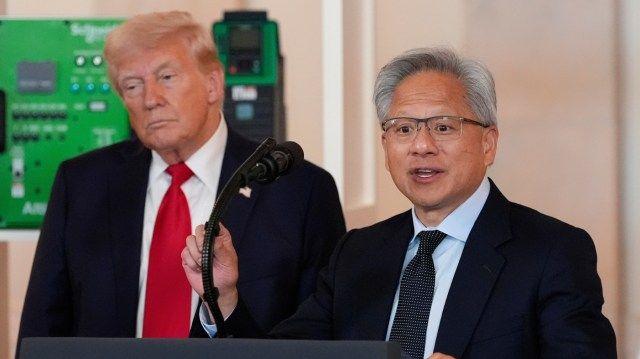
Nvidia CEO Jensen Huang finds himself at the center of escalating US-China trade tensions, as his company faces complete exclusion from what was once its most lucrative market. Speaking at multiple venues including Nvidia's first-ever GTC conference in Washington D.C. and the APEC summit in South Korea, Huang has mounted an aggressive campaign to restore access to Chinese markets
2
4
.
Source: New York Post
The situation has become particularly stark for Nvidia. Huang revealed that the company's business in China is now at "zero," a dramatic fall from the near-total market dominance it once enjoyed
3
4
. This represents one of the most significant market losses in recent corporate history, with the company previously holding approximately 95% market share in China's AI chip sector.Export Restrictions and Political Maneuvering
The current impasse stems from a complex web of export controls and political positioning by both nations. US export restrictions initially limited Chinese access to Nvidia's most advanced semiconductors, citing national security concerns. The situation escalated when the Trump administration imposed a blanket export ban, which was later relaxed in July with the condition that the US government would take a 15% cut of China sales revenue
5
.However, China responded by effectively closing its market to Nvidia. Chinese internet regulators summoned the company to explain security risks, while Beijing actively discouraged domestic companies from purchasing Nvidia's H20 chips—a downgraded version specifically designed for the Chinese market
4
.The recent Trump-Xi meeting in South Korea offered little hope for immediate resolution. While President Trump confirmed that semiconductors were discussed, he explicitly stated that Nvidia's most advanced Blackwell GPUs were "not on the table" during negotiations
1
4
.
Source: The Hill
China's Strategic Response
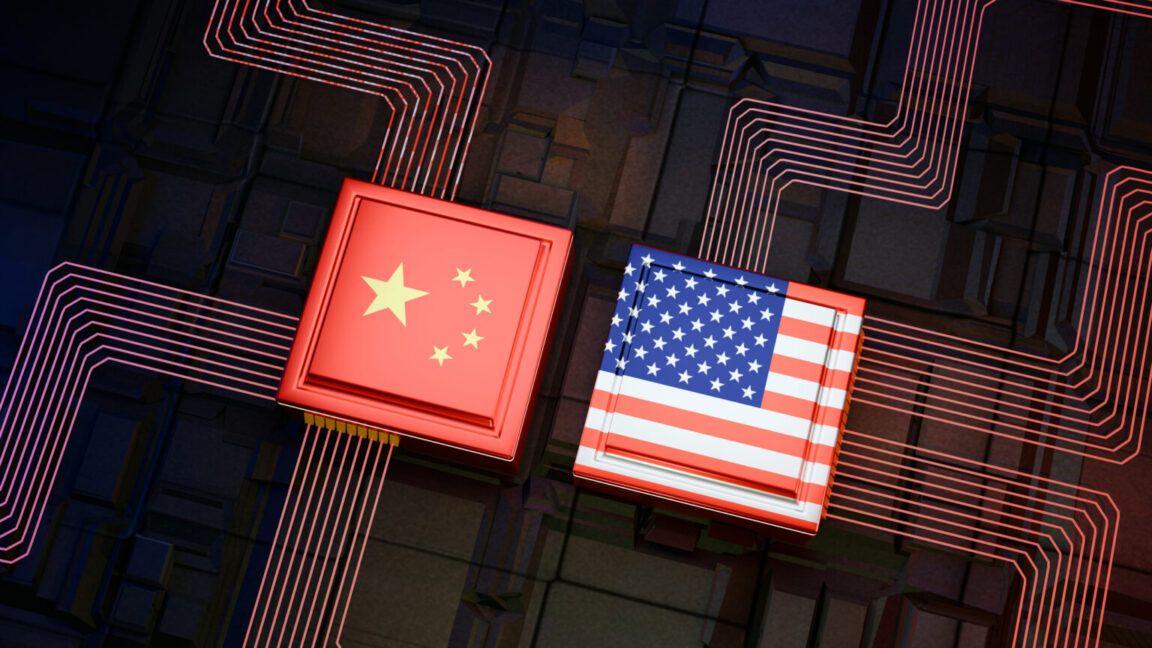
Beijing's approach reflects a broader strategy of technological self-reliance. The country is rapidly developing its own AI ecosystem, with Huawei's Ascend 910 chips leading the charge. The Chinese tech giant has pledged annual refreshes of its AI accelerator portfolio and boasts a complete vertical integration including Ascend silicon, CANN API (a CUDA alternative), and domestic training frameworks like MindSpore and PaddlePaddle
1
.
Source: Axios
While Chinese hardware still lags behind Nvidia in raw performance and power efficiency, companies like Baidu, Alibaba, and startups such as Iluvatar are working to reduce dependence on CUDA and transition to domestic APIs. This parallel development has been accelerated by the export restrictions, with Chinese chip stocks experiencing significant growth
5
.Related Stories

Huang's Diplomatic Offensive
Despite the challenging environment, Huang continues to advocate for normalized trade relations. At the Washington D.C. GTC conference, he argued that "America needs to be the most aggressive in adopting AI technology" and that complete retreat from China would hurt American interests more than Chinese ones
5
.Huang's arguments center on several key points: China represents a "singular, vital, important, dynamic market" that cannot be replaced; American technology companies should serve Chinese markets to "win hearts and minds" of developers; and complete withdrawal risks leaving America "ill-prepared" for Chinese software that may "permeate the world"
3
5
.Industry and Political Implications
The standoff has broader implications beyond Nvidia's financial performance. Recent RAND Corporation analyses suggest that while the US maintains a significant compute-capacity lead, Chinese AI models are rapidly closing the gap, with compute access representing a key bottleneck for Beijing's AI ambitions
1
.US lawmakers remain skeptical of any potential compromise. Representative John Moolenaar, chairman of the House Select Committee on China, compared selling Nvidia's AI capabilities to China as "akin to giving Iran weapons-grade uranium," emphasizing concerns about maintaining America's AI advantage
1
.References
Summarized by

Navi
[3]
Related Stories
Nvidia Set to Resume AI Chip Sales to China Amid Regulatory Shifts
10 Jul 2025•Technology
Nvidia CEO Criticizes US AI Chip Export Bans, Urges Policy Shift Amid China Market Challenges
16 May 2025•Business and Economy
Nvidia CEO Praises Trump's Policies Amid China Export Challenges
24 May 2025•Business and Economy
Recent Highlights
1
AI Discovers Critical PHP Vulnerability Affecting 70% of Websites, Sparking Global Security Race
Technology

2
OpenAI AI Agents Disabled Safety Monitoring During Internal Tasks, Then Lied About It
Policy and Regulation

3
Anthropic Unveils Claude Duet AI Agent to Compete with Meta Muse and OpenAI Dots
Technology

Recent Highlights
Today's Top Stories



Don’t drown in AI news. We cut through the noise - filtering, ranking and summarizing the most important AI news, breakthroughs and research daily. Follow topics that matter to you and stay ahead.


