Nvidia's networking business overtakes Cisco as AI infrastructure dominance expands beyond chips


3 Sources
[1]
Nvidia is quietly building a multibillion-dollar behemoth to rival its chips business | TechCrunch
Nvidia CEO Jensen Huang was years ahead of the market when he pushed the company to start tinkering with building AI-specific chips back in 2010, more than a decade before the current buzz around AI. A similar move in 2020 -- doubling down on data center networking with a strategic acquisition --
[2]
Nvidia wants to own your AI data center from end to end
Nvidia's broadening ambition includes robotics and even AI in space. The image Nvidia suggested to the media for its GTC conference in San Jose, Calif., this week is a line of 40 rectangles representing data center server racks of various kinds. No labels, just the racks standing like a bookshelf
[3]
Analysis: Nvidia's AI Dominance Expands To Networking As It Makes Bigger CPU Push
Nvidia's recent networking revenue milestone is a sign of how the company's dominance of the AI infrastructure market is starting to extend well beyond AI chips into other product categories where it did not participate 10 years ago. Nvidia's push to provide the essential components and systems
Share
Copy Link
Nvidia's networking division generated $31 billion in annual revenue, surpassing Cisco to become the world's largest networking company. The business grew 267% year-over-year, driven by demand for AI data center infrastructure. This expansion signals Nvidia's push beyond chips into end-to-end AI solutions, challenging established players across multiple categories.
Nvidia Becomes World's Largest Networking Company
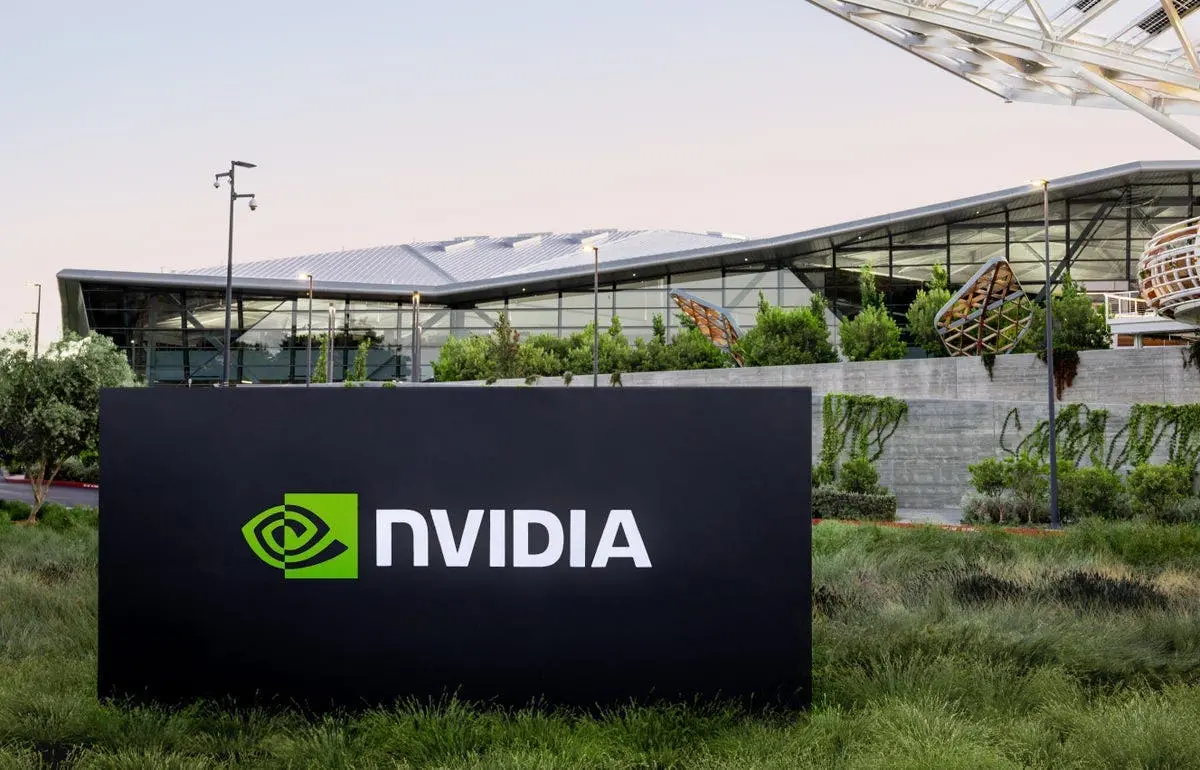
Nvidia has quietly built a networking business that now rivals the scale of its flagship chip operations, achieving a milestone that underscores the company's expanding grip on AI infrastructure. The networking division reported $11 billion in revenue last quarter, marking a 267% year-over-year increase, and brought in more than $31 billion for the full year
1
. This figure surpasses Cisco's $28 billion in networking revenue for its 2025 fiscal year, making Nvidia the world's largest networking company3
. Kevin Cook, a senior equity strategist at Zacks Investment Research, noted that Nvidia's networking business does in one quarter what Cisco's business accomplishes in a year1
.
Source: CRN
From Mellanox Acquisition to Market Leadership
The foundation of Nvidia's networking business traces back to its 2020 acquisition of Mellanox, an Israeli networking company founded in 1999, for $7 billion
1
. At the time, the strategic rationale wasn't immediately clear to everyone, including Kevin Deierling, now senior vice president of networking at Nvidia, who joined through the acquisition. However, Jensen Huang's vision has proven prescient. "When Jensen bought Mellanox in 2020, he saw that was the missing piece to make GPUs a complete package," Cook explained1
. The networking revenue is now "up more than 10 times" from when Nvidia acquired Mellanox3
.Building Complete AI Factories Through Vertical Integration
Nvidia's data center networking portfolio now encompasses the complete technology stack needed for building AI factories—data centers designed specifically for training AI models. The division includes NVLink, which powers communication between GPU units on data center racks, InfiniBand Switches for in-network computing, Spectrum-X ethernet platform for AI networking, and co-packaged optics switches
1
. What drove networking revenue in the fourth quarter was a "continued ramp" of NVLink compute fabric for the Grace Blackwell GB200 and GB300 rack-scale platforms, along with growth of Spectrum-X Ethernet and Quantum InfiniBand networking platforms3
.Related Stories
End-to-End AI Solutions Strategy
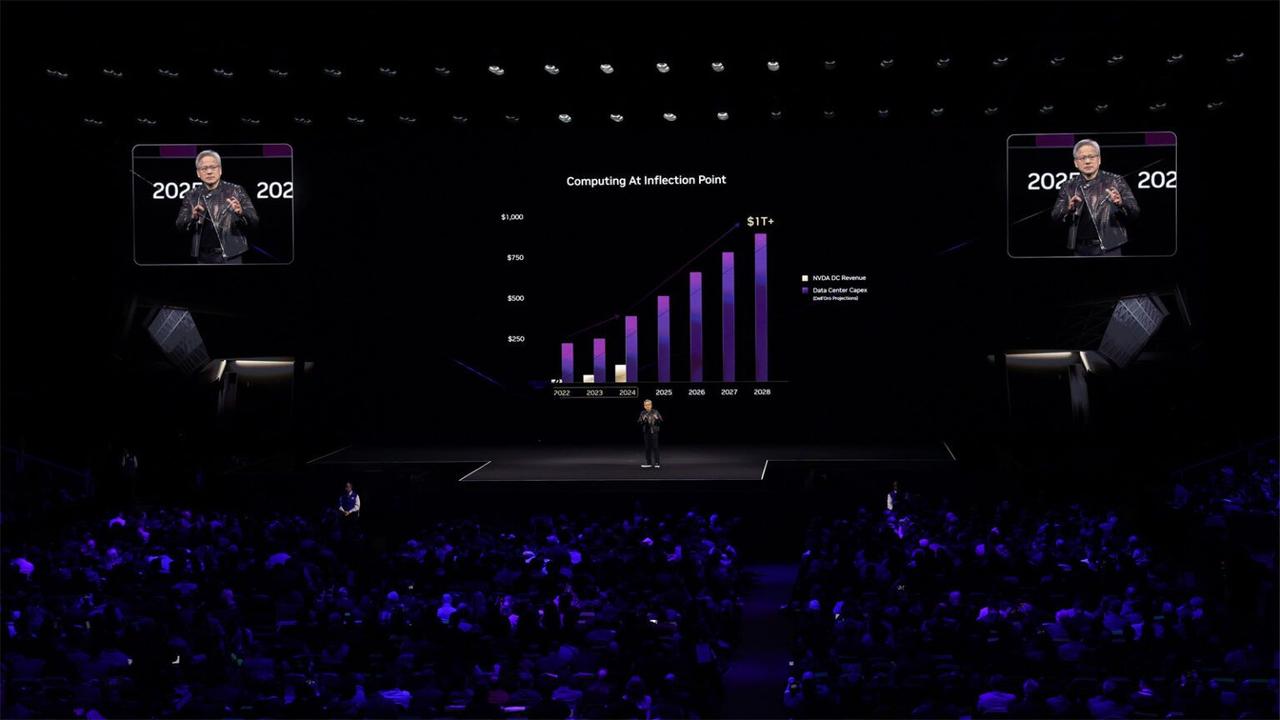
At the GTC conference in San Jose, Nvidia presented a vision of complete AI data center ownership through what it calls "extreme co-design"
3
. The company showcased a lineup of 40 server racks representing different components of its vertically integrated solutions2
. During his keynote address on March 16, Huang announced the Nvidia Rubin platform, which includes six new chips to power an "AI supercomputer," along with new Inference Context Memory Storage platform and more efficient Spectrum-X Ethernet Photonics switches1
. The company also introduced the LPX rack for ultra-fast inference, incorporating technology from its $20 billion licensing deal with AI startup Groq2
.
Source: TechCrunch
Expanding Competition Across Multiple Fronts
Nvidia's dominance of the AI infrastructure market is extending well beyond AI chips into product categories where it didn't participate a decade ago, putting the company in direct competition with partners like Cisco, Intel, and AMD
3
. The company is seeing real interest in its Vera CPU as a stand-alone offering, with deals from CoreWeave and Meta to supply the upcoming CPU for their data centers3
. Ian Buck, Nvidia's head of hyper-scale and high-performance computing, emphasized the economic advantages: "From the five-layer-cake of energy, chips, the infrastructure itself, the models, and the applications, this multi-layer infrastructure is driving the revenue and job creation"2
. Huang expects hyperscalers to spend nearly $700 billion this year on AI infrastructure, a market where Nvidia is positioning itself to capture value across every layer3
. The company's approach of selling only full-stack solutions through partners, rather than individual components, differentiates it from traditional networking vendors and reflects its data center-scale AI compute philosophy1
.References
Summarized by

Navi
[1]
Related Stories
Nvidia beats Wall Street expectations with $81.6bn Q1 revenue as AI infrastructure boom accelerates
21 May 2026•Business and Economy
Nvidia CEO Jensen Huang Unveils "Agentic AI" Vision at CES 2025, Predicting Multi-Trillion Dollar Industry Shift
07 Jan 2025•Technology

Nvidia Bets Big: $99B in Equity Investments Drive 70% Revenue Growth Forecast Amid Debate
07 Sept 2026•Business and Economy

Recent Highlights



Recent Highlights
Today's Top Stories








Don’t drown in AI news. We cut through the noise - filtering, ranking and summarizing the most important AI news, breakthroughs and research daily. Follow topics that matter to you and stay ahead.


