NVIDIA Supercharges Local AI: 40% Faster Inference, 8-Way Clusters and New Nemotron Models


3 Sources
[1]
NVIDIA RTX Spark Windows Laptops Gain New Models, Agent Tools and Games
NVIDIA Nemotron 3.5 Transcribe and Liquid AI's LFM3 models arrive for local AI; plus, Hermes Agent adds NVIDIA OpenShell and Switchyard, and 'Phantom Blade Zero' launches with NVIDIA DLSS 4.5. NVIDIA RTX Spark powers thin and light laptops built for everything that developers, creators and gamers
[2]
Bringing the Spark to Europe: Local Intelligence Powers Next Wave of Agents
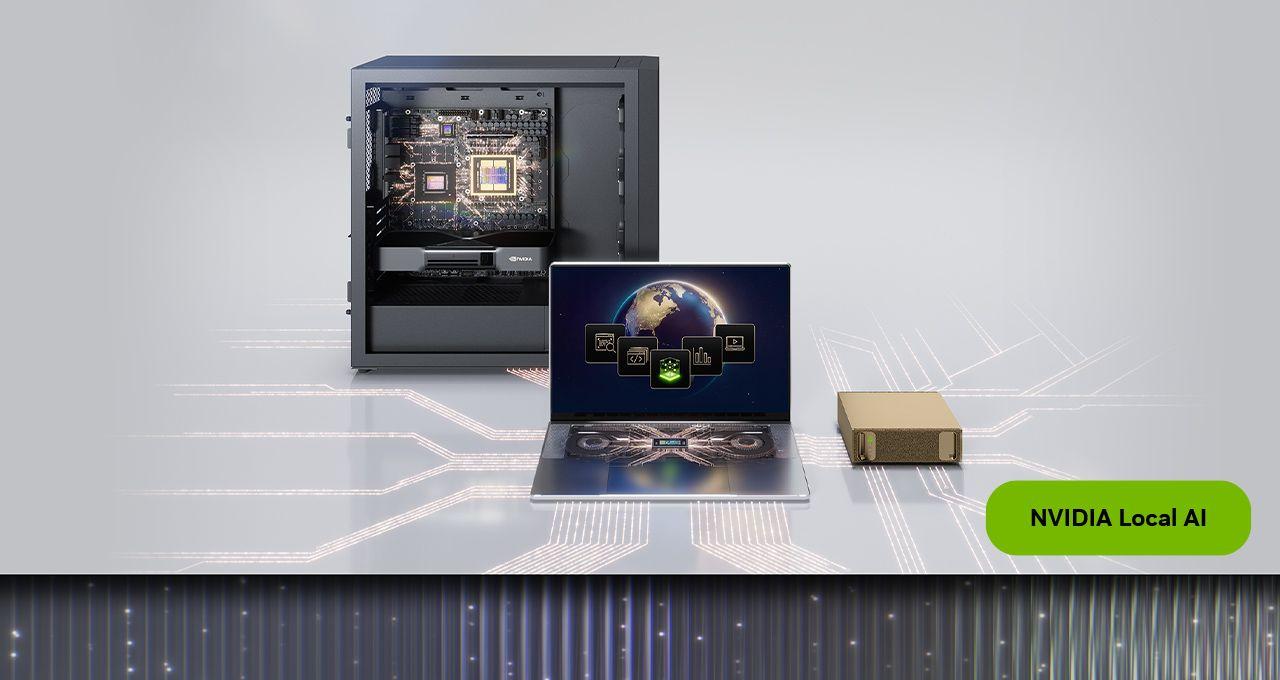
At GTC Berlin, NVIDIA is highlighting secure, local systems across RTX Spark, DGX Spark and DGX Station systems to accelerate coding, engineering, robotics and AI factory development. At GTC Berlin, NVIDIA is showcasing its full lineup of local AI hardware. RTX Spark, which launched last week,
[3]
NVIDIA Gives DGX And RTX Systems A 40% AI Inference Boost, While DGX Spark Now Clusters Up To 8 Units For 1 TB Memory
NVIDIA has announced DGX Spark platforms now support 8-way clusters while AI inference gains a 40% boost on DGX & RTX systems. 8-Way NVIDIA DGX Spark Clusters Now Supported, Boosting Memory To 512 GB on 64 GB & 1 TB on 128 GB Configurations Today, NVIDIA is sharing new updates for its DGX and RTX
Share
Copy Link
NVIDIA announced major updates to its local AI platforms at GTC Berlin, including 40% faster AI inference performance on RTX systems, expanded DGX Spark clusters supporting up to 1TB unified memory, and the launch of Nemotron 3.5 Transcribe for speech processing.
NVIDIA Accelerates Local AI Development With Major Performance Gains
NVIDIA unveiled significant enhancements to its local AI platforms at GTC Berlin, delivering 40% faster AI inference performance on RTX systems and expanding DGX Spark capabilities to support 8-way clusters with up to 1TB of unified memory
3
. The updates span NVIDIA RTX Spark laptops, DGX Spark developer systems, and DGX Station enterprise platforms, addressing the growing demand for personal agents on Windows PCs and local AI development workflows2
.The performance improvements target agentic workflows specifically. DGX Spark now delivers 30% faster performance running Qwen 3.8 27B models, while DGX Station achieves a 20% boost with GLM 5.3 Flash. RTX PRO 6000 Blackwell systems see the most dramatic gains with 40% faster inference on Qwen 3.8 Flash-Next
3
. These optimizations come through collaboration with the vLLM and llama.cpp open-source communities, enabling faster local inference across coding models and other AI applications.RTX Spark Expands With New Models and Resource Management

Source: NVIDIA
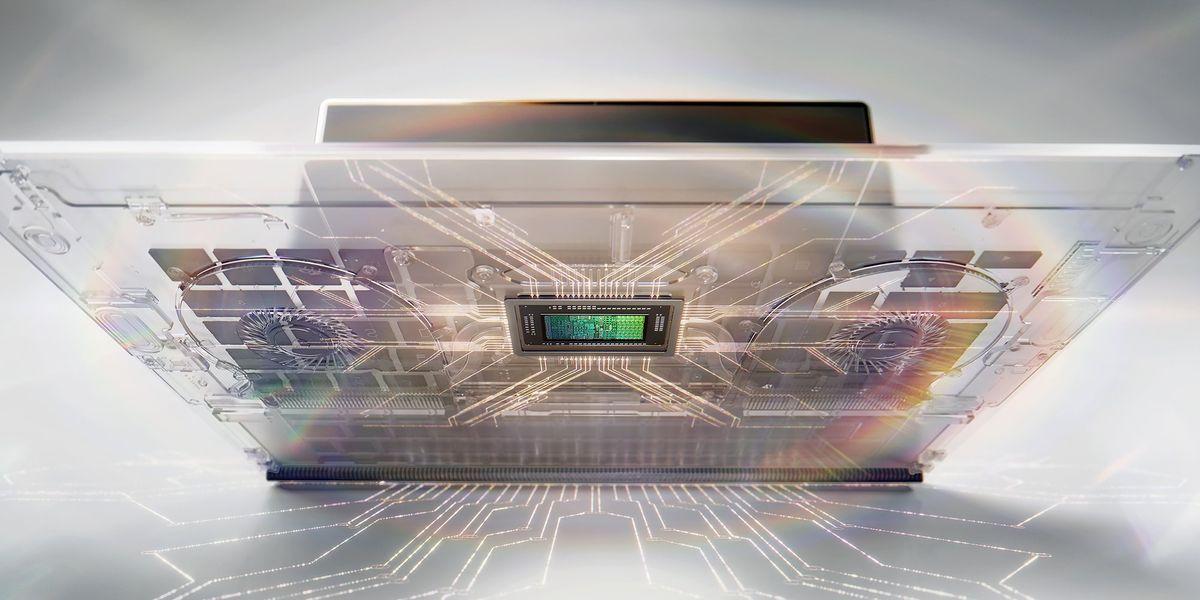
NVIDIA RTX Spark laptops, now available from ASUS, Dell, HP, Lenovo, Microsoft and MSI, combine Blackwell RTX GPUs with Grace CPUs in a single superchip delivering up to 128GB of unified memory and up to 1 petaflop of FP4 AI performance
1
. This architecture puts the NVIDIA CUDA platform and RTX graphics capabilities inside thin and light Windows laptops designed for developers, creators and gamers.The platform gains a critical new feature: resource management controls in NVIDIA App that let users allocate GPU resources between foreground applications and background agents
1
. Users can prioritize their active app for best performance or give background-running agents more resources to complete tasks faster. This addresses a key challenge as long-running personal agents become more common on local systems.Underdog, a new desktop agent app built for fully local, private AI, now runs on RTX Spark
2
. Powered by its Husky model-specific inference engine, Underdog processes everything on-device, ensuring user data never leaves the PC. Many RTX Spark laptops ship with unlocked bootloaders, enabling developers and enthusiasts to build and customize local agents more easily.Nemotron 3.5 Transcribe Delivers Advanced Speech Processing
NVIDIA introduced Nemotron 3.5 Transcribe, an open weight speech model that handles transcription, speaker attribution and translation in a single promptable system
1
. The model transcribes 40 languages, including seven Indic languages, and responds to plain-language prompts like "Transcribe this recording and label each speaker" or "List what decisions were made in this meeting."Nemotron 3.5 Transcribe ranks No. 1 on the Hugging Face Open ASR leaderboard and No. 2 among open weight models on Artificial Analysis, delivering leading accuracy with approximately 4.3 billion active parameters—80% fewer than the top open weight competitor
1
. This efficiency makes high-quality speech transcription practical on local hardware. The model supports specialized vocabulary in healthcare, financial services and customer service through customizable prompts.Available on Hugging Face in BF16, FP8 and NVFP4 formats, the model deploys across NVIDIA RTX Spark and DGX Spark systems, Jetson AGX Thor devices and GeForce RTX 5090 GPUs
1
. Developers can deploy NVFP4 versions through NeMo-Speech.cpp or vLLM, with flexible options for processing audio from desktop to cloud.DGX Spark Scales to 8-Way Clusters With 1TB Memory
Source: NVIDIA
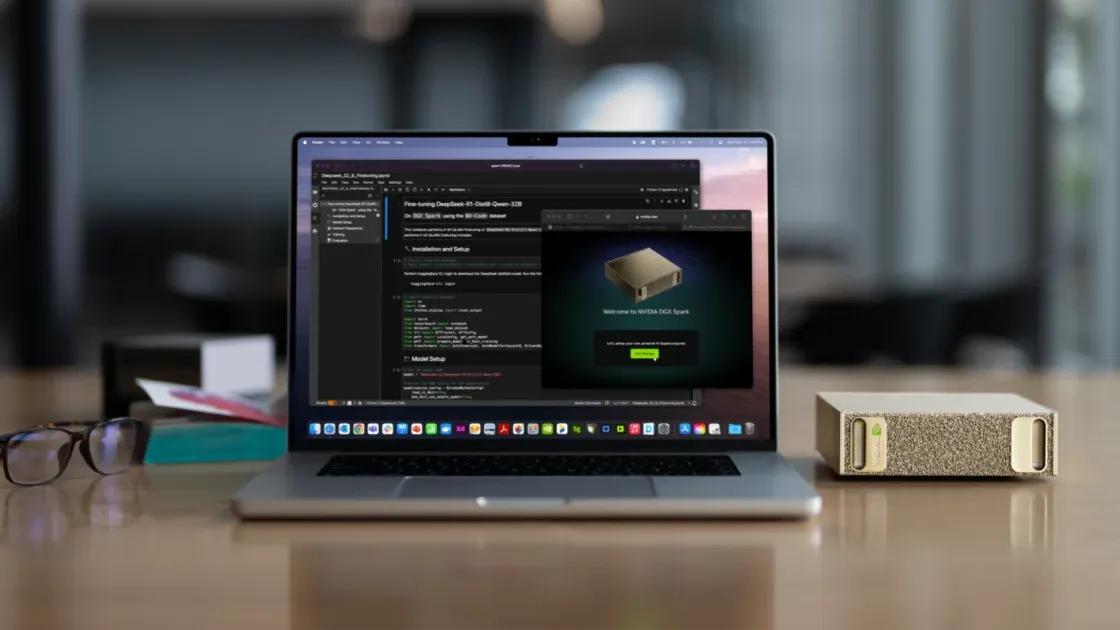
DGX Spark platforms now support manual configuration of up to eight clustered systems via built-in NVIDIA ConnectX-7 networking and NVIDIA Sync Cluster Assistant
3
. The 64GB DGX Spark configurations, launching October 23, can pool 512GB of memory in 8-way setups, while 128GB systems reach 1TB of unified memory—enough to run frontier-class models like GLM 5.32
.This expanded clustering enables larger AI models, longer contexts, concurrent agents and distributed development workflows. Small teams can share a single cluster as a backend, with each developer running concurrent sessions against the same model. The configuration proves ideal for advanced coding models including Qwen 3.8 Flash Next, DeepSeek v4 Flash 0731 and GLM 5.3 Flash
2
.NVIDIA Sync Model Launcher, arriving later this month, simplifies access to local AI on single or clustered DGX Spark systems
3
. With a few clicks, Model Launcher downloads models and containers suited to the configuration and connects them to OpenCode, automatically loading DGX Spark Skills for troubleshooting, device maintenance and workflow guidance.Related Stories
New AI Models and Optimized Checkpoints Arrive
NVIDIA announced day-zero support for multiple new AI models across its platforms, including Nemotron Bolt E4B 4B, GLM, DeepSeek, Qwen, MiniMax M3.1, and FLUX.3 Klein
3
. The company also released Recursive Flint, a new local coding model optimized for RTX Spark—a 40B MoE model with 2.5 billion active parameters delivering over 220 tokens per second on 64GB RTX Spark systems3
.Liquid AI's LFM3 family joins the platform with day-zero support, offering a new generation of Liquid Foundation Models designed for specialized tasks
1
. The family spans text, vision, audio, omni and decision models built on one shared backbone. The compact 1.7-billion-parameter base model outperforms the previous 2.6-billion-parameter version, supporting local workflows in Hermes Agent, Pi and OpenClaw for inbox triage, calendar management, document reading and speech transcription.NVIDIA released a collection of model checkpoints optimized for RAM efficiency on local AI hardware, enabling frontier-class open models to run with sufficient memory for KV cache
3
. Each checkpoint is quantized while maintaining near full-precision accuracy, starting with Qwen3.8-Flash-Next-FP4-Local on single DGX Spark 128GB or RTX PRO 6000 systems and GLM-5.3-Flash-FP4-Local on dual-system configurations.Gaming and Enterprise Updates Round Out Announcements
Phantom Blade Zero, S-GAME's action role-playing game, launched October 28 on Steam and Epic Games Store with ray tracing and NVIDIA DLSS 4.5
1
. Players take on the role of Soul, a swordsman framed for his master's murder, experiencing enhanced graphics through NVIDIA's collaboration with S-GAME Studio. RTX Spark laptops also support Minecraft with path tracing and DLSS through RTX Remix 1.6.DGX Station, serving enterprise teams running frontier workloads on Linux, receives seven new enterprise management integrations with Absolute Security, Splunk by Cisco, Fleet Device Management, Microsoft Intune, Perforce Puppet, Progress Software Chef and Tanium
3
. These integrations help IT teams deploy and manage local AI infrastructure. A Windows version of DGX Station launches in December with support for manufacturing applications and agent harnesses2
.References
Summarized by

Navi
Related Stories
NVIDIA Unveils RTX Spark PCs and Local AI Tools at IFA 2026 With October Launch
03 Sept 2026•Technology

Nvidia RTX Spark aims to reinvent the PC as Jensen Huang bets on agentic AI taking computing local
01 Jun 2026•Technology

Nvidia RTX Spark debuts at Computex 2026, promising to reinvent the PC for AI agents
02 Jun 2026•Technology
Recent Highlights


Recent Highlights
Today's Top Stories








Don’t drown in AI news. We cut through the noise - filtering, ranking and summarizing the most important AI news, breakthroughs and research daily. Follow topics that matter to you and stay ahead.


