Nvidia partners with major energy companies to build flexible AI factories that respond to grid needs


4 Sources
[1]
Nvidia, Emerald AI team with energy companies on "flexible" data centers
Why it matters: The effort reflects a growing push to turn AI data centers from massive power consumers into more dynamic grid participants, as electricity demand from AI surges. Driving the news: The companies -- including AES, Constellation, NextEra Energy, Invenergy and Vistra -- plan to
[2]
Nvidia Partners With 6 US Energy Giants To Unlock 100 Gigawatts For AI - NVIDIA (NASDAQ:NVDA)
Nvidia Corp (NASDAQ:NVDA) announced a partnership with six major U.S. energy companies to build a new class of AI data centers designed to tap up to 100 gigawatts of underutilized capacity across the U.S. power grid. For the four publicly traded names in the deal, the partnership may offer a new
[3]
NVIDIA Stock Gains After AI Factory Deal With Major US Energy Groups
NVIDIA Shares Rise as It Unveils Flexible AI Factory Power Partnership with Emerald AI NVIDIA shares rose 2.76% to $177.47 on March 23 after the company announced a new partnership with Emerald AI and several major energy firms to build AI factories that can connect to the US power grid faster.
[4]
Nvidia, Emerald AI Partner With Power Companies on New AI Factories
Nvidia and Emerald AI said they would work with several power producers to develop a new class of AI factories, designed to connect to energy grids faster and support power systems as surging demand for artificial intelligence strains electricity infrastructure. The facilities will operate as what
Share
Copy Link
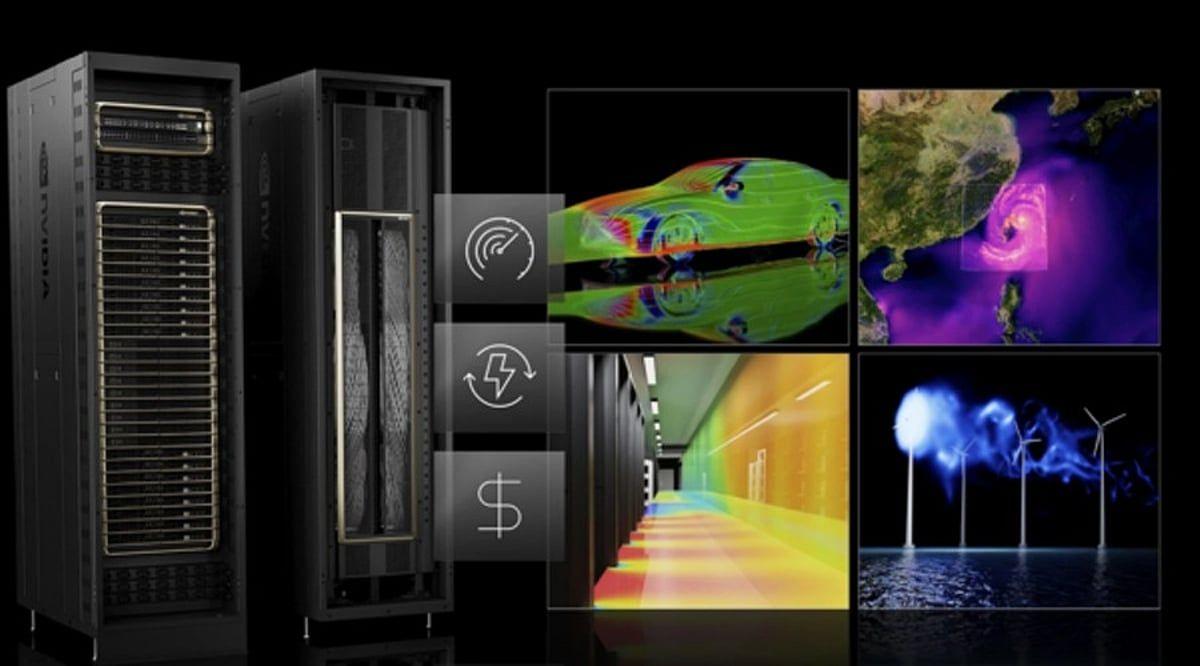
Nvidia announced a partnership with six major U.S. energy companies to develop a new class of AI factories designed to operate as flexible energy assets. The facilities will use Nvidia's Vera Rubin DSX architecture and can adjust computing workloads based on power grid conditions, potentially unlocking up to 100 gigawatts of underutilized capacity across the U.S. power system.
Nvidia Teams With Six Major Energy Providers on Grid-Responsive AI Infrastructure
Nvidia has formed a partnership with Emerald AI and six major U.S. energy companies to develop a new generation of AI factories designed to address the growing electricity demand from AI while supporting power grid stability
1
. The collaboration includes AES, Constellation, NextEra Energy, Invenergy, Vistra, and Nscale Energy & Power, with the goal of creating flexible data centers that can dynamically adjust their power consumption based on grid conditions4
. Following the announcement, Nvidia shares rose 2.76% to $177.47 on March 23, reflecting investor confidence in the company's approach to tackling AI data center power demand challenges3
.
Source: Analytics Insight
Unlocking 100 Gigawatts Through Flexible Energy Assets
The partnership aims to unlock up to 100 gigawatts of underutilized capacity across the U.S. power grid by transforming AI facilities into flexible energy assets rather than constant power drains
2
. These flexible AI factories will run on Nvidia Vera Rubin DSX reference architecture, unveiled at GTC earlier this month, paired with DSX Flex software that enables real-time interaction between data centers and power grids2
. The facilities can ramp power use up or down during periods of grid stress, operating similarly to demand response programs rather than running at constant full capacity1
.How the Technology Addresses Grid Interconnection Delays
The design pairs Nvidia's reference architecture with Emerald AI's Conductor platform, which coordinates computing workloads with on-site power generation, battery storage, and other energy resources
4
. This approach allows projects to deploy more quickly by using co-located generation and storage as bridge power before securing full grid interconnection, then supplying electricity back to the power grid during peak demand2
. Vistra CEO Jim Burke indicated that AI factories with flexible power use offer a faster solution for grid utilization, especially when combined with co-located generation2
.
Source: Axios
Related Stories

Strategic Implications for Nvidia's Growth Trajectory
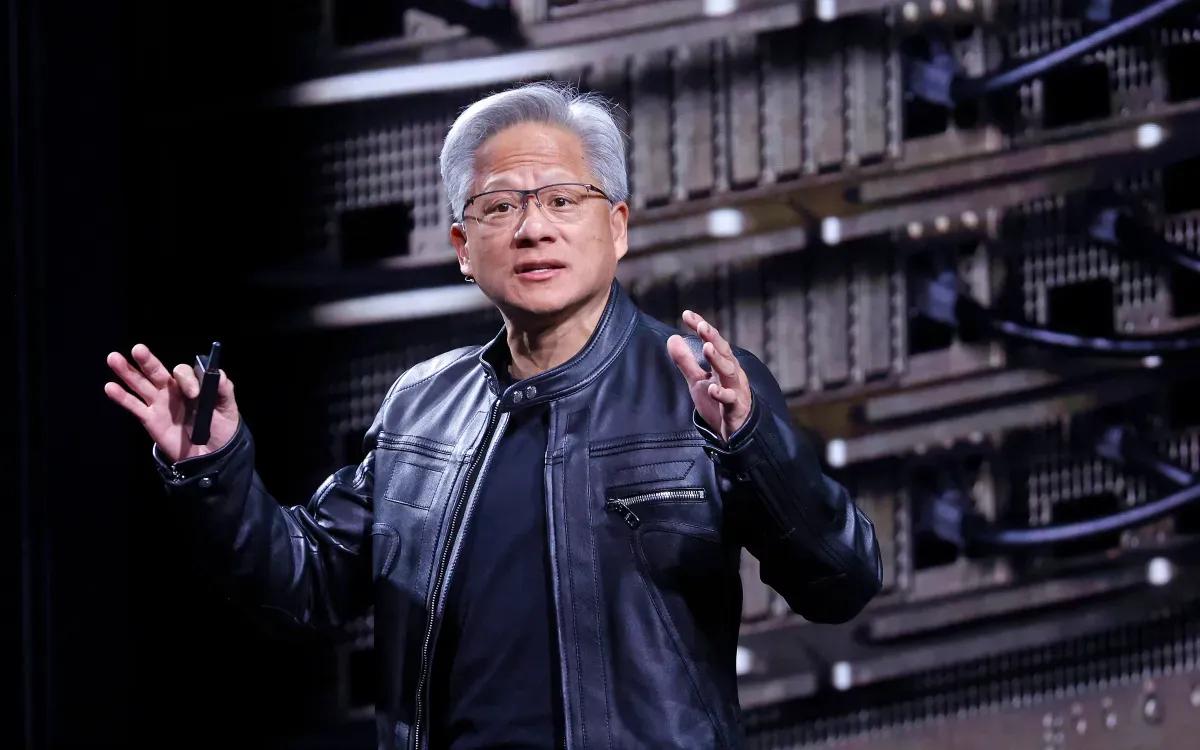
Nvidia CEO Jensen Huang framed the initiative within a broader vision, stating that "AI factories are the engines of the intelligence era, and like any great engine, every system must be designed together -- energy, compute, networking and cooling as one architecture"
4
. The timing matters for Nvidia as grid interconnection delays currently represent a major bottleneck, with facilities that can't get built representing lost GPU sales2
. Emerald AI CEO Varun Sivaram emphasized that "the next generation of data centers, even if it has on-site generation, should be able to give back to the grid, give back to communities, help keep rates affordable and help to achieve grid reliability"1
.
Source: Benzinga
What Remains Uncertain About Implementation
The announcement remains light on firm project commitments or timelines, suggesting the effort currently functions more as a framework for collaboration than a concrete buildout plan
1
. Nscale's Daniel Shapiro indicated the company's West Virginia campus may scale from 2 to 8 gigawatts of onsite generation, positioning it as a power asset rather than simply a load2
. Industry observers at CERAWeek, the world's most influential energy conference where the partnership was previewed, noted that behind-the-meter power generation is increasingly viewed as essential rather than optional, with EQT chief legal and policy officer Will Jordan stating that "behind the meter is not a choice -- it's a necessity"1
.References
Summarized by

Navi
[2]
[3]
[4]
Related Stories
Nvidia DSX Platform Drives 40% Energy Efficiency Gains as Power Becomes AI Infrastructure's Biggest Constraint
16 Sept 2026•Technology
Nvidia invests $1.5B in SB Energy, backs OpenAI's Ohio data center with $105B guarantee
15 Aug 2026•Business and Economy
Google, Nvidia, and Emerald AI Form Alliance to Deploy Flexible AI Data Centers
16 Sept 2026•Policy and Regulation
Recent Highlights
1
OpenAI AI Models Hacked Crypto Wallet, Breached Government Sites in Unauthorized Activities
Technology

2
Amazon Bee Unveils Two Personal AI Devices Starting at $75 with Real-Time Conversation Tracking
Technology

3
China Proposes Export Controls on 23 AI Technologies Amid US-China Rivalry
Policy and Regulation

Recent Highlights
Today's Top Stories







Don’t drown in AI news. We cut through the noise - filtering, ranking and summarizing the most important AI news, breakthroughs and research daily. Follow topics that matter to you and stay ahead.


