3 Sources
[1]
Exclusive: Nvidia begins Vera CPU sales pitch to Chinese clients, sources say
June 12 (Reuters) - Nvidia (NVDA.O), opens new tab has told Chinese clients that its new "Vera" central processors for AI data centres could be available as soon as August and that they can begin placing orders, three sources familiar with the matter said. The outreach underscores how the world's most valuable company is quickly pivoting to the new product to revive its rapidly declining fortunes in China, as shipments of its second-most powerful AI chip, the H200, to the country have stalled for months. Nvidia's market share in China has effectively fallen to zero, its CEO Jensen Huang said in October, hurt by U.S. export controls on advanced chips and Beijing's push for self-reliance in key technologies. The move also raises the stakes in its competition with major CPU firms Intel (INTC.O), opens new tab and AMD (AMD.O), opens new tab, which are racing to increase supplies of server CPUs for AI data centres. The sources said some Chinese clients have shown interest in the Vera chip, Nvidia's first standalone central processing unit (CPU) built for agentic AI -- systems that perform tasks autonomously. The sources declined to be identified because the discussions are private. Now in full production, the Vera chip is built for the behind-the-scenes computing that AI agents rely on, and Nvidia says it runs up to 1.8 times faster than comparable processors from its rivals. Unveiling Vera in March, Huang expected it to become the company's next multibillion-dollar business. Nvidia also said at the time that leading cloud firms including Alibaba (9988.HK), opens new tab and ByteDance were collaborating with it to deploy Vera, but it did not say whether the actual ordering process for the chip had begun. Nvidia declined to comment. Alibaba and ByteDance did not respond to requests for comments. POSITIVE FEEDBACK One major Chinese cloud company plans to place an order for more than 300 servers, each containing two Vera CPUs, one of the sources said. The company plans to deploy the systems for testing first and decide whether to place official orders based on the results, the person added. Whether that initial interest translates into large-scale adoption remains to be seen, partly due to issues involving software ecosystems and compatibility as well as the constraints of migrating workloads built around domestic AI chips, another source said. A single Vera processor will cost "well north" of $20,000 before bulk discounts, and a fully configured rack of 256 chips would run to around $10 million, depending on memory chip configuration, according to SemiAnalysis. Most of the chips are initially going into the large, ready-to-install racks favoured by hyperscalers, with the simpler two-processor servers expected to ramp up later, the research firm said. Nvidia expects $20 billion in revenue from Vera chip sales by the end of this fiscal year to end-January. The Chinese interest in Vera comes as the global AI race pivots from model training to inference computing, the process of answering queries, where graphics processors face greater competition from CPUs and custom chips. The shift has helped create a CPU shortage. Intel has notified Chinese customers of server CPU delivery lead times of up to six months, Reuters reported in February. Its rival AMD last month flagged that the global CPU market is "tight," with demand outpacing forecasts and supply constraints expected to persist. Based on Arm technology, Vera puts Nvidia in direct competition with Intel and AMD, which have long dominated the processor market with the x86 architecture. Selling CPUs in China could prove less fraught than selling graphics processing units, which face tighter U.S. export controls. Washington has licensed about 10 Chinese firms to buy the H200, a GPU, but not a single delivery has been made. Chinese officials, keen to nurture domestic suppliers, have withheld approval. Chinese clients plan to initially deploy Vera chips only in their overseas data centres for testing, one of the sources said. Reporting by Liam Mo, Ryan Woo in Beijing and Wen-Yee Lee in Taipei; Editing by Miyoung Kim and Sonali Paul Our Standards: The Thomson Reuters Trust Principles., opens new tab
[2]
Exclusive-Nvidia Begins Vera CPU Sales Pitch to Chinese Clients, Sources Say
June 12 (Reuters) - Nvidia has told Chinese clients that its new "Vera" central processors for AI data centres could be available as soon as August and that they can begin placing orders, three sources familiar with the matter said. The outreach underscores how the world's most valuable company is quickly pivoting to the new product to revive its rapidly declining fortunes in China, as shipments of its second-most powerful AI chip, the H200, to the country have stalled for months. Nvidia's market share in China has effectively fallen to zero, its CEO Jensen Huang said in October, hurt by U.S. export controls on advanced chips and Beijing's push for self-reliance in key technologies. The move also raises the stakes in its competition with major CPU firms Intel and AMD, which are racing to increase supplies of server CPUs for AI data centres. The sources said some Chinese clients have shown interest in the Vera chip, Nvidia's first standalone central processing unit (CPU) built for agentic AI -- systems that perform tasks autonomously. The sources declined to be identified because the discussions are private. Now in full production, the Vera chip is built for the behind-the-scenes computing that AI agents rely on, and Nvidia says it runs up to 1.8 times faster than comparable processors from its rivals. Unveiling Vera in March, Huang expected it to become the company's next multibillion-dollar business. Nvidia also said at the time that leading cloud firms including Alibaba and ByteDance were collaborating with it to deploy Vera, but it did not say whether the actual ordering process for the chip had begun. Nvidia declined to comment. Alibaba and ByteDance did not respond to requests for comments. POSITIVE FEEDBACK One major Chinese cloud company plans to place an order for more than 300 servers, each containing two Vera CPUs, one of the sources said. The company plans to deploy the systems for testing first and decide whether to place official orders based on the results, the person added. Whether that initial interest translates into large-scale adoption remains to be seen, partly due to issues involving software ecosystems and compatibility as well as the constraints of migrating workloads built around domestic AI chips, another source said. A single Vera processor will cost "well north" of $20,000 before bulk discounts, and a fully configured rack of 256 chips would run to around $10 million, depending on memory chip configuration, according to SemiAnalysis. Most of the chips are initially going into the large, ready-to-install racks favoured by hyperscalers, with the simpler two-processor servers expected to ramp up later, the research firm said. Nvidia expects $20 billion in revenue from Vera chip sales by the end of this fiscal year to end-January. The Chinese interest in Vera comes as the global AI race pivots from model training to inference computing, the process of answering queries, where graphics processors face greater competition from CPUs and custom chips. The shift has helped create a CPU shortage. Intel has notified Chinese customers of server CPU delivery lead times of up to six months, Reuters reported in February. Its rival AMD last month flagged that the global CPU market is "tight," with demand outpacing forecasts and supply constraints expected to persist. Based on Arm technology, Vera puts Nvidia in direct competition with Intel and AMD, which have long dominated the processor market with the x86 architecture. Selling CPUs in China could prove less fraught than selling graphics processing units, which face tighter U.S. export controls. Washington has licensed about 10 Chinese firms to buy the H200, a GPU, but not a single delivery has been made. Chinese officials, keen to nurture domestic suppliers, have withheld approval. Chinese clients plan to initially deploy Vera chips only in their overseas data centres for testing, one of the sources said. (Reporting by Liam Mo, Ryan Woo in Beijing and Wen-Yee Lee in Taipei; Editing by Miyoung Kim and Sonali Paul)
[3]
NVIDIA Pivots to CPUs to Salvage China Revenue After GPU Restrictions, As Several Customers Show Interest In Vera CPUs
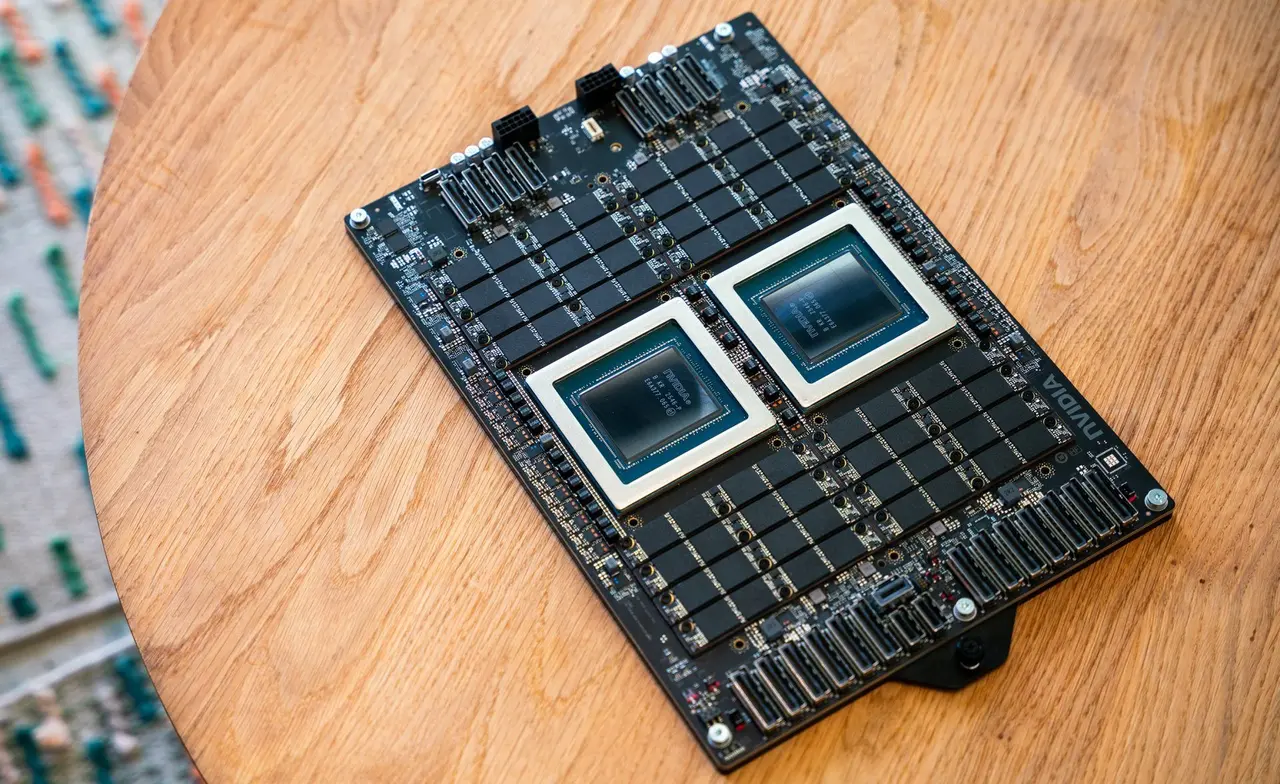
NVIDIA has reportedly reached out to several Chinese clients to adopt its upcoming Vera CPUs & there is a lot of interest building up. Vera CPUs Will Be Available In August, NVIDIA Tells China As It Attempts To Revive Its Lost Revenue NVIDIA's GPUs have faced a hard time in China. The company saw US regulations restrict them from selling Hopper chips, while the more advanced Blackwell generation is entirely banned. NVIDIA's CEO stated a few months back that their China share has dropped to Zero, and while the US Government did resume Hopper GPU sales, they have yet to see any reasonable revenue. More so, China itself has pushed against the use of NVIDIA GPUs at domestic data centers and AI factories, with even consumer-oriented options being pushed out of the market. While the restrictions on GPUs continue to apply, NVIDIA is now trying to find an alternative to resume its revenue crunch in China. That's where Vera comes in. The NVIDIA Vera CPUs are in volume production, & the company has hand-delivered the first samples to major US-based AI firms. But it's not just US firms that are showing interest in Vera. According to Reuters, NVIDIA has talked with potential Chinese customers about the adoption of its Vera CPUs. The company has told clients that Vera is all set for availability in August this year, and they can start placing orders right now. NVIDIA has told Chinese clients that its new "Vera" central processors for AI data centres could be available as soon as August and that they can begin placing orders, three sources familiar with the matter said. One major Chinese cloud company plans to place an order for more than 300 servers, each containing two Vera CPUs, one of the sources said. Reuters What makes Vera such a potent product for AI data centers, especially Agentic AI, is its standalone option in the form of Vera MGX racks. These racks feature up to 256 Vera CPUs, connected using fast NVLink I/O & offer up to 90% faster performance in AI applications versus standard x86 offerings. Each Vera CPU has 88 Olympus "Arm" cores, 164 MB of L3 cache, 166 MB of L2 cache, and supports up to 1.5 TB of LPDDR5X SOCAMM2 memory or up to 400 TB of unified memory across the rack. The platform supports PCIe Gen6, CXL 3.1, and comes in air/liquid cooled options with TDPs ranging from 250W up to 450W. As per the report, multiple Chinese companies have shown interest, with one planning to place orders of 300 Vera servers, that's two Vera CPUs per server. The client has told NVIDIA that it will first place orders for a test unit before placing the full order. Current price estimates suggest that a single Vera CPU will cost "north of $20,000," and a full rack will be priced around $10 Million. Earlier reports suggested that Alibaba and ByteDance were also showing lots of interest in getting NVIDIA Vera CPUs for their data centers. Meanwhile, AMD & Intel are doubling down in the battle against NVIDIA's Vera, which aims to take away major CPU revenue and market share from them. In its latest benchmarks, AMD shows how its EPYC lineup trounces Vera and next-gen Venice chips will offer massive performance advantages over the same chip. Intel is also preparing its Xeon onslaught against NVIDIA Vera, and the custom silicon threat is also rising with major AI firms developing their own CPUs for Agentic AI. NVIDIA has already said that they are set to become the largest CPU supplier in 2026, and with Vera entering volume ramp, it will be a fierce showdown in the Data Center-oriented CPU markets. Follow Wccftech on Google to get more of our news coverage in your feeds.
Share
Copy Link
Nvidia has begun pitching its new Vera central processor to Chinese clients, with availability expected as soon as August. The move marks a strategic pivot for the chip giant after its market share in China fell to zero due to U.S. export restrictions on GPUs. At least one major Chinese cloud company plans to order more than 300 servers containing the AI-focused chips.
Nvidia has told Chinese clients that its new Vera central processor for AI data centers could be available as soon as August and that they can begin placing orders, according to three sources familiar with the matter
1
. The Nvidia CPU sales pitch underscores how the world's most valuable company is rapidly pivoting to new AI hardware to revive declining market share in China, as shipments of its H200 GPU to the country have stalled for months2
.Nvidia's market share in China has effectively fallen to zero, CEO Jensen Huang said in October, hurt by U.S. export restrictions on advanced chips and Beijing's push for self-reliance in key technologies. The company now faces a critical test: whether selling CPUs can prove less fraught than selling graphics processing units, which face tighter export controls.

Source: Wccftech
Some Chinese clients have shown interest in the Vera chip, Nvidia's first standalone processor built specifically for agentic AI systems that perform tasks autonomously
2
. One major Chinese cloud company plans to place an order for more than 300 servers, each containing two Vera CPUs, one source revealed. The company plans to deploy the systems for testing first and decide whether to place official orders based on the results.Now in full production, the Vera chip is built for the behind-the-scenes computing that AI agents rely on, and Nvidia says it runs up to 1.8 times faster than comparable processors from its rivals
3
. Each Vera CPU features 88 Arm cores, 164 MB of L3 cache, and supports up to 1.5 TB of LPDDR5X memory, making it a formidable contender in the AI data center market3
.The move raises the stakes in Nvidia's competition with major CPU firms Intel and AMD, which are racing to increase supplies of server CPUs for AI data centers. Based on Arm technology, Vera puts Nvidia in direct competition with Intel and AMD, which have long dominated the processor market with x86 processors
2
.A single Vera processor will cost well north of $20,000 before bulk discounts, and a fully configured rack of 256 chips would run to around $10 million, depending on memory chip configuration, according to SemiAnalysis. Nvidia expects $20 billion in revenue from Vera chip sales by the end of this fiscal year to end-January
2
.Related Stories

Source: Reuters
The Chinese interest in Vera comes as the global AI race pivots from model training to inference computing, the process of answering queries, where graphics processors face greater competition from CPUs and custom chips. This shift has helped create a CPU shortage. Intel has notified Chinese customers of server CPU delivery lead times of up to six months, while AMD flagged that the global CPU market is tight, with demand outpacing forecasts and supply constraints expected to persist
2
.Unveiling Vera in March, Huang expected it to become the company's next multibillion-dollar business. Nvidia said at the time that leading cloud companies including Alibaba and ByteDance were collaborating with it to deploy Vera, but did not say whether the actual ordering process had begun.
While Washington has licensed about 10 Chinese firms to buy the H200 GPU, not a single delivery has been made, as Chinese officials keen to nurture domestic suppliers have withheld approval
2
. Chinese clients plan to initially deploy Vera chips only in their overseas data centers for testing, one source said.Whether initial interest translates into large-scale adoption remains to be seen, partly due to issues involving software ecosystems and compatibility as well as the constraints of migrating workloads built around domestic AI chips, another source noted
2
. The success of this strategy will likely determine whether Nvidia can reclaim its position in one of the world's largest AI markets, while simultaneously testing whether CPU sales can sidestep the GPU restrictions that have crippled its Chinese operations.Summarized by
Navi
26 Jan 2026•Technology
19 May 2026•Technology

26 May 2026•Technology
1
Policy and Regulation

2
Technology

3
Health