Nvidia halts RTX 5090 production as GB202 chips shift to $15,000 AI data center GPUs


3 Sources
[1]
Nvidia reportedly halts GeForce RTX 5090 production in favor of AI data center and professional GPUs -- impending supply drought expected to drive up prices, RTX 5080 24GB rumored as new gaming flagship
Nvidia has reportedly ceased selling its GB202 graphics processors for consumer-grade GeForce RTX 5090-series add-in-boards (AIBs), including 'D' variants for the Chinese market, according to a leaked notice from an unknown factory cited by @hongxing2020, who tends to have insights into the
[2]
NVIDIA Reportedly Stops Supplying GB202 GPUs to GeForce RTX 5090 Cards
NVIDIA has reportedly stopped allocating its largest Blackwell GPU, GB202, to consumer GeForce graphics cards. Hardware leaker MEGAsizeGPU claims future supplies of the processor will instead be reserved for NVIDIA's professional RTX PRO Blackwell products. If accurate, the decision would have
[3]
RTX 5090 may be nearing end of life as NVIDIA reserves GB202 chips for RTX Pro AI GPUs
The RTX 5090 has long been unavailable at a reasonable price for consumers, and it now appears to be nearing end-of-life status. The claim comes from a leaked factory notice cited by hardware leaker @hongxing2020, and it has been corroborated independently by another prominent leaker, @Zed__Wang
Share
Copy Link
Nvidia has reportedly ceased supplying GB202 processors for GeForce RTX 5090 gaming cards, redirecting all future chips to professional GPUs and AI data center products. The move positions the RTX 5080 24GB as the new gaming flagship while existing RTX 5090 inventory faces price increases and supply shortages.
Nvidia Redirects GB202 Chips From Gaming to Professional Markets
Nvidia has reportedly stopped allocating its flagship GB202 graphics processor to consumer GeForce RTX 5090 cards, according to leaked factory notices cited by hardware leakers @hongxing2020 and @Zed__Wang (MEGAsizeGPU).
1
The decision affects both the standard RTX 5090 and the China-specific RTX 5090 D V2 variant, with all future GB202 supplies now reserved exclusively for RTX Pro AI GPUs and professional visualization workloads.2
While Nvidia has not officially confirmed the move, the leaked factory notification states that the company will no longer manufacture any RTX 5090 models going forward.
Source: Guru3D
Economic Logic Behind the Strategic Pivot
The reported shift makes substantial financial sense for Nvidia. The same GB202 silicon that powers the $1,999 RTX 5090 also drives significantly higher-margin AI products in the professional segment. The RTX Pro 5500 features identical 21,760 CUDA cores as the RTX 5090 but comes equipped with 84GB of GDDR7 memory instead of 32GB, targeting AI workloads and professional visualization applications.
1
The fully-configured RTX Pro 6000, featuring 24,064 CUDA cores and 96GB of memory, sells for approximately $15,000.3
By redirecting GB202 allocation toward these professional GPUs, Nvidia prevents its relatively inexpensive consumer graphics cards from competing with its own AI data center accelerators while maximizing returns on limited semiconductor manufacturing capacity.Supply Shortage Timeline and Price Implications
The RTX 5090 will not disappear from retail shelves immediately. Nvidia's board partners, distributors, and retailers maintain existing inventories of GB202 chips and finished graphics cards that could sustain availability for some time.
2
However, once current stock depletes, availability will inevitably decline, driving prices higher in an already constrained market. The RTX 5090 launched at $1,999 in January 2025 but has been spotted selling for as much as $9,600 at some retailers, with AI buyers purchasing bulk inventory before cards reach gaming customers.3
Regional availability will vary considerably as the supply shortage progresses through different distribution channels.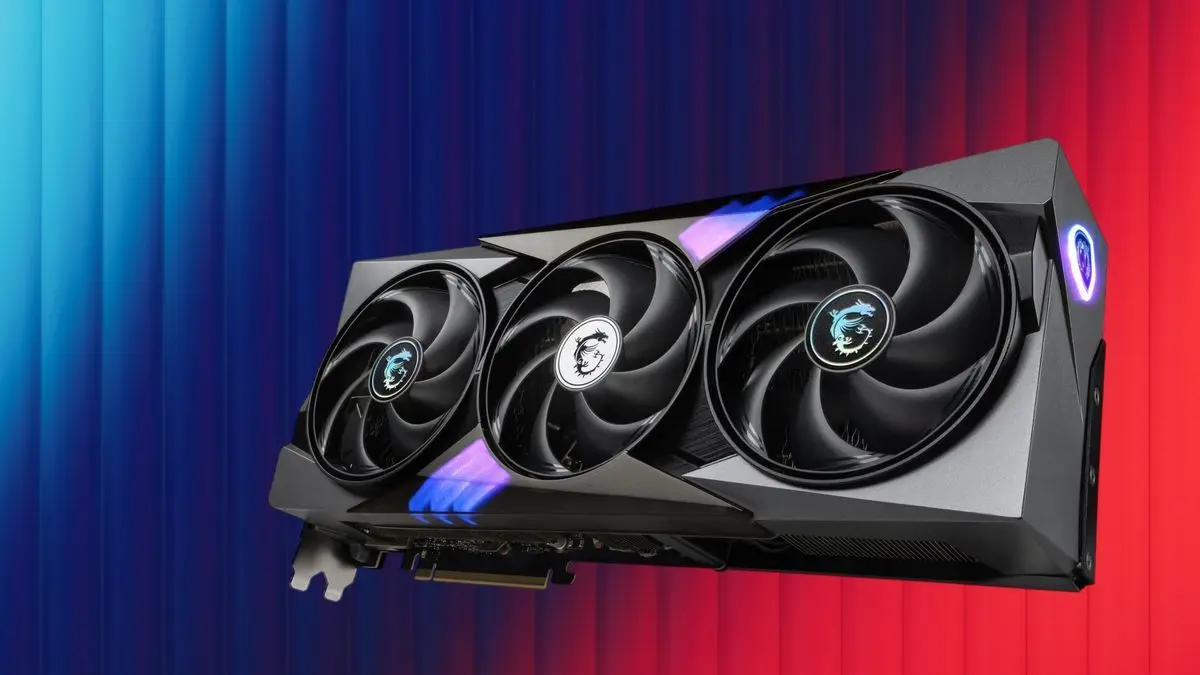
Source: Tom's Hardware
Related Stories

RTX 5080 24GB Emerges as New Gaming Flagship
According to the leaked factory notice, the RTX 5080 24GB will become Nvidia's highest-end GeForce graphics card, while the RTX 5080 16GB version faces discontinuation.
1
This rumored RTX 5080 24GB could represent a revival of previously postponed GeForce RTX 50 Super plans, which were delayed due to memory supply constraints. With GB202 chips no longer allocated to gaming products, the new gaming flagship would benefit from improved memory availability. However, questions remain about whether this card will match RTX 5090 performance, especially if it retains the smaller GB203 chip found in the existing 16GB model rather than the larger Blackwell GPU architecture.Impact on Enthusiast Gaming Market and Future Outlook
The reported end of life for GB202-based gaming cards creates a significant gap in the enthusiast gaming market. The RTX 5090 currently stands as the only GPU capable of handling DLSS 5 neural rendering at 4K without Multi-Frame Generation, making it essential for cutting-edge gaming experiences.
3
Nvidia's next-generation Rubin-based RTX 60-series GPUs are not expected until late 2027 or possibly 2028, leaving the enthusiast gaming market without a true flagship for an extended period.1
Demand from workstation customers and AI developers for professional accelerators will likely continue driving Nvidia's allocation decisions, as these higher-margin AI products generate substantially more revenue than consumer graphics cards. GB202's unusually large die size makes yield and wafer allocation particularly consequential, favoring professional markets where pricing flexibility accommodates manufacturing complexity.References
Summarized by

Navi
Related Stories
Nvidia slashes RTX 50-series production to prioritize AI demand, triggering GPU drought
22 Jan 2026•Business and Economy

Nvidia RTX 5090 Disappears From Shelves as AI Demand Pushes Prices Beyond $9,500
14 Sept 2026•Business and Economy
NVIDIA RTX 5090 and 5080: Next-Gen GPUs Rumored for CES 2025 Launch with Impressive Specs
27 Sept 2024

Recent Highlights



Recent Highlights
Today's Top Stories








Don’t drown in AI news. We cut through the noise - filtering, ranking and summarizing the most important AI news, breakthroughs and research daily. Follow topics that matter to you and stay ahead.


