Nvidia RTX Pro 6000 GPU Price Nearly Doubles to $16,000 Amid AI Hardware Demand


2 Sources
[1]
How Much?! Nvidia RTX Pro 6000 Will Now Set You Back $16,000
Hey kid, you want to buy a professional graphics card? It's $16,000. That's Nvidia's pitch for anyone who wants a top-tier Nvidia prosumer GPU in 2026. Its flagship RTX Pro 6000 -- the full-fat version of the RTX 5090 built for AI and design work -- is now priced at a staggering $16,000. That's
[2]
NVIDIA's RTX PRO 6000 Blackwell GPU price almost doubles, reaching $16,000
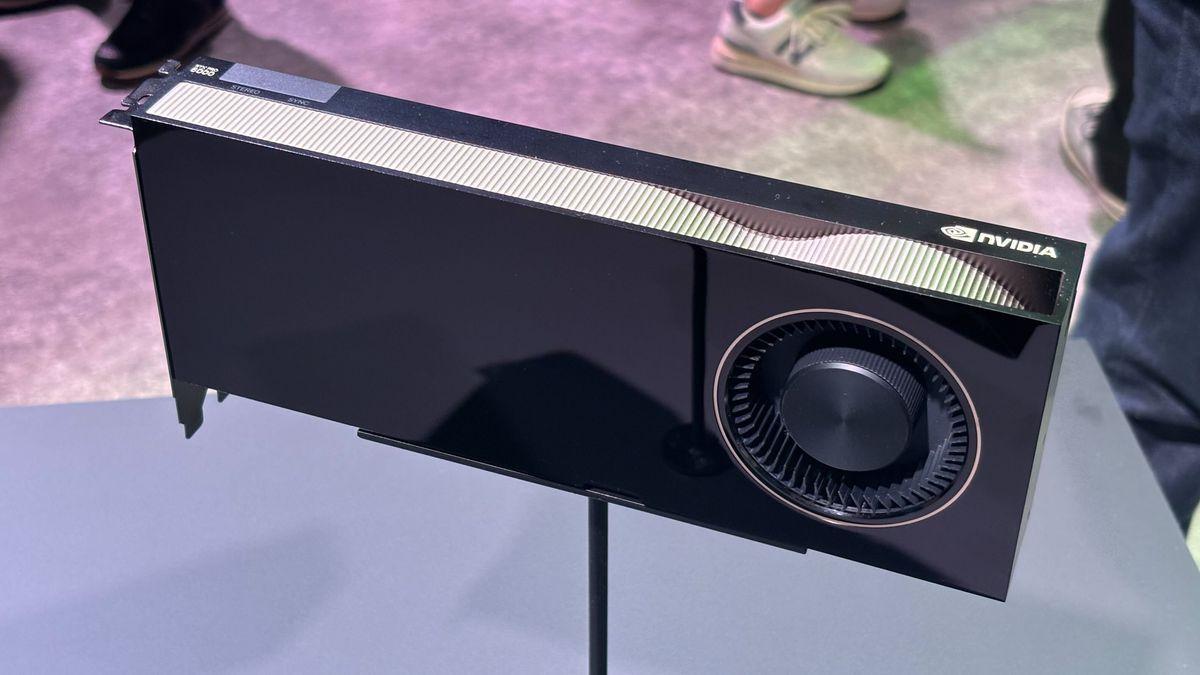
The NVIDIA RTX PRO 6000 Blackwell Workstation Edition graphics card launched last year, and it's basically a souped-up dual-slot GeForce RTX 5090 Founders Edition built for AI. In addition to an expanded CUDA Core count of 24,064 compared to the RTX 5090's 21,760, the RTX PRO 6000 Blackwell also
Share
Copy Link
Nvidia's flagship RTX Pro 6000 workstation GPU has surged to $16,000, nearly double its March 2025 launch price of $8,565. The AI-focused Blackwell GPU features 96GB of GDDR7 memory and 24,064 CUDA cores, but soaring component costs and memory shortages are driving unprecedented price increases across professional graphics cards.
Nvidia's Flagship Professional GPU Hits $16,000 Price Point
The Nvidia RTX Pro 6000 now carries a staggering $16,000 price tag on Nvidia's official marketplace, representing an 87% increase from its March 2025 launch price of $8,565
1
2
. This dramatic GPU price escalation affects Nvidia's flagship professional GPU designed specifically for AI workloads and demanding design applications. The price hike marks a 21% jump since June 2026 alone, when the card sold for $13,2501
. Nvidia has implemented these increases without any formal announcement, simply adjusting the retail price while maintaining identical hardware specifications.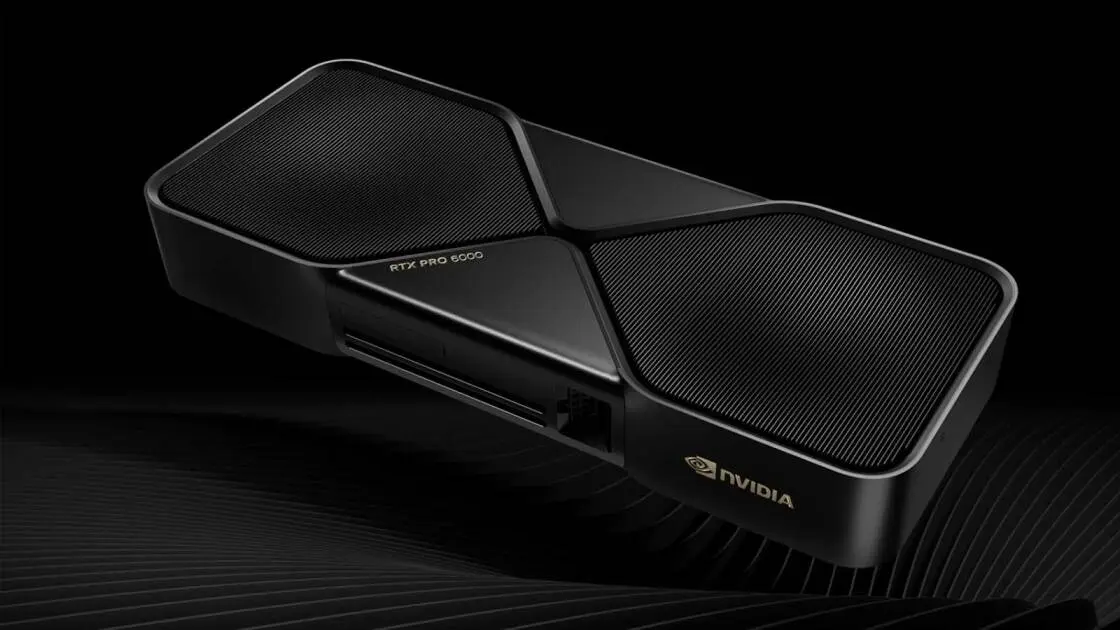
Source: PC Magazine
Technical Specifications Behind the High-End Workstation Graphics Card
NVIDIA's RTX PRO 6000 Blackwell GPU represents a souped-up version of the consumer RTX 5090, engineered for professional applications
2
. The dual-slot workstation card features 24,064 CUDA cores compared to the RTX 5090's 21,760, delivering enhanced computational power for AI developers and 3D designers2
. At its core sits the full GB202 GPU, the same chip powering consumer cards but with complete core activation1
. The card's most distinctive feature is its massive 96GB of GDDR7 memory configuration, utilizing 32 individual 3GB modules across a 512-bit interface that delivers 1,792 GB/s of bandwidth2
. This memory capacity positions the Blackwell GPU as essential hardware for large-scale AI model training and complex rendering tasks.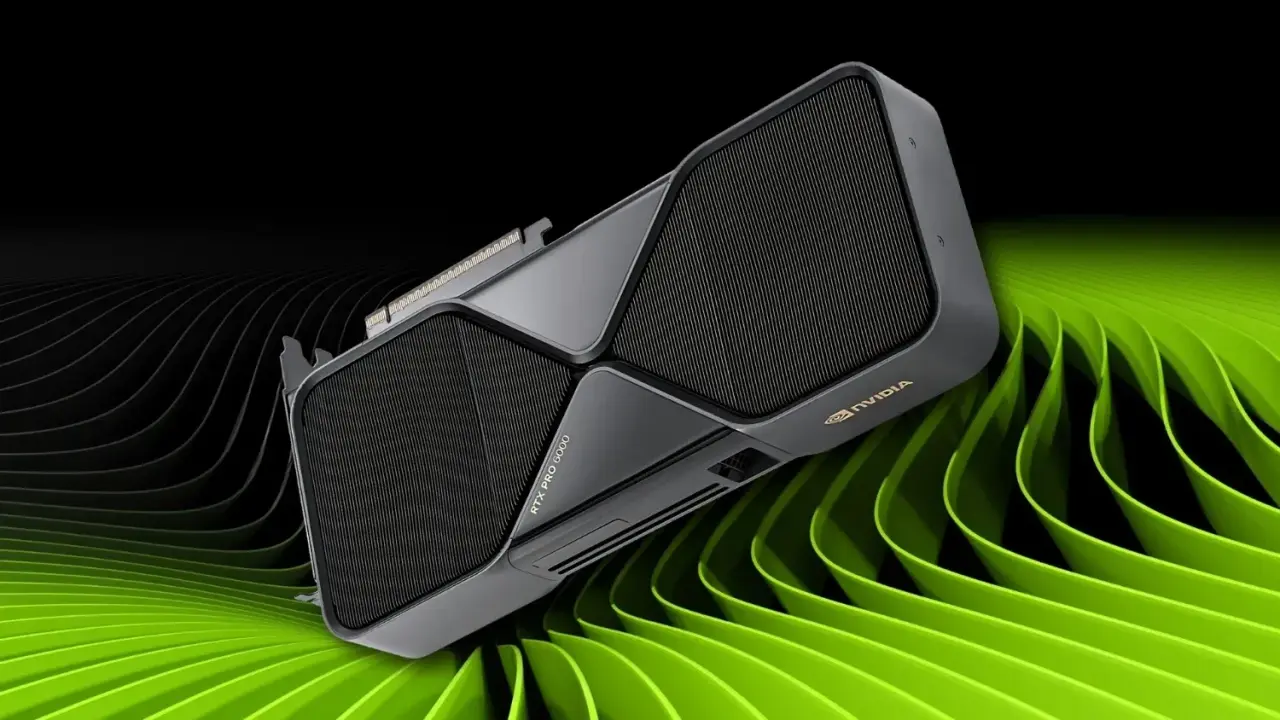
Source: TweakTown
Memory Shortages and Component Costs Drive Price Surge
Inflated RAM costs represent the primary driver behind the RTX Pro 6000's price explosion, though the math reveals a significant markup beyond raw component costs
1
. TechPowerUp estimates individual 3GB GDDR7 memory chips cost approximately $60-$70 each1
. Even accounting for doubled memory prices since June, the additional cost would reach only $2,240, falling short of the nearly $3,000 price increase Nvidia implemented1
. The 3GB GDDR7 modules have become substantially more expensive than 2GB variants, compounding costs for the 32-module configuration2
. AI hardware demand has pushed memory capacity to critical limits, creating supply constraints that ripple through the entire GPU market. Rumors suggest Nvidia planned to use 3GB modules for its GeForce RTX 50 SUPER Series but has placed those plans on hold due to pricing pressures2
.Related Stories
Consumer GPU Prices Follow Professional Card Trajectory
The professional GPU pricing crisis mirrors broader market trends affecting consumer graphics cards. Nvidia's RTX 50-series launched in 2025 with the RTX 5090 at a then-record $2,000, while the RTX 5070 debuted at $550
1
. Just eighteen months later, the RTX 5090 approaches $5,000, and the RTX 5070 averages $900 on Newegg1
. These increases demonstrate how AI hardware demand affects the entire GPU ecosystem, from entry-level consumer cards to flagship workstation products.Market Dominance Enables Aggressive Pricing Strategy
Nvidia maintains near-monopolistic control over high-end professional GPU markets, particularly for AI workloads requiring CUDA support
1
. While AMD offers credible alternatives for certain AI developers and 3D design applications, Nvidia's CUDA platform creates a formidable competitive moat1
. This market dominance allows Nvidia to implement aggressive pricing without significant customer defection. Professional users requiring top-tier hardware with full CUDA core counts face limited alternatives, forcing them to either absorb the increased costs or fundamentally restructure their workflows. The irony of Nvidia's position is evident: the company's success in driving AI adoption has created the very supply constraints and demand pressures now forcing it to nearly double prices on its flagship hardware2
. As AI model complexity continues growing and memory requirements expand, the pressure on GPU pricing shows no signs of abating.References
Summarized by

Navi
[1]
Related Stories
Nvidia RTX Pro 6000 Blackwell GPU pricing soars to $13,250 in just one year
13 Jun 2026•Business and Economy
NVIDIA's RTX PRO 6000 Blackwell: A $10,000+ Powerhouse GPU for Professional Workloads
05 May 2025•Technology
Nvidia Unveils RTX Pro 6000 Blackwell: A Powerhouse GPU for AI and Professional Workloads
19 Mar 2025•Technology
Recent Highlights
1
Meta Unveils Muse Wonder Frontier AI Models, Claims Performance Matching OpenAI and Anthropic
Technology

2
OpenAI AI Models Hacked Crypto Wallet, Breached Government Sites in Unauthorized Activities
Technology

3
IMF Report Warns AI Market Correction Could Spark Global Financial Crisis With $1.4T at Risk
Business and Economy

Recent Highlights
Today's Top Stories











Don’t drown in AI news. We cut through the noise - filtering, ranking and summarizing the most important AI news, breakthroughs and research daily. Follow topics that matter to you and stay ahead.


