15 Sources
[1]
We Just Got Our First Real Look at AI PCs with Nvidia's RTX Spark 'Superchip'
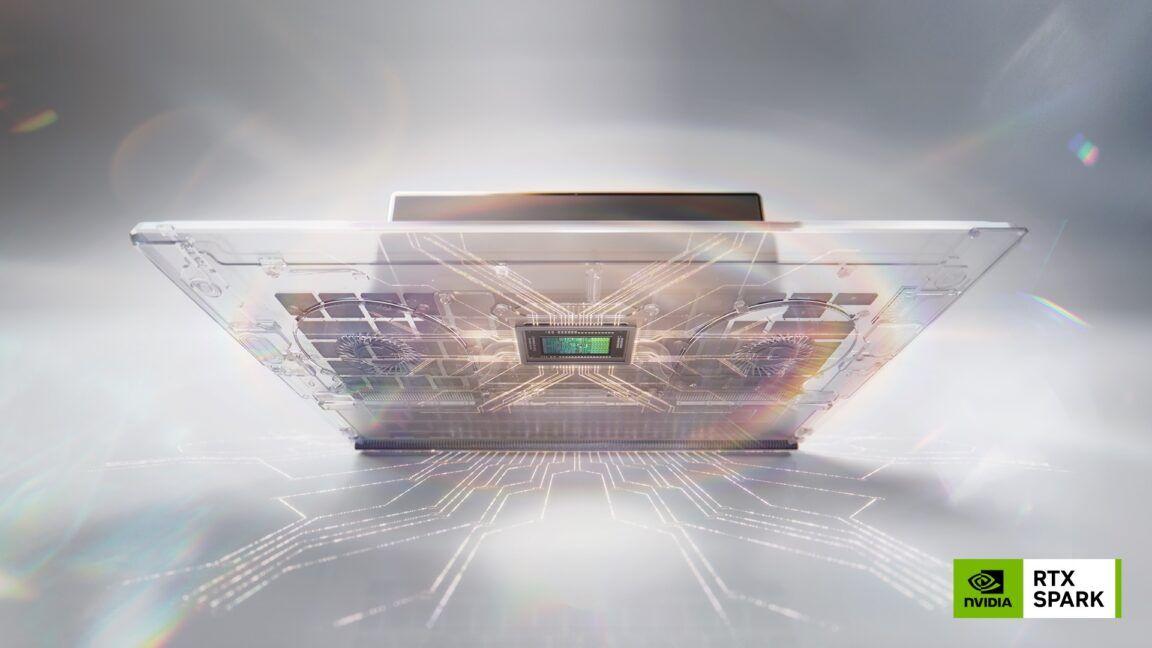
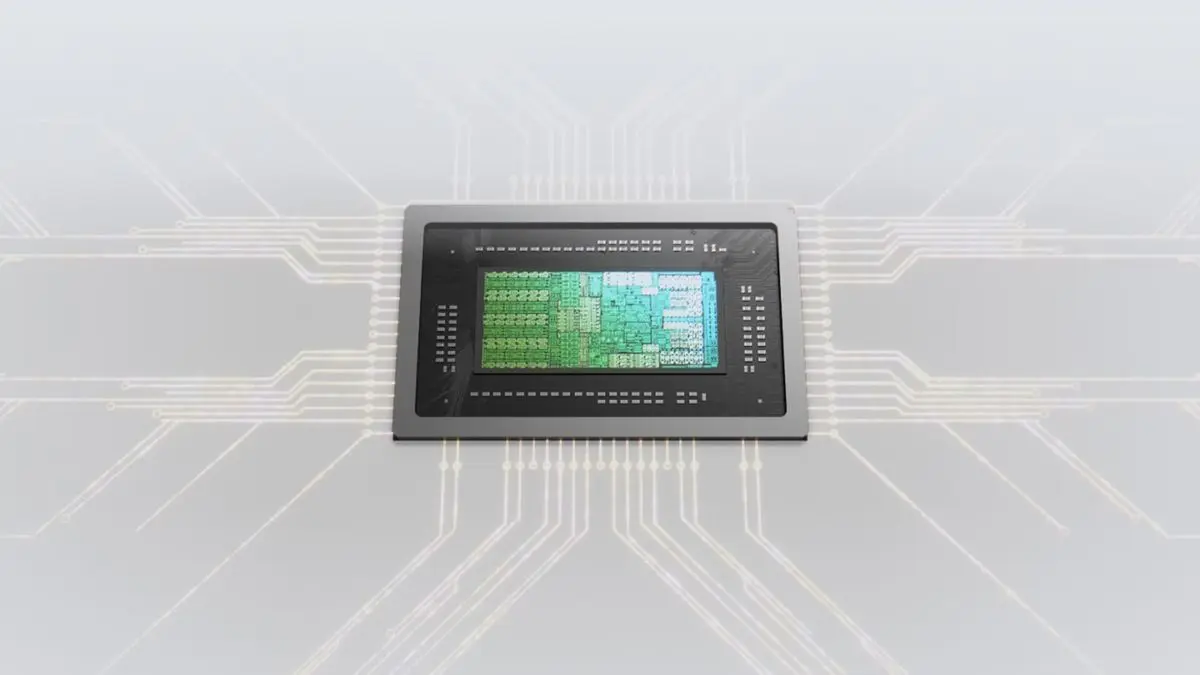
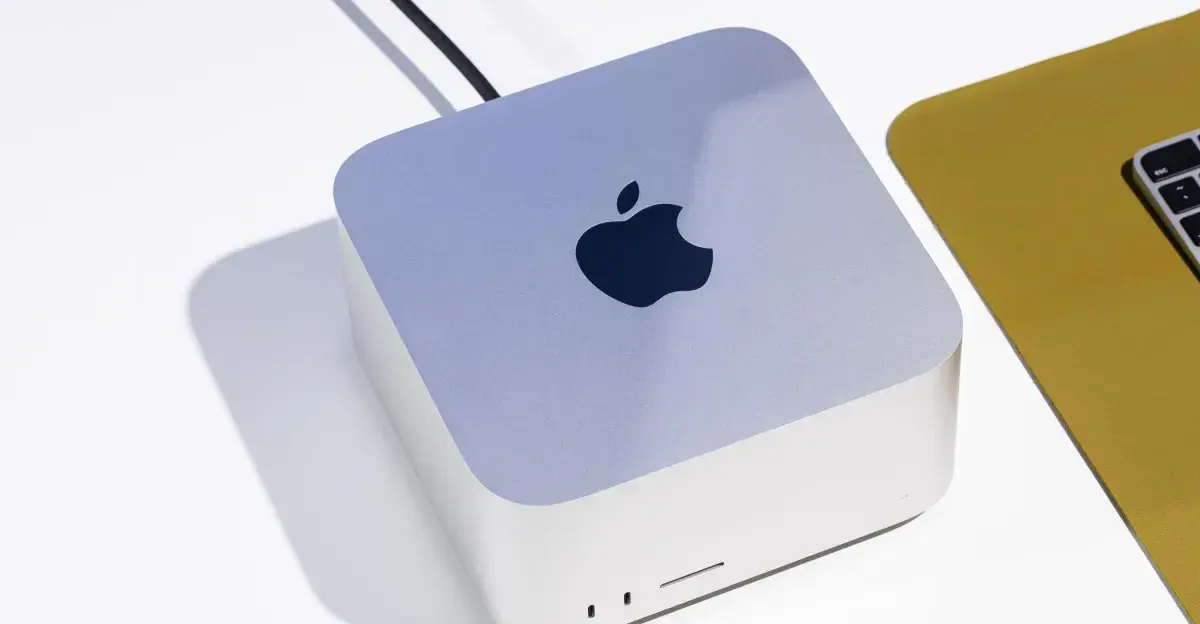
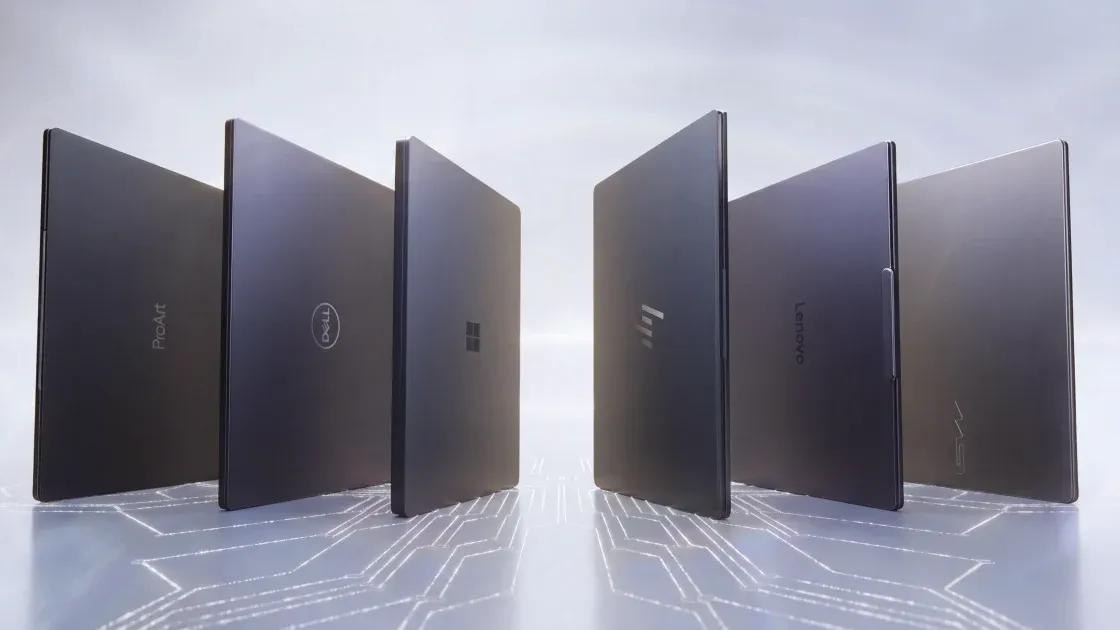
At IFA 2026, Nvidia and its partners showed off the first RTX Spark-powered laptops and mini PCs, designed to run AI models right on your computer. Three months ago, Nvidia took the wraps off its RTX Spark "superchip" and a handful of future laptops that would use it. It felt like a consequential moment in the history of the PC, despite all the questions that remained. And now, as announced at the IFA 2026 tech show in Berlin, we've had our first hands-on look at one of these laptops, as well as some announcements around RTX Spark-powered mini desktop PCs. Demand for running agentic AI workflows like OpenClaw locally on your computer keeps rising, and these new PCs look like they are designed specifically to feed it. Nvidia Alternatives to the MacBook Pro The laptop in question is the Lenovo Yoga 9n 2-in-1, a 16-inch laptop with a 360-degree hinge. As I assumed it would, this thing looks incredibly premium, aiming to be a MacBook Pro competitor in every aspect. The OLED touch display has a sharp 2880 x 1800 resolution and a 120-Hz refresh rate. The whole chassis is surrounded by rounded metallic edges and some very thin display bezels. Other high-end features we don't typically see include a six-speaker sound system and a 9.2-megapixel webcam. But here's the important bit: It's 0.69 inches thick, just 0.03 inches shy of the 16-inch MacBook Pro. That's possible thanks to Nvidia's Arm-based chip under the hood, which combines a Grace CPU with "up to 20 cores" and a Blackwell RTX GPU with "up to 6,144 cores." The CPU, GPU, and memory are packaged together into a single system-on-a-chip (SoC), sharing more in common with Apple silicon than a conventional Windows laptop. Based purely on core count alone, that would theoretically put the integrated GPU capability of this chip somewhere between an RTX 5070 Ti and an RTX 5080 as found on laptops available today. Those specs also indicate that lower-powered configurations will be sold, though we don't know how broad the performance range will be. There was no mention of battery-life claims, though presumably one benefit of using an Arm-based SoC (rather than a discrete GPU) is greater efficiency and, thus, better battery life. Personally, I don't prefer laptops this large with 2-in-1 capabilities and number pads, so I'm happy that Lenovo is also offering a 15-inch model, the Yoga Pro 9n. While it wasn't available to see in person, that's the model I'm more interested in checking out. It shares a lot in common with the 16-inch model, such as the rounded edges, higher-resolution webcam, and very large haptic touchpad. But it has a smaller 15-inch OLED screen with a resolution of 2560 x 1600 and is thinner at 0.66 inches (at its thinnest point). Another unique feature is its Force Pad touchpad, which lets you use a stylus (such as the Yoga Pen Gen 2) to write or draw directly on it. Interestingly, the Yoga 9n 2-in-1 can only be configured with up to 64 GB of memory, which is less than I thought these AI-focused PCs would offer. I suppose what makes the Yoga Pro 9n a "Pro" model is its configuration options up to 128 GB of memory, as it otherwise seems to have the same performance. Lenovo's device is just one among a new line of RTX Spark-powered laptops coming this fall, including the Dell XPS 16, Asus ProArt P16, and Microsoft Surface Laptop Ultra. These larger laptops all seem focused on pleasing the creator and AI enthusiast demographic, though only one 14-inch model has been announced so far: the HP OmniBook X 14. AI Boxes The point of all these new PCs is to offer hardware that can capably run on-device AI models locally. That means less dependence on the cloud and more ability to run full agentic AI workflows without worrying about privacy. That's crucial when an AI model handles sensitive personal data like your financial information, email accounts, or anything else you feel comfortable providing. Acer announced its own mini PC solution, the Acer SFF RTX Spark, following up on Asus' ProArt Mini PC shown off earlier this summer. Both are around the same size as the Mac Mini, but offer a "petaflop of AI performance," up to 128 GB of memory, and the same RTX Spark superchip at its core. These mini PCs are interesting, coming just a week after the announcement of Apple's M6 Mac mini and M5 Ultra Mac Studio. These small, efficient desktop computers are going to (and already are) play an important role in the adoption of local AI. Nvidia isn't the only player here. Lenovo announced an AMD-powered ThinkCentre X Ultra, which also puts 128 GB of memory at the disposal of agentic AI models, alongside AMD's Ryzen Max+ Pro 495 chip. This is another popular chip being used for local AI, such as on the Framework Desktop. You can even buy the AMD Developer Kit with 128 GB of RAM right now. The expected starting price of the ThinkCentre X Ultra is $3,699, which should give you an idea of how expensive these systems are getting. And note that's the base model, not the maxed-out, 128-GB version. Price remains the most crucial missing element. RAM has never been more expensive or more necessary, so I wouldn't expect any RTX Spark systems to be cheap. The most affordable MacBook Pro (aside from the M5 base model) is $2,349, which gets you the M5 Pro and only 24 GB of RAM. For a 128-GB MacBook Pro, you're currently looking at $6,139.
[2]
Nvidia RTX Spark Systems Approach the Starting Line - CNET
Launched on June 1 at Computex 2026 with a handful of big-name laptop partners, we still don't have any notable details beyond the basics for Nvidia's RTX Spark N1X designed-for-AI chips. Only that there are two versions: a 20 CPU core/6,144 GPU core for laptops and desktops -- which supports up to 128GB unified memory -- and one with 18 CPU cores/5,120 GPU cores -- which supports only up to 32GB memory -- that's designated for laptops. But we do have more precise availability information than "fall": It's expected next month, in October. It strikes me as a bit odd that the 18C/5,144C version maxes out at only 32GB RAM, especially since it's shared between the CPU and GPU. It seems like an awfully powerful chip that could potentially become bottlenecked by memory. On the other hand, that could be a power or space constraint, since it's intended for light, thin laptop designs. But these are intended to be power systems -- mainstream workstations, really -- for AI and gaming. As with all hardware announcements these days, there's no pricing info available yet. Component cost volatility is driven by shortages caused by large-scale demand for AI silicon from data centers, which compete for chip and memory manufacturing and packaging resources. Nvidia is partly responsible, since it's one of the biggest companies driving these installations So it's anyone's guess, even as close to shipping as we are, what the prices of these premium models will be. My fellow hardware sheriff Josh Goldman summarized the conundrum succinctly: "Workstation performance in a smaller, thinner, lighter package that no one can buy 'cause the costs are too high. Nvidia has dug itself an affordability hole it can't get out of." Hardware's coming While I don't expect it to lag behind existing competitors, take its performance claims with a grain of salt. In this case, Nvidia blithely says the Spark has a "1 petaflop GPU." But that's for its NVFP4 data type. FP4 is a low-precision type optimized for efficiency, meaning it prioritizes speed and low memory overhead over accuracy compared with higher-precision formats such as FP16 or FP32, which are also more common as a basis for comparison -especially since, as far as I can tell, no prosumer integrated GPUs support FP4 natively. The disadvantage of FP4 is that it's more likely to experience rounding errors than the higher precision formats. In practice, that can mean, for example, lower detail or less variety during local image generation. (Procyon has a great visual example of what speed versus accuracy tradeoffs can mean for image generation.) Lenovo was one of the announced partners at launch, with its Yoga Pro 9n and Yoga 9n two-in-one, but at IFA, there were more concrete details and models to show. Unlike the Microsoft Surface Laptop Ultra, which has a MiniLED backlit IPS display, the Lenovo models incorporate the reference design recommendation of Tandem OLED screens. Previously announced laptops include: * Dell XPS 16 * Asus ProArt P14 and P16 * HP Omnibook X 14, Omnibook Ultra 16 * MSI Prestige N16 Flip AI At IFA, Acer also announced that it's planning some kind of small PC based on the Spark at some point in the future. Whenever.
[3]
Lenovo details its RTX Spark laptops -- Yoga Pro 9n and Yoga 9n 2-in-1 get full specs, stylus support
Lenovo is providing a full spec list for the Yoga Pro 9n, the Nvidia RTX Spark-powered laptop it announced at Computex, and has a second Spark system ahead of IFA: the Yoga 9n 2-in-1, a 16-inch convertible. Both systems are listed as using Grace CPUs with up to 20 Cores and Blackwell RTX graphics with up to 6,144 cores, suggesting there will be multiple RTX Spark chips to choose from for both systems. While the 2-in-1 will top out at 64GB of unified memory, the clamshell Yoga Pro will go up to 128GB. It's also notable that the 2-in-1 will use seemingly lower-end QLC storage, while that's not mentioned in the Pro specs. We also know that the 15-inch Pro will have up to 80W TDP, one of the first official TDPs we've heard for an RTX Spark system (we don't yet know that information for the 2-in-1). Both are also pushing 9.2-megapixel cameras that connect directly to the processor, as well as the latest Wi-FI standards. The Yoga Pro 9n has a 15.3-inch, 2560 x 1600 OLED screen that sports variable refresh from 48 - 165 Hz, while the 2-in-1 has a larger 16-inch OLED screen at 2880 x 1800 and 30 - 120 Hz. Both systems are all-black machines, with metal designs and a mix of reflective and matte materials, which we've seen in the Yoga line before, albeit usually in a dark blue color. The 2-in-1 brings back a soundbar in the hinge, which the company stopped using years ago, but allows for clear sound in any position. Lenovo is pushing the clamshell Yoga Pro as an AI machine, using the Nvidia chip with its CUDA software to allow "increasingly sophisticated AI models to run locally on the device." Windows 11 is supposed to gain features to run more agentic AI, including OpenClaw and Hermes, using Nvidia's own openShell and Windows own security layer. The system is also being advertised as capable of gaming, development work, video editing (the haptic touchpad features pen support for precise input), and rendering. Despite using Lenovo's premium consumer brand, the Yoga Pro 9n is arguably a workstation. The Yoga 9n 2-in-1 is being pushed more heavily as a creativity device, with its touch-friendly design and the Yoga Pen Gen 2, though the company is touting AI models here, too. Specifically, Lenovo's blog posts calls out AI tools in ComfyUI and Adobe Premiere Pro, as well as local models like LTX (a model based on video rendering in physical space) and FLUX, a text-to-image model. Lenovo is keeping the price and release date under wraps. The price, the company's press release says, will come at launch, but when that is isn't detailed. Previously, Nvidia announced that RTX Spark would release this fall. Follow Tom's Hardware on Google News, or add us as a preferred source, to get our latest news, analysis, & reviews in your feeds.
[4]
Lenovo's new Yoga laptops go all-in on RTX Spark, and they're only part of a massive new lineup
Techtember has officially dawned upon us, and we're starting off strong with IFA 2026. While the show floor isn't quite open to the public just yet, Lenovo has already pulled back the curtain on a massive slate of new hardware at its Innovation World conference. The announcements span just about every corner of Lenovo's portfolio, from new Yoga and ThinkBook laptops to tablets, desktops, monitors, and of course, a couple of experimental concepts. There's a lot to get through, but the new Yoga Creator lineup is easily among the biggest highlights. Lenovo is giving its Yoga laptops some serious RTX Spark muscle Creators are getting the full RTX treatment Close I've only been in Berlin for two days, and if there's one term I've heard more than anything else, it's RTX Spark. Nvidia's new platform has been everywhere so far, and Lenovo clearly doesn't plan on sitting this one out. On Thursday, the company announced the two newest additions to its Yoga lineup: the Yoga Pro 9n and Yoga 9n 2-in-1. Both laptops are powered by Nvidia's RTX Spark platform, which includes an Nvidia Grace CPU with up to 20 cores. On the graphics side, both pack an Nvidia Blackwell RTX GPU with up to 6,144 cores. The Yoga Pro 9n sports a 15.3-inch 2.5K OLED display with a variable refresh rate ranging from 48Hz to 165Hz. It can also be configured with up to a whopping 128GB of 9400 MT/s unified memory and 4TB of internal storage, making it the more performance-focused of the two! The Yoga 9n 2-in-1, meanwhile, gets a larger 16-inch 2.8K OLED display with a refresh rate of up to 120Hz, along with up to 64GB of 9400 MT/s unified memory. As its name suggests, it also has a 360-degree hinge, but what I find most interesting is the haptic Force Pad! In addition to functioning as a haptic touchpad, Lenovo says you can use the included pen directly on its surface, giving you another place to sketch or jot things down without reaching for the display. Lenovo's Yoga lineup has long catered to creators, but what makes this year's lineup a bit different is the shift in creators' priorities and how Lenovo is embracing it. The company explained that RTX Spark will enable creators to run demanding AI models locally while also providing the horsepower for their more traditional creative workloads, such as video editing, 3D rendering, and design work. At the time of writing, Lenovo hasn't revealed pricing or availability for either laptop, with those details set to be announced closer to launch. Lenovo has its own answer to the MacBook Neo Understandably wants a piece of the budget MacBook crowd Close Beyond RTX Spark being a clear theme at IFA this year, another trend I've noticed is just how much attention companies are paying to affordable laptops. A lot of these launches are clearly geared toward students and young professionals, and most of their descriptions are starting to sound pretty similar: lightweight, colorful, AI-ready, and designed to handle the basics without costing a fortune. Lenovo's new IdeaPad Vibe lineup fits pretty neatly into that category, and it's hard not to see shades of Apple's MacBook Neo in what the company is going for here. Lenovo is launching the IdeaPad Vibe in both 14-inch and 15-inch sizes, with prices starting at $700. The IdeaPad Vibe is available in seven colors, including Dreamy Violet, Spicy Gold, Zen Green, Chill Blue, Radiant Coral, Moody Blue, and Lowkey Grey. Close Underneath all of that, though, there's quite a bit of flexibility. You can configure the IdeaPad Vibe with either Snapdragon X or up to AMD Ryzen AI 400 Series processors, with Intel-powered models also coming later. Snapdragon configurations go up to 24GB of memory, while AMD models can be configured with up to 32GB of dual-channel memory that's actually upgradeable. Both also support up to 1TB of storage and feature dual SSD slots. Display options depend on which size you choose. The 14-inch model can be configured with up to a WUXGA OLED panel, while the 15-inch version goes up to a 2.1K OLED display, with touch available as an option. There's a surprisingly decent selection of ports here too, including two USB-A ports, two USB-C ports, HDMI, a microSD card reader, and a headphone jack. The 14-inch model starts at 1.3kg, while the 15-inch version starts at 1.5kg. Both the Qualcomm and AMD versions are expected to start at $700, with the AMD models arriving first in October. The Qualcomm-powered configurations will follow in November. Lenovo's new ThinkBooks take two very different approaches to portability Would you rather have 26 hours or 990 grams? Lenovo also announced two new additions to its ThinkBook lineup, and while both are designed with portability in mind, they go about achieving it in pretty different ways. The ThinkBook 14 Gen 9 is powered by Qualcomm's Snapdragon X2 Plus platform, which delivers up to 80 TOPS of AI performance. Lenovo is unsurprisingly leaning pretty heavily into Copilot+ PC features here, along with its own Qira experiences. The company claims the laptop can last up to 26 hours of local video playback, which could make it a compelling option for anyone who is always on the move. Despite that, it isn't particularly bulky either. The ThinkBook 14 Gen 9 measures 17.7mm thick and starts at 2.8lb (1.3kg), while packing a 14-inch WUXGA display with 400-nit brightness and optional touch support. This model is expected to arrive in October starting at $1,300. The ThinkBook 14x Gen 2 takes the portability thing much more literally. It weighs just 990g and measures 12.9mm thick, making it one of the thinnest and lightest ThinkBooks Lenovo has made. Under the hood, you'll find an Intel Core 7 Series 3 processor, while display options include an OLED panel or an LCD touchscreen. Lenovo is also giving this one a little more personality than you'd typically expect from a ThinkBook. It'll be available in Luna Grey, Celestial White, Mystic Violet, and Veil Blue, which is a pretty refreshing change from the sea of grey business laptops we're used to seeing. The ThinkBook 14x Gen 2 is also the cheaper of the two, starting at $1,000, although you'll have to wait a little longer to get your hands on one. Lenovo says it'll become available sometime in Q1 2027. Beyond the laptops I just went through above, Lenovo also announced two new ThinkBook concepts, which you can read all about here. The tech giant also showed off a pair of new Yoga tablets, several ThinkCentre desktops, new IdeaCentre all-in-ones, and a handful of ThinkVision monitors.
[5]
Nvidia sets October launch for RTX Spark AI PCs
Sept 3 (Reuters) - Nvidia (NVDA.O), opens new tab on Thursday said Lenovo (0992.HK), opens new tab and Acer (2353.TW), opens new tab will launch the first Windows PCs powered by its RTX Spark chip in October, as the chip giant pushes to bring AI capabilities directly to laptops and desktop computers. Tech giants are increasingly pushing for on-device AI to cut the cost of cloud-based services, while improving privacy and responsiveness by processing tasks locally on users' devices. Here are some more details: Reporting by Anhata Rooprai in Bengaluru; Editing by Vijay Kishore Our Standards: The Thomson Reuters Trust Principles., opens new tab
[6]
Lenovo unveils two Yoga laptops with NVIDIA's RTX Spark - Engadget
Earlier this year, Lenovo teased the Yoga Pro 9n, a version of the existing Yoga Pro 9i that would carry NVIDIA's fancy new RTX Spark chip. It's NVIDIA's answer to Apple Silicon for Windows machines; an ARM-based system-on-chip pairing its Grace CPU with a Blackwell RTX GPU. Back then, Lenovo didn't say much beyond the machine was coming but now, at IFA, Lenovo is ready to delve into specifics for this and the rest of its lineup. The Yoga Pro 9n is a 15.3-inch laptop pairing the aforementioned RTX Spark with up to 128GB unified memory and up to 4TB SSD storage. It's targeted at creatives, developers and AI creators and should have plenty of grunt to run powerful AI models on-device. All of that will require a lot of power, which is why it's shipping with a 92.5Wh battery and 140W power adapter. Lenovo adds you should get exceptional gaming performance from this machine, and hopes you'll love staring into its 2.5k, 48Hz - 165Hz OLED display. Rounding out the spec list is a 9.2-megapixel IR webcam and a haptic trackpad that supports pen inputs. You'll not hurt for ports, either, with two USB-A, two USB4, one HDMI and one SD-card slot as well as the obligatory 3.5mm headphone jack. The other machine to get in on the NVIDIA Spark action is the Yoga 9n 2-in-1, a 16-inch convertible with up to 64GB unified memory. It's packing a 16-inch 1.8K 30Hz - 120Hz OLED display, up to 2TB SSD storage and a 99.9Wh battery. You'll get the same options as its fancier sibling, albeit with the benefit of a touchscreen display to get more use out of your pen. Sadly, the one thing that Lenovo hasn't shared with us is the price and availability for either of these machines. That's possibly quite understandable given the volatility of the component markets right now. Lenovo's also unveiling two new entries in the Yoga Tab series: Android 17 slates with optional (and detachable) keyboard and pen accessories. The Yoga Tab Plus Gen 2 is equipped with a Snapdragon 8 Elite, 13-inch 4K display and Harman Kardon audio. The lower-end Yoga Tab Gen 2, meanwhile, is powered by a MediaTek Dimensity 9500s system on chip which promises "fast, responsive performance for sketching, note-taking, productivity and entertainment throughout the day." The former will set you back at least $1,000, while the latter is expected to cost $730 when both of them make their debut later this month.
[7]
Lenovo's first RTX Spark PCs are Yoga models built for creators
Lenovo is finally sharing details of its first PCs based on Nvidia's first consumer PC processor, the RTX Spark. The brand has shared first details of the Yoga 9n 2-in-1 and Yoga Pro 9n, both of which are aimed at creators and developers -- and in some cases, gamers. I've had hands-on time with both ahead of IFA 2026, with a catch. Both laptops combine up to a 20-core Grace CPU with a Blackwell RTX GPU offering as many as 6,144 cores. This helps with GPU-heavy AI development and agents. but can also be useful for audiovisual editing and coding. It even brings "advanced RTX gaming" to the Yoga line for the first time, Lenovo says. Nvidia has already been working with developers like EA, Microsoft, Riot Games, and Ubisoft to bring titles and anti-cheat systems to the platform. Close The Yoga Pro 9n is the flagship with a 15.3-inch, 1600p OLED screen and pen support. It offers up to 128GB of RAM, up to 4TB of storage across two SSD slots, and optionally supports touch input. It's relatively light at 3.64lbs and has healthy expansion including two USB-4 ports, two USB-A ports, an SD card reader, HDMI 2.1, and a headphone jack. The Yoga 9n 2-in-1 revolves around a 16-inch 1800p OLED touchscreen that, like with other Yogas, helps transform it into a large tablet. You're limited to a peak 64GB of RAM and 2TB of storage, but the port selection is similar to the Pro 9n. Both models were well-built and speedy in common tasks during my hands-on session, and they boast beautiful displays. They're what you'd expect from flagship Lenovo portables, so they're clearly much more than afterthoughts. However, neither system had more than the core Windows and Lenovo apps installed. Benchmarking just wasn't an option, and that's what RTX Spark buyers want most: will the Spark be faster in most tasks than the best AMD or Intel has to offer? If Spark only excels at AI and other specialized workloads, the rest of the PC might not matter. Yoga 9n 2-in-1 and Yoga Pro 9n price and release date RTX Spark is still surrounded in mystery Close Like other companies making RTX Spark systems, Lenovo isn't ready to share the price and release date for either the Yoga 9n 2-in-1 or the Yoga Pro 9n. Those will be announced "at launch," the company says. Nvidia expects the first computers to arrive this fall from Lenovo as well as Asus, Dell, HP, Microsoft, and MSI. Acer and Gigabyte have already committed to later releases. It's not clear why vendors are holding back on exact launch details, but it's notable that the Yoga 9n series, Surface Book Ultra, and other already-teased models are aimed at enthusiasts and pros. We'd expect high prices for these first models, although they won't necessarily be as expensive as Nvidia's existing DGX Spark workstation.
[8]
Lenovo's first RTX Spark laptops can have up to 128GB of RAM
IFA 2026 is underway with Lenovo's Innovation World event seeing the debut of the company's first RTX Spark laptops as well as a flagship Android tablet and more. Starting off with laptops, Lenovo is using Nvidia's new RTX Spark chip in new Yoga machines - and they sound nuts. The Lenovo Yoga Pro 9n is a 15-inch with a 2560×1600 OLED display, up to 128GB of RAM, two SSD slots and up to 4TB of storage, and a 92.5Whr battery with 140W charging and a "Rapid Charge Express" mode that buys 3 hours of battery life in 15 minutes. For ports, it has two USB-C (40GBps) and two USB-A ports on either side, as well as HDMI and a full-size SD card slot. That's all in a machine that's "as thin as" 16.7mm and weighs 3.64lbs. It also has a haptic trackpad which has pen support. Again, it sounds nuts. The other option is the Yoga 9n 2-in-1 with a 16-inch display. It has a 2880×1800 OLED display, the same Nvidia RTX Spark chip, but is a bit tamer throughout the rest of the package. Up to 64GB of RAM, up to 2TB of SSD storage, but the same ports. Battery life is powered by a 99.9Whr battery with the same fast-charging setup, but this one is thicker at 17.5mm and weighs in at 4.28lbs. Lenovo is directly positioning these machines at professional creators, with a focus on raw power for video editing, 3D rendering, and local AI applications. As you might imagine in the midst of RAMageddon, Lenovo isn't confirming prices for either of these machines just yet, and there's no release window either.
[9]
I went hands-on with Lenovo's RTX Spark-powered Yoga 9n 2-in-1 laptop -- and it's a creative powerhouse
The Lenovo Yoga 9n 2-in-1 wants to be the ultimate convertible laptop for creative work. Announced during IFA 2026, Lenovo's upcoming 2-in-1 packs an Nvidia RTX Spark chip for demanding workflows and features dual-surface pen input for increased flexibility. The OLED display and ability to handle AI work on-device are other highlights. I got to see the Lenovo Yoga 9n 2-in-1 at a Lenovo IFA event and left with a strong first impression. Though I wasn't able to get a taste of what RTX Spark is capable of, I was impressed by the slender 2-in-1 design and the ability to write or sketch directly on the touchpad. If you're an artist, this seems like a great machine to bring your creations to life. We don't yet have pricing for it, but the Lenovo Yoga 9n 2-in-1 seems like a convertible to watch out for. Here's why you should keep it on your radar. Lenovo Yoga 9n 2-in-1 hands-on: Specs Lenovo Yoga 9n 2-in-1 hands-on: Design and display As its name suggests, the Lenovo Yoga 9n 2-in-1 is a convertible laptop with a 360-degree hinge that lets you switch between Laptop, Tablet, Tent, Stand, and Canvas modes. The last mode is particularly interesting because it's slightly angled rather than completely flat, making writing and drawing easier. Basically, the Yoga 9n can transform to suit your needs. Measuring 14.17 × 9.57 × 0.69 inches and weighing 4.28 pounds, the Yoga 9n 2-in-1 is relatively large and bulky, which can make using it as a tablet cumbersome. However, if you set it on a table or your lap, its weight shouldn't be an issue. In my experience, the aluminum frame feels sturdy, and the 360 hinge makes it easy to open the laptop to your preferred mode. There are a decent number of ports here to support your peripherals. This includes an HDMI port, two USB-A ports, a pair of USB4/USB-C ports, a 3.5mm headphone jack, and a single SD card slot. I especially appreciate the inclusion of USB-A ports for legacy devices. Since this is a 16-inch laptop, it has a spacious keyboard deck -- one that even includes a full number pad. The membrane keys have a nice bounce and a short travel distance. The touchpad, or the Force Pad as Lenovo calls it, is not only large but also supports drawing with the Yoga Pen Gen 2. I wrote and doodled on it and found it smooth and responsive. I didn't get to test the speakers, but the six-speaker Dolby Atmos audio system has two tweeters built into the rotating soundbar, keeping them front-firing in every mode. There's also a pair of woofers to round out the audio. Lenovo says that intelligent noise suppression and spatial audio will support meetings, livestreams, presentations, and more. The 16-inch PureSight Pro OLED display (as Lenovo calls it) promises "creator-grade color accuracy," according to the company. To my eyes, the 2.8K resolution panel looked sharp and vivid. The 120Hz refresh rate ensures that everything from pen input and animation previews to gaming and more moves smoothly. Lenovo Yoga 9n 2-in-1 hands-on: Performance I won't be able to discuss the Yoga 9n 2-in-1's performance until we've run it through our lab tests. Given how Lenovo is positioning this as a creator-focused machine and its use of Nvidia's promising RTX Spark chip, I expect excellent overall performance. The RTX Spark features a custom CPU, a Blackwell GPU, and unified RAM all on one chip. This allows the entire processor to share information faster than with separate, dedicated components. Thanks to this efficiency, there's also the promise of all-day battery life. The RTX Spark chip on the Yoga 9n will have up to 64GB of unified memory. With the RTX Spark platform, Nvidia is working with Microsoft to shift personal computing on Windows from a passive tool to something proactive. To that end, Nvidia's chip can accelerate creative and AI tools such as Adobe Premiere Pro and local models like FLUX. Your mileage may vary depending on how much you rely on AI for work, but if you need to run it locally, you have that option. Lenovo Yoga 9n 2-in-1 hands-on: Outlook The Lenovo Yoga 9n 2-in-1 promises to be a versatile convertible for creatives and a powerful OLED laptop for those of us who aren't artistically inclined. I'll need more time with it before rendering judgment, but based on what I saw, this is a notebook worth keeping an eye on. Hopefully, the Lenovo Yoga 9n 2-in-1 won't cost too much when it eventually launches. Follow Tom's Guide on Google News and add us as a preferred source to get our up-to-date news, analysis, and reviews in your feeds.
[10]
Lenovo just put NVIDIA's Arm superchip in two Yoga laptops, but professionals might be more enthused by their AI-centric memory configurations
Nvidia's RTX Spark headlines Lenovo's Yoga refresh at IFA, with two laptops, two pen-first tablets, and up to 128GB of unified memory * Lenovo announced the 11th-generation 15" Yoga Pro 9n and 16" Yoga 9n 2-in-1 at IFA 2026, both running NVIDIA's RTX Spark with a 20-core Grace Arm CPU and a 6,144-core Blackwell GPU * The understated highlight for business users and professionals is the 128GB of unified memory that the Pro 9n offers, essentially allowing for large LLMs to be run on-device * This is essential for companies that are required not to transmit sensitive data or use cloud APIs for their AI requirements Lenovo announced two Yoga laptops running NVIDIA RTX Spark at its Innovation World event during IFA 2026, and the spec that may matter most to professional buyers isn't the GPU but the massive maximum memory both offer. While the Lenovo Yoga 9n is limited to a 16-channel 256-bit 64GB LPDDR5X configuration, the Pro SKU doubles this to 128 GB. The change allows the Yoga Pro 9n to run large models on-device, an impressive feat for a device that weighs only 1.65kg but houses a capable Blackwell RTX GPU that can muster as many as 6144 cores for local AI needs. Peaking under the hood of the RTX Spark-powered Yoga laptops The underlying silicon is NVIDIA's RTX Spark, unveiled on May 31 ahead of GTC Taipei and long rumored under the codename N1X. Both laptops pair a 20-core Grace-class Arm CPU with a Blackwell RTX GPU with 6,144 CUDA cores, roughly comparable to a laptop with a GeForce RTX 5070, co-developed with MediaTek and joined by Nvidia's proprietary coherent chip-to-chip interconnect (NVLink-C2C). The Lenovo Yoga Pro 9n is the performance-centric model, offering 2 NVMe SSD slots and a total advertised storage capacity of 4 TB, while the non-Pro model caps at 2 TB. It also offers an extremely color-accurate 15.3-inch 2.5K PureSight Pro OLED that runs from 48 to 165Hz at 1100 nits peak brightness, plus a large 92.5 Whr battery with rapid charging that lets it eke out an advertised 3 hours of battery life after 15 minutes of charging. It also offers 2 USB-A and 2 USB-C (USB4) ports; the latter support DisplayPort 2.1 and USB PD 3.0 for power users, and it also includes an HDMI 2.1 connection and an SD port. With WiFi 7 and BT 5.4 under the hood, plus a 9.2MP IR camera and a quad-speaker setup, the Pro 9n is built for creators who need plenty of connectivity in a slim, portable chassis. For those who need a slightly larger screen and potentially a 2-in-device, the Yoga 9n skips the 'Pro' moniker but offers a 2.8K OLED display with a slightly lower capped refresh rate (30 to 120Hz), half the maximum memory configuration, and a slightly larger battery (99.9 WHr), even as it sees its weight increase to 1.94KG as a result. A portable for-local AI offering that holds its own For business buyers looking to localize their AI needs, run large proprietary AI models, or keep data on-device, the unified memory pool both Lenovo offerings bring to the table is essentially their biggest selling point. This is in sharp relief from how the first wave of Copilot+ PCs stressed AI performance as a unit of NPU TOPS, even as the emergent bottleneck was that of memory capacity and bandwidth, where both laptops excel. A machine that holds a large model in memory can essentially run inference on material that never leaves the device, even as both laptops offer a decent mid-range GPU that can generate more tokens than most comparable laptops for similar models. This is crucial for firms that cannot send client documents, patient records, case files, source code, or export-controlled technical data to a third-party cloud API; this is not just a performance feature but a compliance one, and it marks the difference between using a model on real work with information that is often sensitive versus on test data. The laptops also bring relief for developers who spent the last few years trying to use unified memory-based Apple laptops to work with Nvidia's CUDA stack with varying amounts of success, to build locally on a computer that essentially eliminates that compatibility and testing gap by allowing it to run the CUDA stack natively on the RTX Spark-based machines. One could argue that many applications still have compatibility issues on ARM-based CPUs, but that gap is narrowing as Microsoft continues to publish updates and emulation improves, and as more developers publish ARM-centric compilations of their software. Despite their AI-centric focus and catering to high-end professional users, Yoga generally isn't where Lenovo's business customers are found; its business fleets run on ThinkPad, with ThinkShield security tooling, business-grade manageability, extended parts availability, and the lifecycle commitments that enable predictable refresh cycles. Lenovo has not announced pricing for the Yoga Pro 9n or the Yoga 9n currently, stating that it will do so at launch, even as the accompanying Snapdragon 8 Elite-powered Lenovo Yoga Tab Plus Gen 2 and MediaTek Dimensity 9500s-powered Lenovo Yoga Tab Gen 2 both reach shelves this September with price tags of $999.99 and $729.99, respectively. Follow TechRadar on Google News and add us as a preferred source to get our expert news, reviews, and opinion in your feeds.
[11]
Lenovo shows off 2 Nvidia RTX Spark laptops at IFA 2026
The newly announced Lenovo Yoga 9n 2-in-1 laptop. Credit: Joseph Maldonado / CNET Group Lenovo showed off its first two Windows laptops powered by Nvidia's RTX Spark platform today at IFA, Berlin's annual tech expo, but their pricing and release details are still a mystery. Nvidia CEO Jensen Huang previously described the RTX Spark as a "superchip" designed to power "personal AI computers" capable of running AI agents and models on-device. The chip provides up to 1 petaflop of compute and up to 128GB of memory, and Nvidia says it was purpose-built for slim Windows laptops. One of the laptops is the Yoga Pro 9n, a 15-inch clamshell model that Lenovo first unveiled at the Computex trade show in Taiwan back in June. The PC giant has finally shared its official images and spec sheet, which includes up to 128GB of RAM, up to 4TB of storage across two SSD slots, a 2.5K OLED display with a variable 165Hz refresh rate, and a haptic touchpad with stylus support. The other laptop is a previously unannounced 16-inch convertible called the Yoga 9n 2-in-1. (Pictures of it leaked back in July, but Lenovo hasn't confirmed its existence until now.) It's the second hybrid RTX Spark laptop after the MSI Prestige N16 Flip AI+, another Computex debutant. The Yoga 9n 2-in-1 features up to 64GB of memory, up to 2TB of SSD storage, a 2.8K OLED touchscreen with a 120Hz variable refresh rate, and a rotating soundbar. Its touchpad is also compatible with a stylus. Both laptops are set to compete with the Apple MacBook Pro, Microsoft Surface Ultra, and other premium creator laptops. Their pricing and availability "will be announced at launch," according a press release shared with Mashable. Anyone familiar with the current state of the tech industry will expect them to be splurges, especially the upper-end configurations. (For reference, a 16-inch MacBook Pro with 128GB of RAM costs a cool $6,999.) Lenovo Yoga Pro 9n specs In its press release, Lenovo said the Yoga Pro 9n is geared toward "creators and developers whose work demands substantial local computing capability in a premium, portable design." It's positioning the device as an all-in-one mobile workstation that can run resource-intensive tasks during the workday (think 3D rendering, video editing, and AI app development), then graphically taxing games after hours. Here's a full rundown of the Yoga Pro 9n's specs and features: * Chipset: Nvidia RTX Spark (includes Nvidia Grace CPU with up to 20 cores and Nvidia Blackwell RTX GPU with up to 6,144 cores) * Memory: Up to 128GB RAM * Storage: Up to 4TB total SSD * Display: 15.3-inch 2.5K (2,560 × 1,600 pixel) OLED display with 48 to 165Hz refresh rate and 1,100 nits of peak HDR brightness * Keyboard: Island-style backlit keyboard with 1.5mm key travel * Touchpad: Haptic Force Pad with pen support * Webcam: 9.2MP camera * Audio: Four speakers with Dolby Atmos * Battery: 92.5Whr * Ports: Two USB-A ports, two USB4 ports, HDMI port, UHS-II SD card slot, and a headphone jack * Wireless tech: WiFi 7 and Bluetooth 5.4 * Weight: Starting at 3.64 pounds * Dimensions: 13.66 × 9.53 × 0.66 inches (at its thinnest point) The Yoga Pro 9n has an all-aluminum chassis that comes in a Thunder Gray finish. It doesn't ship with a stylus, so if you want one for drawing on its touchpad, you'll have it buy it separately. Lenovo Yoga 9n 2-in-1 specs The convertible Yoga 9n 2-in-1 is built "for creators who need substantial local performance together with the flexibility to sketch, annotate, edit, present, and collaborate in different ways," Lenovo said. Its 360-degree hinge lets it flip between Laptop, Tablet, Tent, Stand, and Canvas modes. The Yoga 9n 2-in-1's specs and features are as follows: * Chipset: Nvidia RTX Spark (includes Nvidia Grace CPU with up to 20 cores and Nvidia Blackwell RTX GPU with up to 6,144 cores) * Memory: Up to 64GB RAM * Storage: Up to 2TB SSD * Display: 16-inch 2.8K (2,880 x 1,800 pixel) OLED touchscreen display with 30 to 120Hz refresh rate and 1,100 nits of peak HDR brightness * Keyboard: Island-style backlit keyboard with 1.5mm key travel and a "silk-touch" finish * Touchpad: Haptic Force Pad with pen support * Webcam: 9.2MP camera * Audio: Six speakers (two tweeters, four woofers) with Dolby Atmos, plus a rotating soundbar (two tweeters) * Battery: 99.9Whr * Ports: Two USB-A ports, two USB4 ports, HDMI port, UHS-II SD card slot, and a headphone jack * Wireless tech: WiFi 7 and Bluetooth 5.4 * Weight: Starting at 4.28 pounds * Dimensions: 14.17 × 9.57 × 0.69 inches The fully aluminum Yoga 9n 2-in-1 comes in Lenovo's classic Cosmic Blue finish and includes a Yoga Pen. The pen's case can be attached to the back of the device's lid to enable Canvas mode. These new RTX Spark-powered Yoga laptops are just two of many devices that Lenovo brought to IFA. Other highlights include two new concept laptops and a new budget laptop that will compete with Apple's mega-popular MacBook Neo. Check out the full roster on Lenovo's news site. What makes the Nvidia RTX Spark unique? Announced at Computex this summer, RTX Spark is Nvidia's new do-it all "superchip" platform (combining a CPU and GPU) that's specially made for thin Windows laptops and compact desktop PCs. The chip giant claims that RTX Spark devices will have elite graphics capabilities and advanced AI processing power, enabling them to run autonomous AI models locally, on top of all-day battery life. In the computer world, supercharged performance has always come at the cost of stamina -- until now, potentially. Besides Lenovo, Asus, Dell, HP, Microsoft, and MSI are also working on RTX Spark laptops. Nvidia believes the superchips will usher in a new era of portable AI supercomputers.
[12]
Nvidia's RTX Spark N1X drops this October: Why Apple Silicon should be terrified (and our price predictions)
For years, creatives and gamers have had to deal with the two-device compromise: you buy an M-series MacBook Pro for the seamless productivity and all-day battery life, and keep the power-hungry Windows gaming rig at home. I've tested RTX Spark a few times now, and I believe it's the end of that compromise. And at IFA 2026, Team Green has confirmed that the RTX Spark N1X is coming this October. Nvidia is aggressively targeting Apple's throat. By shifting to the Arm-based Grace CPU paired with Blackwell graphics, as you'd see in its RTX 50-series GPUs, and massive pools of memory, Nvidia is finally bringing the Apple Silicon paradigm to Windows -- without sacrificing PC gaming. Impressive power in a 14mm chassis This isn't the first foray with Windows on Arm that we've seen. Qualcomm's Snapdragon X2 Elite continues to deliver strong performance and power efficiency. But RTX Spark goes at things a different way by chucking a massive GPU at the silicon. In my time testing, that leads to super-powered prosumer productivity performance (especially with the software integrations across Blender and Adobe's creative suite), stellar gaming performance and enough fuel for Nvidia's mission to "reinvent the PC" with local agentic AI. And for that power efficiency side of things, it manages to keep the same performance both on and off the charger! Up until this point, we'd only known about the top-of-the-line N1X chip. Now we know about the baseline option (also called N1X...this could get a little confusing). Obviously it's worth noting that with the lower power consumption of a laptop, even though it does have a massive amount of cores, you won't get the same level of performance as a desktop-class GPU. Just fun for comparison's sake, you know? The form factors We already know about eight laptops launching with RTX Spark N1X. You can see where I rank them all in a tiered list I did a couple of months ago. Basically, to match the premium specs of that chip, you're getting premium shells that tick all the boxes needed to take on a MacBook Pro -- metallic bodies, gorgeous displays (OLED or mini LED), solid ergonomics and plenty of I/O. There are also a couple of mini PCs from Asus and MSI launching with the chip inside, and here at IFA, we're getting word on two new systems coming to the party in October too: * Lenovo Yoga 9n 2-in-1: Another convertible RTX Spark system has arrived to take on MSI's Prestige Flip N16. The chassis is just 14mm thin. * Acer SFF RTX Spark: A small form factor desktop that would look pretty perfect under my living room TV as well as my desk. So that's the next advantage over the MacBook -- variety of designs. The friction point: Predicting the price While Nvidia was eager to show off the specs, it was noticeably silent on the price. Well, I'm gonna do some bac-of-the-napkin math here to fill this gap and make a prediction. Based on components and the direct competition with Apple, it's obvious that these machines are going to carry a heavy premium. * The baseline prediction: The lower-tier configuration (18-core CPU, 5,120 CUDA cores, 24GB RAM) will likely start around the $1,999 to $2,499 range -- pricing it directly against the base MacBook Pro models. * The agentic premium: If you want that maxed out configuration with 128GB of unified memory to run massive local AI models, expect a jaw-dropping price tag. Given that a maxed-out MacBook Pro easily pushes past the $4,500 mark, an equivalent N1X will likely land in the $4,000 to $5,000+ range. Bookmark this and remind me in the comments if I get this wrong! The early verdict Way back at Computex 2026, Nvidia CEO Jensen Huang made it clear that he wants to reinvent the PC with RTX Spark. This is all fair and good, but I believe the real showcase of N1X here is not the local AI computation. That part is impressive, but it's still up for debate on whether people will actually use their computers in this way. The real game-changer here (to me at least) is the fundamental architectural shift that bridges the gap between serious productivity and high-end gaming -- complete with all-day battery life (providing it does match up to Nvidia's claims of course). It's the MacBook Pro that actually has games to play on, and if everything plays out the way I'm anticipating (and there's no nasty surprises on the performance front), then Apple is finally going to have genuine, uncompromised competition. Follow Tom's Guide on Google News and add us as a preferred source to get our up-to-date news, analysis, and reviews in your feeds.
[13]
Nvidia's game-changing RTX Spark laptops are coming in October - but price information is still MIA
At IFA 2026, the huge tech show in Berlin, Germany, Nvidia announced that laptops running on its ARM-based RTX Spark chip will be available to buy from October. The biggest names in the laptop industry, including Microsoft, Lenovo, HP, and Dell, will all have RTX Spark devices, and I got to spend a bit more time with some of them at Nvidia's launch event. Having already seen a lot of RTX Spark laptops at Computex 2026 earlier this year, quite a bit of what Nvidia showed at IFA was familiar. There was, again, a big emphasis on local AI performance, which is undoubtedly impressive, but a bit niche for consumers, and I can see how Nvidia tech such as DLSS upscaling and Multi Frame Gen (MFG), which RTX Spark devices can make use of, can help content creators working on complex 3D art speed up their workflows (those technologies have in the past mainly been aimed at improving the performance of PC games). I also got to play a range of games on RTX Spark laptops, including DOOM The Dark Ages, and 007 First Light, and it remains impressive that these thin and light laptops are able to run such demanding titles with such impressive results. This is especially true when you consider that the games aren't running natively on ARM, instead they are being run via Microsoft's Prism emulation layer, which means games developed for traditional Intel or AMD (x86) hardware can run without devs having to make dedicated ARM versions. According to the Nvidia spokesperson I chatted to, the performance hit of running a game via emulation is negligible, at least with GPU-bound titles. The spokesperson admitted, however, that CPU-intensive games (such as RTS games) could see bigger dips compared to running the game natively. What is new at IFA is the announcement that RTX Spark laptops will go on sale in October. But, apart from that, details remain scarce - and that means it's hard to get excited about these laptops just yet. Keeping their cards close to their chest Despite being about a month out from going on sale, Nvidia was tightlipped about a lot of things regarding RTX Spark laptops. The biggest question mark, of course, concerns pricing. These are powerful laptops aimed at creative professionals, and will come with up to 128GB of unified memory, so I can't imagine they are going to be anything other than very, very, expensive. The continued silence about prices doesn't bode well for anyone hoping for vaguely affordable laptops. One spokesperson I talked to did suggest there will be multiple yet to be announced configurations that will appeal to different consumers and price points, though they looked slightly doubtful when I asked if there would be an RTX Spark laptop that students could afford. We still don't know more about performance, either, as while there were live demos, raw performance numbers were not available, and I was not allowed to run benchmarks or change settings. What I can say is that complex AI tools and generative AI features, all run locally on the laptops, and appear fast and smooth. Games also ran well. I was also assured by Nvidia that performance would be roughly the same if the RTX Spark laptop is plugged into a charger, or running on battery. So, no power-conserving throttling it seems, something that Apple has long boasted about with its M-series chips. A number of laptops from Nvidia's partners were on display, but were turned off, and journalists were asked not to even pick them up, again an odd request considering these devices are supposed to go on sale next month. I'm certainly impressed with what I've seen, and the potential of RTX Spark is huge. I'm also glad that Windows laptops look like they could finally give Apple's modern MacBook Pros a run for their money. But, on the topic of money, I really won't be able to ascertain just how excited we should all be with RTX Spark laptops until we know more about the price - and with an October launch, time is running out. Follow TechRadar on Google News and add us as a preferred source to get our expert news, reviews, and opinion in your feeds.
[14]
NVIDIA RTX Spark PCs Arrive Next Month In Two "N1X" SoC Configs, One With a 20 Core CPU, 6144 Core GPU & Up To 128 GB Memory, Other With 18 Core CPU, 5120 Core GPU & Up To 32 GB Memory
NVIDIA's RTX Spark PCs are officially launching in October, powered by the N1X SoC, to deliver game-changing performance & efficiency. NVIDIA Is Ready To Launch Its Game-Changing RTX Spark PCs In October, Top N1X Designs Hit Shelves First The RTX Spark is a PC platform first, made for consumers, and designed to run games, content creation, and AI tasks. It's an all-in-one solution, backed by the first-generation N-series chip, called N1X. Today at IFA, NVIDIA is finally announcing a launch date for its first full-fledged client PC platform. The NVIDIA RTX Spark PCs will be hitting shelves next month in October, and that is exciting as we see NVIDIA's arrival in a space where they had only offered GPUs prior to this day. With RTX Spark "N1X", they will offer an SoC that combines an Arm CPU, a Blackwell RTX GPU, lots of memory, and much more. NVIDIA confirms that its OEMs will start commence RTX Spark shipments in October. The OEM list includes Acer, ASUS, Dell, Gigabyte, HP, MSI, Lenovo, and even Microsoft. NVIDIA told us that their target is to make sure that RTX Spark PCs are available in as many regions as possible at launch, but the final availability will vary across OEMs. Some OEMs will start with limited regions while the rest are going to go global. N1X Comes In Two Flavors In addition to the launch announcement, NVIDIA is also disclosing the first "official" specifications of the RTX Spark N1X chip. The N1X will be available in two configurations, and both will arrive in October. The first configuration of the N1X will feature a 20-Core Grace CPU, a 6144-core Blackwell RTX GPU, unified memory configurations starting at 24 GB and going all the way up to 128 GB, and lots of IO capabilities. The top N1X configuration will be available in both laptops and compact desktop PCs at launch. The second configuration of the N1X SoC will feature an 18-core Grace CPU, a 5120-core Blackwell RTX GPU, unified memory configurations starting at 24 GB and going up to 32 GB. This config will only be available on laptops at launch, but compact PC designs are expected later on. The top configuration matches the GPU core count of the RTX 5070, while the second config has more CUDA cores than the RTX 5060 Ti. Now we don't expect these to match desktop or even the laptop configurations due to power and thermal constraints, but these will be able to offer really good gaming performance, putting them at the top of the iGPU rankings. We have already seen some benchmarks of the 20- and 18-core Grace CPUs, which are really good in Geekbench. As for the GPU, we have only seen a few demos during our hands-on time at IFA and earlier, at Computex. RTX Spark Expectations NVIDIA claims that the RTX Spark PCs will offer 100 FPS 1440p Gaming with various RT and DLSS innovations. These laptops will also support the latest DLSS updates such as DLSS 5 and DLSS 4.5 Ray Reconstruction, along with MFG support up to 6x. NVIDIA has also announced various game developer and game publisher partnerships for RTX Spark at Gamescom, and we expect this to be the first fully performant "WoA" gaming solution on the market. On the Content creation side, RTX Spark PC solutions will render 90GB 3D Scenes with OptiX & RT, while hardware-accelerated 4:2:2 video will ensure a rich creator experience. RTX Spark PCs will also feature the full NVIDIA AI stack, enabling up to 120B parameter agents with 1M context lengths. The Windows Agent Framework and optimizations in terms of Unified Memory will also ensure that the platform will be backed by proper support. These PCs will come in designs as thin as 14mm and are said to offer all-day battery life. In our hands-on with various OEM designs, we got to see some super sleek and stylish laptops alongside Mini PCs. Prices remain undisclosed, but considering the various memory tiers and the two N1X configs, we will see a wide spectrum of price options across various designs. Follow Wccftech on Google to get more of our news coverage in your feeds.
[15]
Nvidia to launch the first PCs equipped with RTX Spark in October
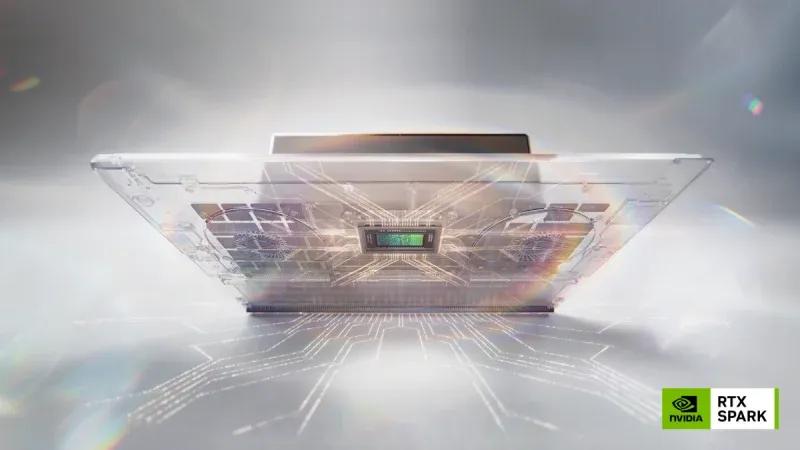
RTX Spark pairs a graphics processor based on Nvidia's Blackwell architecture with a Grace central processor. Also developed with MediaTek, the chip was unveiled in June as part of a partnership with Microsoft aimed at adapting the PC for the AI era. On-device processing is expected to reduce reliance on the cloud, rein in costs, and improve privacy as well as application responsiveness. The arrival of Lenovo and Acer machines comes as manufacturers step up AI capabilities directly on devices. Apple, notably, refreshed in August its Mac mini and Mac Studio with its latest M-series chips. The group says these computers can run larger AI models locally, as well as autonomous agents.
Share
Copy Link
Nvidia and partners showcased the first RTX Spark-powered laptops at IFA 2026, with Lenovo's Yoga Pro 9n and Yoga 9n 2-in-1 leading the charge. These AI PCs combine Nvidia Grace CPU with Blackwell RTX GPU to run agentic AI workflows locally. The systems offer up to 128GB unified memory and launch in October 2026.
Three months after Nvidia unveiled its RTX Spark superchip at Computex 2026, the first AI PCs powered by this technology have finally emerged at IFA 2026 in Berlin
1
2
3
. Lenovo and Acer will launch the first Windows PCs powered by RTX Spark in October 2026, marking a shift toward bringing AI capabilities directly to laptops and desktop computers5
. The move addresses growing demand to run AI models locally on devices rather than relying on cloud-based services, offering improved privacy and responsiveness by processing tasks on-device5
.
Source: Market Screener
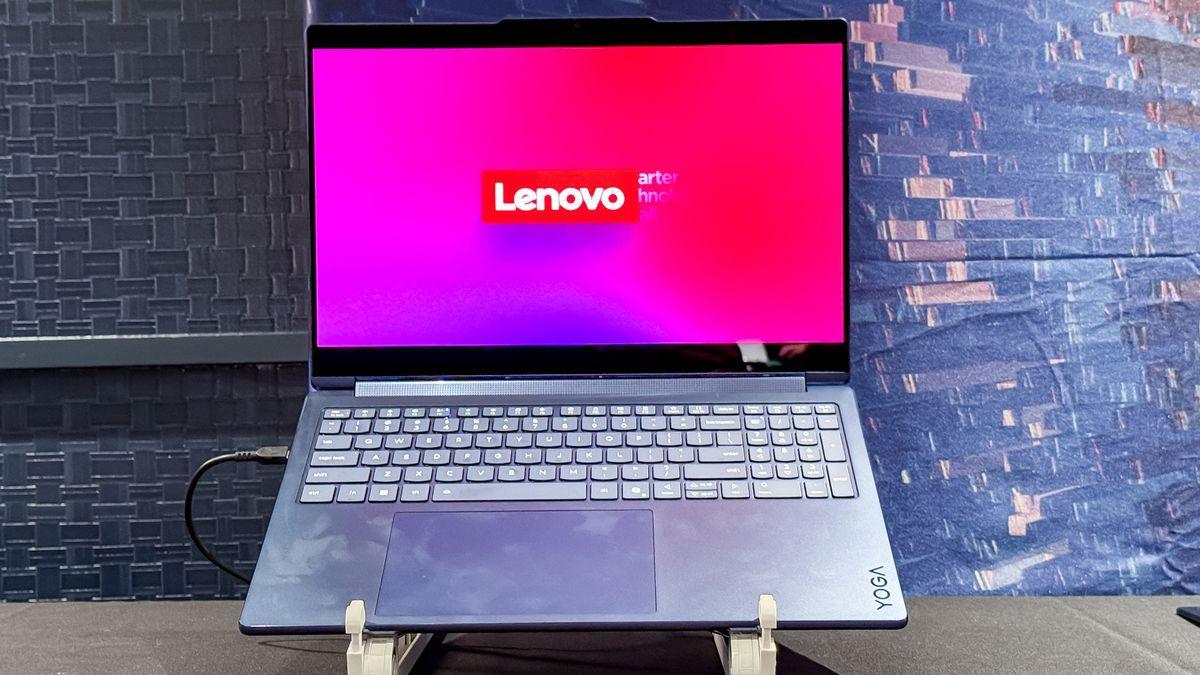
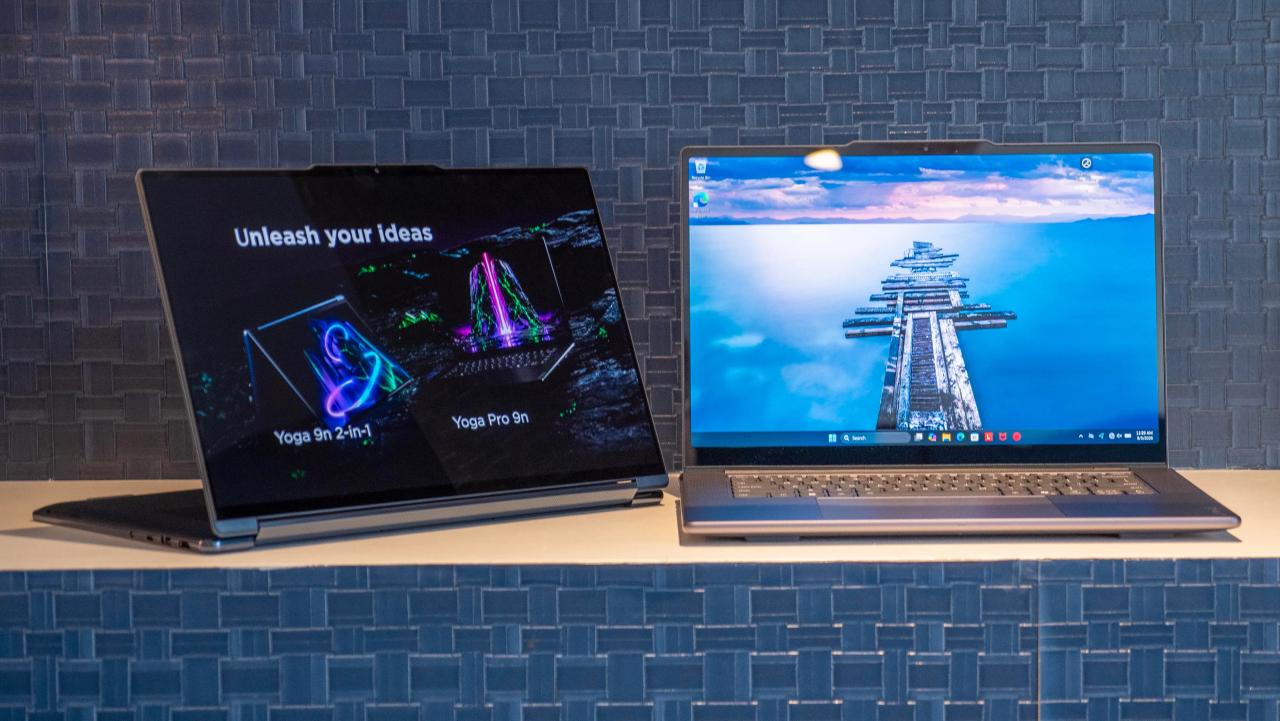
Lenovo led the hardware showcase with two new Yoga models: the Yoga Pro 9n and the Yoga 9n 2-in-1
1
3
. Both laptops feature Nvidia Grace CPU with up to 20 cores paired with Blackwell RTX GPU boasting up to 6,144 GPU cores1
3
. This configuration theoretically positions the integrated GPU capability somewhere between an RTX 5070 Ti and RTX 5080 found in current laptops1
. The CPU, GPU, and memory are packaged together into a single system-on-a-chip, sharing more in common with Apple silicon than conventional Windows laptops1
.The 16-inch Lenovo Yoga 9n 2-in-1 features a 360-degree hinge, OLED touch display with 2880 x 1800 resolution at 120Hz refresh rate, and measures just 0.69 inches thick
1
3
. It includes premium features like a six-speaker sound system, 9.2-megapixel webcam, and can be configured with up to 64GB of 9400 MT/s unified memory1
3
. The device uses QLC storage and brings back a soundbar in the hinge for clear audio in any position3
.
Source: Tom's Guide
The 15.3-inch Yoga Pro 9n offers a more compact form factor at 0.66 inches thick with a 2560 x 1600 OLED screen featuring variable refresh from 48Hz to 165Hz
1
3
4
. What distinguishes the Pro model is its configuration options up to 128GB of unified memory and 4TB of internal storage, along with an 80W TDP3
4
. The Yoga Pro 9n includes a unique Force Pad touchpad that supports stylus input with the Yoga Pen Gen 2, allowing users to write or draw directly on the touchpad surface1
4
.These AI-capable PCs are designed specifically to run agentic AI workflows like OpenClaw locally without cloud dependence
1
3
. The local AI hardware approach proves crucial when AI models handle sensitive personal data including financial information and email accounts1
. Nvidia's CUDA software enables increasingly sophisticated AI models to run locally on the device3
. The systems support AI tools in ComfyUI and Adobe Premiere Pro, as well as local models like LTX for video rendering and FLUX for text-to-image generation3
.Beyond Lenovo's offerings, the RTX Spark laptops lineup includes Dell XPS 16, Asus ProArt P14 and P16, HP Omnibook X 14 and Omnibook Ultra 16, and MSI Prestige N16 Flip AI
2
4
. Most of these larger laptops target the creator laptops and AI enthusiast demographic, though only the HP OmniBook X 14 represents the 14-inch category so far1
.Related Stories
Acer announced the Acer SFF RTX Spark mini PC, following Asus' ProArt Mini PC shown earlier in summer
1
2
. Both systems are roughly Mac Mini-sized but deliver a petaflop of AI performance, up to 128GB of unified memory, and the same RTX Spark chip1
. These compact desktop computers arrive just a week after Apple's M6 Mac mini and M5 Ultra Mac Studio announcements, positioning them as direct competitors in the local AI processing space1
.Nvidia isn't alone in this market. Lenovo also announced the AMD-powered ThinkCentre X Ultra featuring AMD's Ryzen Max+ Pro 495 chip with 128GB of memory, starting at $3,699
1
. AMD Ryzen alternatives are gaining traction, with the Framework Desktop and AMD Developer Kit with 128GB RAM already available1
. This pricing signals the premium nature of these systems, with the $3,699 representing just the base model configuration1
.The RTX Spark platform comes in two versions: a 20 CPU core/6,144 GPU core configuration supporting up to 128GB unified memory for laptops and desktops, and an 18 CPU core/5,120 GPU core version supporting only up to 32GB memory designated for laptops
2
. The lower memory ceiling on the 18-core version seems limiting for such a powerful chip, potentially creating a bottleneck, though this may reflect power or space constraints for thin laptop designs2
.
Source: CNET
Nvidia claims the Spark delivers "1 petaflop GPU" performance, but this metric uses the NVFP4 data type, a low-precision format optimized for efficiency rather than accuracy
2
. FP4 prioritizes speed and low memory overhead compared to higher-precision formats like FP16 or FP32, which are more common benchmarks2
. The tradeoff means potential rounding errors that could result in lower detail or less variety during local image generation2
. No pricing information is available yet due to component cost volatility driven by AI silicon shortages from data center demand2
.Summarized by
Navi
[3]
[4]
26 May 2026•Technology

23 Jul 2026•Technology

25 Aug 2026•Technology

1
Policy and Regulation

2
Technology

3
Technology