Nvidia RTX Spark redefines AI PC as on-device powerhouse challenging Apple and Qualcomm


2 Sources
[1]
Nvidia RTX Spark platform is AI workhorse first, gamer's friend second
Nvidia is fundamentally rethinking the portable PC, treating its new RTX Spark platform not as a traditional gaming silicon upgrade, but as a blueprint for a high-end, on-device AI powerhouse. The idea of an 'AI PC' has been doing a lot of heavy lifting in recent years. In practice, it has often
[2]
RTX Spark Is Apple's And Qualcomm's Kryptonite In One Crucial Area And These Two Only Have A Year To Get Things Right
The ARM-based ecosystem has been graced by another entrant in the form of NVIDIA's RTX Spark, and with its arrival in laptops this fall, Qualcomm and Apple should feel a little hint of worry, mainly in one category, because they have had years to address a problem existing in these notebook SoCs
Share
Copy Link
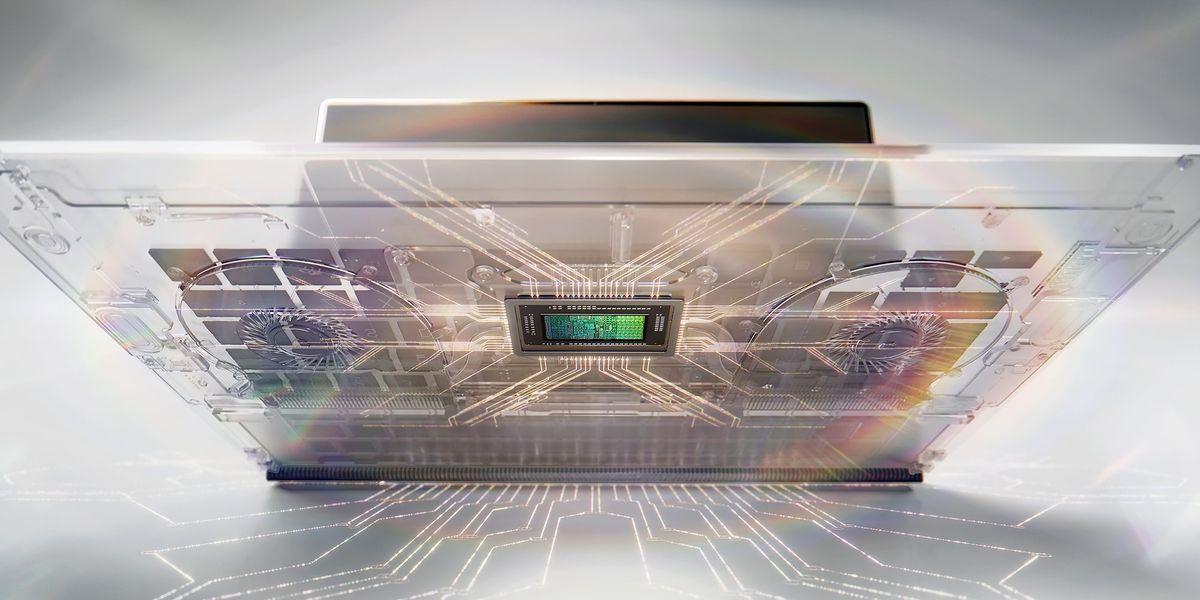
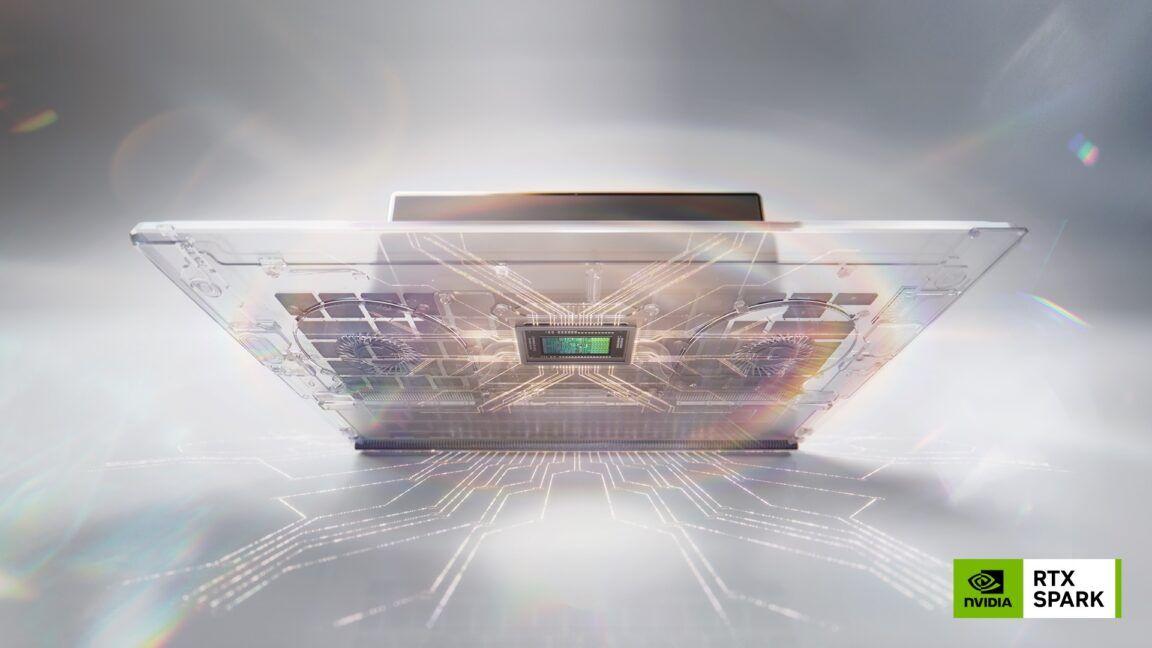
Nvidia unveiled RTX Spark at Computex 2026, an ARM-based superchip combining a 20-core Grace CPU with Blackwell RTX GPU and up to 128GB unified memory. Built with Microsoft for Surface hardware, it positions itself as an on-device AI powerhouse for creators and gamers, directly challenging Apple Silicon and Qualcomm's Snapdragon in the premium laptop market.
Nvidia RTX Spark Redefines the AI PC Category
Nvidia RTX Spark represents a fundamental shift in how portable computing platforms approach artificial intelligence workloads. Unveiled at Computex 2026, the platform moves beyond the superficial AI PC branding that has dominated recent laptop releases, delivering what Nvidia calls a true on-device AI powerhouse
1
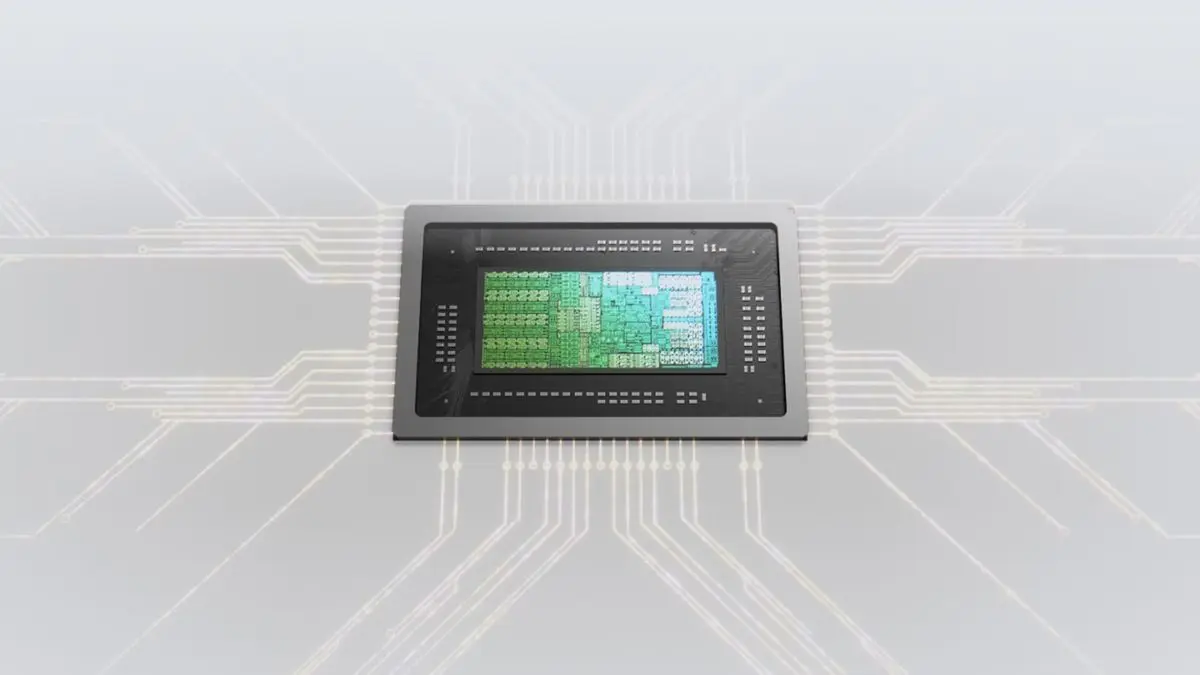
. Unlike typical Windows laptops with Neural Processing Units and Copilot branding that offer limited on-device AI capabilities, the RTX Spark superchip integrates a 20-core Grace Arm-based CPU with a Blackwell RTX GPU featuring 6,144 CUDA cores and fifth-generation Tensor Cores with FP4 precision1
. Built in close partnership with Microsoft and showcased across Microsoft Surface hardware, this ARM-based laptops solution supports up to 128GB of LPDDR5X memory in a 45-80W power envelope, with Nvidia claiming up to 1 petaflop AI performance1
.
Source: New Atlas
Unified Memory Architecture Tackles Creator Workflow Bottlenecks
The unified memory architecture stands as RTX Spark's defining feature, addressing a persistent problem that has plagued desktop and laptop GPUs when running AI models locally
2
. This massive shared memory pool enables the platform to accommodate immense localized AI models, multi-agent systems, sprawling 3D scenes, 12K video timelines, and heavy Unreal Engine 5 projects without the out-of-memory errors that typically plague standard laptops1
. The NVLink-C2C connection between CPU and GPU facilitates this seamless data flow, creating an architecture conceptually reminiscent of Apple's MacBook Pro approach but layered with Nvidia's CUDA, RTX, DLSS, TensorRT, and Windows ecosystem1
. For professionals running local LLMs, 3D rendering, video exporting, and image editing workloads, the majority of heavy lifting will be handled by the Blackwell GPU thanks to supporting the entire Nvidia stack2
.Gaming Performance Positions RTX Spark as Apple Silicon and Qualcomm Competitor
Gaming continues to be a weakness for both Apple Silicon and Snapdragon platforms, with only decent experiences possible by spending top-tier funds on configurations like the Apple M5 Max
2
. Nvidia claims the RTX Spark's Blackwell GPU can achieve 100FPS at 1440p resolution in current AAA titles, with demos involving PRAGMATA and Alan Wake 2 providing early validation2
. The platform includes DLSS 4.5, Multi Frame Generation supporting up to 6x frame interpolation, Reflex, and Ray Reconstruction—placing it miles ahead of what Apple and Qualcomm have brought to the table1
2
. In Cyberpunk 2077 testing, a three-year-old laptop RTX 4090 outperformed both the top-tier M5 Max and Snapdragon X2 Elite Extreme2
. A 14-inch M5 Max MacBook Pro with 18-core CPU and 40-core GPU retails for $4,099, making its gaming performance particularly disappointing compared to previous-generation Nvidia hardware2
. Frame Generation technologies and AI-powered DLSS ensure RTX Spark delivers playable framerates with upscaling and interpolation, addressing VRAM shortages that have limited traditional discrete GPU configurations2
.
Source: Wccftech
Related Stories
Windows on Arm Compatibility Questions Remain
While RTX Spark presents compelling hardware specifications, several unknowns persist around Windows on Arm compatibility, Prism emulation for non-native games, anti-cheat support, compatibility with older PC titles, power limits, and real-world benchmarks outside of controlled demos
1
. Despite featuring altered Cortex-X925 cores, Nvidia is using two-year-old ARM designs, which places it at a compute performance disadvantage compared to the M5 Max and Snapdragon X2 Elite Extreme2
. However, for the kind of work users will perform on RTX Spark laptops—where the Blackwell GPU handles the majority of intensive tasks—this CPU performance gap will likely prove negligible during everyday use2
. Traditional gaming laptops with discrete RTX GPUs and dedicated GDDR7 VRAM remain the safer bet for raw gaming performance, broad compatibility, and probably price1
.Market Positioning and Availability Target Premium Segment
The first wave of RTX Spark systems arrives later this year from major manufacturers including Microsoft Surface, Lenovo, Dell, ASUS, HP, MSI, and others
1
. Early positioning leans toward creator, premium, and business-style designs rather than obvious ROG or Legion-style gaming machines1
. Pricing remains unclear, but if the DGX Spark AI PC provides any indication, these systems won't be cheap1
. For comparison, Qualcomm's Snapdragon X2 Elite Extreme appears in laptops like ASUS's Zenbook A16 retailing for $1,999 on Amazon—less than half the price of an M5 Max MacBook Pro2
. With just one launch, Nvidia can potentially take away Apple's and Qualcomm's customer base, particularly among professionals who need both AI workload capabilities and credible gaming performance in a single device2
.References
Summarized by

Navi
Related Stories
Nvidia RTX Spark AI Superchip Brings 100 FPS Gaming to Ultra-Thin Laptops This Fall
25 Aug 2026•Technology
Microsoft's RTX Spark Dev Box targets AI developers, but raises questions about accessibility
04 Jun 2026•Technology

Nvidia enters Arm-based PC market with RTX Spark chip targeting AI workloads and gaming
26 May 2026•Technology
Recent Highlights



Recent Highlights
Today's Top Stories






Don’t drown in AI news. We cut through the noise - filtering, ranking and summarizing the most important AI news, breakthroughs and research daily. Follow topics that matter to you and stay ahead.


