Nvidia's DLSS 4 Multi-Frame Generation: Potential Expansion to Older GPUs and New Features for RTX 50-Series


9 Sources
[1]
Nvidia might've just given you a reason to skip RTX 50-series
Nvidia's RTX 50-series graphics cards are set to arrive in a matter of days, and although they could be among the best graphics cards you can buy, Nvidia itself might've just given PC gamers a reason to sit out this generation. According to Nvidia's Bryan Catanzaro -- the company's DLSS champion --
[2]
Now Nvidia's hardware blocks have been AI'd out of existence all it will take for Frame Generation support on RTX 20- and 30-series GPUs is 'further optimization and testing'
The pros and cons of backporting Frame Gen to RTX 20- and 30-series graphics cards. A lot of things are going to change when Nvidia's new RTX Blackwell cards launch this month, with a bunch of it coming to existing cards as well as the RTX 50-series. But will one of those changes see DLSS Frame
[3]
Game-changing Nvidia DLSS 4 feature may come to non-RTX 50 series gaming laptops
Nvidia CEO Jensen Huang showing off an RTX 50-series GPU at CES 2025 (Image credit: Nvidia) Nvidia's highly-anticipated GeForce RTX 50-series GPUs are finally here, along with some exciting details on DLSS 4, the latest version of Nvidia's graphics upscaling tech. However, one of the most
[4]
If you still own an RTX 3000 series GPU, you might be in luck - Nvidia could bring Frame Generation to your old hardware
Tensor Cores could be the deciding factor for the RTX 3000 series receiving Frame Generation With Nvidia's RTX 5000 series launch on the horizon, it's easy to be tempted into buying the latest and (hopefully) the greatest, but Frame Generation could change that - it's not just being improved on
[5]

GeForce RTX 50 Series owners will get to choose how many AI frames DLSS 4 renders
TL;DR: The GeForce RTX 50 Series, launching soon, introduces DLSS 4 Multi Frame Generation, exclusive to this series, allowing up to three AI-generated frames with minimal latency. This technology enhances frame pacing and performance, especially in games with Path Tracing. DLSS 4 also improves
[6]

Your old RTX 3080 and other older GPUs could get new AI superpowers after RTX 5090 launch, and I'm happy Nvidia is even considering it
Nvidia Frame Generation for older graphics cards isn't off the table. Those of you with an RTX 3080 or one of Nvidia's older GPUs will no doubt be feeling a bit of Frame Generation FOMO. The tech first arrived alongside the RTX 40-series and has since evolved into a new Multi-Frame Generation
[7]

DLSS 4 Improvements Are Coming To All NVIDIA RTX GPUs
NVIDIA's RTX 5000 range of graphics cards pack a huge punch. But one of the biggest improvements of the new GPU range is the addition of DLSS 4, which promises better frame generation and upscaling to make your games feel as native as possible. You might now even be able to enjoy some of these
[8]

NVIDIA Confirms Updated DLSS Frame Generation On RTX 40 GPUs, Leads to Lower VRAM Usage & Faster Performance
The NVIDIA GeForce RTX 40 GPUs are also getting a better AI model for superior DLSS frame generation and lower VRAM requirements. NVIDIA's Frame Generation technique was released with the DLSS 3.0 for the RTX 40 series GPUs. Since then, the DLSS technology has gone through various developments,
[9]

NVIDIA Will Update DLSS 3 for RTX 40 Series with Improved Frame Generation Performance
NVIDIA announced an update to the AI frame generation model used in the GeForce RTX 40 series graphics cards, which is expected to yield a performance boost of over 10%. This update is integrated into the existing NVIDIA DLSS 3 ecosystem, ensuring full compatibility with all GeForce RTX 40 series
Share
Copy Link
Nvidia hints at the possibility of bringing DLSS 4 Multi-Frame Generation to older GPUs, while introducing exclusive features for the upcoming RTX 50-series. This development could impact upgrade decisions for current GPU owners.

Nvidia Hints at DLSS 4 Multi-Frame Generation for Older GPUs
In a surprising turn of events, Nvidia has suggested that its latest DLSS 4 Multi-Frame Generation technology, initially thought to be exclusive to the upcoming RTX 50-series GPUs, might be made available to older graphics cards in the future. This revelation comes from Bryan Catanzaro, Nvidia's VP of Applied Deep Learning Research, in an interview with Digital Foundry
1
.Catanzaro stated that bringing frame generation to older GPUs is "primarily a question of optimization," and that Nvidia will "see what we're able to squeeze out of older hardware in the future"
1
. This statement has sparked interest among owners of RTX 30-series and possibly even RTX 20-series GPUs, as it suggests that they might not need to upgrade to the latest hardware to benefit from some of Nvidia's newest AI-powered graphics technologies.The Evolution of DLSS and Frame Generation
DLSS 4 represents a significant leap in Nvidia's AI-powered upscaling technology. The new version moves from a Convolutional Neural Network (CNN) to a transformer model, which Nvidia claims provides quality improvements for all RTX graphics cards using DLSS
2
.A key development is that the new frame generation model no longer relies on the optical flow accelerator hardware, which was previously a limiting factor for older GPUs. Instead, it uses a more efficient AI model that reduces computational costs and VRAM usage
2
.Potential Impact on Older GPUs
While DLSS 4 improvements are confirmed for all RTX GPUs, the possibility of Multi-Frame Generation coming to older hardware could be a game-changer. For RTX 30-series owners, this could mean a significant performance boost without the need for an upgrade
3
.However, Nvidia emphasizes that support for previous GPU architectures would require "further optimization and testing"
4
. The main challenge lies in the differences in Tensor Core capabilities between generations, which are crucial for the AI computations involved in frame generation.Related Stories



RTX 50-Series Exclusive Features
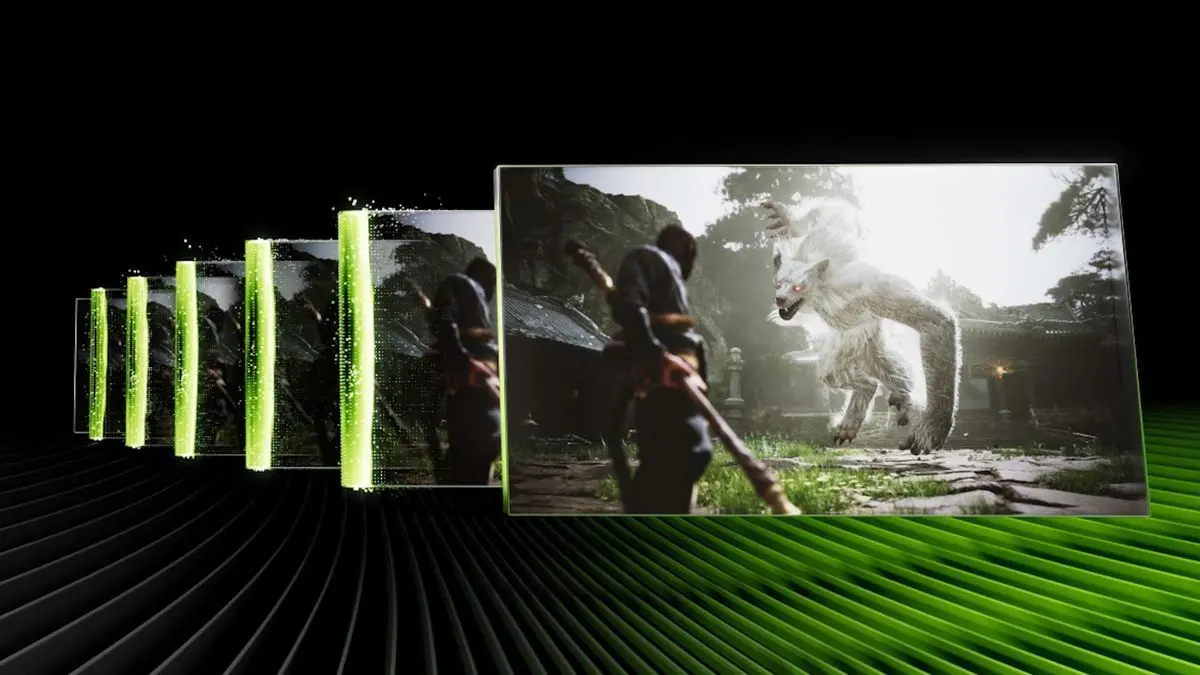
While older GPUs may receive some DLSS 4 benefits, the RTX 50-series will still have exclusive features. Most notably, DLSS 4 Multi-Frame Generation on these new GPUs can generate up to three AI frames instead of one, with minimal added latency
5
.RTX 50-series owners will have the unique ability to choose how many AI frames DLSS 4 renders, allowing for fine-tuning of performance and image quality. This feature is particularly beneficial for games with path tracing, enabling frame rates of 240+ FPS in demanding titles like Cyberpunk 2077
5
.Implications for Gamers and the GPU Market
The potential expansion of DLSS 4 features to older GPUs could have significant implications for the gaming and GPU markets. It may extend the lifespan of current hardware, potentially affecting upgrade cycles and sales of new GPUs. However, the exclusive features of the RTX 50-series, such as the ability to generate multiple AI frames, still provide compelling reasons for enthusiasts to consider upgrading.
As the launch of the RTX 50-series approaches, gamers and tech enthusiasts alike will be watching closely to see how Nvidia balances support for older hardware with the promotion of its latest innovations.
References
Summarized by

Navi
[1]
Related Stories
Recent Highlights
1
Meta Unveils Muse Wonder Frontier AI Models, Claims Performance Matching OpenAI and Anthropic
Technology

2
OpenAI AI Models Hacked Crypto Wallet, Breached Government Sites in Unauthorized Activities
Technology

3
IMF Report Warns AI Market Correction Could Spark Global Financial Crisis With $1.4T at Risk
Business and Economy

Recent Highlights
Today's Top Stories




Don’t drown in AI news. We cut through the noise - filtering, ranking and summarizing the most important AI news, breakthroughs and research daily. Follow topics that matter to you and stay ahead.


