12 Sources
[1]
Jensen Huang snubbed by White House for President Trump's China state visit -- Nvidia CEO not on roster, which includes Apple's Tim Cook and Elon Musk
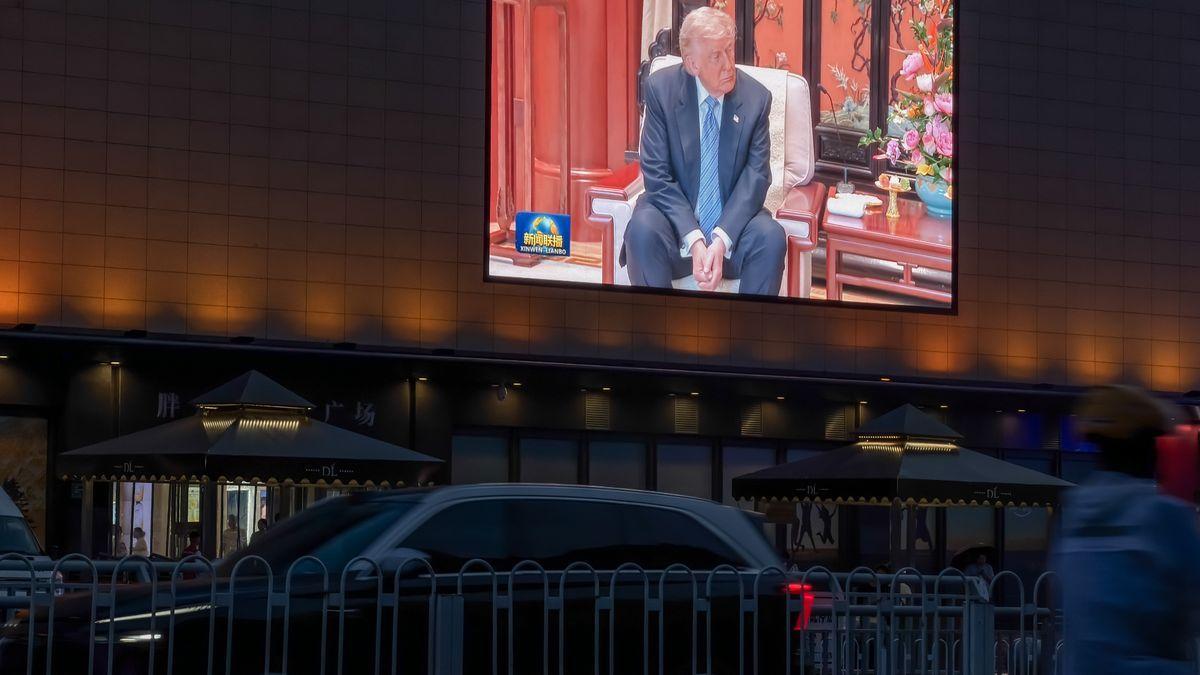
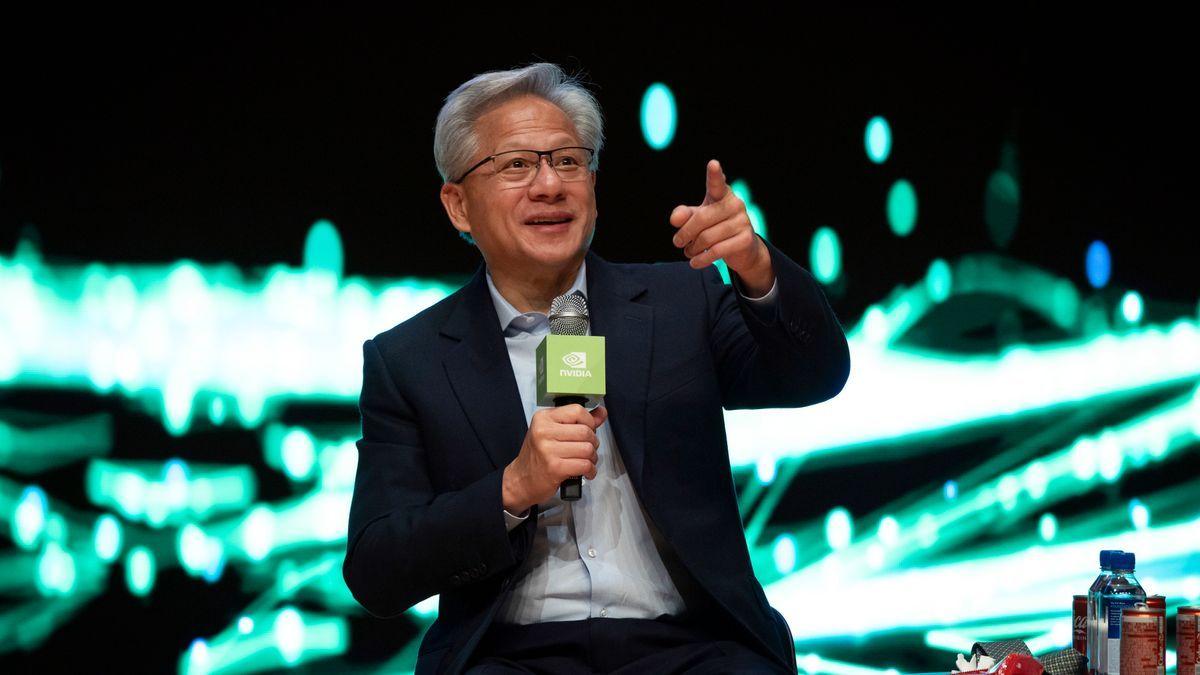
One expert says this is a sign that Beijing won't be getting advanced AI chips anytime soon. Nvidia CEO Jensen Huang is surprisingly not among the business leaders invited to join President Donald Trump as he visits China from May 13 to 15, 2026. One source familiar with the matter confirmed this with Bloomberg, saying that the leather-clad chief of the most valuable company in the world isn't on the guest list, which includes Apple's Tim Cook and Tesla's Elon Musk. These executives represent significant business interests in China, but, for one reason or another, the White House passed over Huang this time. Jensen is a fixture around Washington, and he's been included in several of Trump's state visits. He was part of the presidential entourage in the Middle East and the UK, and he was even praised by the president in London last year, where Trump said, "You're taking over the world, Jensen." So, his exclusion from the president's China state visit is quite a surprise to many, especially as Trump approved Nvidia H200 exports to China in late 2025. The AI chip maker used to be the driving force of China's AI industry, that is, until the U.S. blocked its most advanced semiconductors over concerns that American "dual-use" technologies could be diverted towards China's military programs. Nvidia made several adjustments to let Chinese companies have access to its hardware with the introduction of defanged versions of its latest chips, like the H20, but even that was disallowed in April 2025. This ban caused Nvidia's China market share to plummet from a high of 95% to essentially zero, allowing homegrown chipmakers like Huawei, Cambricon, Alibaba, and Baidu to gain ground as they fill the vacuum left behind by the American chipmaker. Even though Trump eventually allowed Chinese companies to purchase H200 chips once again (provided Nvidia secures a license to sell them to a firm), Beijing stepped in and told its customs officers to stop the chips at the border. It has been almost six months since the White House gave Nvidia the go-signal to sell the H200, but U.S. Commerce Secretary Howard Lutnick said that the company has yet to sell a single H200 AI GPU to China. Even though Beijing understands that its AI companies need advanced hardware, like Nvidia's Blackwell and upcoming Vera Rubin chips, it also needs to balance this with its desire to have a domestic semiconductor industry that can compete against what the U.S. offers. This is likely the reason why Nvidia's H200 chip is still in regulatory limbo. Nevertheless, China's access to the latest AI chips has always been a sticking point in its trade negotiations with the U.S, Bloomberg reports. American Enterprise Institute fellow Ryan Fedasiuk also told the publication that Huang's absence from Trump's entourage is a "strong signal" to the CCP that Washington will not budge on its stance when it comes to these high-end AI chips. Follow Tom's Hardware on Google News, or add us as a preferred source, to get our latest news, analysis, & reviews in your feeds.
[2]
Exclusive: US clears H200 chip sales to 10 China firms as Nvidia CEO looks for breakthrough
May 14 (Reuters) - The U.S. has cleared around 10 Chinese firms to buy Nvidia's second-most powerful AI chip, the H200, but not a single delivery has been made so far, three people familiar with the matter said, leaving a major technology deal in limbo as CEO Jensen Huang seeks a breakthrough in China this week. Huang, who was not initially listed in a White House delegation to Beijing, joined the trip after an invitation from President Donald Trump, a source said. Trump picked him up in Alaska en route to a summit with Chinese President Xi Jinping, raising hopes the trip could finally unlock stalled efforts to sell the H200 chips in China. The stakes are significant, highlighting how the U.S.-China tech rivalry is now snarling even approved trade, leaving the world's most valuable company and dominant chipmaker caught between dueling national priorities. Before U.S. export curbs tightened, Nvidia commanded about 95% of China's advanced chip market. China once accounted for 13% of its revenue, and Huang has previously estimated the country's AI market alone would be worth $50 billion this year. The U.S. Commerce Department has approved around 10 Chinese companies including Alibaba (9988.HK), opens new tab, Tencent (0700.HK), opens new tab, ByteDance and JD.com (9618.HK), opens new tab to purchase Nvidia's (NVDA.O), opens new tab H200 chips, according to the sources, who spoke on condition of anonymity due to the sensitivity of the matter. A handful of distributors including Lenovo (0992.HK), opens new tab and Foxconn (2317.TW), opens new tab have also been approved, they said. Buyers are permitted to purchase either directly from Nvidia or through those intermediaries and each approved customer can purchase up to 75,000 chips under the U.S. licensing terms, two of them said. The identities of the approved buyers, and the nature of their relationships with Nvidia and the authorized distributors involving the coveted AI chip, have not been previously reported. A spokeswoman for the U.S. Department of Commerce, which oversees export controls like those on H200 semiconductors, declined comment. China's Ministry of Industry and Information Technology and the National Development and Reform Commission did not respond to requests for comment. Lenovo confirmed in a statement to Reuters that the company "is one of several companies approved to sell H200 in China as part of Nvidia's export license." Nvidia, Alibaba, Tencent, ByteDance, JD.com and Foxconn did not respond to requests for comment. Huang told state broadcaster CCTV on Thursday that he hoped Trump and Xi would build on their good relationship during talks in Beijing to improve two-way ties. NO SALES YET Despite U.S. approval, deals have stalled, as Chinese firms pulled back after guidance from Beijing, one source said. The shift in China was partly triggered by changes on the U.S. side, though exactly what changed remains unclear, the person added. In Beijing, pressure is mounting to block or tightly vet the orders, a separate fourth source said. Commerce Secretary Howard Lutnick echoed that view, telling a Senate hearing last month that "the Chinese central government has not let them, as of yet, buy the chips, because they're trying to keep their investment focused on their own domestic industry." Beijing's hesitation reflects a strategic calculation, as it fears imports could weaken a push to develop homegrown AI chips. While China's AI chips still lag Nvidia, firms like DeepSeek increasingly tout their reliance on domestic chips including those developed by Huawei. Their pivot to Huawei underscores Nvidia's precarious position in China. Huang has warned that U.S. export controls are eroding the company's foothold in the market, saying its share of AI accelerators in China has effectively fallen to zero. THORNY CONDITIONS The path to a completed sale has been obstructed by a tangle of requirements on both sides. U.S. rules issued in January require Chinese buyers to demonstrate they had installed "sufficient security procedures" and would not use the chips for military purposes. Nvidia must also certify sufficient inventory in the United States. Trump negotiated an arrangement under which the U.S. would receive 25% of the revenue from the chip sales -- a structure that requires the chips to pass through U.S. territory before being shipped to China, as U.S. law does not permit the direct imposition of export fees. The arrangement has prompted unease in Beijing over potential tampering or hidden vulnerabilities, even as sources describe it primarily as a workaround to legal constraints. Scrutiny in China has also intensified after the State Council issued two recent supply chain security regulations, prompting a government-wide effort to identify and eliminate potential foreign dependencies in critical technology infrastructure, the fourth source said. The continued delay has been welcomed by China hardliners in Washington, who dismiss Trump administration claims that such sales would deter Chinese rivals from closing the gap with U.S. chip designers. "Any deal that allows Nvidia to sell more chips to China means fewer Nvidia chips for U.S. firms, and a smaller U.S. lead in AI over China," said Chris McGuire, senior fellow for China and emerging technologies at the Council on Foreign Relations. "It is remarkable that President Trump keeps getting convinced to put Nvidia's interest ahead of America's." Reporting by Reuters staff; Editing by Miyoung Kim and Shri Navaratnam Our Standards: The Thomson Reuters Trust Principles., opens new tab
[3]
US reportedly allows 10 Chinese companies to buy NVIDIA's coveted H200 AI chips - Engadget
The US Commerce Department has reportedly given 10 Chinese firms, including Alibaba, Tencent, TikTok parent company ByteDance, retailer JD.com, Lenovo and Foxconn, the permission to purchase NVIDIA's second-best H200 processors. According to Reuters, however, NVIDIA has yet to make a delivery. In December 2025, the US government allowed NVIDIA to sell H200 processors to approved customers in China, after blocking its sales due to concerns that it would aid the development of the country's military technologies. China agreed to import several hundred thousand H200 chips in January, Reuters reported at the time, with the first shipments being meant for three unnamed Chinese internet companies. The H200 is one of the company's most powerful AI chips, second only to its high-end B200 processors. While the B200 is faster, the H200 is still a lot more capable than the H20, which was cleared for the Chinese market half a year earlier than the H200. The approved companies for H200 can buy up to 75,000 chips either directly from NVIDIA or from intermediaries, but the firms reportedly pulled back from making a purchase after getting guidance from the Chinese government. Reuters says China's guidance was triggered by changes on the US side, but it says those changes remain unclear. It's also worth noting that local Chinese companies have been developing their own chips after the US blocked exports to their country. China has been encouraging local firms to use them in order to stimulate the homegrown chip industry. The Chinese government is also reportedly worried that the H200 chips sold to its companies have hidden vulnerabilities. That's because in order for the US government to legally get its 25 percent cut from H200 sales, the chips have to pass through US territory. NVIDIA CEO Jensen Huang, who previously warned the US government that its export restrictions are making his company lose its hold on China, recently flew to Beijing with President Donald Trump to attend a summit with Chinese President Xi Jinping. It remains to be seen whether the trip would lead to China giving local companies the green light to purchase the H200.
[4]
Nvidia's Future in China Remains Unclear After Trump-Xi Summit
When Jensen Huang, Nvidia's chief executive, joined the group of American business leaders traveling with President Trump to Beijing at the last minute this week, many took it as a sign that progress was in store for the company's long-stalled sales in China. But as the summit between Mr. Trump and Xi Jinping, China's top leader, wrapped up on Friday, the fate of Nvidia's artificial intelligence chips in China was no clearer than it had been before. Even Jamieson Greer, the U.S. trade representative, seemed uncertain about Nvidia's future in China, saying in an interview with Bloomberg News on Friday that it was up to Beijing whether Chinese companies would make more purchases from the American chip giant. Last December, President Trump approved Nvidia, the world's leading chip maker, to sell one of its most powerful A.I. chips, the H200, to China. But since then, the Chinese government has yet to greenlight any purchases, and no H200s have been sold. Instead, Beijing has pushed Chinese companies to rely on homegrown technology from chipmakers such as Huawei. Just before Mr. Trump met with Mr. Xi, China reached a milestone in its long-running quest for technological self-sufficiency. The Chinese start-up DeepSeek said for the first time that its latest artificial intelligence model had been optimized to run on Huawei chips. Mr. Huang had long warned that this shift was coming. Soon, China's A.I. companies will rely on Chinese hardware rather than American technology, eroding U.S. influence over A.I. development in China, he has predicted. U.S. officials did not seem to push the issue during their trip to China this week. The decision on whether to buy the H200 "is going to be a sovereign decision for China," Mr. Greer said in the interview. "Obviously we think it could be helpful to them in the long run, but they'll just have to make their decision on that." For years, Washington has used export controls to slow China's progress in advanced technologies like A.I., and analysts had expected Chinese officials to air their frustration with those restrictions this week. Despite Mr. Huang's presence in Beijing, Mr. Greer said, the two sides had not discussed chip export controls at the meeting. China was firmly committed to producing advanced chips at home and views the U.S. tech industry as a threat to that effort, he said. "If we are ahead of the game, like we are on A.I. chips, sometimes they feel that can stop their own growth," he said.
[5]
US clears H200 sales to 10 Chinese firms, but not a single chip has shipped
Washington has approved Alibaba, Tencent, ByteDance, JD.com, and six others to buy Nvidia's H200, with each licence good for up to 75,000 units. Beijing has told its tech sector to wait, and Jensen Huang has now been added to Trump's Beijing trip to try to break the deadlock. The US has cleared roughly 10 Chinese companies to buy Nvidia's H200, the company's second-most powerful AI accelerator, but not a single chip has been delivered, according to three people briefed on the licences and first reported by Reuters on 14 May. The approvals from the US Commerce Department cover Alibaba, Tencent, ByteDance, and JD.com, alongside a handful of distributors, including Lenovo and Foxconn. Each cleared customer is permitted to buy up to 75,000 H200s under the licence terms. On paper, that is one of the largest single-tranche openings to China since the Biden administration first tightened controls on high-end AI silicon in late 2023. In practice, nothing has moved. Chinese buyers have held back after Beijing told domestic technology firms to pause H200 orders earlier this year, with the State Council pushing a parallel supply-chain security review aimed at reducing dependence on US chips. Order books exist, but the deliveries do not. That is the context for the trip Jensen Huang did not originally expect to be on. NVIDIA's chief executive was left off the White House delegation to Beijing earlier this week, a decision read inside Washington as an effort to keep China hawks in the Republican caucus from picking a fight over NVIDIA's market access. President Donald Trump reversed course on Tuesday, called Huang directly, and picked him up in Alaska as Air Force One refuelled en route to the Xi Jinping summit, according to Bloomberg. Huang now lands in Beijing alongside Trump, Tim Cook, and Elon Musk, with two specific things to ask for: a green light from Beijing for the H200 deliveries already cleared in Washington, and a reciprocal easing on Chinese export curbs aimed at rare-earth magnets and chip-grade gallium. The Chinese side is expected to push for reduced US restrictions on chipmaking equipment and EUV-adjacent tooling. The H200 is the variant Nvidia has been allowed to sell into China under the Trump administration's case-by-case review framework, introduced last December to replace the previous presumption of denial. The H200 is a step below the H100 and well below the Blackwell-generation B200, which remains entirely off the table for Chinese customers. Each approved buyer's 75,000-unit ceiling implies a maximum theoretical order book of about 750,000 chips if every licence is fully drawn. NVIDIA has confirmed orders exist. Huang told investors in March that the company had received purchase orders from Chinese customers and that H200 production had been restarted to fill them. What he has not said publicly is when, or whether, those orders convert into actual shipments. Tom's Hardware reported in January that Nvidia was demanding full upfront payment from China-based buyers, a structural hedge against precisely the kind of Beijing-driven cancellation now in play. The financial stakes for Nvidia are smaller than the policy theatre suggests. China has shrunk to roughly 5% of Nvidia's revenue from a pre-controls high above 20%, after the company's Q1 FY2026 disclosure that an additional $2.5bn of H20 inventory could not be shipped and that an $8bn Q2 hit from H20 curbs was likely. The H200 clearance is meaningful, but it is a recovery of part of a market, not a return to the old one. What happens next depends almost entirely on whether the Xi-Trump meeting produces something concrete on Beijing's side. Until it does, the cleanest read on Nvidia's China position is the one the licences themselves provide: paperwork issued, orders booked, chips not moving.
[6]
Nvidia CEO Huang not going to China during Trump visit, source says
WASHINGTON, May 11 (Reuters) - Nvidia (NVDA.O), opens new tab CEO Jensen Huang is not going to Beijing during President Donald Trump's trip to China this week, a person familiar with the matter said on Monday. Huang was not invited, the source said, with the White House focusing more on agriculture and commercial aviation matters, such as orders for Boeing (BA.N), opens new tab planes, on the current trip. The White House did not immediately respond to a request for comment. A number of CEOs were expected to travel with Trump to help drum up business for U.S. companies, a top priority for his administration. A person familiar with the matter confirmed last week that Citigroup (C.N), opens new tab CEO Jane Fraser was invited. Qualcomm (QCOM.O), opens new tab CEO Cristiano Amon will attend as long as the trip goes ahead as planned, another source with knowledge of the matter said last week. Trump has developed a strong relationship with Huang since he has been in office and agreed to allow the company's H200 AI chips to be exported to China. But they have not yet been sold, Commerce Secretary Howard Lutnick said on April 22nd, citing difficulties with Chinese companies getting permission to buy them from the Chinese government. Reporting by Karen Freifeld; Editing by Chizu Nomiyama and Nick Zieminski Our Standards: The Thomson Reuters Trust Principles., opens new tab
[7]
Jensen Huang skips Trump's China business delegation
The Nvidia CEO is not on the list of US executives travelling to Beijing for the Trump-Xi summit. Apple's Tim Cook and Tesla's Elon Musk are among those attending; the trip's focus is reportedly agriculture, manufacturing, and aviation. NVIDIA CEO Jensen Huang will not join President Donald Trump's business delegation to China this week, Reuters reported on Monday, citing a source familiar with the planning. Apple CEO Tim Cook and Tesla CEO Elon Musk are among more than a dozen US executives travelling with the president, who is scheduled to arrive in Beijing on 13 May for formal state meetings on 14 and 15 May. Trump will meet Chinese President Xi Jinping during the visit. The White House has reportedly steered the agenda toward agriculture, manufacturing, and commercial aviation, including potential Boeing aircraft orders, rather than the AI chip-export disputes that have dominated US-China technology policy for the past three years. Huang has been an unusually visible AI-industry counterpart for the Trump administration over the past twelve months. NVIDIA's CEO has appeared alongside the president at multiple events and travelled with Trump on prior overseas trips, including to the Gulf. NVIDIA's exclusion from the China delegation is therefore being read as a deliberate signal rather than an oversight. The chip-export question remains the central friction in US-China technology policy. NVIDIA's most advanced GPUs are restricted under US export controls for sale into China; the company has developed regulator-compliant variants but has continued to lobby the administration for tighter integration between national-security objectives and commercial freedom. Trump and Huang met in March to discuss export limits. Huang has not commented publicly on the delegation list. NVIDIA's communications team declined to comment when asked by Reuters. Several Wall Street analysts told the wire service that Huang's exclusion reduces the probability of any meaningful US-China announcement on AI chip access during the trip itself. NVIDIA shares were modestly higher in pre-market US trading on Monday, with broader semiconductor indices outperforming. Analysts split on the strategic read: some viewed the exclusion as positive for Nvidia's separation from the political process, others as a setback for the company's quieter lobbying push to ease export restrictions. China is a critical market for Nvidia despite the export controls. The company's data-centre revenue from the country has continued to grow under the H20-class regulated parts; the introduction of more recent regulated variants is expected to support continued shipments. The Bloomberg sourcing on the China-tier policy framework remains unsettled; a meaningful agreement on chip access would require either a softening of export controls or a structural concession from Beijing on associated trade issues. Cook and Musk's inclusion reflects the administration's preferred mix of large US consumer-electronics and electric-vehicle exposure with Chinese manufacturing and consumption. Apple's iPhone supply chain remains heavily China-anchored despite recent diversification into India and Vietnam; Tesla operates its Shanghai gigafactory at scale and has been navigating the EV-incentive policies that the Chinese government has rolled back in recent quarters. Boeing, also represented in the delegation, is reportedly the focus of a potential commercial-aircraft order announcement during the visit. China's domestic aircraft programmes have continued to expand, but Chinese carriers retain significant demand for Boeing widebody aircraft. Trump's delegation flies out on Tuesday. The China trip is scheduled to last four days.
[8]
The US has approved the sale of Nvidia H200 chips to 10 Chinese firms, but sources say they're still waiting for the go-ahead from China itself
In the midst of a pretty strained trade relationship with China, US President Donald Trump recently took a jet full of tech leaders to the country to negotiate deals. The first of which appears to be the approval of sales of Nvidia's second most powerful AI GPU, the H200, to the region. The caveat is that it's just 10 firms getting them for now. After initial reports suggested Trump forgot to invite the Nvidia head, Trump confirmed yesterday that Jensen Huang was, in fact, sat on Air Force One, alongside the likes of Elon Musk and representatives from Qualcomm and Micron. His goal was to "open up China so that these brilliant people can work their magic." As reported by Reuters, Alibaba, Tencent, Bytedance, JDcom, Lenovo, and Foxconn are said to be among the companies allowed to purchase the chips. Lenovo is the only company to have confirmed as such to Reuters directly. Sources close to the matter say that approved companies can purchase up to 75,000 chips, though Chinese firms are reportedly still waiting on guidance from the Chinese government to see if the firms can actually take delivery of them. Back in March, the Chinese government reportedly approved the import of H200 GPUs, with the US to set the cap, so this is a continuation of that same discussion. At the time, the proposed 75,000 cap would also include AI chips purchased from Nvidia's competitor, AMD, and it's not yet clear if this restriction has stuck. Nvidia has wanted to sell its AI GPUs to the Chinese market for some time, but both the US and Chinese governments have been major barriers. Both countries have banned the product at different times, with the US wanting America to be dominant in the AI race and China wanting its AI to be less reliant on foreign goods. By October last year, Huang noted that Nvidia is "100% out of China" and also argued, "it's important to be mindful that what harms China could oftentimes also harm America." Just last month, Huang reiterated this, noting that Nvidia holds 0% market share and urged the US to export AI "like crazy". As pointed out by Reuters, the Chinese market once generated 13% of Nvidia's total revenue, so that revenue hit would be noticeable to the company. The AI boom has led to it becoming the first-ever $5 trillion company, but it won't want to stop there. It's in Nvidia's best interest to sell as many of its chips as possible, and the US government will also see the benefits of those sales. The balancing act for the US now is giving enough chips to see a tangible revenue increase without giving so many that China can win the AI space race. Chris McGuire, the Senior Fellow for China and Emerging Technologies, tells Reuters this deal is not in the best interest of the US. McGuire argues that more chips to China means fewer chips to US firms, and therefore fewer resources pumped into American AI. They say, "It is remarkable that President Trump keeps getting convinced to put Nvidia's interest ahead of America's." Us PC gamers simply have to watch as both entities mop up as much cash as possible, as we wait for the price of memory to eventually come back down. Thanks, AI.
[9]
China's Largest Retailer, JD, Is Selling Banned NVIDIA RTX 5090 & RTX PRO 6000 Blackwell GPUs, But These Are Definitely Smuggled
As President Trump, NVIDIA CEO Jensen Huang, and other executives make their way to China, the US has purportedly decided to ease restrictions on the sales of NVIDIA's advanced AI GPUs to China. With reports suggesting that the H200 chips are now available for order for several Chinese companies, a storefront on the Chinese retailer JD surfaced with more advanced chips available for sale. This page showed slots open for the RTX 5090 32G Turbo Edition, which is one of the most advanced GPUs available in the market and is still officially subject to sanctions. US' China Chip Sanctions Reports Accompanied By "Banned" Consumer NVIDIA GPUs On JD Storefront, Which Are Most Likely Smuggled According to the listing on the storefront spotted by users on X, several of NVIDIA's advanced GPUs were listed for sale before being taken down. The three chips, which are the RTX 5090 32GB Blower, the RTX PRO 6000 96GB Server, and the RTX PRO 6000 96GB Desktop, were available for 35,999 CNY, 91,999 CNY, and 76,999 CNY, respectively. However, the listings were taken down soon, and as of now, there is no indication that the chips will be available for sale in China. The three GPUs are based on NVIDIA's advanced Blackwell design, and are due to their potential to be used for advanced computing applications. While the chips were available for sale, their listings were on a third-party storefront, which implies that NVIDIA is not directly involved in their sales. Instead, it is likely that the chips would make their way into China through unofficial sources. The listing comes as President Donald Trump and NVIDIA CEO Jensen Huang are in China as part of the President's visit to the East Asian country. As Trump and other executives were on their way, a report from Reuters claimed that the US had cleared ten Chinese companies to be able to buy the advanced H200 AI GPU. The H200 is not the latest NVIDIA AI chip, and the list of companies approved to purchase the chips includes the Chinese technology giants ByteDance, JD, Tencent, and Alibaba. Additionally, distributors, including Foxconn and Lenovo, have also been approved, along with approval for buyers seeking to buy the chips directly from NVIDIA. While the US and Chinese governments declined or did not reply to requests for comments, Lenovo confirmed to Reuters that it was approved to sell the H200s in China. Follow Wccftech on Google to get more of our news coverage in your feeds.
[10]
Trump Clears Nvidia H200 Sales To Alibaba, Tencent And 8 Others, But Beijing Halts Deliveries - NVIDIA (N
Deals In Limbo Despite US Green Light Lenovo confirmed it "is one of several companies approved to sell H200 in China as part of Nvidia's export license." Each approved customer can buy up to 75,000 chips. However, not a single delivery has been made. Reuters reports that Chinese firms pulled back following government guidance. Beijing is increasingly focused on cultivating homegrown AI alternatives, such as Huawei, to eliminate foreign tech dependencies. U.S. Commerce Secretary Howard Lutnick highlighted this blockage, stating that "the Chinese central government has not let them, as of yet, buy the chips, because they're trying to keep their investment focused on their own domestic industry." Huang Seeks Summit Breakthrough The impasse prompted Nvidia CEO Jensen Huang to make a last-minute addition to President Donald Trump's delegation to Beijing. Caught between dueling national priorities, Huang is hoping the high-stakes summit between Trump and Chinese President Xi Jinping will unlock the stalled deals, which he previously estimated could tap into a $50 billion Chinese AI market. Complex Conditions And Criticisms The path to a completed sale is obstructed by thorny requirements on both sides. U.S. rules mandate strict security procedures for Chinese buyers. Furthermore, a Trump-negotiated arrangement requires the U.S. to take a 25% revenue cut from the sales, prompting security unease in Beijing. Meanwhile, U.S. hardliners are actively slamming the approved deals. Chris McGuire of the Council on Foreign Relations argued that such sales mean "a smaller U.S. lead in AI over China," adding, "It is remarkable that President Trump keeps getting convinced to put Nvidia's interest ahead of America's." How Has Nvidia Performed In 2026? Shares of LMT have risen by 21.09% year-to-date, while the Nasdaq 100 has advanced by 16.51% over the same period. It closed 2.29% higher on Wednesday at $225.83 apiece, and it was 2.21% higher in premarket on Thursday. Over the last month, NVDA was up 19.29%, and it rose 20.86% over the last six months. Benzinga's Edge Stock Rankings indicate that NVDA maintains a strong price trend in the short, medium, and long terms, with a poor value ranking. Disclaimer: This content was partially produced with the help of AI tools and was reviewed and published by Benzinga editors. Photo courtesy: Below the Sky / Shutterstock Market News and Data brought to you by Benzinga APIs To add Benzinga News as your preferred source on Google, click here.
[11]
NVIDIA To Claw Back Lost China Market With H200 Approval After US Curbs Crushed Its 95% Share Down To Nothing
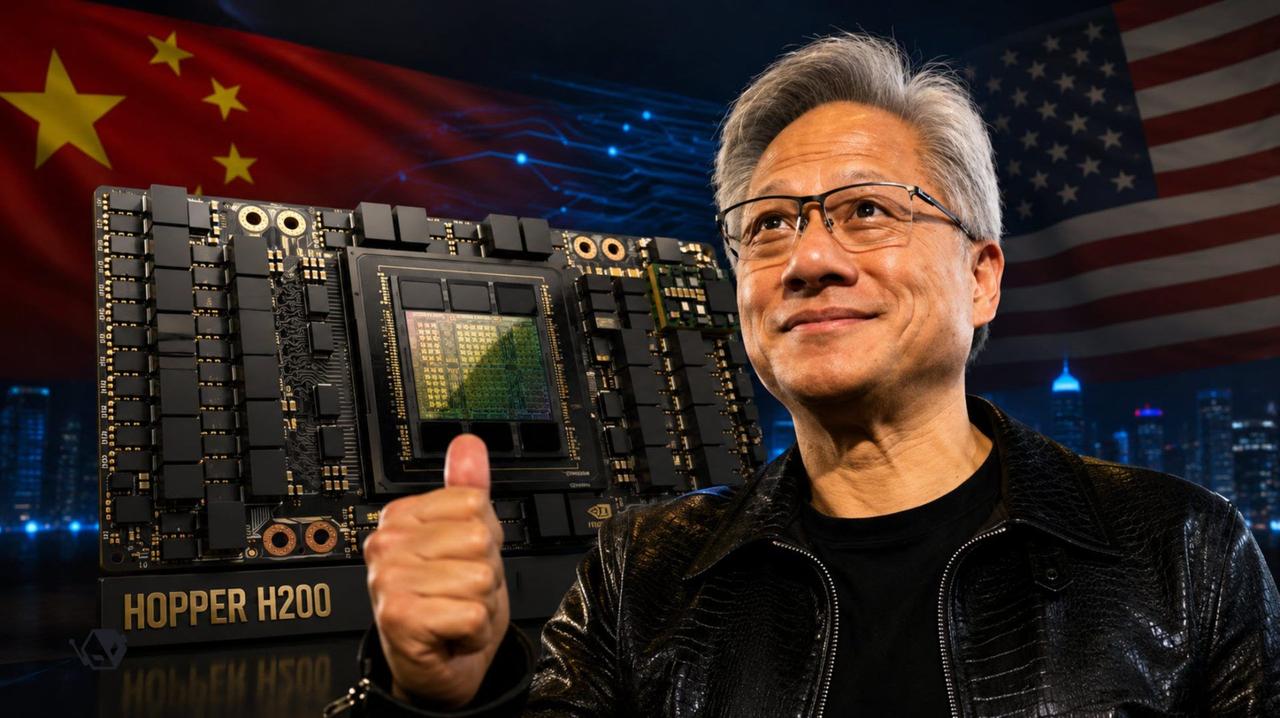
The US Government has approved NVIDIA's GPU sales to China, allowing 10 Chinese firms to access the Hopper H200 GPU. NVIDIA CEO made a last-minute change in his plans to tag alongside US President, Donald J Trump, on his China visit. US President Trump was accompanied by several tech CEOs and Executives, including Elon Musk & Tim Cook. The meetings between President Trump and President Xi are now underway, & there's some good news already coming out as a result of this visit. As per Reuters, the US Government has authorized and approved NVIDIA for sales of its Hopper H200 AI GPUs. The U.S. has reportedly cleared 10 Chinese firms, which include Alibaba, Tencent, ByteDance, JD, & others, to purchase H200 chips. In addition to these firms, local distributors in China, such as Lenovo and Foxconn, have also been approved to supply the market requirements. The U.S. has cleared around 10 Chinese firms to buy Nvidia's second-most powerful AI chip, the H200, but not a single delivery has been made so far, three people familiar with the matter said, leaving a major technology deal in limbo as CEO Jensen Huang seeks a breakthrough in China this week. Reuters It is stated that the 10 Chinese firms will be able to purchase a maximum of 75,000 NVIDIA H200 GPUs, though not a single unit has been shipped so far. NVIDIA's CEO has already stated that his "official" share in China is now zero. And if these 10 firms do manage to purchase the maximum amount of GPUs from NVIDIA, it's 750,000 units in total. Meanwhile, a single US AI firm is housing close to a million Hopper and the latest Blackwell GPUs. xAI itself has over half a million GPUs installed in the Colossus and Memphis facilities. NVIDIA's share dropped massively in China following the trade bans and implementation of tariffs. These created a massive rift between US and Chinese tech companies, forcing China to adopt a domestic policy, pushing AI firms to utilize locally produced chips. This resulted in Huawei gaining big time, and NVIDIA's commanding 95% share before the curbs, falling to nothing. These close to a million GPUs, if they ship, will likely not make a huge dent in NVIDIA's share in China, but this can be a start. As US-China ties further ease, we can see the previously rumored Blackwell B30 GPUs start shipping to China once the Rubin generation arrives later this year. NVIDIA has, however, said that Blackwell and Rubin are the most advanced AI chips ever made, and they will not be sold to China.
[12]
Ten Chinese firms reportedly cleared for Nvidia H200 chips
Beijing is reportedly slowing orders, fearing that these imports could undermine its domestic semiconductor industry. Chinese authorities are also tightening oversight of foreign technological dependencies at a time when local players like Huawei are gaining prominence. The H200 represents Nvidia's second most powerful chip to date. Reuters has learned that the approved entities are permitted to purchase up to 75,000 chips each. In Washington, the issue remains divisive. The Trump administration defends these sales, while hardliners argue they could erode the U.S. lead in artificial intelligence and deprive American firms of Nvidia silicon. Donald Trump's visit to China later this week could shift the status quo. He is accompanied by several chief executives, including Nvidia's Jensen Huang.
Share
Copy Link
The US Commerce Department approved roughly 10 Chinese companies to purchase Nvidia's H200 AI chips, with licences for up to 75,000 units each. But six months later, not a single chip has been delivered as Beijing tells its tech firms to wait, prioritizing domestic semiconductor development over American imports.

Nvidia CEO Jensen Huang was initially excluded from President Donald Trump's state visit to China from May 13 to 15, 2026, a surprising omission given his presence at previous presidential trips to the Middle East and UK
1
. However, Trump reversed course and personally called Huang, picking him up in Alaska as Air Force One refueled en route to the summit with Chinese President Xi Jinping2
. The last-minute addition raised hopes that the trip could unlock stalled efforts to sell H200 AI chips in China, as the world's most valuable company finds itself caught between dueling national priorities in the US-China tech rivalry.The US Commerce Department has approved around 10 Chinese companies including Alibaba, Tencent, ByteDance, and JD.com to purchase Nvidia's second-most powerful AI chip, the H200
2
. A handful of distributors including Lenovo and Foxconn have also received approval3
. Each approved customer can purchase up to 75,000 chips under the US licensing terms, which on paper represents one of the largest single-tranche openings to China since export controls on AI chips tightened in late 20235
. Lenovo confirmed to Reuters that it "is one of several companies approved to sell H200 in China as part of Nvidia's export license"2
.Despite US approval granted in late 2025, not a single H200 has been sold to China, according to three people familiar with the matter
2
. Commerce Secretary Howard Lutnick told a Senate hearing last month that "the Chinese central government has not let them, as of yet, buy the chips, because they're trying to keep their investment focused on their own domestic industry"2
. Chinese firms pulled back after guidance from Beijing, with pressure mounting to block or tightly vet the orders2
. The State Council issued two recent supply-chain security regulations, prompting a government-wide effort to identify and eliminate potential foreign dependencies in critical technology infrastructure2
.Before US export curbs tightened, Nvidia commanded about 95% of China's advanced chip market, with China once accounting for 13% of its revenue
2
. Jensen Huang previously estimated the country's AI market alone would be worth $50 billion this year2
. Export restrictions caused Nvidia's China market share to plummet from 95% to essentially zero, allowing homegrown chipmakers like Huawei, Cambricon, Alibaba, and Baidu to fill the vacuum1
. Just before Trump met with Xi, Chinese startup DeepSeek announced its latest artificial intelligence model had been optimized to run on Huawei chips for the first time4
.Related Stories
The path to a completed sale has been obstructed by a tangle of requirements. US rules issued in January require Chinese buyers to demonstrate they had installed "sufficient security procedures" and would not use the chips for military purposes
2
. Trump negotiated an arrangement under which the US would receive 25% of the revenue from chip sales, requiring the chips to pass through US territory before being shipped to China2
. This arrangement has prompted unease in Beijing over potential tampering or hidden vulnerabilities2
3
.As the summit between Trump and Xi wrapped up on Friday, the fate of Nvidia's artificial intelligence chips in China was no clearer than before
4
. US Trade Representative Jamieson Greer said in an interview with Bloomberg News that it was up to Beijing whether Chinese companies would make more purchases from the American chip giant4
. "The decision on whether to buy the H200 is going to be a sovereign decision for China," Greer said, adding that "obviously we think it could be helpful to them in the long run, but they'll just have to make their decision on that"4
. Despite Huang's presence in Beijing, the two sides had not discussed chip export controls at the meeting4
. American Enterprise Institute fellow Ryan Fedasiuk told Bloomberg that Huang's initial absence from Trump's entourage was a "strong signal" to the CCP that Washington will not budge on its stance when it comes to high-end AI chips1
. The financial stakes for Nvidia have shrunk, with China now representing roughly 5% of revenue from a pre-controls high above 20%5
. What happens next in trade negotiations depends almost entirely on whether concrete agreements emerge from Beijing, but until then, the semiconductor situation remains in limbo: paperwork issued, orders booked, chips not moving5
.Summarized by
Navi
[1]
[2]
[3]
28 Jan 2026•Policy and Regulation

07 Jan 2026•Policy and Regulation

10 Jul 2025•Technology

1
Technology

2
Technology

3
Policy and Regulation