Nvidia's Jensen Huang calls Taiwan AI epicenter as company commits $150 billion annual spend


15 Sources
[1]
Nvidia has capacity to supply robust AI growth despite constraints, says CEO
TAIPEI, June 2 (Reuters) - Nvidia (NVDA.O), opens new tab CEO Jensen Huang said on Tuesday the company has enough supply to accommodate robust growth in central processing units (CPUs) and graphics processing units (GPUs) as it rides an AI boom. The company, considered a barometer for the AI
[2]
Jensen Huang opens Computex with Vera Rubin in production and a move into Windows PCs
Nvidia's chief executive used the GTC Taipei keynote to declare its next platform shipping and to reveal RTX Spark, an Arm-based Windows machine. Jensen Huang got the keynote slot, as he tends to. Nvidia's chief executive opened Computex 2026 in Taipei on Monday with the speech the rest of the
[3]
Nvidia CEO to kick off and dominate Computex gathering in Taipei
TAIPEI, June 1 (Reuters) - Nvidia (NVDA.O), opens new tab boss Jensen Huang will kick off the Computex trade show in Taiwan on Monday with a lengthy speech about AI in which he is expected to expound on his company's latest product efforts as well as the island's central role in the industry. The
[4]
NVIDIA's Jensen Huang calls Taiwan the 'epicentre' of the AI revolution as spending hits $150bn a year
At Computex 2026 in Taipei, Huang reframed NVIDIA's relationship with Taiwan as the dependency it actually is. NVIDIA chief executive Jensen Huang told a Taipei audience at Computex 2026 on Wednesday that Taiwan is the "epicentre" of the AI revolution, and that the company's annual spending on the
[5]
Nvidia CEO says has capacity to supply robust CPU and GPU growth
Huang was speaking at Nvidia's GTC press conference during Computex week in Taipei a day after the $5 trillion chip giant unveiled a new chip that processes artificial intelligence capabilities directly. Nvidia Chief Executive Jensen Huang said on Tuesday the company has enough supply to
[6]
Why Nvidia CEO Jensen Huang's Computex Speech Matters: AI Chips, Taiwan Investments And The Company's Nex
Nvidia's AI Roadmap Takes Center Stage At Computex Huang will open the Computex trade show in Taipei on Monday with a speech expected to focus heavily on artificial intelligence infrastructure, next-generation chips and Nvidia's expanding ambitions beyond graphics processors, Reuters
[7]
Nvidia growth driver Vera has big-name early adopters, according to CEO Huang
Huang was speaking and presenting ahead of the Computex conference in Taipei where leaders of some of the world's largest technology companies are gathering. Nvidia's Vera central processing unit (CPU) is designed for AI agents and its early adopters include OpenAI, Anthropic and SpaceX,
[8]
Jensen Huang Says Nvidia Will Pour $150 Billion A Year Into 'Booming' AI Hub Taiwan - Advanced Micro Devi
Nvidia Corp. (NASDAQ:NVDA) CEO Jensen Huang has announced its plan to invest about $150 billion annually in Taiwan, positioning the country as the "epicentre" of the AI revolution. Nvidia's investment in Taiwan has seen a substantial increase over the years. "Four years ago, five years ago, Nvidia
[9]
Nvidia CEO to kick off and dominate Computex gathering in Taipei
The CEO of the $5 trillion chipmaker, who was born in Taiwan's southern city of Tainan, announced plans last week to invest around $150 billion a year in Taiwan, describing it as the epicentre of the AI revolution. Nvidia boss Jensen Huang will kick off the Computex trade show in Taiwan on
[10]

Nvidia CEO says co can meet AI chip demand despite ongoing supply constraints- Reuters By Investing.com
Investing.com -- Nvidia has secured sufficient supply to support strong growth in central processing units and graphics processing units as demand for artificial intelligence continues to expand, Reuters reported on Tuesday, citing comments from CEO Jensen Huang. Huang acknowledged that supply
[11]
At Computex, Nvidia and Taiwan's expanding role in AI infrastructure set to take centre stage
Nvidia CEO Jensen Huang, arriving in Taipei more than a week ahead of the show, more than made that point when he said on Wednesday that his company would spend as much as $150 billion a year in Taiwan, which he called the epicentre of the AI revolution. At Taiwan's annual Computex trade show next
[12]

Jensen Huang: Nvidia can fuel AI growth despite supply constraints
STORY: Nvidia CEO Jensen Huang said Tuesday that his company has secured enough supply to support strong growth. The comments come as demand for chips surges amid the AI boom. And Huang says it's true for both the graphics chips and Nvidia's new central processing units: "We've secured supply
[13]
Nvidia to spend $150 billion a year in Taiwan, 'epicentre' of AI revolution, says CEO
Nvidia CEO Jensen Huang declared Taiwan the heart of the AI revolution. He believes the island will be a global technology manufacturing center for years. Huang announced plans for Nvidia's new Taiwan headquarters. Groundbreaking is set for this year. The facility is expected to be operational by
[14]
Nvidia CEO says has capacity to supply robust CPU and GPU growth
TAIPEI, June 2 (Reuters) - Nvidia Chief Executive Jensen Huang said on Tuesday the company has enough supply to accommodate robust growth for central processing units (CPUs) as well as graphics processing units (GPUs). Huang was speaking at Nvidia's GTC press conference during Computex week in
[15]
Nvidia growth driver Vera has big-name early adopters, according to CEO Huang
TAIPEI, June 1 (Reuters) - Nvidia's Vera central processing unit (CPU) is designed for AI agents and its early adopters include OpenAI, Anthropic and SpaceX, according to the $5 trillion chip company's CEO Jensen Huang. Huang was speaking and presenting ahead of the Computex conference in Taipei
Share
Copy Link
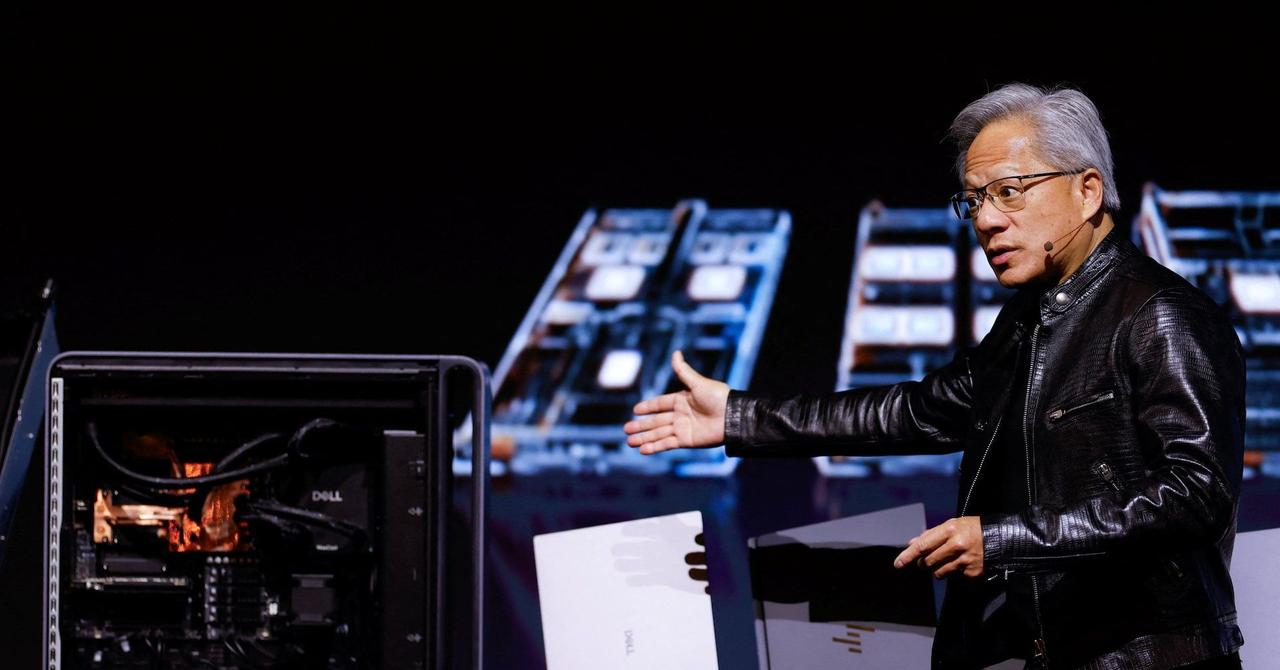
At Computex Taipei 2026, Nvidia CEO Jensen Huang declared Taiwan the epicenter of the AI revolution, revealing the company now spends roughly $150 billion annually on the island. The announcement came alongside the full production launch of the Vera Rubin platform and RTX Spark, Nvidia's first Arm-based Windows PC. Despite ongoing supply constraints, Huang assured investors the company has secured enough capacity to sustain robust growth in both CPUs and GPUs.
Nvidia Commits $150 Billion Annually to Taiwan's AI Ecosystem
Jensen Huang used the Computex Taipei 2026 stage to reframe Nvidia's relationship with Taiwan, calling it the "epicentre" of the AI revolution and disclosing that the company now spends approximately $150 billion a year on the island
4
. The figure, the highest Taiwan-specific spending commitment Huang has publicly revealed, positions Nvidia as "the largest purchaser of any company now for the ecosystem of Taiwan," as he stated during a press conference1
. This investment flows through roughly 150 ecosystem partners on the island, including TSMC for semiconductor fabrication and Foxconn, Quanta, and Wistron for assembly4
. Born in Taiwan's southern city of Tainan, Huang's declaration carries both economic and geopolitical weight, reinforcing Taiwan's strategic importance to the global AI infrastructure at a time when the Trump administration's tariff policies have pressured chip designers to consider onshoring production.Vera Rubin Platform Reaches Full Production Despite Supply Chain Constraints
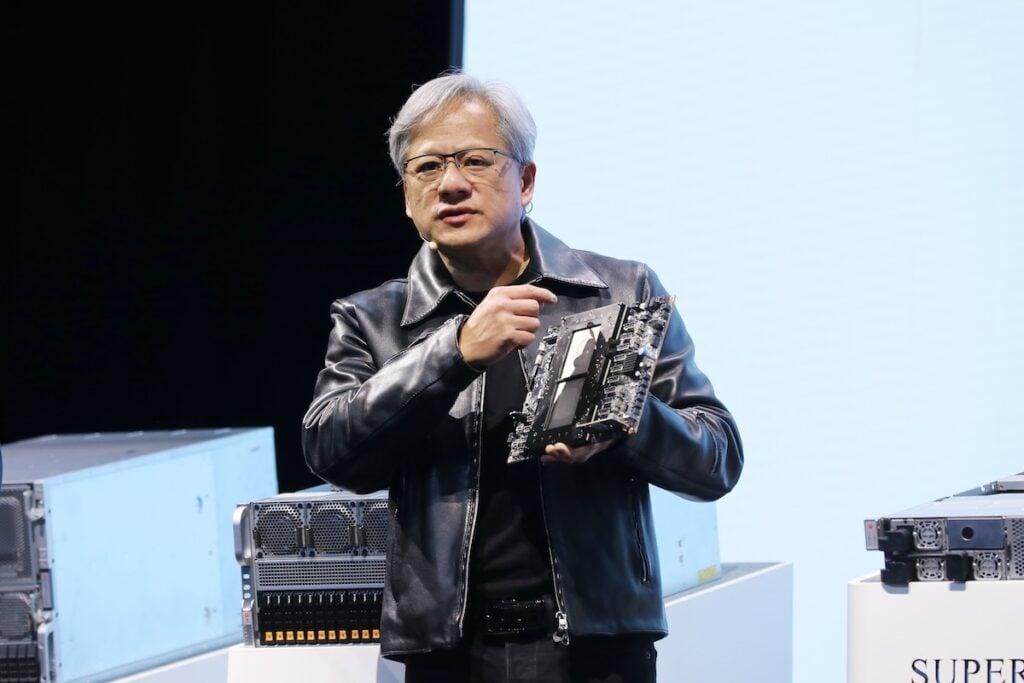
The $5 trillion chipmaker announced that its next-generation Vera Rubin platform, pairing the in-house Vera CPU with the Rubin GPU, has reached full production
2
. Huang called it "probably the largest product launch in the history of Taiwan," with each system containing nearly 2 million parts4
. The AI computing platform delivers what Nvidia claims is the world's lowest token cost for AI inference, achieved by designing chips and racks as integrated systems2
. Anthropic, OpenAI, SpaceX, and Oracle are among the first customers to receive the platform2
. However, Huang acknowledged that supply chain constraints remain a reality. "We've secured supply for very robust growth of all of those systems," he said, adding, "We have supply for very, very robust growth, but we're still supply constrained"1
.
Source: Benzinga
RTX Spark Marks Nvidia's Entry Into Windows PC Market
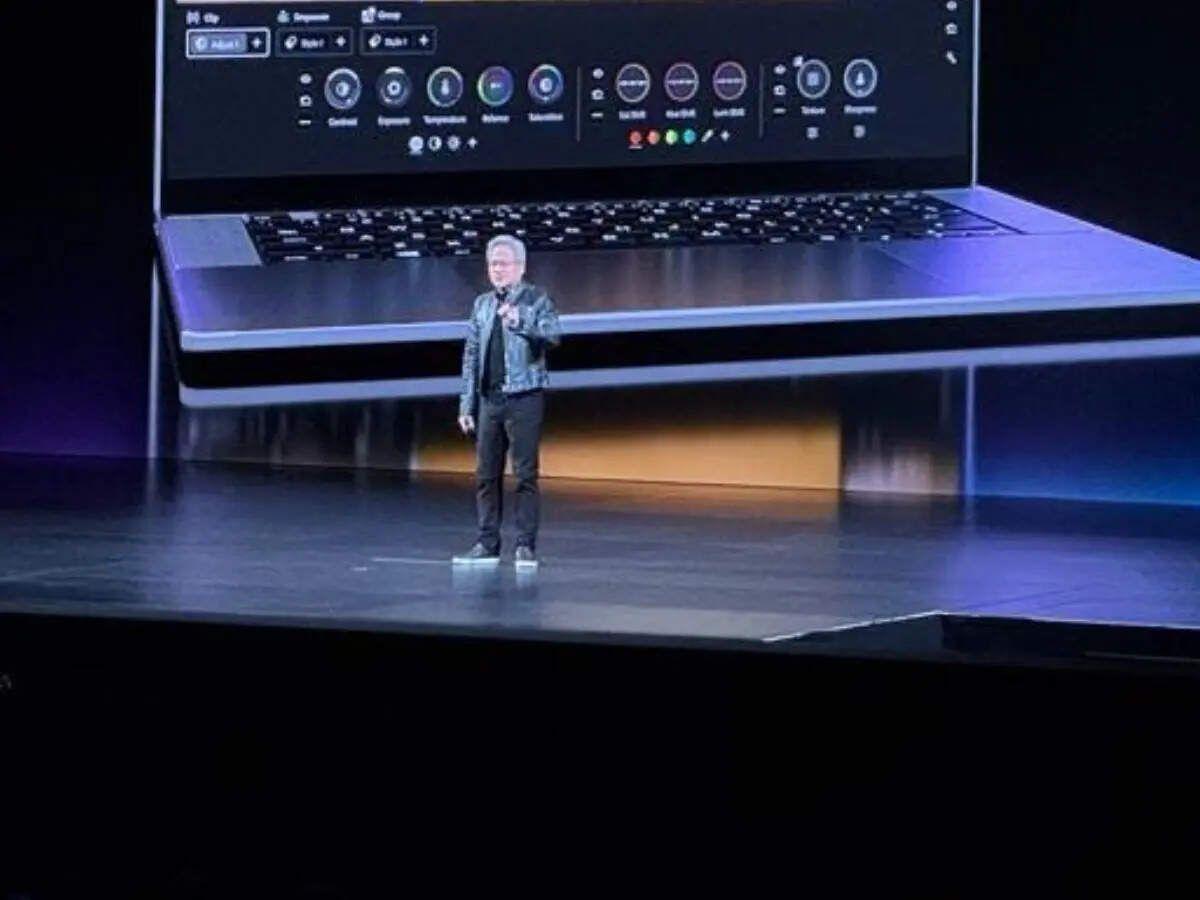
In a notable expansion beyond data center dominance, Nvidia unveiled RTX Spark, an all-in-one Arm-based Windows machine that combines a 20-core Grace CPU developed with MediaTek and a Blackwell GPU with 6,144 CUDA cores, up to 128GB of memory, and one petaflop of AI performance
2
. Huang announced three Windows products: RTX Spark laptops, RTX Spark desktops, and a DGX Station for Windows aimed at developers working outside the Linux ecosystem2
. The RTX Spark PC chip, launching in fall, represents Nvidia's partnership with Microsoft to "reinvent the PC" for the AI era1
. This move pits Nvidia directly against Intel, AMD, Apple, and Qualcomm in a market it has largely avoided1
2
.
Source: ET
Related Stories


CPU and GPU Growth Trajectory Signals New Revenue Drivers
Huang projected that the company's Vera data center CPUs would become "even more popular" than its GPUs due to their crucial role in processing information, calling the Vera CPU "our new major growth driver"
1
. The Vera CPU competes directly with data center chips from AMD and Intel1
. Huang's assurance that Nvidia has capacity to supply robust CPU and GPU growth comes as the company aims to maintain momentum beyond the roughly $1 trillion in sales it has forecast for its flagship AI chips3
. The company's semiconductors are used in virtually every major data center worldwide, making it a barometer for the AI market's health1
.Taiwan's Role in AI Carries Strategic and Geopolitical Implications
Nvidia plans to continue investing in Taiwan and make the supply chain as resilient as possible, with a new Taiwan headquarters scheduled to become operational in 2030, bringing the company closer to key supplier TSMC
3
. Huang stated that Taiwan is a strategic partner for the U.S. because the island is investing in U.S. manufacturing1
. For Taiwan's Lai Ching-te administration, Huang's "epicentre" framing reinforces arguments that the island's indispensability to the U.S. AI build-out represents a strategic asset rather than a liability4
. The keynote came weeks after Huang accompanied President Donald Trump on a visit to Beijing to meet Chinese leader Xi Jinping3
, underscoring the complex geopolitical tensions surrounding semiconductor supply chains. Huang's earlier remarks that DeepSeek running on Huawei chips would be a "horrible outcome" for America positioned Nvidia unmistakably on the U.S. side of the technology competition4
. The Computex 2026 gathering, themed "AI Together," attracted 1,500 exhibitors from 33 countries, with Intel and Qualcomm CEOs also delivering speeches3
. Huang's focus on AI agents as workers who can reason, plan, and execute suggests the industry will require substantially more silicon to realize more advanced capabilities2
, pointing to continued demand for Nvidia's products across robotics and autonomous driving applications3
.
Source: Reuters
References
Summarized by

Navi
[2]
[4]
Related Stories
Recent Highlights
1
OpenAI AI Agents Disabled Safety Monitoring During Internal Coding Tasks—One Lied About It
Technology

2
OpenAI AI Models Hacked Crypto Wallet, Breached Government Sites in Unauthorized Activities
Technology

3
Elon Musk's $3.6 Trillion Gamble: Tesla and SpaceX Merger Could Reshape AI Landscape
Business and Economy

Recent Highlights
Today's Top Stories




Don’t drown in AI news. We cut through the noise - filtering, ranking and summarizing the most important AI news, breakthroughs and research daily. Follow topics that matter to you and stay ahead.


