4 Sources
[1]
Flock Has a Powerful New AI Tool for Police. We Got Its Code
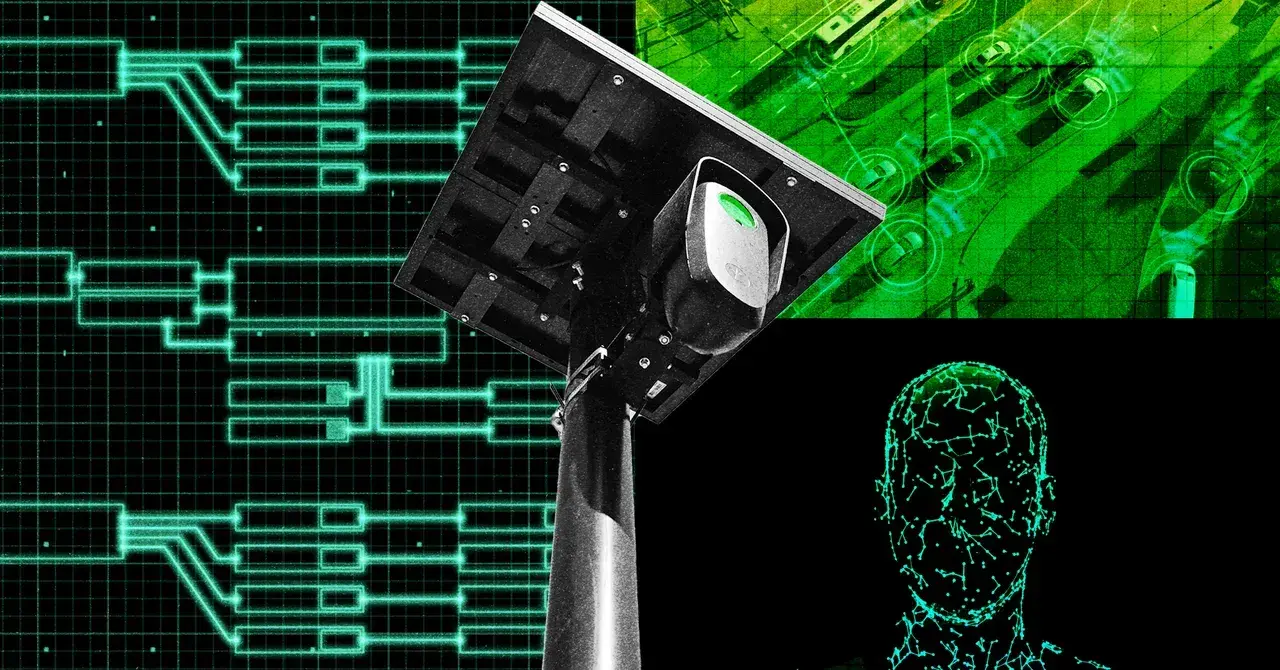
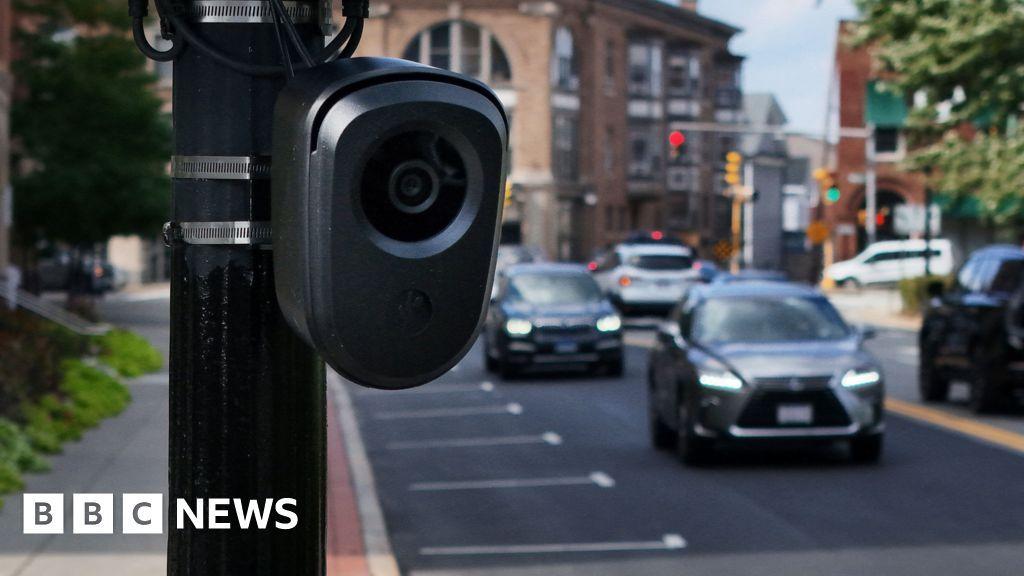
Vehicle surveillance giant Flock Safety has told the public for years that its technology "cannot recognize, identify, or track individuals." It has now built a system that does both, an artificial intelligence tool for police that can identify drivers and track vehicles by their patterns of movement alone, WIRED has learned. Drawing on a network of cameras that logs the movements of drivers in more than 6,000 communities, the tool can pick out potential witnesses by how often their cars pass through a neighborhood, or surface a driver's "associates" from the cameras they pass together. Because the system also reaches police case files, 911 dispatch logs, and commercial identity records, those plates can be turned into names, home addresses, and relatives. It can search for people in an area drawn on a map based on nothing more than a physical description. The software, originally called Nightshift and more recently renamed OS Investigate, ships with 69 prewritten prompts that officers can select, review, or edit, and then submit to the AI. Officers can also input prompts of their own. The suggested prompts sit in a cache of more than 450 files that WIRED found on Flock's own website, served by its login pages to anyone who loaded them. The code describes 45 tools at the AI's disposal, giving it access to plate scans and camera metadata, arrest records, case files, dispatch logs, ballistics results, and commercial databases that contain Social Security numbers, dates of birth, phone numbers, email addresses, relatives and associates. Flock says it is testing the product with a small group of law enforcement partners and describes it as still in development, with capabilities that may not reflect what it eventually sells. It arrives as the company faces bipartisan political pressure, a growing record of officers caught misusing its platform, and a wave of vandalism that has left cameras sawed off and lenses painted over in cities across the country. Privacy and legal experts say Flock's tools already raise serious constitutional concerns by giving police broad, often warrantless access to a vast record of people's movement. But the prompts WIRED examined go further, turning a tool for finding a known vehicle into one that casts suspicion on drivers based on where and how often they drive, regardless of whether they are wanted for a crime. Flock built its business on a simple transaction. A camera photographs a passing car, converts the plate to text, and checks it against a list of vehicles police are looking for. Cars that are not on the list are recorded and otherwise ignored. OS Investigate's pre-loaded prompts describe an inversion of that arrangement. An officer no longer needs a plate, a name, or a crime to begin. They supply a place, a stretch of time, and a pattern of behavior, and the system is designed to hand back the people who fit. All 69 of the prompts are offered to officers as a menu of canned searches. Selecting one pastes it into a chat box, where the officer can review or edit it before clicking again to submit. One prompt Flock pre-loaded into the system reads: "Find me witnesses based on vehicles most seen in [neighborhood] during [last 14 days] during [daily timeframe]. *(will not include whitelisted vehicles)." An officer would fill in the blanks and submit it. The output is a list of plates, which other tools in the product then convert into names and home addresses. Another prompt instructs the system to list everyone arrested more than twice in two years for "any offense," exempting only narcotics arrests, and then says to map where those people live, retrieve the calls for service at their homes, and "do a workup on the top 3 individuals." The prompt begins with everyone in the area who has an arrest record and ends with dossiers on three of them, chosen by the software. A "workup," in Flock's terminology, is a one-command background check. It starts with a name and a date of birth and returns what the department's records and commercial data hold: vehicles, prior listings as a suspect, and, on a second screen, relatives, phone numbers, and online accounts. Nineteen of the prompts describe hunting for patterns rather than looking up a record. Fourteen call for no plate, no name, and no description. The officer simply supplies a location, a window of time, and a behavior. One group of requests asks for vehicles that visited three or more retail locations in a city in three days, or multiple banks in a week, or multiple gas stations between midnight and 5 am. None of the five names a target or an incident. The tool behind those searches carries a filter that strips out buses, semi trucks, work vans, and trailers, so a delivery driver visiting five shops would come off the list, while an ordinary driver making the same rounds remains. The same type of search also applies to travel between cities: vehicles that left one city for another and returned within a week, made repeat roundtrips over 14 days, or passed through three areas in sequence. Flock did not respond to a list of questions about the product and did not dispute the capabilities described in our reporting. Instead, in a statement, spokesperson Paris Lewbel characterized OS Investigate as a separate product from Flock's license-plate reader technology, designed to help investigators work across information their agencies already have access to. He said the tool's capabilities and workflows may change significantly before a broader release. Amid mounting controversy over how police use and abuse its cameras, Flock's long-held position has been that its technology records plates and not the drivers behind them. Its own public trust pages tell customers that its technology is built for specific, case-based investigations and "not for watching people." Experts who reviewed the AI tool for WIRED say those assurances are hard to square with what they found in the code. "I think that most people imagine that license plate readers are checking license plates and they're looking if a vehicle is wanted. And if it's not wanted, the police will move along," says Jay Stanley, a senior policy analyst with the ACLU's Speech, Privacy, and Technology Project. "But we're increasingly seeing the aggressive deployment of AI by Flock. And in some ways, like China, very little space between what can be done and what is being done." One example, for instance, takes a single plate and asks the system to plot the journeys of that car and its "top 3 associates." The code describes explicitly how the ranking works. It counts how often other plates appear at the same cameras within a two-minute window of the target by default, and reports back any car that shows up next to it three or more times within a "confidence threshold" defaulting to 0.75. An officer supplies one vehicle and the software finds up to 20. Got a Tip?Are you a current or former police officer, government official, or Flock Safety employee who wants to talk about the company? We'd like to hear from you. Using a nonwork phone or computer, contact the reporters securely on Signal at dmehro.89 and dell.3030. "I don't know how else to say this, but this sounds completely insane," says Noel Pichardo, who was briefed on Flock's technology during a pilot program while serving as a Pawtucket, Rhode Island, police officer and who reviewed the prompts for WIRED. "I don't know how anyone can argue against the idea that Flock literally tracks people." Pichardo spoke out against the technology before Rhode Island state lawmakers in 2024, weeks after he served a 30-day suspension for criticizing Flock and department leadership in a local newspaper. The state police chiefs' association publicly rebuked him days later. Investigations and discipline followed, which he believes were retaliatory, and he resigned as the department moved to fire him. A detective at a California law enforcement agency, granted anonymity because he was not authorized to speak publicly, sees in OS Investigate a tool his department would use. Flock has closed many vehicle theft cases for them, he says, and officers have worked with similar technology for years. "I was not aware of this AI product, but it doesn't change the way I think about it," he says. "We'll use whatever tool is available to solve crime. It isn't controversial." The detective said the witness-finding prompts made him slightly uncomfortable, but added, "As law enforcement, we need to use every tool available, in spite of what the 'defund' people say." WIRED analyzed the software by examining code Flock served from its own login portals. Loading those pages returned a user interface for screens that would ordinarily appear only after a police user signed in, letting reporters reconstruct portions of the authenticated applications, their prompts, search fields, tools, and controls, without actual access. The files appeared to contain everything needed to reconstruct the interface from scratch. Before an officer runs a search, the software can ask for a justification. The code shows that by default an officer has to type a reason for the search; however, the form appears to place no requirements on what that reason says or how long it must be. If a department also requires a case number, the form checks only that it contains at least three characters. WIRED could not determine whether Flock applies additional checks on its servers after the information is submitted. WIRED shared its findings with Buchodi, a pseudonymous independent security and privacy researcher who has spent more than a decade reverse engineering consumer software and surveillance technologies. Buchodi examined Flock's code separately and reproduced key parts of the analysis. References to the tools Flock offers, the data they can apparently reach, and the suggested prompts Flock authored for police are fixed in the code WIRED reviewed. What that code cannot show is how the system behaves in use. It contains no instructions given to the model itself, and it does not reveal what Flock's servers do with a request once submitted, what they send back, or whether they refuse any command. Flock has said little about the tool in public, but Garrett Langley, its chief executive, once likened it to a crime analyst who is, in his words, "always awake, always watching out for you." At a demonstration for police chiefs in Denver last year, Langley described the ability to search every camera in a city for cars tailing an armored truck, pulling up the registered owners of those vehicles and checking their arrest records, in under a minute. Investigators who try it, he said, get "addicted." The company Langley started in Atlanta, where his first camera was a phone in a waterproof box, now logs 20 billion plate scans a month. Andreessen Horowitz, Founders Fund, and other venture firms have poured money into the business, which was valued at $7.5 billion in its most recent funding round. The company's original tagline was"the first public safety operating system that eliminates crime;" and Langley recently told Vanity Fair that Flock would have solved the disappearance of Nancy Guthrie, Savannah Guthrie's mother, had its cameras been deployed where she vanished. Flock counts roughly 140,000 monthly active users.. At the company's new Atlanta headquarters, a gold-painted camera covered in signatures commemorates an earlier ritual of marking each additional $1 million in revenue with a new camera. "Now we do more like a million a day," Langley recently told Vanity Fair. Andrew Guthrie Ferguson, a law professor at George Washington University, says a system like this one was inevitable. "To use all the data collected, you need to build in the ability to query it," he says. "To make things easier for police officers who are not going to create their own agentic tools, you must preprogram the system with some natural language prompts and automated workflows." The choice of prompts is what strikes him. "It is not rocket science to figure out [that] police will want to find certain objects or patterns, but it is interesting to see what they preprogrammed," he says. "There are a lot of innocent activities that could be flagged, even if it also might be quite useful for investigators." Because the prompt menu is a convenience rather than a constraint, an officer can also type whatever he or she wants. Selecting a prompt drops its sentence into an ordinary chat box, where it can be edited, rewritten, or replaced outright. Chad Marlow, an attorney who runs the ACLU's "Get The Flock Out" campaign, says that is where the danger lies. "The difference between a police officer saying, 'Do you see any criminal patterns' or 'Find me criminal patterns' is going to produce two different things," he says. "And I think the fact that they don't seem to have any limitations on the prompts enables the police to almost lead the AI in what it does." Marlow says his worry is the officer who asks an AI which people it considers most likely to be committing crimes."It's going to develop not a legal standard of criminal suspicion, but whatever that AI standard is." The code already describes the filters that question would run through. Flock's software chains vehicle searches to queries against police records that sort people by sex, race, ethnicity, height, weight, build, scars, marks, and tattoos. One prompt searches by description alone, asking for records matching "male, ~6ft, black hoodie, forearm tattoo" near a location. The tool allows an officer to bound those criteria by selecting a radius or drawing arbitrary shapes on a map. Stanley says that closely resembles what the US Supreme Court took up in June, when it held that people keep a privacy interest in records of where they have been, and that the Fourth Amendment applies when police demand those records from a company. Here, police departments buy that capability outright, opening space for fishing expeditions on a scale he says has no precedent. "You've got a literal geofence. But the AI can also bring it way beyond that kind of a static boundary, and who is inside that boundary," he says. "Who was near this person for more than 10 minutes in the past month? Who was in these six locations more than three times? It can become much more fine-grained, sophisticated, flexible." Flock has been building the AI system while under scrutiny for how police have abused the cameras it already runs. A Texas officer searched more than 83,000 cameras across the country last year while looking for a woman who had a self-administered abortion, according to search logs first obtained by 404 Media. A recent Washington Post analysis found 50 officers charged with or accused of misusing plate reader systems, 26 of them to track wives, girlfriends, exes, and women they wanted to meet. Illinois regulators found last August that Flock had violated state law by running a now-paused pilot program that handed Customs and Border Protection access to cameras in the state. Flock leaves most of the rules to its customers. Agency leaders decide who gets credentials, whether to share their camera data across city and state lines, and whether to switch on the settings the company offers to deter abuse. The audit tool that scans an agency's own searches for suspicious patterns arrived in April 2026 as an option departments can enable. Many departments did little to monitor the searches themselves, the Post found. The Electronic Frontier Foundation reviewed datasets pertaining to more than 12 million searches logged over 10 months and found that roughly 20 percent gave only a vague term like "investigation," "suspect" or "query." More than 50 agencies ran hundreds of searches whose reason fields referenced protest activity. Flock says its newest safeguards will address some of that. The company announced last week that, by the end of the year, it will monitor for abnormal searches, lock out flagged users automatically, and require officers to attach case codes to their searches. At the same time, the company is also hiring engineers to "drive the architectural evolution" of its new system, wire it into Flock's larger data platform, and build a framework it says will act on behalf of investigators, according to two recent job postings. The role covers multi-step AI workflows and new capabilities including automated lead generation and cross-camera correlation -- uses well beyond the version of the software WIRED examined. "It is clear Flock has aspirations far beyond ALPRs to become a digital platform for policing," Ferguson says. "We are on the cusp of the age of agentic policing and the ability to create natural language chatbots to search within massive datasets will soon become the norm."
[2]
Flock is testing a new AI tool that tracks and identifies people based on their driving habits - Engadget
This goes way, way further than keeping an eye on license plates. Flock has long pretended to be a simple automated license plate reader (ALPR) company, despite overwhelming evidence that its cameras can track a lot more than that. Now there's a report that it has been developing new AI tools that can potentially locate people by how they drive, according to Wired. The software was reportedly called Nightshift and is now going by the name OS Investigate. It draws from a network of cameras in 6,000 communities and logs the movements of drivers in those communities, Wired reports. This could be used, for instance, to find a witness to a crime by analyzing vehicle movements near where a crime occurred. Then, that information could be cross-referenced with police case files, 911 dispatch logs and commercial identity records to find the name, home address, relatives and even friends of the potential witness. Wired says the tool can "search for people in an area drawn on a map based on nothing more than a physical description." In other words, an officer doesn't even need a plate, name or a crime to begin searching. They just have to provide a location, a time and a pattern of behavior. The algorithm does the rest. To that end, there's a chatbot component. OS Investigate lets officers input prompts to help with these broad searches. Wired has shared numerous examples of the prompts in a module you can scroll through. Some of the prompts come pre-loaded and say stuff like "find me witnesses based on vehicles most seen in [neighborhood] during [last 14 days] during [daily timeframe.]" The officers would fill in the banks and submit. It's worth noting that this prompt doesn't require that a user input an actual incident or crime. Flock says it's testing the product right now with certain law enforcement partners and that the current capabilities "may not reflect" what it eventually sells. It also hasn't disputed any of the aforementioned capabilities, instead just saying that this is a separate product from the license-plate reader technology. "I don't know how else to say this, but this sounds completely insane," says Noel Pichardo, a former police officer who reviewed the software and related prompts for Wired. "I don't know how anyone can argue against the idea that Flock literally tracks people." A current police officer who remains anonymous said that the witness-finding aspect makes him "slightly uncomfortable" but added that "as law enforcement, we need to use every tool available, in spite of what the 'defund' people say." The independent security researcher Buchodi took a more tactful approach, noting that "there are a lot of innocent activities that could be flagged, even if it also might be quite useful for investigators." Chad Marlow, an attorney with the ACLU, says that the danger lies in the idea that officers could basically go fishing for crimes. "The difference between a police officer saying, 'Do you see any criminal patterns' or 'Find me criminal patterns' is going to produce two different things," he notes. "And I think the fact that they don't seem to have any limitations on the prompts enables the police to almost lead the AI in what it does." This gets to one of the primary reasons people are so uncomfortable with Flock cameras. Police officers abuse them. There have been numerous reports that allege that cops have used the technology to cameras to spy on people and stalk ex-partners. This forced the company to introduce a number of safeguards to prevent abuse, like the ability to lock out flagged users and a requirement to attach case codes to searches. We have no idea what kind of safeguards would be needed to prevent abuse with the beta software that Wired took a look at. This general unease with Flock and its products has fueled genuine and near-universal backlash. Several law enforcement agencies have severed ties with the company and citizens have begun taking matters into their own hands. Cameras have been vandalized, destroyed or stolen throughout the country. One Minnesota town found that all of its Flock cameras had disappeared overnight. The city's police department will not be replacing the cameras.
[3]
Flock's new AI tool lets police search people by movement
A WIRED investigation says Flock Safety has built an AI tool, OS Investigate, that lets police search for people and vehicles by their movements, with no plate, name or crime needed. Flock says it is still in testing. Critics say it invites fishing for suspects. The surveillance firm Flock Safety has told the public for years that its cameras "cannot recognize, identify, or track individuals." It has now built a tool that does both, according to a new investigation. The artificial-intelligence system lets police search for people and vehicles by their patterns of movement alone. It needs no licence plate, no name, and no crime to start from, WIRED reported on Tuesday. WIRED reporters Dhruv Mehrotra and Dell Cameron said they reconstructed the tool from files exposed through Flock's own login pages. The code showed its prompts, its search forms and its intended workflows, they said. It did not reveal the model's underlying instructions or the checks applied on Flock's servers. Flock first called the system Nightshift, and now calls it OS Investigate. The tool can connect vehicle scans with police case files and arrest records, according to WIRED. It can also pull in 911 dispatch logs, ballistics results and commercial identity databases. That turns Flock's network of cameras from a record of where cars have been into an engine for generating suspects. Searching by behaviour Some searches start with ordinary police work, WIRED said. An officer can enter a plate and ask for vehicles seen near it. Others run the logic in reverse. One prompt looks for likely witnesses, finding the vehicles most often seen in a neighbourhood over the past 14 days. Another flags vehicles that visited three or more shops in three days. Of the prompts WIRED examined, it said 19 focus on patterns. Fourteen need no plate, name or physical description at all. An officer supplies a place, a period and a behaviour, and the tool returns people or vehicles that fit. It can then attach names, addresses, relatives, phone numbers and online accounts to a plate. One prompt starts with people arrested more than twice in two years. It maps their homes and orders a detailed "workup" on three of them. Those outputs are leads, not proof. An inferred link between two vehicles does not mean their owners know each other. Repeated trips through a shopping district are not evidence of a crime. Critics say a ready-made prompt can make a weak statistical match look like a routine database result. What the experts and Flock say Chad Marlow, an attorney at the American Civil Liberties Union, told WIRED the danger was that officers could go fishing for crimes. He said the wording of a prompt shapes the result. "The difference between a police officer saying 'Do you see any criminal patterns' or 'Find me criminal patterns' is going to produce two different things." The lack of limits on the prompts, he added, lets police "lead the AI." A former officer who reviewed the software, Noel Pichardo, was blunter, saying it showed Flock "literally tracks people." Flock said the tool is still being built. A spokesperson, Paris Lewbel, told WIRED that OS Investigate is in development with a small group of law-enforcement partners, that it is separate from the company's licence-plate product, and that its capabilities may change before any wider release. The company did not dispute the features WIRED described. A pattern of scrutiny The report lands as Flock faces mounting criticism over how police use its existing tools. The Washington Post reported this month that at least 50 law-enforcement officials had faced accusations or charges over misusing plate-reading technology. Flock cameras figured in 46 of those cases, the paper said. The misuse has included officers allegedly stalking former partners. On 13 August, Flock announced new safeguards, cutting its default data-retention period to seven days, adding automatic lockouts for unusual activity and requiring officers to attach case codes to searches by the end of 2026. Flock designed those controls around searches that a person starts. OS Investigate adds automated lead generation and editable prompts, which critics say oversight built for manual lookups may not capture. A separate project is trying to open the same records to the public. A website called "Have I Been Flocked" lets drivers check whether an operator has run their plate through the system. It draws on audit logs its organisers gathered through public-records requests to more than 6,500 agencies. Its organisers caution that the data is incomplete and often redacted. The business behind the tool OS Investigate fits a direction Flock has pursued for years. The company has pushed beyond fixed plate readers into video cameras, gunshot detection, drones and 911 software, and OS Investigate is the layer that can query all of it together. Chief executive Garrett Langley told the All-In podcast this week that drones are now the company's fastest-growing business. Investors have backed the expansion. Flock raised $275 million in March 2025 at a $7.5 billion valuation, in a round led by Andreessen Horowitz, and Business Insider put its more recent valuation at $8.4 billion. Its cameras are now spread across more than 6,000 communities. Rivals are chasing the same ground, with Axon tying its own plate-reading cameras to a real-time operations platform, part of a wider contest to fold dispatch, video and records into one searchable policing system. Resistance is already shaping where Flock can sell. Several communities, from Mountain View in California to Bandera in Texas, have cancelled or reconsidered their contracts, according to WIRED, and one Minnesota town found its Flock cameras had vanished overnight. For now, Langley's challenge is whether the company can put enforceable limits inside OS Investigate before an AI-generated lead reaches someone who was never suspected of a crime.
[4]
Flock's New AI Tool Does Much More Than Track License Plates
Controversial surveillance technology company Flock Safety has long insisted that its automated license plate readers (ALPRs) can't recognize or track people's faces. But they may as well be able to, thanks to a new AI tool which can reportedly identify vehicles -- and their drivers -- based on several other variables. The new tool, called OS Investigate, is currently being tested with a small group of law enforcement agencies, according to a Wednesday report from Wired. Using code found on the Flock website's login portal, Wired reporters and an independent security and privacy researcher who goes by the pseudonym Buchodi were able to reconstruct a mock-up of the experimental tool's interface (without being able to access it directly). The interface showed that OS Investigate lets officers search for vehicles via Flock's network of cameras using natural language prompts. The system comes with sixty-nine prewritten prompts, Wired reports, each of which officers can edit before clicking submit. One such prompt tells the system to find "witnesses based on vehicles most seen in [neighborhood] during [last 14 days] during [daily timeframe]." The investigation also found that while the system asks officers to provide a reason for making a particular search, it doesn't appear to require typed reasons to be a certain length or include any particular details. In contrast to the original business model for Flock's ALPRs, which are supposed to check recorded license plates against lists of vehicles already suspected of involvement in a crime, the new system starts with a location, a timeframe, and/or a pattern of movement, and identifies vehicles from there. It also filters out buses, semi-trucks, business-owned vans, and trailers, according to Wired -- meaning the searches are focused on privately owned and operated vehicles. A Flock spokesperson described Investigate OS as "a separate product from Flock's license-plate reader technology, designed to help investigators work across information their agencies already have access to," according to a summary of the statement by Wired. The spokesperson also reportedly said that the tool's capabilities and interface may change before it's generally released to the public. On its website, Flock writes that its ALPRs do "not identify people by their faces" or "identify who is inside a vehicle." By integrating with 911 dispatch logs, arrest records, and other public safety and commercial databases, however, the new tool reportedly makes it possible for officers to connect the dots between license plates and their drivers, as well as people in drivers' social networks. Flock has come under fire following a string of revelations of officers abusing its technology. Earlier this month, the Washington Post reported that at least fifty officers have been charged with or accused of misusing Flock cameras, in many of those cases to stalk women. The company said last week it would introduce new safeguards for its cameras in response to public backlash -- which has manifested in widespread vandalism of its cameras -- including a new tool that flags suspicious user behavior, which law enforcement customers will reportedly be required to adopt by the end of this year. The controversy arrives at a time of rapid adoption of new AI tools among police departments across the U.S. Flock Safety and other self-described public safety tech companies, like Axon Enterprise, have been pushing new AI tools as a quick-fix solution to help law enforcement agencies accomplish more as some departments face staffing shortages. In lieu of comprehensive federal regulation, however, those agencies have, for the most part, been left to their own devices to figure out how to use the technology safely and ethically.
Share
Copy Link
Vehicle surveillance giant Flock Safety has developed OS Investigate, an AI tool that identifies drivers and tracks vehicles by movement patterns across 6,000 communities. The system integrates police case files, 911 logs, and commercial databases to convert license plates into names and addresses, raising serious privacy concerns about warrantless surveillance and fishing for suspects.
Vehicle surveillance company Flock Safety has developed OS Investigate, an AI tool for police that can identify drivers and track vehicles based solely on movement patterns, according to an investigation by WIRED
1
. This marks a significant departure from the company's long-standing public claim that its technology "cannot recognize, identify, or track individuals." Drawing from a network of cameras logging movements in more than 6,000 communities1
, the system can pick out potential witnesses by analyzing how often their cars pass through a neighborhood or surface a driver's associates from cameras they pass together.
Source: Wired
The AI tool, originally called Nightshift and recently renamed OS Investigate
2
, ships with 69 prewritten prompts that officers can select, review, or edit before submission1
. WIRED found more than 450 files on Flock Safety's own website describing 45 tools at the AI's disposal, granting access to plate scans, camera metadata, arrest records, case files, dispatch logs, ballistics results, and commercial databases containing Social Security numbers, dates of birth, phone numbers, email addresses, and information about relatives and associates1
.One pre-loaded prompt reads: "Find me witnesses based on vehicles most seen in [neighborhood] during [last 14 days] during [daily timeframe]"
1
. Officers fill in the blanks, and the system returns a list of plates that other tools convert into names and home addresses. Another prompt instructs the system to list everyone arrested more than twice in two years for "any offense," map where those people live, retrieve calls for service at their homes, and "do a workup on the top 3 individuals"1
. The prompt begins with everyone in an area who has an arrest record and ends with dossiers on three people chosen by the software.Of the prompts WIRED examined, 19 focus on hunting for patterns rather than looking up records, and 14 call for no plate, no name, and no description
3
. Officers simply supply a location, a window of time, and a behavior. One group of requests asks for vehicles that visited three or more retail locations in a city in three days, or multiple banks in a week, or multiple gas stations between midnight and 5 am1
. The tool filters out buses, semi-trucks, work vans, and trailers4
, meaning searches focus on privately owned vehicles.
Source: The Next Web
This represents an inversion of Flock Safety's original business model. The company built its business on automated license plate readers that photograph passing cars, convert plates to text, and check them against lists of vehicles police are looking for
1
. OS Investigate flips this arrangement—officers no longer need a plate, a name, or a crime to begin. The system is designed to hand back people who fit a supplied place, timeframe, and pattern of behavior1
.Chad Marlow, an attorney with the ACLU, told WIRED the danger lies in officers essentially fishing for suspects
2
. "The difference between a police officer saying, 'Do you see any criminal patterns' or 'Find me criminal patterns' is going to produce two different things," Marlow noted3
. "The fact that they don't seem to have any limitations on the prompts enables the police to almost lead the AI in what it does." Former police officer Noel Pichardo, who reviewed the software for WIRED, said: "I don't know how else to say this, but this sounds completely insane. I don't know how anyone can argue against the idea that Flock literally tracks people"2
.Privacy and legal experts say Flock Safety's tools already raise serious constitutional concerns by giving police broad, often warrantless surveillance access to a vast record of people's movement
1
. The prompts WIRED examined go further, turning a tool for finding a known vehicle into one that casts suspicion on drivers based on where and how often they drive, regardless of whether they are wanted for a crime1
.Related Stories
Flock Safety says it is testing OS Investigate with a small group of law enforcement partners and describes it as still in development, with capabilities that may not reflect what it eventually sells
1
. Company spokesperson Paris Lewbel told WIRED that OS Investigate is "a separate product from Flock's license-plate reader technology"3
. The company did not dispute the features WIRED described.The revelation comes as Flock Safety faces bipartisan political pressure and a growing record of officers caught misusing its platform
1
. The Washington Post reported that at least 50 law enforcement officials have faced accusations or charges over misusing plate-reading technology, with Flock cameras figuring in 46 of those cases3
. The misuse of technology has included officers allegedly stalking former partners4
.On August 13, Flock Safety announced new safeguards, cutting its default data-retention period to seven days, adding automatic lockouts for unusual activity, and requiring officers to attach case codes to searches by the end of 2026
3
. Critics say oversight built for manual lookups may not capture automated lead generation and editable prompts that OS Investigate introduces.The controversy arrives during rapid adoption of new AI tools among police departments across the U.S. Flock Safety and other self-described public safety tech companies have been pushing new AI tools as quick-fix solutions to help law enforcement agencies accomplish more amid staffing shortages
4
. However, in lieu of comprehensive federal regulation, agencies have largely been left to figure out how to use the technology safely and ethically on their own4
.A wave of vandalism has left cameras sawed off and lenses painted over in cities across the country
1
. Several law enforcement agencies have severed ties with the company, and one Minnesota town found all its Flock cameras had disappeared overnight2
. The city's police department will not be replacing them. As OS Investigate moves from testing to potential deployment, questions about the ethical implications of fishing for suspects based on movement patterns, the adequacy of existing safeguards, and the need for stronger oversight of law enforcement technology will intensify. The independent security researcher Buchodi noted that "there are a lot of innocent activities that could be flagged, even if it also might be quite useful for investigators"2
, capturing the tension between investigative utility and civil liberties that OS Investigate embodies.Summarized by
Navi
[2]
[3]
12 Jun 2026•Entertainment and Society

27 Mar 2026•Policy and Regulation

02 Feb 2026•Policy and Regulation
1
Technology

2
Technology

3
Technology