NVIDIA Unveils Futuristic Vision for AI Compute: Silicon Photonics and 3D Stacking


3 Sources
[1]
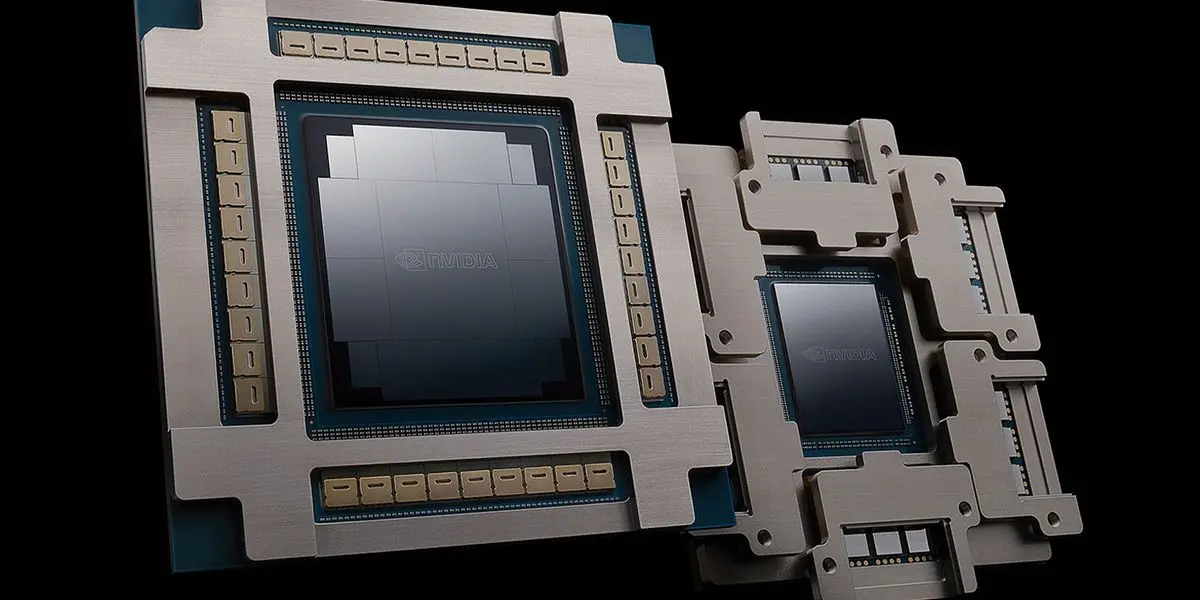
Nvidia's eyeing up ways to beef up its future AI chips with GPUs on top of GPUs and the power of light
I'm not usually one for extravagant tech and hardware predictions -- things can change so much and so unpredictably that it's difficult to put too much weight behind such premonitions. But when it comes to AI tech, things move so quickly that what seems distant might not actually be too far away.
[2]
NVIDIA Presents The Future Of "AI Compute", Featuring Silicon Photonics & 3D GPU/DRAM Stacking
NVIDIA has presented its approach with next-gen AI accelerators, showcasing an innovative "silicon photonic" implementation at the IEDM 2024 conference. NVIDIA's Vision Of Next-Gen AI Accelerators Includes Utilizing Silicon Photonics Interposers & Unique Stacking Methods With modern-day packaging
[3]
NVIDIA shows off future of 'AI compute' with silicon photonics, 3D GPU + DRAM stacking
NVIDIA's vision of the future of AI compute has been teased: the AI GPU leader sees the use of a silicon photonics interposer, 3D stacked DRAM, and GPU 'tiers' that tease GPU on GPU tech in the future. In a new post on X from Ian Cutress, NVIDIA's vision of the future of AI compute has many
Share
Copy Link
NVIDIA presents a groundbreaking concept for future AI accelerators, featuring silicon photonics and 3D stacking of GPUs and DRAM, potentially revolutionizing AI compute capabilities.

NVIDIA's Vision for Next-Generation AI Accelerators
NVIDIA, the leading AI GPU manufacturer, has unveiled its ambitious vision for the future of AI compute at the IEDM 2024 conference. This groundbreaking concept integrates advanced technologies such as silicon photonics and 3D stacking, potentially revolutionizing the landscape of AI hardware
1
2
.Silicon Photonics: The Future of Data Transmission
At the heart of NVIDIA's futuristic design is the implementation of silicon photonics (SiPh) technology. This innovative approach uses light (photons) for data transmission, offering significant advantages over traditional electrical methods:
- Increased speed and bandwidth
- Lower power consumption
- Improved efficiency in data transfer
The proposed design includes 12 SiPh connections for both intrachip and interchip communication, with three connections per GPU tile across four GPU tiles per tier
1
2
.3D Stacking: Vertical Integration for Enhanced Performance
NVIDIA's concept introduces a novel approach to GPU architecture through vertical stacking:
- Multiple GPU tiles stacked vertically, forming "GPU tiers"
- Four GPU tiles per tier, reducing interconnect latency
- 3D stacked DRAM, with six chips per tile
- Potential for power gating implementation
This vertical integration aims to increase chip density while reducing the overall footprint, potentially leading to significant performance improvements
2
3
.Challenges and Timeline
While NVIDIA's vision is ambitious, several challenges need to be addressed:
- Silicon photonics technology is still in its infancy
- Thermal management concerns due to aggressive 3D stacking
- Need for high-volume production of silicon photonics components
Experts, including analyst Ian Cutress, estimate that this technology might not be commercially viable until 2028-2030, given the complexities involved
1
2
3
.Related Stories

Implications for Consumer GPUs
While primarily focused on AI accelerators, some aspects of this technology could potentially trickle down to consumer GPUs in the future. However, gaming graphics may not require the extreme bandwidth provided by silicon photonics, making its implementation in consumer products less likely in the near term
1
.Industry Impact
NVIDIA's presentation of this futuristic AI compute vision underscores the company's commitment to pushing the boundaries of AI hardware. As AI computing demands continue to grow exponentially, innovations like these will be crucial in meeting future performance requirements and maintaining NVIDIA's leadership position in the AI hardware market
2
3
.References
Summarized by

Navi
[1]
[2]
Related Stories
Recent Highlights



Recent Highlights
Today's Top Stories



Don’t drown in AI news. We cut through the noise - filtering, ranking and summarizing the most important AI news, breakthroughs and research daily. Follow topics that matter to you and stay ahead.


