3 Sources
[1]
Popular open source AI developer tool Ollama raises $65M, grows to nearly 9M users
The popular open source AI tool Ollama has raised a $65 million Series B, led by Theory Venture, founder and CEO Jeff Morgan tells TechCrunch. This round follows a previous $15 million Series A led by Benchmark's Peter Fenton. All told, the company has now raised $88 million. Ollama, which launched in 2023, helps devs run open-weight AI models on their PCs, getting them up and running in minutes. It has been praised by developers across countless training sites, videos, blogs and social media posts. It has amassed 176,000 stars and nearly 17,000 forks on GitHub. Developers can also use Ollama to find models and access larger, more complex ones that it hosts on its neocloud via several subscription tiers, from free to $100/month. It also tracks usage based on GPU time, not token limits. If the mission to help developers more easily build on their PCs sounds vaguely familiar, it should. Morgan and his co-founder Michael Chiang previously helped build Docker Desktop. They landed at Docker after it bought their previous startup, Kitematic. Docker makes containers that help cloud apps easy to move from cloud to cloud, or from desktop to cloud, abstracting away all the pesky hardware configuration issues. So Ollama essentially did for AI what Docker and Docker Desktop did for cloud. "Open models started coming out in 2023 but they were really hard to use," Morgan said. They had been geared toward researchers at the time, not programmers. "As a result, it was really hard to get them up and running." Three years after launching, Ollama is now "used by over 8.9 million developers every month, sitting in 85% of the Fortune 500 and growing like crazy," he said. All with only 14 employees. That career experience is what drew Benchmark's Peter Fenton to lead its earlier round and join the board. "What Jeff and Michael built with Docker is being used by 10 million-plus developers every day. The creative powers to create a product that goes to ubiquity for developers is extremely rare," Fenton told TechCrunch. Morgan and Fenton declined to discuss the startup's revenues and new valuation. However, Morgan says that the proving point for Ollama as a business happened around January, when OpenClaw became hot. That's when larger open models "suddenly became able to do these agentic tasks, like coding. Obviously, we saw the explosion of the assistants like OpenClaw, and this idea that open models can get real work done." Since then, the industry has been abuzz with the idea that paying users (particularly deep-pocketed enterprises and fast-growing AI application-layer startups) will increasingly turn to more affordable open models, reserving their use of closed models like Anthropic for more of an as-needed basis. "I still think that this is the part that most of the debate gets wrong. It's not an either/or," Fenton says of open versus closed AI models. There will be plenty of business for both, he contends. However, every company with high inference expenses -- the costs of using the models -- has a "vital existential project" pushing them to move "to open-weight models," he says. There's plenty of evidence that such startups and enterprises are already turning to open models for their daily needs. That, obviously, bodes well for Ollama's cloud business. But even more interesting, Ollama is another example of how AI is birthing a large new crop of open source projects that are turning into companies pursued by VCs. There are open source inference providers like Inferact, maker of vLLM, and RadixArk, maker of SGLang. There is OpenClaw and its alternatives like NanoClaw. There are even tiny startups building their own open models from scratch, like Arcee. To be sure, not every Ollama fan has been happy that the company has been pursuing making a living. About a year ago, a bunch of blog and social media posts complained that its cloud business was drawing attention away from its beloved free project and cited Ollama as an example of the so-called "Enshittification" of dev tools, as the trend is called. But Morgan sees its cloud service as an evolution of its open source mission to help programmers find and easily use models. Those state-of-the-art, large, open models are often "too big to run on your own computer. So we said, 'Hey, let's help find the compute for that,'" he explained. Board member Fenton adds, "Nothing has changed for the core product that's free on the desktop. There's zero change to the premise that this is the place you can discover and run local models."
[2]
Ollama raises $65M for its open-model AI platform
Ollama, the tool that made running open-source AI models on your own laptop a one-line command, has raised $65M. The bet: open models will do most of the world's AI work, and developers will want to own them. Ollama has raised a $65M Series B led by Theory Ventures. Benchmark, 8VC, Y Combinator and others joined. The round takes the company's total funding to $88M, three years after it launched, and Ollama set out the plan in a blog post on Thursday. Founder and chief executive Jeff Morgan gave the details to TechCrunch, which broke the raise. The pitch is simple. Ollama lets a developer download an open-weight model and run it locally in a single command. If a laptop cannot handle a bigger model, Ollama's cloud runs it instead, with the same setup. It bills for that cloud by GPU time, not per token. The Docker crew, again The founders have done this before. Morgan and co-founder Michael Chiang built Kitematic, which Docker bought in 2015. Their work there became Docker Desktop, which more than ten million developers now use. Ollama is the same move for AI. It hides the messy setup and lets people just run the thing. The traction is hard to argue with. Ollama says 8.9 million developers now use it each month, up from half that in January. It adds close to a million installs a week. It sits inside 85% of the Fortune 500, including government, healthcare and finance. The team is 14 people. A bet on open over closed The money rides on a shift from closed AI models to open ones. "Open-weight models will generate the supermajority of tokens within the next 18 to 24 months," said Peter Fenton, the Benchmark partner who led Ollama's earlier round and sits on its board. Theory's Tomasz Tunguz frames Ollama as the platform layer that everything else plugs into, a valuable spot to hold. Fenton is careful to call it a shift, not a war. Open versus closed is "not an either/or," he told TechCrunch. But firms with heavy inference bills have a strong reason to move to open models. They can then lean on closed ones like Anthropic only as needed. Morgan says the turning point came around January, when open models got good enough to handle agentic work like coding. Ollama's cloud hosts the heavyweight open models: Nemotron, GLM, DeepSeek, Kimi and MiniMax. It is a distribution partner for those labs, and for chipmakers Nvidia, AMD, Intel and Qualcomm. That deal gets its users new models on day one. Ollama is one of a wave of open-source projects now turning into venture-backed companies. Not everyone is cheering The growth has a critic camp. About a year ago, some fans accused Ollama of letting its paid cloud pull focus from the free project. They filed the gripe under the "enshittification" of developer tools. Morgan and Fenton push back. The free desktop app has not changed, they say, and the cloud simply reaches models too big to run at home. Why it matters Ollama is a marker for how fast open models have moved from research toys to production tools. If the cheap, ownable option really does generate most AI tokens, the layer that runs them becomes valuable ground. Ollama got there first, with 14 people and a one-line install.
[3]
Open-source AI developer tool Ollama raises $65M to grow its platform
Open-source AI developer tool Ollama raises $65M to grow its platform Ollama Inc., the largest artificial intelligence platform connecting developers to open models, today announced it raised $65 million in Series B funding led by Theory Ventures. Benchmark, 8VC, Y Combinator, Pace Capital, 49 Palms, GTMFund, and other investors and angels also participated in the round. Today's funding brings the company's total raised to $88 million. Ollama provides an easy-to-use tool that AI developers and engineers can run locally. With a single command, they can download and deploy AI models on their own local hardware or execute on more powerful models in Ollama's cloud. "Open models should be easy to run, easy to build with, and available wherever people need them -- on your own machine, in the cloud, or both," said Chief Executive and co-founder Jeffrey Morgan. "Ollama started as an open-source project, and has since grown into a community of millions of developers." Since its launch in 2023, the tool has been used by more than 8.9 million developers each month, making it the largest network in the open model ecosystem and featuring over 67,000 integrations. The company said it is used within 85% of Fortune 500 enterprise companies, including customers in deeply regulated industries, such as government, healthcare and finance. On its front end, Ollama provides a graphical user interface and a command line that make it simple to activate and test models, both locally and in the cloud. Although the tool initially launched with the capability to provide local AI models and application protocol interface connectors for cloud model providers, the pivot to providing neocloud inference enabled the company to build it natively into the product. Users can sign up for a free tier that offers time on graphics processing units, with subscriptions up to $100 a month. The company's cloud inference pricing model competes with other developer-centric AI cloud inference providers such as Together Computer Inc., Fireworks AI Inc. and Groq Inc. that provide access to large models on a per-token pricing basis. Ollama differentiates itself by offering a cloud service that extends the tool for developers who already run models locally. The same command, the same OpenAI-compatible API that addresses any model provider or local 7B model can also swap to a 400B cloud model with a single string. This allows developers a simple continuity of workflow rather than any separate cloud relationship. Through a network of partnerships, the company can provide developers release-day access to powerful new open models for experimentation, testing and building. Open models available in the company's catalog include GLM, Nemotron, DeepSeek, Kimi and MiniMax. The company said on average, the cloud has more than doubled in token volume every month. The difficulty is that GPU-time metering is difficult to forecast, whereas per-token is easier to control. Specialists such as Fireworks also provide extremely high-speed, low-latency access and large-catalog providers such as Groq and Together offer high availability of frontier-class models. Direct competitors to Ollama include LM Studio, which is a polished GUI for browsing models, chatting and visually tuning models. Many developers use Ollama as a nuts-and-bolts, under-the-hood runtime for scripting, servers and app building, while LM Studio is a go-to for GUI-first exploration and experimentation. Other examples include llama.cpp itself, the low-level engine Ollama itself builds on; vLLM, a production-scale multi-GPU tool; Jan, a fully open-source ChatGPT-style desktop app for cloud AI models; and MLX, a purely Apple-silicon AI tool. Many developers use Ollama as a backend for apps, or to power other interfaces such as AnythingLLM, a per-project retrieval augmented generation workspace setup that powers a whole chat and agent client; Open WebUI, a popular Ollama client that self-hosts a ChatGPT-like UI with RAG, voice and plugins; and full-on local AI agents such as OpenClaw and Hermes.
Share
Copy Link
Ollama, the popular open-source AI developer tool that simplifies running AI models locally, has secured $65 million in Series B funding led by Theory Ventures. The platform now serves 8.9 million developers monthly and is used by 85% of Fortune 500 companies. Founded by former Docker Desktop creators, Ollama has grown to $88 million in total funding with just 14 employees, betting that open AI models will dominate the industry.
Ollama has closed a $65 million Series B funding round led by Theory Ventures, with participation from Benchmark, 8VC, Y Combinator, Pace Capital, 49 Palms, and GTMFund
1
. This round follows a $15 million Series A led by Benchmark's Peter Fenton, bringing the company's total funding to $88 million since its 2023 launch1
. The AI developer tool has amassed 176,000 stars and nearly 17,000 forks on GitHub, establishing itself as a critical platform for developers seeking to run open-source AI models locally1
.

Source: SiliconANGLE
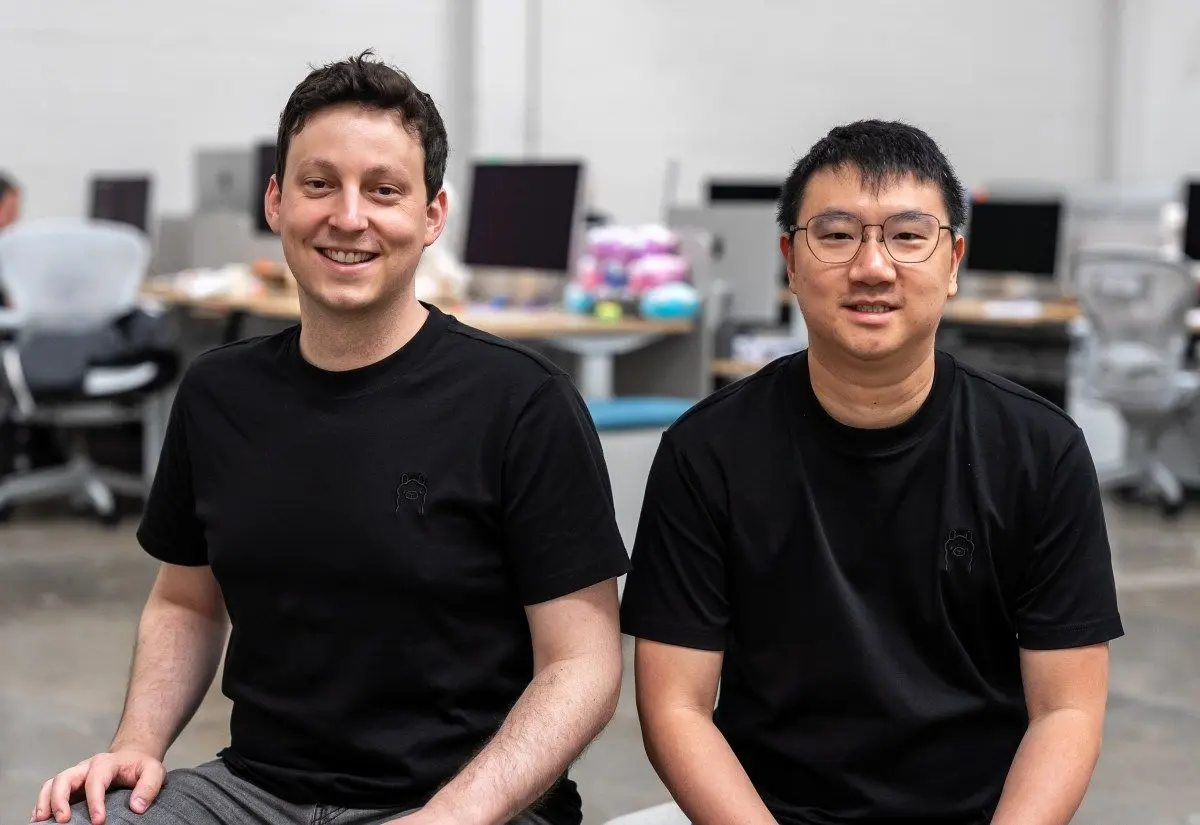
Founder and CEO Jeff Morgan, who previously co-built Docker Desktop with co-founder Michael Chiang, tells TechCrunch that Ollama now serves 8.9 million developers every month, up from roughly half that number in January
1
2
. The company adds close to a million installs weekly while operating with just 14 employees2
.
Source: TechCrunch
Morgan and Chiang's experience building Docker Desktop proved instrumental in shaping Ollama's approach. The duo landed at Docker after it acquired their previous startup, Kitematic, in 2015
1
. Docker makes containers that help cloud apps move easily between environments, abstracting away hardware configuration issues. Ollama essentially did for AI what Docker and Docker Desktop did for cloud computing1
."Open models started coming out in 2023 but they were really hard to use," Morgan explained. They had been geared toward researchers rather than programmers, making them difficult to get up and running
1
. Ollama solves this by letting developers download an open-weight model and run it locally with a single command2
.This career experience drew Benchmark's Peter Fenton to lead the earlier round and join the board. "What Jeff and Michael built with Docker is being used by 10 million-plus developers every day. The creative powers to create a product that goes to ubiquity for developers is extremely rare," Fenton told TechCrunch
1
.The funding reflects a broader industry shift toward open AI models. Fenton predicts that "open-weight models will generate the supermajority of tokens within the next 18 to 24 months"
2
. The platform is already embedded in 85% of Fortune 500 companies, including organizations in heavily regulated sectors like government, healthcare, and finance3
.Morgan says the proving point for Ollama as a business happened around January, when OpenClaw became popular and larger open models "suddenly became able to do these agentic tasks, like coding"
1
. Since then, the industry has buzzed with the idea that paying users—particularly deep-pocketed enterprises and fast-growing AI application-layer startups—will increasingly turn to more affordable open models, reserving closed models like Anthropic for as-needed use1
.Fenton emphasizes this isn't an either-or scenario. "I still think that this is the part that most of the debate gets wrong. It's not an either/or," he says of open versus closed AI models
1
. However, every company with high inference expenses has a "vital existential project" pushing them toward open-weight models1
.Developers can use Ollama to find models and access larger, more complex ones that it hosts on its neocloud via several subscription tiers, from free to $100 per month
1
. The platform tracks usage based on GPU time rather than token limits, differentiating itself from competitors like Together Computer, Fireworks AI, and Groq that use per-token pricing3
.When a laptop cannot handle a bigger model, Ollama's cloud runs it instead with the same setup
2
. The same OpenAI-compatible API that addresses any model provider or local 7B model can swap to a 400B cloud model with a single string, allowing developers simple continuity of workflow3
. The company reports that on average, the cloud has more than doubled in token volume every month3
.Through partnerships with chipmakers Nvidia, AMD, Intel, and Qualcomm, Ollama provides developers release-day access to powerful new open models for experimentation
2
. Open models available in the catalog include Nemotron, GLM, DeepSeek, Kimi, and MiniMax2
3
. The platform features over 67,000 integrations3
.Related Stories
Ollama operates in a competitive landscape that includes LM Studio, a polished GUI for browsing models; llama.cpp, the low-level engine Ollama builds on; vLLM; Jan, a fully open-source ChatGPT-style desktop app; and MLX for Apple silicon
3
. Many developers use Ollama as a backend to power interfaces like AnythingLLM, Open WebUI, and local AI agents such as OpenClaw3
.About a year ago, some community members complained that the cloud business was drawing attention away from the beloved free project, citing Ollama as an example of the "enshittification" of developer tools
1
. Morgan and Fenton push back on this criticism. "Nothing has changed for the core product that's free on the desktop. There's zero change to the premise that this is the place you can discover and run local models," Fenton states1
.Morgan frames the cloud service as an evolution of the open-source mission to help programmers find and easily use models. State-of-the-art, large open models are often "too big to run on your own computer. So we said, 'Hey, let's help find the compute for that,'" he explained
1
.Ollama represents a growing wave of open-source projects turning into venture-backed companies. Other examples include inference providers like Inferact, maker of vLLM, and RadixArk, maker of SGLang, as well as startups building their own open models from scratch like Arcee
1
. Theory Ventures' Tomasz Tunguz frames Ollama as the platform layer that everything else plugs into, positioning it as valuable infrastructure2
.For developers watching the space, Ollama's trajectory signals that the ability to run AI models locally while seamlessly scaling to cloud resources when needed has become table stakes. The question now is whether GPU time-based pricing will gain traction over token-based models, and how quickly enterprises will shift their inference workloads to open models. With nearly 9 million developers already choosing to run open-source AI models locally through Ollama, the answer appears to be taking shape rapidly.
Summarized by
Navi
[2]
05 Mar 2025•Technology

30 Aug 2024

20 Nov 2025•Technology

1
Technology

2
Policy and Regulation

3
Technology