Omen AI raises $31M to solve bacterial contamination problem in data center cooling systems


3 Sources
[1]
Omen AI's plan to optimize data centers is all wet
The AI-driven demand for compute power has data centers looking to squeeze more from every rack of GPUs. One consequence? Bacterial outbreaks. The liquid for liquid-cooled chips is a mixture of water and a substance that inhibits bacteria growth. To run the chips hotter, data center managers can
[2]
Omen AI raises $31m to watch the water inside AI data centres
The unglamorous truth about the AI boom is that some of its hardest problems are plumbing. As data centres pack more GPUs into every rack and run them hotter, the fluid that keeps the chips from cooking has started, occasionally, to grow bacteria. That is the problem Omen AI has built a company
[3]
Omen AI raises $31M to help data centers avoid costly downtime with continuous liquid coolant monitoring
Omen AI raises $31M to help data centers avoid costly downtime with continuous liquid coolant monitoring Data center coolant monitoring startup Omen AI Inc. is trying to fix one of the most pressing, yet little-known challenges in the artificial intelligence industry after raising $31 million in
Share
Copy Link
Omen AI secured $31 million in Series A funding to address a critical issue in AI infrastructure: bacterial growth in liquid cooling systems. The startup's real-time monitoring technology helps data centers avoid millions in downtime costs by detecting contamination before it clogs chip cooling systems. Led by Nava Ventures, the round signals growing investor interest in solutions that optimize the efficiency of liquid cooling as AI compute demands surge.
Omen AI Secures $31M to Tackle Critical Data Center Cooling Challenge
Omen AI announced it raised a $31 million Series A round led by Nava Ventures, with participation from CRV, Vanderbilt University, Mann+Hummel, Starhill Holdings, and Hard Launch Capital
1
. Executives from Bridgestone, GM, Johnson Controls, and TensorWave also contributed personal investments1
. The funding addresses an unglamorous but critical problem in AI infrastructure: bacterial contamination in liquid cooling systems that threatens to derail the AI boom's massive compute buildout.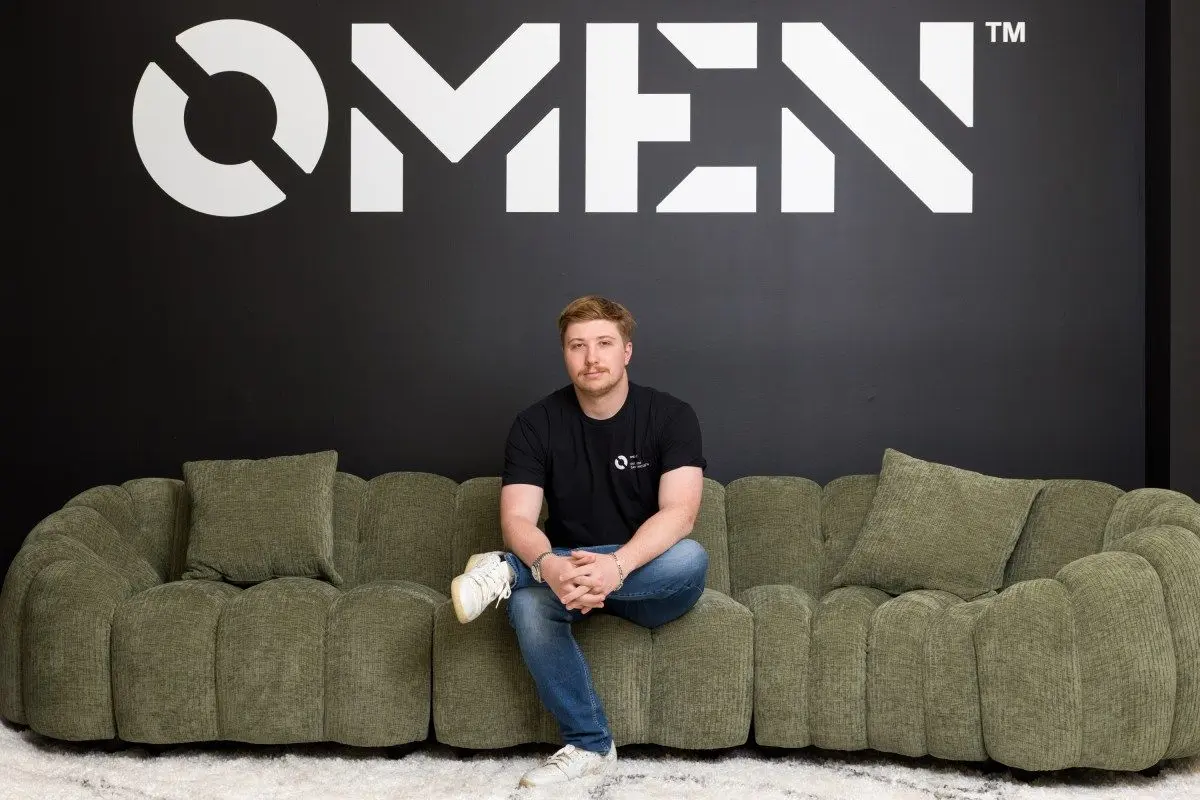
Source: TechCrunch
The startup, founded by 21-year-old Zach Laberge in 2024, has raised $40 million since its inception
1
. Laberge previously founded his first company at age 14 in 2020, raising $3 million to install sensors on construction equipment before dropping out of high school with his parents' support—his mother was a former Minister of Education for Ontario1
.How Bacterial Contamination in Liquid Cooling Threatens AI Compute Power
As data centers pack more GPU racks and push chips harder to meet AI compute power demands, they face an unexpected enemy: bacteria. The liquid coolant for liquid-cooled chips consists of water mixed with additives that inhibit bacterial growth
1
. To run chips hotter, data center managers increase the water proportion since water absorbs heat better, but this wetter mix creates conditions for nasty contamination that clogs the flow1
.The standard fix requires flushing the system, which means shutting down a rack for five or six hours at a potential cost of millions of dollars
1
. This AI data center downtime represents a massive operational risk as operators try to squeeze more from every rack. "Taking a sample, shipping it to a lab, and waiting days for results is dangerously inadequate when you're protecting billions in GPU infrastructure," Laberge explained3
.Real-Time Fluid Monitoring Prevents Costly Downtime
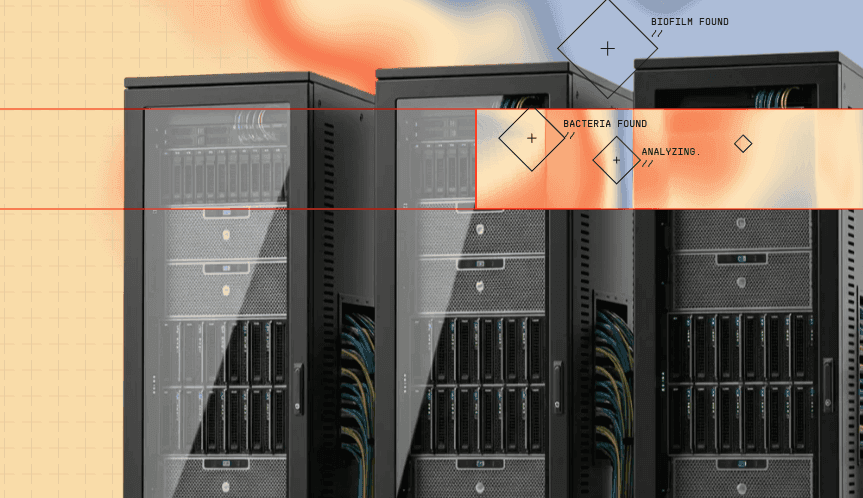
Omen AI's solution centers on a tiny spectrometer that provides liquid coolant monitoring in real time, spotting bacterial growth before it becomes a massive problem
1
. "You're not risking huge amounts of downtime because you have no insight into what's going on chemically," Laberge explained1
.
Source: SiliconANGLE
Beyond bacterial contamination, the device monitors coolant health by detecting wear particles. If the spectrometer sees copper or chromium, it indicates pumps wearing out; silicon signals seal degradation
1
. The system monitors more than 21 elemental signatures, replacing the old sample-and-wait model with continuous intelligence3
.Customers can choose between a permanent sensor array that connects directly to a server rack's fluid system or a portable diagnostic unit for immediate diagnosis
3
.Related Stories

From Construction Equipment to AI Infrastructure
Omen AI's pivot to data center cooling came through an unexpected path. Originally, the company focused on monitoring cooling fluids in heavy machinery, with Caterpillar dealerships as key early customers
1
. Since Caterpillar also supplies gas-powered turbines and generators for on-premises data center power, the transition happened organically.About six months ago, dealerships started asking whether Omen could monitor the buildings themselves
1
. "A lot of the dealerships were saying, 'Hey, we're starting to put sensors on our turbines, can you guys do anything on the building side of things?'" Laberge told TechCrunch1
. The buildings were full of fluid, from HVAC systems to chip cooling, and a fast-growing customer base came with them2
.Omen AI now works with about a dozen data center customers, including TensorWave, which is building an AI compute cloud on AMD chips
1
. "The fluid running through these massive systems is a critical variable that most of the industry is flying blind on," said Piotr Tomasik, TensorWave's president1
.Growing Market for Liquid Cooling Systems Optimization
The Omen AI Series A funding reflects broader investor interest in liquid cooling infrastructure as rack densities climb past what air can handle
2
. Iceotope, a liquid-cooling firm, raised $26 million as operators scramble to retrofit facilities2
.Omen AI faces competition from Pyxis, an established water-monitoring firm that rolled out its data center coolant monitoring product earlier this month
1
. However, recent improvements in optical technologies and signal processing software have unlocked new possibilities. "Hardware is just cheap enough that it makes sense to play at scale, and then signal processing lets us make more sense out of the noise," Laberge said1
."It's rare to see such a young founder who has the respect of established, large corporations in a space that moves a bit more slowly," said Cory Rellas, a partner at Nava Ventures who sits on Omen's board
1
. "For Omen in particular, much of our diligence came through our introductions with large customers which quickly validated their approach"1
.As the environmental cost of water-hungry data centers draws regulatory attention, monitoring solutions that optimize efficiency while preventing costly downtime will become increasingly critical to AI infrastructure operations
2
.References
Summarized by

Navi
[1]
[2]
Related Stories
Iceotope raises $26M Series B as AI rack densities push past what air cooling can handle
15 May 2026•Startups

Submer Secures $55.5M for Sustainable AI Data Center Cooling Solutions
04 Oct 2024•Technology

Orbital Industries raises $50M Series B to scale AI-designed cooling fluid and data centers
28 May 2026•Technology

Recent Highlights



Recent Highlights
Today's Top Stories












Don’t drown in AI news. We cut through the noise - filtering, ranking and summarizing the most important AI news, breakthroughs and research daily. Follow topics that matter to you and stay ahead.


