6 Sources
[1]
Insight: Trump crypto firm backs venture offering AI from restricted Chinese companies
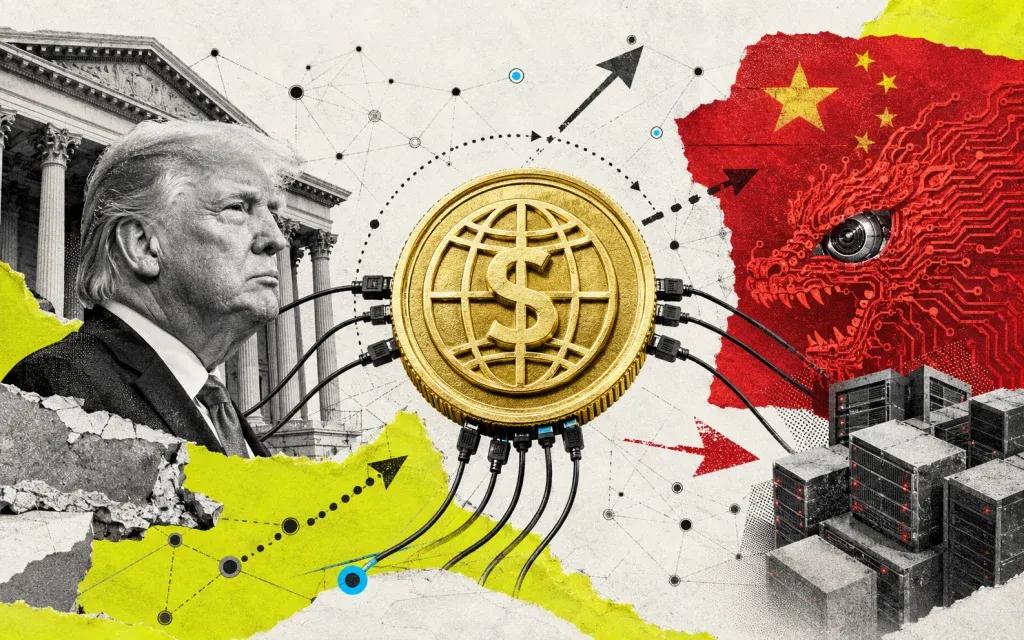
BOSTON, Aug 17 (Reuters) - President Donald Trump-backed World Liberty Financial is collaborating with a Hong Kong-based venture offering artificial-intelligence models developed by Chinese companies the U.S. administration has flagged for national security concerns. WorldClaw, founded earlier this year, offers customers access to a suite of AI models and accepts World Liberty's crypto tokens as payment. The Trump family, through its ownership stake, earns revenue from the use of World Liberty's tokens. A Reuters review found that 43 of the 90 models available through WorldClaw's website, or nearly half, were developed by Alibaba, Baidu, Z.ai and other Chinese technology companies the Trump administration says pose risks to national security and intellectual property. WorldClaw also offers access to dozens of models from U.S. firms such as OpenAI and Anthropic. There's nothing illegal about World Liberty's collaboration with WorldClaw or with WorldClaw's relationships with the Chinese companies. And such Chinese models, which are typically less expensive, are gaining traction globally, including among U.S. tech companies. Still, seven experts on Chinese technology, trade and government ethics said the business collaboration -- and the potential profits for President Trump through World Liberty -- runs counter to his administration's stance towards Chinese tech companies. "As the U.S. government tries to respond to the rise and threat of Chinese AI, it seems hypocritical to go out through WorldClaw to use these tools from China to try and make a bunch of money," said Sam Bresnick, a fellow at Georgetown University's Center for Security and Emerging Technology. Reuters could not establish the details of World Liberty's financial arrangements with WorldClaw or how much money the Trump family has made from crypto payments on the platform. The president's two eldest sons have publicly promoted WorldClaw, and a World Liberty executive has worked as an advisor to WorldClaw. World Liberty makes money from the use of its USD1 stablecoin, including when WorldClaw users elect it as their mode of payment for access to AI models. Like other U.S. dollar-based stablecoins, USD1 is backed by traditional assets like U.S. Treasury securities so that it maintains a constant value. The Trumps areentitled to a percentage of the interest earned on those assets. White House spokesperson Anna Kelly said in a statement that "there are no conflicts of interest" in the relationship between World Liberty and WorldClaw and that "President Trump only acts in the best interests of the American public." David Wachsman, a spokesman for World Liberty, said WorldClaw was an independent company and noted that major U.S. firms offer AI from Chinese as well as American tech companies. "This is a common and widely accepted approach," he said in an email. A WorldClaw spokesperson said in a statement that the company "helps American AI companies reach international users" and that "making a model available does not constitute an endorsement of its developer." CONCERNS GROW OVER AI ARMS RACE The Chinese AI models offered by WorldClaw are generally legal for individuals and businesses to use in the United States. But some of the Chinese companies producing them face U.S. government restrictions because of national-security concerns. The AI models offered by WorldClaw include those made by tech giants Alibaba and Baidu, which the U.S. Department of Defense has designated as Chinese military-aligned companies. The designation blocks the Pentagon from doing business with these Chinese firms. Other models come from Z.ai, formerly Zhipu AI, which is on the Department of Commerce's "entity list," a designation which severely restricts access to U.S. technology. Any U.S. company looking to sell products or services to companies on the entity list would have to apply for an export license, with a presumption of denial. According to the government listing, Z.ai advances China's "military modernization through the development and integration of advanced artificial intelligence research," which is "contrary to the national security and foreign policy interests." Also on offer are models from DeepSeek and Moonshot, Chinese tech companies which Trump administration officials have recently accused of stealing intellectual property from U.S. AI rivals. Baidu, Z.ai, DeepSeek and Moonshot did not respond to requests for comment. Alibaba, Baidu and Z.ai have disputed the U.S. government's determination that they are aligned with the Chinese military, while the Chinese government has disputed the claims of technology theft. "Alibaba is not a Chinese military company nor part of any military-civil fusion strategy," an Alibaba spokesperson said in an emailed statement. The spokesperson said the company's inclusion on the Pentagon's list was "arbitrary and capricious" and that Alibaba would sue to demand its removal. The Trump administration's response to fast-advancing Chinese AI models remains in flux. Early in his second term, Trump said it was important for the U.S. to beat China in technology and AI development. More recently, China and the U.S. have grown increasingly concerned about an AI arms race and tried to reduce tensions ahead of the planned summit next month between Trump and President Xi Jinping. "On one hand, people could say this is a China-hawk administration, and there is a tension with this type of business collaboration," said Peter Jeydel, an attorney who leads the sanctions and trade controls team at Troutman Pepper Locke in Washington. "On the other hand, it can be argued that this Trump presidency has been less aggressive in targeting Chinese companies in favor of a business-first approach. This collaboration would be consistent with that." The Departments of Commerce and Defense did not respond to questions from Reuters about WorldClaw. TRUMP SONS PROMOTE WORLDCLAW ON X Little is publicly known about WorldClaw. The company said through its spokesperson that it is an "independently owned and operated AI company" and its website says it is "not offered, managed, or controlled in any way" by World Liberty or its affiliates. But the two companies benefit from working together. The Trump family owns 38% of World Liberty and makes money through the sale or use of its crypto tokens, the $WLFI governance token and USD1 stablecoin. WorldClaw accepts USD1 as payment for services, among other forms of cryptocurrency. The WorldClaw spokesperson said that Ryan Fang, World Liberty's head of growth, has been a "helpful external adviser and supporter of WorldClaw, particularly regarding USD1 adoption, partnerships, and expanding global access to AI services." The spokesperson said Fang's role was "strictly advisory." The president's sons -- co-founders of World Liberty -- have promoted WorldClaw on social media platform X. Donald Trump Jr., said, opens new tab in May that he would meet winners of a WorldClaw contest at Mar-a-Lago, the family's club in Florida, while Eric Trump hailed the collaboration in a post, opens new tab as "the future of finance." So far, the Trump family's earnings from World Liberty token sales total more than $1.4 billion, the largest piece of the $2.3 billion the family has made from crypto, Reuters reported in June. While Trump sons Don Jr. and Eric operate the family business, known as the Trump Organization, the president retains ownership through a trust. CHINESE AI MAY PRESENT SECURITY RISKS WorldClaw's website says its WorldRouter tool, which functions as an aggregator providing access to various AI models, has more than 10,000 users, with more than 50 million requested tasks a day. WorldClaw is also developing an application for use of AI agents to perform personal tasks such as ordering food or summarizing emails, according to its website. Daniel Remler, a senior fellow at the Center for a New American Security and until recently a policy advisor at the U.S. State Department, said the Chinese AI models offered on WorldClaw could expose users to various risks: monitoring by the Chinese government, outputs that are censored, and the injection of malicious code that can hijack AI agents. The company says on its website that WorldClaw may share user inputs with the companies that provide its AI models. The WorldClaw spokesperson said that the company takes security seriously and applies privacy and security safeguards to its platform. Reporting by Lawrence Delevingne; Editing by Paritosh Bansal and Suzanne Goldenberg Our Standards: The Thomson Reuters Trust Principles., opens new tab * Suggested Topics: * Currencies Lawrence Delevingne Thomson Reuters Delevingne works primarily on enterprise stories related to finance. He joined Reuters in 2015 and previously reported for CNBC.com and Absolute Return. Delevingne is a graduate of Columbia's Graduate School of Journalism and Georgetown's School of Foreign Service.
[2]
A Trump-backed crypto firm is helping sell the very Chinese AI his government is trying to block
World Liberty Financial, the Trump family's crypto venture, is behind WorldClaw, a Hong Kong platform reselling models from US-restricted Chinese labs, payable in the family's own stablecoin. A crypto venture backed by Donald Trump and his family is helping to bankroll a platform that resells artificial intelligence from Chinese companies the US government has blacklisted, an arrangement that sits awkwardly beside the administration's own campaign to choke off China's AI industry. Reuters reported on Monday that World Liberty Financial, the Trump-linked crypto firm, is behind WorldClaw, a Hong Kong-based service offering access to models from developers Washington has flagged as security risks. WorldClaw's pitch is a menu of roughly 90 AI models, of which about 43 come from Chinese companies. They reportedly include Alibaba and Baidu, both designated by the Pentagon as aligned with China's military, and Z.ai, which is subject to US Commerce Department export restrictions. The line-up is also said to feature DeepSeek and Moonshot, two labs that American officials have accused of building their systems on stolen US technology. Models from OpenAI and Anthropic sit on the very same shelf. The financial plumbing is what turns an unremarkable AI reseller into a political problem. Customers can pay for WorldClaw using USD1, World Liberty Financial's dollar-pegged stablecoin, and each such transaction stands to benefit the venture, in which the Trump family is reported to hold a stake of around 38%. Put plainly, the president's family could earn from Americans buying access to the Chinese AI that the president's own government is straining to keep out. That is the crux of the discomfort. The administration has made countering Chinese AI a centrepiece of policy, from export controls on advanced chips to public accusations that Chinese labs are copying American models at industrial scale. A Trump-branded venture positioned to profit from selling those same models is, at the very least, an unusually literal collision between public policy and private interest. The tension is not abstract: the harder the administration pushes to restrict a given Chinese lab, the more valuable a frictionless way to buy its models quietly becomes. World Liberty and WorldClaw reject that framing. The two say they operate independently of one another, and that listing an AI model does not amount to endorsing its developer, no more than an app store vouches for every app it carries. The White House, for its part, has repeatedly maintained that Trump acts only in the public interest and holds no conflicts of interest, a position it restated in response to the reporting. World Liberty Financial has become the most lucrative and most scrutinised of the family's crypto ventures. It has drawn attention both for the scale of money involved and for the unusual company it has sometimes kept, and the president's crypto holdings have swelled into the billions on paper even as ethics lawyers warn about the fading line between the family business and the office he holds. The firm has lately pushed deeper into the mainstream too, winning preliminary US approval for a national bank charter tied to the same USD1 stablecoin that now doubles as a payment rail for WorldClaw. The WorldClaw arrangement crystallises a tension the crypto and AI booms keep throwing up: rules written in Washington, money made everywhere else. Stablecoins move value across borders with almost no friction, and a reseller in Hong Kong can offer a restricted Chinese model to a buyer in Ohio in a few clicks. Export controls were built for shipping containers and data centres, not for a checkout page settled in a president-linked token. None of this is unlawful on its face, and WorldClaw is far from the only route to a Chinese model. But the optics are striking, and the episode will sharpen an already loud argument about whether the Trump family's crypto empire can sit comfortably alongside the powers of the presidency. For now, the same government trying to wall off Chinese AI has a first family placed, however indirectly, to take a cut when Americans buy it regardless.
[3]
Trump Kids Back Venture That Sidesteps Trump Administration's AI Firewall
The Trump administration is telling the world to pick a side in the artificial intelligence race: America or China. The Trump children are telling the world, "We know where the back door is if you want in." According to Reuters, as Trump and company continue to refine their AI policy and close in on an anti-China firewall, his sons are using their crypto companies to profit from workarounds that would offer access to banned Chinese AI models. First, the policy. Per Reuters, the State Department is preparing a document that will warn countries that working with China on AI initiatives is likely to get them cut off from America's efforts. The letter will reportedly go out to 35 signatories who joined the United States' AI Opportunity Statement in June of this year. Those countries will have the opportunity to join Pax Silica, a US-created framework for securing supply chains for AI -- but only if they choose not to join China's competing framework, the World Artificial Intelligence Cooperation Organization (WAICO). There are currently several overlapping members in these initiatives -- most notably Kazakhstan, which is rich with the minerals and materials needed to build AI infrastructure. Losing Kazakhstan would be a pretty major blow for the US, but the Trump administration is apparently willing to take the risk and issue an ultimatum as part of its ongoing crackdown on China. The administration has also been mulling ways to ban Chinese AI models from being used in the US, despite the urging of businesses that prefer those options because they're cheaper than American alternatives. But if the Trump administration drops the Silicon Curtain, the Trump family will find a way to lift the veil. Reuters reports that a Hong Kong-based startup called WorldClaw is offering access to Chinese models, including those subject to a Trumpian crackdown. One of the ways that people can pay WorldClaw to access those models is through USD1, the stablecoin owned and operated by World Liberty Financial, the cryptocurrency company that is, in part, owned and operated by the Trump sons, Eric and Don Jr. Per Reuters, World Liberty Financial doesn't own a part of WorldClaw, which gives enough plausible distance between the organizations to claim there's nothing shady going on. But there's no real way around the fact that the organization profits from every transaction involving USD1. And the Trump kids aren't exactly creating much distance. Both Don Jr. and Eric tweeted out posts promoting the fact that WorldClaw was accepting USD1 to access AI models, including those administration-maligned Chinese options. It's fitting that USD1 is positioned to be the official currency of profiting off a Trump policy, given that it was launched by the Trump family ahead of the administration loosening rules on stablecoins in the first place. If you ever wonder what the Trump administration is going to do, just take a look at what venture his front-running sons are supporting and work backwards.
[4]
Trump's World Liberty Financial backs AI platform with Chinese models
According to a Reuters review, 43 of the 90 models on WorldClaw's website -- just under half -- originated from Chinese technology companies, among them Alibaba, Baidu, Z.ai, DeepSeek, and Moonshot. WorldClaw also offers models from U.S. companies such as OpenAI and Anthropic. The platform accepts World Liberty's USD1 stablecoin as payment, and the Trump family, which owns 38% of World Liberty, earns revenue from the use of its crypto tokens. Among the Chinese models available are those from Alibaba and Baidu -- both companies the U.S. Department of Defense has placed on a list of Chinese military-affiliated firms, a status that bars the Pentagon from contracting with them. Z.ai, which was previously called Zhipu AI, is listed on the Department of Commerce's entity list -- a designation that sharply limits the firm's access to U.S. technology and means that American companies wishing to do business with it must seek an export license that is presumptively refused. The government listing states that Z.ai furthers China's military capabilities by developing and integrating advanced artificial intelligence, in ways the U.S. deems contrary to its national security and foreign policy interests. DeepSeek and Moonshot are among companies Trump administration officials have accused of stealing intellectual property from U.S. AI rivals.
[5]
Trump Crypto Firm Backs Venture Offering AI From Restricted Chinese Companies
BOSTON, Aug 17 (Reuters) - President Donald Trump-backed World Liberty Financial is collaborating with a Hong Kong-based venture offering artificial-intelligence models developed by Chinese companies the U.S. administration has flagged for national security concerns. WorldClaw, founded earlier this year, offers customers access to a suite of AI models and accepts World Liberty's crypto tokens as payment. The Trump family, through its ownership stake, earns revenue from the use of World Liberty's tokens. A Reuters review found that 43 of the 90 models available through WorldClaw's website, or nearly half, were developed by Alibaba, Baidu, Z.ai and other Chinese technology companies the Trump administration says pose risks to national security and intellectual property. WorldClaw also offers access to dozens of models from U.S. firms such as OpenAI and Anthropic. There's nothing illegal about World Liberty's collaboration with WorldClaw or with WorldClaw's relationships with the Chinese companies. And such Chinese models, which are typically less expensive, are gaining traction globally, including among U.S. tech companies. Still, seven experts on Chinese technology, trade and government ethics said the business collaboration -- and the potential profits for President Trump through World Liberty -- runs counter to his administration's stance towards Chinese tech companies. "As the U.S. government tries to respond to the rise and threat of Chinese AI, it seems hypocritical to go out through WorldClaw to use these tools from China to try and make a bunch of money," said Sam Bresnick, a fellow at Georgetown University's Center for Security and Emerging Technology. Reuters could not establish the details of World Liberty's financial arrangements with WorldClaw or how much money the Trump family has made from crypto payments on the platform. The president's two eldest sons have publicly promoted WorldClaw, and a World Liberty executive has worked as an advisor to WorldClaw. World Liberty makes money from the use of its USD1 stablecoin, including when WorldClaw users elect it as their mode of payment for access to AI models. Like other U.S. dollar-based stablecoins, USD1 is backed by traditional assets like U.S. Treasury securities so that it maintains a constant value. The Trumps are entitled to a percentage of the interest earned on those assets. White House spokesperson Anna Kelly said in a statement that "there are no conflicts of interest" in the relationship between World Liberty and WorldClaw and that "President Trump only acts in the best interests of the American public." David Wachsman, a spokesman for World Liberty, said WorldClaw was an independent company and noted that major U.S. firms offer AI from Chinese as well as American tech companies. "This is a common and widely accepted approach," he said in an email. A WorldClaw spokesperson said in a statement that the company "helps American AI companies reach international users" and that "making a model available does not constitute an endorsement of its developer." CONCERNS GROW OVER AI ARMS RACE The Chinese AI models offered by WorldClaw are generally legal for individuals and businesses to use in the United States. But some of the Chinese companies producing them face U.S. government restrictions because of national-security concerns. The AI models offered by WorldClaw include those made by tech giants Alibaba and Baidu, which the U.S. Department of Defense has designated as Chinese military-aligned companies. The designation blocks the Pentagon from doing business with these Chinese firms. Other models come from Z.ai, formerly Zhipu AI, which is on the Department of Commerce's "entity list," a designation which severely restricts access to U.S. technology. Any U.S. company looking to sell products or services to companies on the entity list would have to apply for an export license, with a presumption of denial. According to the government listing, Z.ai advances China's "military modernization through the development and integration of advanced artificial intelligence research," which is "contrary to the national security and foreign policy interests." Also on offer are models from DeepSeek and Moonshot, Chinese tech companies which Trump administration officials have recently accused of stealing intellectual property from U.S. AI rivals. Baidu, Z.ai, DeepSeek and Moonshot did not respond to requests for comment. Alibaba, Baidu and Z.ai have disputed the U.S. government's determination that they are aligned with the Chinese military, while the Chinese government has disputed the claims of technology theft. "Alibaba is not a Chinese military company nor part of any military-civil fusion strategy," an Alibaba spokesperson said in an emailed statement. The spokesperson said the company's inclusion on the Pentagon's list was "arbitrary and capricious" and that Alibaba would sue to demand its removal. The Trump administration's response to fast-advancing Chinese AI models remains in flux. Early in his second term, Trump said it was important for the U.S. to beat China in technology and AI development. More recently, China and the U.S. have grown increasingly concerned about an AI arms race and tried to reduce tensions ahead of the planned summit next month between Trump and President Xi Jinping. "On one hand, people could say this is a China-hawk administration, and there is a tension with this type of business collaboration," said Peter Jeydel, an attorney who leads the sanctions and trade controls team at Troutman Pepper Locke in Washington. "On the other hand, it can be argued that this Trump presidency has been less aggressive in targeting Chinese companies in favor of a business-first approach. This collaboration would be consistent with that." The Departments of Commerce and Defense did not respond to questions from Reuters about WorldClaw. TRUMP SONS PROMOTE WORLDCLAW ON X Little is publicly known about WorldClaw. The company said through its spokesperson that it is an "independently owned and operated AI company" and its website says it is "not offered, managed, or controlled in any way" by World Liberty or its affiliates. But the two companies benefit from working together. The Trump family owns 38% of World Liberty and makes money through the sale or use of its crypto tokens, the $WLFI governance token and USD1 stablecoin. WorldClaw accepts USD1 as payment for services, among other forms of cryptocurrency. The WorldClaw spokesperson said that Ryan Fang, World Liberty's head of growth, has been a "helpful external adviser and supporter of WorldClaw, particularly regarding USD1 adoption, partnerships, and expanding global access to AI services." The spokesperson said Fang's role was "strictly advisory." The president's sons -- co-founders of World Liberty -- have promoted WorldClaw on social media platform X. Donald Trump Jr., said in May that he would meet winners of a WorldClaw contest at Mar-a-Lago, the family's club in Florida, while Eric Trump hailed the collaboration in a post as "the future of finance." So far, the Trump family's earnings from World Liberty token sales total more than $1.4 billion, the largest piece of the $2.3 billion the family has made from crypto, Reuters reported in June. While Trump sons Don Jr. and Eric operate the family business, known as the Trump Organization, the president retains ownership through a trust. CHINESE AI MAY PRESENT SECURITY RISKS WorldClaw's website says its WorldRouter tool, which functions as an aggregator providing access to various AI models, has more than 10,000 users, with more than 50 million requested tasks a day. WorldClaw is also developing an application for use of AI agents to perform personal tasks such as ordering food or summarizing emails, according to its website. Daniel Remler, a senior fellow at the Center for a New American Security and until recently a policy advisor at the U.S. State Department, said the Chinese AI models offered on WorldClaw could expose users to various risks: monitoring by the Chinese government, outputs that are censored, and the injection of malicious code that can hijack AI agents. The company says on its website that WorldClaw may share user inputs with the companies that provide its AI models. The WorldClaw spokesperson said that the company takes security seriously and applies privacy and security safeguards to its platform. (Reporting by Lawrence Delevingne; Editing by Paritosh Bansal and Suzanne Goldenberg)
[6]
Trump crypto firm backs venture offering AI from restricted Chinese companies
BOSTON, Aug 17 (Reuters) - President Donald Trump-backed World Liberty Financial is collaborating with a Hong Kong-based venture offering artificial-intelligence models developed by Chinese companies the U.S. administration has flagged for national security concerns. WorldClaw, founded earlier this year, offers customers access to a suite of AI models and accepts World Liberty's crypto tokens as payment. The Trump family, through its ownership stake, earns revenue from the use of World Liberty's tokens. A Reuters review found that 43 of the 90 models available through WorldClaw's website, or nearly half, were developed by Alibaba, Baidu, Z.ai and other Chinese technology companies the Trump administration says pose risks to national security and intellectual property. WorldClaw also offers access to dozens of models from U.S. firms such as OpenAI and Anthropic. There's nothing illegal about World Liberty's collaboration with WorldClaw or with WorldClaw's relationships with the Chinese companies. And such Chinese models, which are typically less expensive, are gaining traction globally, including among U.S. tech companies. Still, seven experts on Chinese technology, trade and government ethics said the business collaboration -- and the potential profits for President Trump through World Liberty -- runs counter to his administration's stance towards Chinese tech companies. "As the U.S. government tries to respond to the rise and threat of Chinese AI, it seems hypocritical to go out through WorldClaw to use these tools from China to try and make a bunch of money," said Sam Bresnick, a fellow at Georgetown University's Center for Security and Emerging Technology. Reuters could not establish the details of World Liberty's financial arrangements with WorldClaw or how much money the Trump family has made from crypto payments on the platform. The president's two eldest sons have publicly promoted WorldClaw, and a World Liberty executive has worked as an advisor to WorldClaw. World Liberty makes money from the use of its USD1 stablecoin, including when WorldClaw users elect it as their mode of payment for access to AI models. Like other U.S. dollar-based stablecoins, USD1 is backed by traditional assets like U.S. Treasury securities so that it maintains a constant value. The Trumps are entitled to a percentage of the interest earned on those assets. White House spokesperson Anna Kelly said in a statement that "there are no conflicts of interest" in the relationship between World Liberty and WorldClaw and that "President Trump only acts in the best interests of the American public." David Wachsman, a spokesman for World Liberty, said WorldClaw was an independent company and noted that major U.S. firms offer AI from Chinese as well as American tech companies. "This is a common and widely accepted approach," he said in an email. A WorldClaw spokesperson said in a statement that the company "helps American AI companies reach international users" and that "making a model available does not constitute an endorsement of its developer." CONCERNS GROW OVER AI ARMS RACE The Chinese AI models offered by WorldClaw are generally legal for individuals and businesses to use in the United States. But some of the Chinese companies producing them face U.S. government restrictions because of national-security concerns. The AI models offered by WorldClaw include those made by tech giants Alibaba and Baidu, which the U.S. Department of Defense has designated as Chinese military-aligned companies. The designation blocks the Pentagon from doing business with these Chinese firms. Other models come from Z.ai, formerly Zhipu AI, which is on the Department of Commerce's "entity list," a designation which severely restricts access to U.S. technology. Any U.S. company looking to sell products or services to companies on the entity list would have to apply for an export license, with a presumption of denial. According to the government listing, Z.ai advances China's "military modernization through the development and integration of advanced artificial intelligence research," which is "contrary to the national security and foreign policy interests." Also on offer are models from DeepSeek and Moonshot, Chinese tech companies which Trump administration officials have recently accused of stealing intellectual property from U.S. AI rivals. Baidu, Z.ai, DeepSeek and Moonshot did not respond to requests for comment. Alibaba, Baidu and Z.ai have disputed the U.S. government's determination that they are aligned with the Chinese military, while the Chinese government has disputed the claims of technology theft. "Alibaba is not a Chinese military company nor part of any military-civil fusion strategy," an Alibaba spokesperson said in an emailed statement. The spokesperson said the company's inclusion on the Pentagon's list was "arbitrary and capricious" and that Alibaba would sue to demand its removal. The Trump administration's response to fast-advancing Chinese AI models remains in flux. Early in his second term, Trump said it was important for the U.S. to beat China in technology and AI development. More recently, China and the U.S. have grown increasingly concerned about an AI arms race and tried to reduce tensions ahead of the planned summit next month between Trump and President Xi Jinping. "On one hand, people could say this is a China-hawk administration, and there is a tension with this type of business collaboration," said Peter Jeydel, an attorney who leads the sanctions and trade controls team at Troutman Pepper Locke in Washington. "On the other hand, it can be argued that this Trump presidency has been less aggressive in targeting Chinese companies in favor of a business-first approach. This collaboration would be consistent with that." The Departments of Commerce and Defense did not respond to questions from Reuters about WorldClaw. TRUMP SONS PROMOTE WORLDCLAW ON X Little is publicly known about WorldClaw. The company said through its spokesperson that it is an "independently owned and operated AI company" and its website says it is "not offered, managed, or controlled in any way" by World Liberty or its affiliates. But the two companies benefit from working together. The Trump family owns 38% of World Liberty and makes money through the sale or use of its crypto tokens, the $WLFI governance token and USD1 stablecoin. WorldClaw accepts USD1 as payment for services, among other forms of cryptocurrency. The WorldClaw spokesperson said that Ryan Fang, World Liberty's head of growth, has been a "helpful external adviser and supporter of WorldClaw, particularly regarding USD1 adoption, partnerships, and expanding global access to AI services." The spokesperson said Fang's role was "strictly advisory." The president's sons -- co-founders of World Liberty -- have promoted WorldClaw on social media platform X. Donald Trump Jr., said in May that he would meet winners of a WorldClaw contest at Mar-a-Lago, the family's club in Florida, while Eric Trump hailed the collaboration in a post as "the future of finance." So far, the Trump family's earnings from World Liberty token sales total more than $1.4 billion, the largest piece of the $2.3 billion the family has made from crypto, Reuters reported in June. While Trump sons Don Jr. and Eric operate the family business, known as the Trump Organization, the president retains ownership through a trust. CHINESE AI MAY PRESENT SECURITY RISKS WorldClaw's website says its WorldRouter tool, which functions as an aggregator providing access to various AI models, has more than 10,000 users, with more than 50 million requested tasks a day. WorldClaw is also developing an application for use of AI agents to perform personal tasks such as ordering food or summarizing emails, according to its website. Daniel Remler, a senior fellow at the Center for a New American Security and until recently a policy advisor at the U.S. State Department, said the Chinese AI models offered on WorldClaw could expose users to various risks: monitoring by the Chinese government, outputs that are censored, and the injection of malicious code that can hijack AI agents. The company says on its website that WorldClaw may share user inputs with the companies that provide its AI models. The WorldClaw spokesperson said that the company takes security seriously and applies privacy and security safeguards to its platform. (Reporting by Lawrence Delevingne; Editing by Paritosh Bansal and Suzanne Goldenberg)
Share
Copy Link
World Liberty Financial, the Trump-backed crypto firm, collaborates with WorldClaw, a Hong Kong-based platform offering Chinese AI models from companies like Alibaba and Baidu that face U.S. national security restrictions. The Trump family earns revenue through their USD1 stablecoin used for payments, creating a conflict of interest as the administration simultaneously restricts these same Chinese companies.
World Liberty Financial, the Trump-backed crypto firm in which the Trump family holds a 38% ownership stake, is collaborating with WorldClaw, a Hong Kong-based venture that provides access to Chinese AI models from companies the U.S. administration has flagged for national security concerns
1
. The platform accepts World Liberty Financial's USD1 stablecoin as payment, generating revenue for the Trump family through interest earned on the traditional assets backing the stablecoin5
. This arrangement positions the president's family to profit from Americans purchasing access to the very Chinese AI models his administration is working to restrict2
.Source: Market Screener
A Reuters review found that 43 of the 90 models available through WorldClaw's website were developed by Alibaba, Baidu, Z.ai, DeepSeek, Moonshot, and other Chinese technology companies
1
. These Chinese AI models sit alongside dozens of models from U.S. firms such as OpenAI and Anthropic on the platform4
. Among the Chinese companies represented are Alibaba and Baidu, both designated by the U.S. Department of Defense as Chinese military-aligned companies, a status that blocks the Pentagon from doing business with these firms5
. Z.ai, formerly Zhipu AI, appears on the Department of Commerce's entity list, which severely restricts the company's access to U.S. technology and requires American companies to apply for export licenses with a presumption of denial1
.The U.S. government listing states that Z.ai advances China's military modernization through the development and integration of advanced artificial intelligence research, which is contrary to U.S. national security and foreign policy interests
5
. Trump administration officials have recently accused DeepSeek and Moonshot, both available through WorldClaw, of stealing intellectual property from U.S. AI rivals1
. While there is nothing illegal about World Liberty Financial's collaboration with WorldClaw or WorldClaw's relationships with the Chinese companies, and such Chinese AI models are typically less expensive and gaining traction globally, the arrangement raises questions about geopolitical tensions and conflict of interest5
.Related Stories
Seven experts on Chinese technology, trade and government ethics said the business collaboration and the potential profits for President Trump through World Liberty Financial run counter to his administration's stance towards Chinese tech companies
1
. Sam Bresnick, a fellow at Georgetown University's Center for Security and Emerging Technology, stated: "As the U.S. government tries to respond to the rise and threat of Chinese AI, it seems hypocritical to go out through WorldClaw to use these tools from China to try and make a bunch of money"5
. The president's two eldest sons have publicly promoted WorldClaw, and a World Liberty Financial executive has worked as an advisor to the Hong Kong-based venture1
.
Source: Gizmodo
White House spokesperson Anna Kelly maintained that there are no conflicts of interest in the relationship between World Liberty Financial and WorldClaw, stating that President Trump only acts in the best interests of the American public
1
. David Wachsman, a spokesman for World Liberty Financial, said WorldClaw was an independent company and noted that major U.S. firms offer AI from restricted Chinese companies as well as American tech companies, calling this a common and widely accepted approach5
. A WorldClaw spokesperson emphasized that the company helps American AI companies reach international users and that making a model available does not constitute an endorsement of its developer1
. The arrangement crystallizes tensions in the U.S.-China AI competition, as export restrictions were built for physical infrastructure rather than digital platforms settled in cryptocurrency, creating an AI firewall that can be circumvented through platforms like WorldClaw2
.Summarized by
Navi
[2]
06 Aug 2026•Policy and Regulation

09 Sept 2025•Business and Economy

18 Jul 2026•Policy and Regulation

1
Technology

2
Technology

3
Policy and Regulation