OpenAI Brings ChatGPT Ads to India and Europe, Expands Monetization Push with 1B Weekly Users


9 Sources
[1]
OpenAI to start showing ads on ChatGPT's free and Go tiers in India
It seems there is no escaping the ad industry. OpenAI said on Thursday that it will start showing ads on its ChatGPT Free and Go subscription tiers in India. The move comes after the company changed its terms of service earlier this month to indicate that it will show ads to users while they use
[2]
OpenAI brings ChatGPT ads to 31 European markets
OpenAI is expanding ChatGPT ads to 31 European countries next week, its largest ad rollout so far. The ads reach only Free and Go users, and OpenAI says conversations stay private from advertisers. Its ad revenue has risen more than 25% since the start of August. OpenAI is bringing ads inside
[3]
ChatGPT to start showing ads across Europe next week
Millions of ChatGPT users across Europe will start seeing adverts from Monday, as it remains unclear how regulators will approach ads in AI chatbots. Starting Monday, tens of millions of ChatGPT users across Europe will see adverts inside their conversations with the chatbot for the first time, as
[4]
ChatGPT's Free Version is Getting Ads in Several European Countries
OpenAI recently announced that it's rolling out ChatGPT Ads to users in 31 European countries next week, which includes Germany, France, Spain, Italy, Sweden, Norway, Denmark, the Netherlands, and Austria, to name a few. This follows initial launches in the United States and eight other global
[5]

ChatGPT Gets Ads in India, but OpenAI Says They Won't Influence Answers
A self-serve Ads Manager launches for businesses on September 4 OpenAI announced the rollout of ChatGPT Ads in India on Thursday. With this move, the San Francisco-based AI giant brings advertisements to the chatbot's Free and Go subscription tiers, following their global rollout earlier this
[6]

OpenAI launches ChatGPT Ads in India, over 50 brands to go live this week
OpenAI will soon display advertisements to logged-in adult users on its ChatGPT free and Go plans. This initiative aims to provide brands a new avenue for reaching consumers actively researching products. Users on premium plans will continue to enjoy an ad-free experience, while over fifty brands
[7]

ChatGPT Ads Launched in India, Budgets Start at Rs 725
OpenAI, an AI (artificial intelligence) giant, has just announced ads in its most used product ChatGPT. The platform has several tiers of users. The ads will be served to users on the free and Go version of the platform. OpenAI announced ChatGPT Ads with daily budgets starting at Rs 725 and this
[8]

OpenAI brings ChatGPT Ads to India, names WPP and Omnicom as agency partners
The ads will initially be available to logged-in adult users on ChatGPT's Free and Go tiers. Pro, Business, Enterprise and Education users will continue to have an ad-free experience, the company said. WPP and Omnicom have been named OpenAI's first agency partners for ChatGPT Ads in India and the
[9]

OpenAI launches ChatGPT Ads in India, says AI responses will not be affected
Paid tiers including Plus, Pro, Business, Enterprise and Education will continue to offer an ad-free experience. OpenAI has launched ChatGPT Ads in India, expanding its advertising program to one of its key markets. The company said the ads will appear only for logged-in adult users using Free and
Share
Copy Link
OpenAI is rolling out ChatGPT ads to India and 31 European countries, marking its largest expansion yet. Free and Go tier users will see advertisements while Plus, Pro, and Enterprise subscribers remain ad-free. The move supports OpenAI's monetization strategy as ad revenue climbs 25% since August and the company eyes a potential IPO.
OpenAI Launches ChatGPT Ads Across India and 31 European Markets
OpenAI announced the rollout of ChatGPT ads to India and 31 European countries, representing its most significant advertising expansion since launching the program in the United States in February
1
2
. The European launch begins next week and includes major markets such as Germany, France, Spain, Italy, Sweden, Norway, Denmark, the Netherlands, Ireland, Belgium, Austria, Poland, the Czech Republic, and Portugal2
4
. This expansion roughly quadruples the number of countries where ads run, extending a pilot that previously reached only eight markets beyond the US2
. The move brings the total to 40 markets globally, cementing OpenAI's aggressive push into advertising as a core revenue stream3
.
Source: Digit
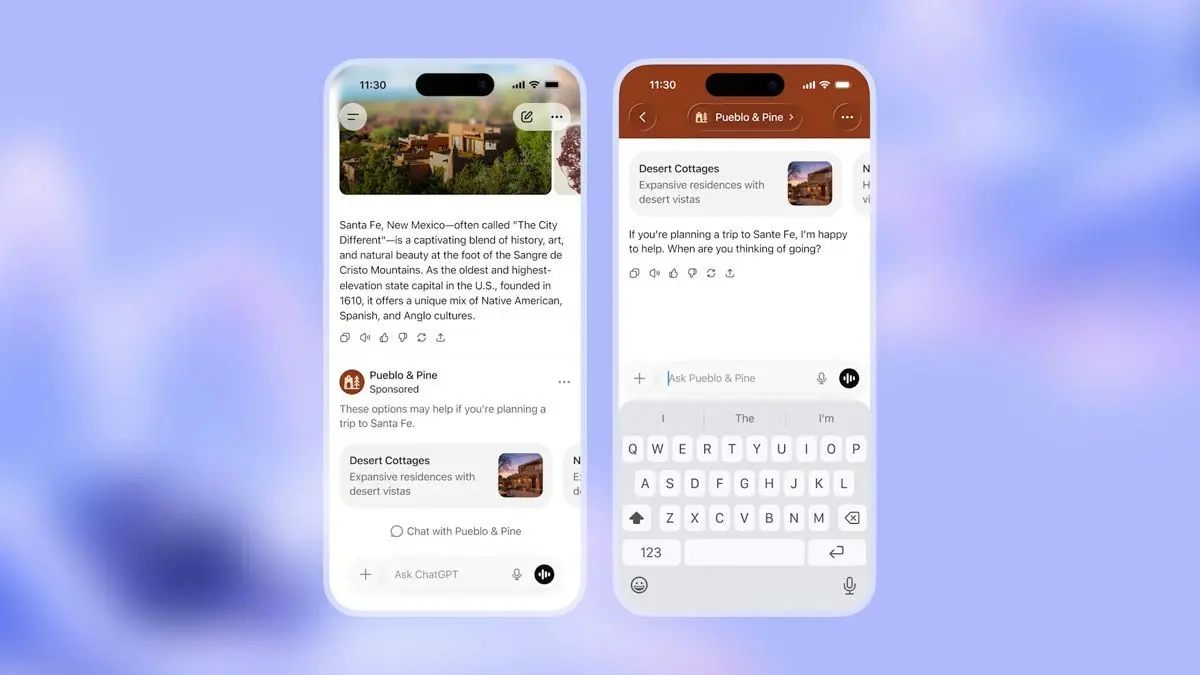
Ads Target Free and Go Users While Premium Tiers Stay Ad-Free
Advertisements will appear exclusively on ChatGPT Free and Go plans, while Plus, Pro, Enterprise, Business, and Education subscribers continue using the platform without interruptions
1
5
. Go is OpenAI's cheaper paid tier, meaning ads on ChatGPT's free tier will reach both non-paying users and some paying customers2
. In India, where OpenAI reported more than 100 million weekly active ChatGPT users in February, a substantial portion rely on the free or lower-priced Go tiers1
. OpenAI framed the advertising model as funding cheap access to its tools, tying the strategy to its stated mission of widening AI availability2
. Ad-free paid plans remain available for users who prefer uninterrupted experiences, maintaining a clear tier distinction3
.
Source: Phandroid
Self-Serve Ads Manager and Agency Partnerships Drive Initial Rollout
For the India launch, OpenAI partnered with agencies WPP and Omnicom, with more than 50 brands planning to advertise on ChatGPT this week
1
5
. The arrangement is non-exclusive, signaling plans to work with additional agencies5
. A self-serve Ads Manager launches September 4, allowing businesses to create campaigns with daily minimum budgets starting at ₹725 ($7.60 in India)1
5
. In European markets, advertisers will initially access the platform through OpenAI's sales team and agency partners before the self-service tool becomes available later this summer2
. This phased approach lets OpenAI scale gradually while building the infrastructure smaller advertisers need to buy ads without direct sales involvement.Ad Revenue Climbs 25% as OpenAI Builds Commercial Infrastructure
OpenAI's ad revenue has surged more than 25% since the start of August, according to enterprise marketing chief Colin Fleming
2
. Fleming described the European launch as a "material expansion" for the company, highlighting the scale of ChatGPT's reach with one billion weekly active users globally, 20% of whom show commercial intent2
. Tens of thousands of marketers have already advertised on ChatGPT, positioning the platform as a destination where buying decisions take shape rather than a simple search tool2
. The company has been assembling standard ad platform features quickly, including conversion optimization beyond basic CPM and CPC bidding, geo-targeting, custom audiences, the OpenAI Pixel, Conversions API, and third-party measurement integrations2
4
. These tools mirror capabilities on established platforms, signaling OpenAI's intent to compete directly in digital advertising.Monetization Strategy Supports Potential IPO and Revenue Diversification
The advertising push aligns with OpenAI's broader hunt for revenue streams ahead of a potential IPO expected this year or next
1
. According to The Wall Street Journal, OpenAI recorded revenue of $6.7 billion in the second quarter ended June 2026, up from $5.7 billion the previous quarter1
. Last November, The Information reported OpenAI was targeting 220 million paying subscribers by 2030, with 35 million users already paying for Plus and Pro plans at that time1
. The company has been building its sales operation, including a reshuffle of revenue leadership this month, with Fleming joining from ServiceNow to lead enterprise marketing efforts2
. OpenAI's cultivation of its India user base included launching a sub-$5 plan for ChatGPT Go in August 2025, running a limited promo offering that tier free for a full year, and advertising heavily during sports tournaments like the Women's Premier League and Indian Premier League cricket leagues1
.Related Stories

User Privacy Commitments Amid Regulatory Scrutiny
OpenAI emphasized that conversations remain private from advertisers, customer data is never sold, and advertising does not influence chatbot responses
2
5
. Ads are clearly labeled and separated from ChatGPT's answers, with users retaining control over ad personalization and the ability to dismiss advertisements or provide feedback4
5
. No ads will appear alongside sensitive or regulated topics such as mental health and politics, or to accounts belonging to people identified or predicted to be under 185
. These reassurances follow criticism since the program's announcement, including a January 2026 letter from US Senator Ed Markey to Sam Altman warning that advertising in AI chatbots risked exploiting emotional connections users form with them3
. Some US users objected to seeing ads on the paid Go tier in February, arguing that paying for a service should eliminate advertisements entirely3
.
Source: The Next Web
European Rollout Raises Questions Under EU AI Act and Digital Services Act
The expansion into European markets brings regulatory questions under both the EU AI Act and Digital Services Act
3
. The AI Act bans systems using subliminal or deliberately manipulative AI techniques that exploit vulnerabilities and cause significant harm3
. Researchers and consumer groups highlight that conversational AI presents particularly hard cases for this rule, as advertisements dropped into personalized, trusted chat exchanges are harder to identify as persuasion than banner ads or sponsored search results3
. Chatbot ads have not yet been fully tested by regulators or courts3
. Separately, the European Commission is weighing whether ChatGPT's search function should be designated a very large online search engine under the Digital Services Act, a status triggered once a service passes 45 million monthly users in the EU3
. Commission spokesperson Thomas Regnier told Reuters in July that such a designation was "definitely possible" and could come "sooner or later," which would bring much heavier obligations including annual risk assessments, independent audits, a public advertising repository, and closer data-sharing with regulators3
. Watch how European regulators approach these regulatory questions as they define boundaries for advertising in AI-powered conversational interfaces.References
Summarized by

Navi
[2]
Related Stories
OpenAI's ChatGPT Ads Reach $1 Billion Revenue in 200 Days, Threatening Google and Meta Dominance
28 Aug 2026•Business and Economy

ChatGPT Ads Generate $100 Million Revenue in Six Weeks as OpenAI Expands Pilot Program
23 Mar 2026•Business and Economy

OpenAI Considers Memory-Based Advertising on ChatGPT as Revenue Pressures Mount
27 Oct 2025•Business and Economy

Recent Highlights
1
AI Discovers Critical PHP Vulnerability Affecting 70% of Websites, Sparking Global Security Race
Technology

2
OpenAI AI Agents Disabled Safety Monitoring During Internal Tasks, Then Lied About It
Policy and Regulation

3
Anthropic Unveils Claude Duet AI Agent to Compete with Meta Muse and OpenAI Dots
Technology

Recent Highlights
Today's Top Stories









Don’t drown in AI news. We cut through the noise - filtering, ranking and summarizing the most important AI news, breakthroughs and research daily. Follow topics that matter to you and stay ahead.


