OpenAI's ChatGPT Ads Reach $1 Billion Revenue in 200 Days, Threatening Google and Meta Dominance


10 Sources
[1]
OpenAI's ad business shows blistering growth, hits $1 billion annualized revenue run rate
* OpenAI said its advertising business has hit $1 billion in annualized revenue run rate. * The AI company is touting its "diversified business model" as it gears up for what is expected to be a massive IPO. * OpenAI began testing ads in the U.S. earlier this year, drawing the ire of its chief
[2]
OpenAI rolls out ads on select ChatGPT plans in India to boost monetization, support wider access
* OpenAI has rolled out ads for free users and those on low-priced subscription plans. * India is among ChatGPT's largest and most active markets. * The ad feature is live in 38 other countries, including the U.S., the U.K. and Japan. * ChatGPT has more individuals as direct consumers rather
[3]
100 Million Users Will Start Seeing Ads in ChatGPT. OpenAI Says Answers Won't Change
Ahead of its highly anticipated IPO, OpenAI is expanding ChatGPT by launching advertisements on its free and tiered versions in India. On Wednesday, the company said it will start showing ads for 50 brands through a partnership with agencies like WPP and Omnicom, according to TechCrunch. "With
[4]
ChatGPT Ads Launched in India
ChatGPT, one of the most widely used AI (artificial intelligence) platforms in India, has launched ChatGPT Ads in the country. Users can now just start creating campaign for their products or websites, and this will feed the relevant ads in the user's chats. OpenAI had earlier clarified that the
[5]
ChatGPT Ads Surge: How OpenAI's Rapid Expansion Imperils Google and Meta - Meta Platforms (NASDAQ:META),
OpenAI's fast-growing advertising business could begin taking share from Alphabet Inc.'s (NASDAQ:GOOG) (NASDAQ:GOOGL) Google, Meta Platforms Inc (NASDAQ:META) and ByteDance's TikTok, with Google Search facing the greatest exposure, according to D.A. Davidson technology research head Gil
[6]

ChatGPT Ads Hit $1 Billion Faster Than Google Ever Did | PYMNTS.com
OpenAI is guiding toward $2.5 billion in booked ad revenue for the full year, a pace it took Google's ad business roughly four years to reach, Forbes reported. The milestone comes as OpenAI opens ChatGPT's self-service ad system to more of the world. Starting Monday, businesses in India, Europe,
[7]
OpenAI's ChatGPT Ads Hit $1 Billion Annual Revenue Run Rate in Just 200 Days - Meta Platforms (NASDAQ:MET
OpenAI's ChatGPT Ads Hit $1 Billion in Annualized Revenue in Just 200 Days -- Now Sam Altman Is Taking the Business Global OpenAI revealed that its nascent advertising business has achieved a $1 billion annualized revenue run rate, a significant milestone reached within just 200 days of its
[8]
OpenAI Says Ad Business Reaches $1 Billion Run Rate | PYMNTS.com
"The platform is now used by tens of thousands of advertisers and continues to expand globally," the artificial intelligence (AI) startup announced Monday (Aug. 31). "Starting later today, advertisers can purchase ChatGPT ads directly via Ads Manager across India, Europe, the Middle East, and North
[9]

ChatGPT Ads In India And What OpenAI's Rollout Means For Users
OpenAI is turning an ad-free AI experience into a premium feature rather than the default. Millions of Indian ChatGPT users will soon see ads in their chats for the first time, as OpenAI expands its newly introduced advertising features into one of its biggest markets. This rollout comes six months
[10]

OpenAI advertising business passes $1 billion in annual revenue By Investing.com
Investing.com -- OpenAI said today that its advertising business has reached $1 billion in annualized revenue run rate, marking a major milestone for the artificial intelligence company as it prepares for an initial public offering. The ad business, which launched roughly 200 days ago, adds to
Share
Copy Link
OpenAI announced its advertising business hit $1 billion in annualized revenue run rate just 200 days after launch. ChatGPT Ads are now live in India and over 40 countries, targeting 1 billion weekly active users. Analysts warn the rapid expansion poses a direct threat to Google Search and Meta's ad revenue as OpenAI builds a diversified business model ahead of its anticipated IPO.
OpenAI Advertising Business Hits $1 Billion Milestone
OpenAI announced its advertising business has reached $1 billion in annualized revenue run rate, marking a significant milestone just 200 days after launching ChatGPT Ads in February 2026
1
. The AI company is positioning this achievement as evidence of its diversified business model as it prepares for an expected massive IPO at an $852 billion valuation1
. Gil Luria, technology research head at D.A. Davidson, noted that OpenAI's advertising revenue has surged from approximately $100 million just six months ago, demonstrating explosive growth in a remarkably short timeframe5
.
Source: MediaNama
ChatGPT Ads Expand to India and Global Markets
OpenAI rolled out ads in ChatGPT to India, one of its largest and most active markets with over 100 million weekly active users
3
. The ads appear for free users and those on the 399 rupee ($4) per month Go plan, with the company launching self-serve ads on September 42
. ChatGPT Ads are now available in more than 40 countries, including the U.S., U.K., Japan, Korea, and across 31 European nations2
. OpenAI partnered with major agencies like WPP and Omnicom to deliver ads for 50 brands, enabling businesses to reach users at high-context decision-making moments3
.How Ads in ChatGPT Work While Protecting User Privacy
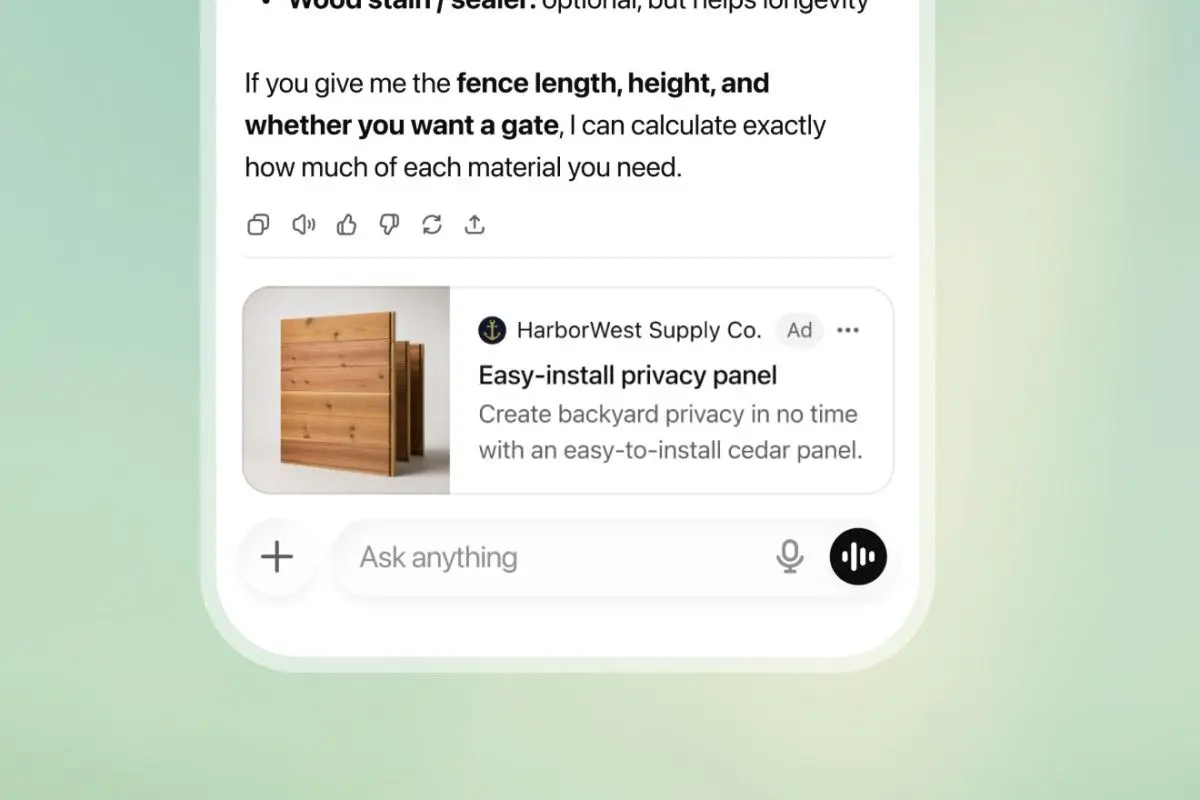
Ads appear below ChatGPT responses and are clearly labeled, visually separate from answers
1
. OpenAI emphasized that ads do not influence ChatGPT's answers, maintaining what the company calls "answer independence"2
. Advertisers receive only aggregated campaign data such as impressions and clicks, without access to users' private conversations, chat history, memories, or personal details3
. Users retain control over ad personalization and can clear data used for advertising3
. The company also does not show ads to users identified or predicted by algorithms to be under 182
.
Source: TelecomTalk
Strategic Push to Monetize Its Consumer Base
OpenAI's advertising expansion represents a strategic shift to monetize its consumer base at scale. Ujjwal Chaudhry, partner at Analysys Mason, explained that unlike Anthropic, which derives higher revenue shares from enterprises, OpenAI is more popular among individual consumers
2
. To monetize an individual consumer base effectively, the ad model proves most effective, particularly as online ads account for more than 75% of total global ad spending worth $1.18 trillion, with in-app advertisements representing a $400 billion market2
. Currently, OpenAI generates roughly 90%-95% of its revenue from subscriptions, with ads for its Go subscribers and free tier making up the vast majority of its 1 billion weekly active users1
.Related Stories

AI-Driven Competition Threatens Google and Meta
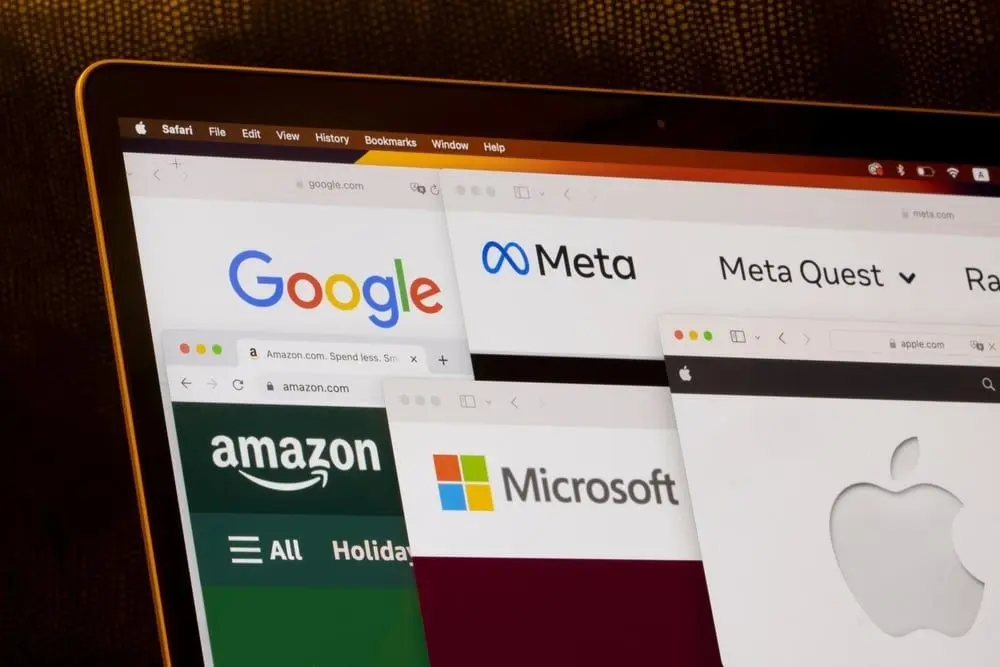
Analysts warn that OpenAI's rapid advertising expansion poses a direct threat to established players. Luria stated that OpenAI could eventually build an advertising business worth tens of billions of dollars, taking share from Google, Meta, and ByteDance's TikTok
5
. Google Search faces the most exposure because advertisers can use ChatGPT Ads in ways that closely resemble search advertising, with Luria noting that "buying an ad on ChatGPT is the most equivalent to buying Google Search"5
. As consumers spend more time engaging with AI-driven services from OpenAI and Anthropic, attention shifts away from traditional media and social platforms, creating additional pressure for Meta, TikTok, and Google's YouTube5
. This dynamic highlights the finite nature of consumer attention in the attention economy, even as enterprise AI spending represents a more open-ended growth opportunity5
.
Source: Benzinga
Anthropic's Criticism and Market Positioning
OpenAI's advertising push drew criticism from its chief rival Anthropic, which made OpenAI's ad strategy the focus of its first Super Bowl campaign
1
. Anthropic insisted that its chatbot Claude will remain ad-free, with users seeing no ads or sponsored links near conversations and answers remaining uninfluenced by third-party product placements2
. Dan Niles, founder of Niles Investment Management, suggested OpenAI faces competitive pressure from both sides, with Anthropic focusing on enterprise customers while Google dominates consumer markets with substantial cash flow to fund its ambitions2
. Both companies are preparing for IPOs in 2027, with OpenAI under pressure to justify its valuation as some key metrics lag behind Anthropic2
.References
Summarized by

Navi
[2]
[4]
Related Stories
OpenAI Brings ChatGPT Ads to India and Europe, Expands Monetization Push with 1B Weekly Users
20 Aug 2026•Business and Economy
OpenAI Introduces Sponsored Agents: Interactive AI Ads Transform ChatGPT Into Billion-Dollar Platform
18 Sept 2026•Technology

OpenAI Launches Visual Ads Alongside ChatGPT Image Generation, Reaching 1.2 Billion Weekly Users
05 Oct 2026•Technology

Recent Highlights



Recent Highlights
Today's Top Stories






Don’t drown in AI news. We cut through the noise - filtering, ranking and summarizing the most important AI news, breakthroughs and research daily. Follow topics that matter to you and stay ahead.


