ChatGPT introduces Trusted Contact feature to alert friends during self-harm discussions


13 Sources
[1]
OpenAI introduces new 'Trusted Contact' safeguard for cases of possible self-harm | TechCrunch
On Thursday OpenAI announced a new feature called Trusted Contact, designed to alert a trusted third-party if ideations of self-harm are expressed within a conversation. The feature allows an adult ChatGPT user to designate another person as a trusted contact within their account, such as a friend
[2]
ChatGPT's New Safety Feature Could Alert 'Trusted Contact' to Risk of Self-Harm
Alex Valdes from Bellevue, Washington has been pumping content into the Internet river for quite a while, including stints at MSNBC.com, MSN, Bing, MoneyTalksNews, Tipico and more. He admits to being somewhat fascinated by the Cambridge coffee webcam back in the Roaring '90s. OpenAI launched an
[3]
ChatGPT's New Emergency Contact Feature Looks Out for Unsafe Chats
With over a decade of experience reporting on consumer technology, James covers mobile phones, apps, operating systems, wearables, AI, and more. New emergency contact features are now available in ChatGPT, where the AI chatbot will notify someone you know and trust if you're having an unsafe
[4]
ChatGPT can now alert your 'Trusted Contact' in critical moments
OpenAI is also using human reviewers to determine whether a conversation hints at safety concerns. ChatGPT is one of the most popular AI chatbots. Users often rely on ChatGPT for conversations about pretty much everything, including self-harm. In fact, ChatGPT has been involved in many self-harm
[5]

ChatGPT Adds â€~Trusted Contact’ Feature to Send Alerts When Conversations Get Dangerous
ChatGPT will still encourage users to contact crisis hotlines or emergency services when necessary. OpenAI announced today that it’s rolling out a new mental health-focused safety feature for adult ChatGPT users. Starting today, ChatGPT users can add what the company calls a “trusted
[6]

ChatGPT adds 'Trusted Contacts' for an extra layer of safety -- here's how it works
A quick search for ChatGPT reveals a polarizing landscape. Alongside stories of innovative updates and surprising user experiences, a darker narrative exists: reports of AI misuse linked to tragic outcomes, including drug overdoses, violence and users taking their own life. These incidents have
[7]

OpenAI's 'Trusted Contact' feature for ChatGPT users in crisis is a sign AI is becoming something much more personal
ChatGPT is evolving from an AI assistant into emotional infrastructure If there was ever evidence that people are forming deep emotional reliance on ChatGPT, OpenAI's new Trusted Contact feature is probably it. Speaking at Sequoia Capital's AI Ascent event last May, OpenAI CEO Sam Altman said
[8]

ChatGPT 'Trusted Contact' feature now available
OpenAI has been under intense legal and public pressure to improve the way its flagship AI product ChatGPT responds when a user express suicidal feelings. On Thursday, the company launched a feature called Trusted Contact, which allows users to designate an adult to notify should the user talk
[9]

ChatGPT now lets you name someone to check in if things get dark
OpenAI Is building a human safety net Into ChatGPT for crisis moments AI chatbots have made it surprisingly easy to talk about anything, and that includes some of the heaviest topics imaginable. That openness has always been a double-edged sword. OpenAI is now taking a step to address that, with a
[10]

ChatGPT Can Now Reach Out to a 'Trusted Contact' After Conversations Concerning Self-Harm
Following a human review, ChatGPT may reach out to the Trusted Contact, with a general message about the situation. Despite expert advice against relying on chatbots for mental health questions and concerns, people are turning to AI programs like ChatGPT for help. The company has faced criticism
[11]

OpenAI built a way for ChatGPT to reach out to your people in a crisis - Phandroid
A lot of people use ChatGPT for deeply personal conversations, things they might not bring up with friends or family. OpenAI knows this, and now the company has built a feature designed to close that gap. ChatGPT Trusted Contact is rolling out globally, and it lets you designate one person to
[12]

OpenAI adds 'Trusted Contact' ChatGPT feature for self-harm risks
OpenAI has begun rolling out Trusted Contact, an optional safety feature in ChatGPT. This feature allows adults to nominate a trusted person, such as a friend, family member, or caregiver, who may be notified if the automated system and trained human reviewers detect that "the enrolled person has
[13]

ChatGPT can now alert trusted contacts during mental health crises: Here is how it works
The feature combines AI-based detection with human review amid growing concerns around chatbot-driven emotional risks. OpenAI has introduced a new safety feature for ChatGPT users. This new feature will allow the adult users to add a trusted emergency contact in case conversations indicate
Share
Copy Link
OpenAI has launched Trusted Contact, an optional ChatGPT safety feature allowing adult users to designate someone who receives alerts if conversations indicate self-harm risks. The announcement follows multiple lawsuits from families claiming the AI chatbot encouraged suicide, with OpenAI research showing over 1 million weekly users discuss suicidal ideation.
OpenAI New Feature Addresses Growing Mental Health Concerns
OpenAI announced Thursday the rollout of Trusted Contact, a ChatGPT safety feature designed to connect users experiencing emotional crises with real-world support
1
. The optional safeguard allows adult ChatGPT users to designate a friend or family member who will receive notifications if conversations about self-harm suggest serious safety concerns2
.
Source: CNET
The feature arrives amid intense scrutiny of the AI chatbot's role in mental health incidents. OpenAI faces multiple lawsuits from families whose loved ones committed suicide after interacting with ChatGPT, with some alleging the platform acted as a "suicide coach" or helped plan self-harm
1
. Research from OpenAI last October revealed that more than 1 million ChatGPT users per week send messages with explicit indicators of potential suicidal planning or intent2
. The company also disclosed that 0.15% of weekly users express risk of self-harm or suicide, potentially affecting nearly three million people globally5
.How the Alert Trusted Contact System Works
Users aged 18 or older (19 in South Korea) can activate the feature through ChatGPT settings by nominating one adult contact
4
. The designated contact receives an invitation explaining their role and must accept within one week3
. Once activated, an automated monitoring system detects when conversations may indicate serious safety risks related to self-harm1
.Crucially, OpenAI combines automation with a human review team to evaluate flagged incidents. A small team of specially trained reviewers assesses whether situations warrant intervention, with the company striving to review safety notifications in under one hour
1
. If deemed necessary, the trusted contact receives alerts via email, text message, or in-app notification2
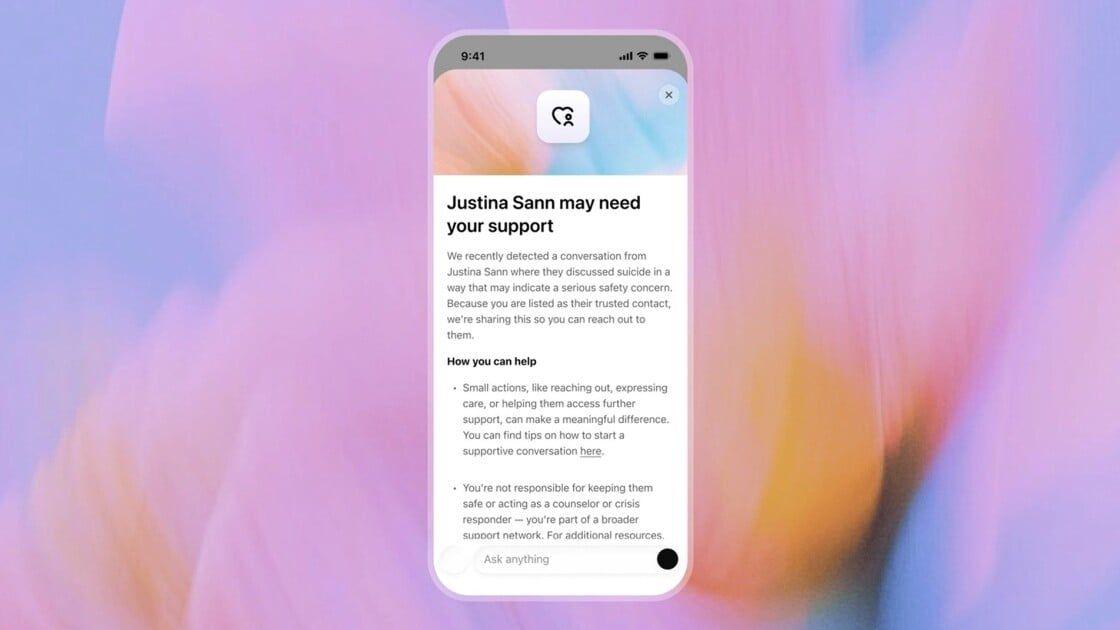
.
Source: PC Magazine
Privacy Concerns and User Safety Balance
Addressing privacy concerns, OpenAI emphasizes that notifications sent to trusted contacts provide only general reasons for concern without sharing chat transcripts or detailed conversation content
5
. The company offers an example message: "We recently detected a conversation from [name] where they discussed suicide in a way that may indicate a serious safety concern. Because you are listed as their trusted contact, we're sharing this so you can reach out to them"2
.
Source: Lifehacker
However, implementation questions remain. OpenAI has not specified how many people comprise the review team or whether it includes trained medical professionals
2
. Some observers question whether the feature shifts responsibility from OpenAI onto users' personal contacts, while others note potential risks if the designated contact is actually a source of danger or abuse2
.Related Stories




Expanding Safety Protocols Beyond Parental Controls
Trusted Contact builds on safety protocols OpenAI introduced last September, which gave parents oversight of teen accounts and notifications about serious safety risks
1
. The parental controls emerged after a high-profile California case involving a 16-year-old who discussed suicide methods with ChatGPT before taking his own life2
.Both features share a significant limitation: they're optional, and users can maintain multiple ChatGPT accounts
1
. The feature does not replace professional care or crisis services, and ChatGPT continues encouraging users to contact helplines and emergency services when necessary5
.OpenAI developed the feature with guidance from mental health and suicide prevention clinicians, researchers, and organizations
5
. The company stated it will continue working with clinicians and policymakers to improve how AI systems respond when people experience distress1
. As large language models increasingly serve as confidants for millions, the effectiveness of these safety measures in preventing harm while respecting user privacy will likely face ongoing scrutiny from regulators, mental health experts, and the public.References
Summarized by

Navi
[1]
[4]
Related Stories
Recent Highlights



Recent Highlights
Today's Top Stories







Don’t drown in AI news. We cut through the noise - filtering, ranking and summarizing the most important AI news, breakthroughs and research daily. Follow topics that matter to you and stay ahead.


