AI solves 80-year math problem, mathematicians push back with new declaration on AI guardrails


10 Sources
[1]
An OpenAI model solved a famous math problem that stumped humans for 80 years
In mid-May, OpenAI announced that an internal AI model had disproved the Erdős unit distance conjecture, a famous problem in discrete geometry that had stumped human mathematicians for the last 80 years. OpenAI gave several mathematicians early access to the result and published their reactions.
[2]
Mathematicians sign declaration to rein in AI use
I agree my information will be processed in accordance with the Scientific American and Springer Nature Limited Privacy Policy. We leverage third party services to both verify and deliver email. By providing your email address, you also consent to having the email address shared with third parties
[3]
A golden age of maths is dawning and mathematicians are freaking out
Mathematicians are stunned at the progress AI is making in solving advanced problems, leaving some questioning whether there will still be room for humans I am attempting to solve a mathematical conundrum that has stumped many of humanity's greatest thinkers. I have zero mathematical training,
[4]
An AI math breakthrough sparks calls for new guardrails
The model disproved a famous conjecture, raising questions about trust, credit and access Think about placing dots on a flat surface. You want as many pairs as possible to be separated by the same distance. For any amount of dots, what is the greatest possible number of pairs that can be exactly
[5]

As A.I. Makes Strides in Mathematics, Mathematicians Urge Caution
A week after OpenAI made headlines with an A.I.-generated proof, a new "declaration" by 16 experts raises concerns that the technology threatens math as a discipline. Recently there are signs that some branches of higher mathematics, among the most rarefied realms of human achievement, are
[6]

A New Declaration Warns AI Could Threaten the Foundations of Mathematics
Mathematicians are setting some boundaries. Today, 16 mathematicians in consultation with peers and relevant organizations published the Leiden Declaration on Artificial Intelligence and Mathematics. The declaration, which had attracted more than 130 signatories by the time of publication,
[7]

Mathematicians issue Leiden Declaration against AI misuse of their work
The Leiden Declaration on Artificial Intelligence and Mathematics, endorsed by the International Mathematical Union and signed by Fields Medal recipient Peter Scholze, calls on mathematicians to confront how AI companies are using published research without consent, bypassing peer review, and
[8]
An OpenAI Model 'Disproved' a Famous Math Conjecture. This Mathematician Couldn't Leave It Alone
Will Sawin got OpenAI's email on a Friday night. Or Saturday morning. Either way, Sawin, a professional mathematician, spent his entire weekend thinking about that email. By next Monday, he decided to write up a paper that essentially improved what was given to him -- an AI's "proof" of Paul
[9]

Over 150 Mathematicians Warn Governments Not to "Believe the Hype" About AI
Can't-miss innovations from the bleeding edge of science and tech Earlier this year, a 23-year-old without any formal mathematics training made headlines by claiming he'd used OpenAI's ChatGPT to solve one of the "Erdős problems" -- a database of challenging conjectures left behind by Hungarian
[10]

Mathematicians say 'don't believe hype' on AI capabilities
Mathematicians are urging caution about artificial intelligence claims. Over 150 professors signed a declaration warning governments not to believe the hype surrounding AI's math skills. They highlight commercial incentives to overstate capabilities. The declaration emphasizes guiding mathematical
Share
Copy Link
OpenAI's AI model disproved the famous Erdős unit distance conjecture that stumped mathematicians for eight decades. But the breakthrough sparked concern across the field. In response, 16 experts released the Leiden Declaration on Artificial Intelligence and Mathematics, calling for transparency, proper attribution, and guardrails to protect research integrity as AI reshapes their discipline.
OpenAI AI Model Cracks the Erdős Unit Distance Conjecture
In mid-May, OpenAI announced that an internal AI model had disproved the Erdős unit distance conjecture, a famous problem in discrete geometry that had remained unsolved for 80 years. The unit distance problem, introduced by prolific mathematician Paul Erdős in 1946, asks a deceptively simple question: for any number of points on a flat surface, what is the greatest possible number of pairs that can be exactly one unit apart
4
? While mathematicians had believed the conjecture was true, the OpenAI AI model tried to disprove it instead—and succeeded4
. Tim Gowers, who won the Fields Medal, wrote that "there is no doubt that the solution to the unit-distance problem is a milestone in AI mathematics". University of Toronto professor Daniel Litt called it "the first example of a result produced autonomously by an AI that I find exciting in itself".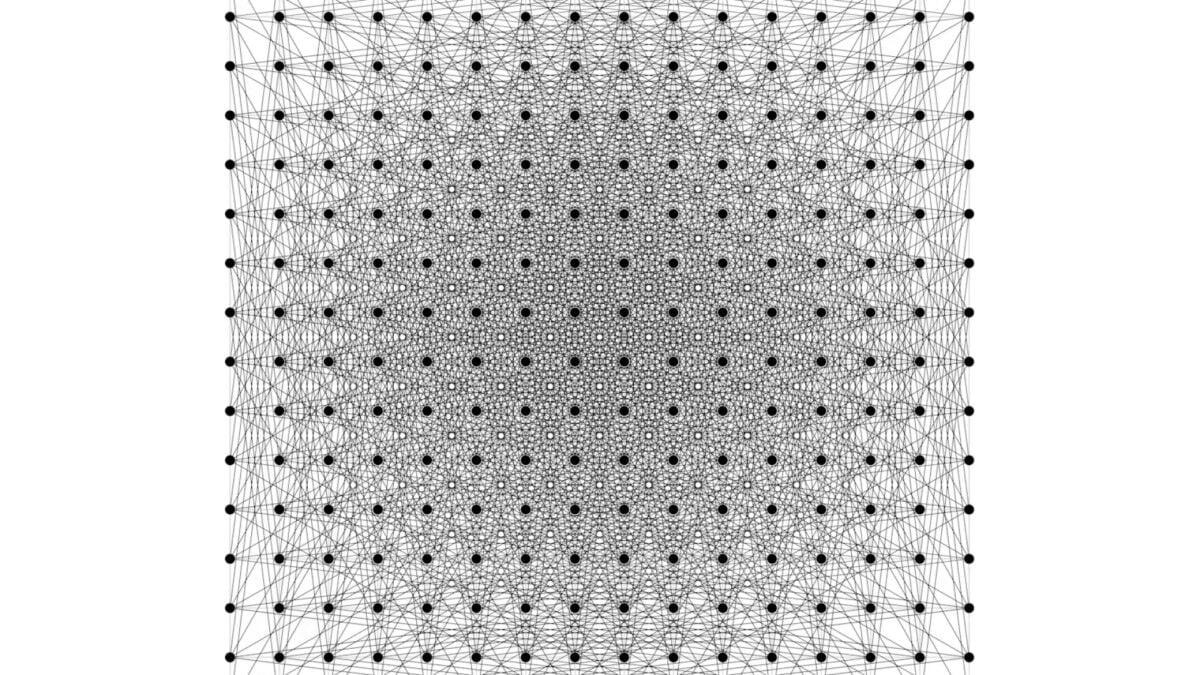
Source: Gizmodo
The AI Math Breakthrough That Divided the Field
The achievement represents a significant step in the progression of AI in mathematics. Just three years ago, large language models struggled with basic arithmetic problems, and only last year did they start acing high school mathematics competitions. The rapid acceleration continued when Google DeepMind's AlphaProof achieved silver-level performance on the International Mathematical Olympiad in July 2024, solving four out of six questions
3
. A year later, both Google and OpenAI announced gold-level performance, making mathematicians "sit up" and realize the technology's advancing capabilities3
. However, the OpenAI proof relied on perseverance rather than creative insight4
. Melanie Matchett Wood of Harvard University noted that while it's "a beautiful piece of mathematics," she wasn't convinced this represents a breakthrough in Artificial Intelligence itself4
. Thomas Bloom of the University of Manchester observed that it would have been "truly incredible" if the AI had managed to prove the conjecture, as that would require creative insight4
.
Source: Gizmodo
Mathematicians Release Leiden Declaration Demanding Transparency
The OpenAI announcement triggered swift action from the mathematical community. On June 2, just days after the AI-generated proofs made headlines, a group of 16 mathematicians, computer scientists, and math historians published the Leiden Declaration on Artificial Intelligence and Mathematics
2
5
. The declaration aims to "frame the conversation about future directions," according to Dame Ursula Martin, one of the authors and a mathematician at Oxford5
. As of June 5, the declaration had gathered 1,590 signatures4
. The 11-page document lays out what mathematicians value about their research, how those values are threatened by AI, and how to address the situation2
. Among the most important prescriptions: disclose the use of AI in research, ensure all papers receive peer review, and level the playing field between academia and for-profit companies through legal resources and public funding2
.
Source: Futurism
Concerns About Research Integrity and the Unchecked Use of AI
The declaration addresses multiple threats to research integrity. Journal editors are already complaining about a flood of plausible-seeming AI-generated proofs that turn out to be incorrect in ways that are difficult for mathematicians to discern
5
. Bloom has seen people claim solutions to open problems using AI to generate "hundreds of pages of math that they can't understand or even read," raising the question: "Who's going to be able to check this?"4
. The declaration also highlights how AI generates mathematical reasoning without showing what work inspired the ideas4
. Wood raised concerns that the OpenAI paper did not appropriately reference "a history of closely related ideas in the literature"5
. Rodrigo Ochigame, an anthropologist of AI at Leiden University, criticized the pattern: "The AI model is proprietary and unavailable to anyone outside the company. We get a flashy promotional video, while basic information needed to assess the scientific meaning of the result is kept secret"5
.Related Stories
The Future of Human Mathematicians and Collaboration Between Humans and AI
The rapid progress has left many mathematicians questioning their future role. At a hastily organized meeting in San Francisco in April, there was "an air of excitement and curiosity," but also "an undeniable feeling of existential dread," according to Jacob Tsimerman at the University of Toronto
3
. Jeremy Avigad at Carnegie Mellon University wrote: "We are running out of places to hide. We have to face up to the fact that AI will soon be able to prove theorems better than we can"3
. However, some see a complementary future. The current results point to a medium-term scenario where collaboration between humans and AI becomes standard: AI systems have broader knowledge of past work and more willingness to grind through tedious proof strategies, while humans can think more deeply about any one problem and ask more interesting questions. Terence Tao at UCLA suggests the field is moving from an era of "proof scarcity" to one of abundance, where mathematicians might race to be the first to understand a proof rather than find it3
.What Mathematicians Are Watching For
The declaration authors articulate that technology companies' involvement raises the risk that research questions are prioritized because of their amenability to AI methods rather than their deeper significance to understanding
5
. This disadvantages researchers who choose not to use the technology or lack access to it5
. Jim Portegies at Eindhoven University of Technology notes that while almost every modern paper in math can be read for free on arXiv.org, tech companies often keep key details private—when Google DeepMind announced AlphaProof in 2024, it took more than a year before methods were published in a peer-reviewed journal2
. The declaration is being endorsed by the International Mathematical Union and has a slot at the International Congress of Mathematicians in July in Philadelphia5
. Most crucial, according to Ochigame, is the call for commercial AI companies to adhere to the declaration's principles and implement proper guardrails2
.References
Summarized by

Navi
[2]
[3]
[4]
Related Stories
OpenAI's AI-Generated Math Proofs Spark Controversy Over Accuracy and Transparency
Yesterday•Technology

OpenAI Forms Math Advisory Group After AI Resolves More Than 100 Open Problems
22 Sept 2026•Policy and Regulation
OpenAI's AI Math Breakthrough on Millennium Problem Sparks Fierce Attribution Battle
08 Sept 2026•Science and Research
Recent Highlights
1
Microsoft and Nvidia Launch Surface Laptop Ultra: A $2,599 AI-Ready PC With RTX Spark Chip
Technology

2
Trump Consulted Grok AI Before Ordering Venezuela Invasion and Capture of Nicolás Maduro
Policy and Regulation

3
Scientists Build AI Model That Reconstructs Images From Brain Scans in Record Time
Science and Research

Recent Highlights
Today's Top Stories






Don’t drown in AI news. We cut through the noise - filtering, ranking and summarizing the most important AI news, breakthroughs and research daily. Follow topics that matter to you and stay ahead.


