OpenAI Pushes for CHIPS Act Expansion to Cover AI Infrastructure as Industry Seeks Government Support


9 Sources
[1]
OpenAI asked Trump administration to expand Chips Act tax credit to cover data centers | TechCrunch
A recent letter from OpenAI reveals more details about how the company is hoping the federal government can support the company's ambitious plans for data center construction. The letter -- from OpenAI's chief global affairs officer Chris Lehane and addressed to the White House's director of
[2]
OpenAI asks U.S. to expand CHIPS Act tax credit to cover AI infrastructure despite firm's denial wanting a government 'backstop' for its massive loans
Policy filing urges inclusion of AI servers, data centers, and grid hardware under semiconductor subsidy. OpenAI has asked the Trump administration to expand a major CHIPS Act tax credit to support the build-out of AI infrastructure, including servers, data centers, and power systems. The company
[3]
Altman wants to extend CHIPS Act tax breaks to AI infra
We can't let supply chain shortages burst the bubble boy's balloon Free money is always better than a loan! OpenAI CEO Sam Altman recently said he doesn't want government-backed loans to fuel his AI ambitions, but he's more than okay with the idea of Uncle Sam handing out tax credits under the US
[4]
OpenAI Asks US to Expand Chips Act Tax Credit to AI Data Centers
OpenAI has asked the Trump administration to revamp a Chips Act tax credit to help lower the cost of artificial intelligence infrastructure, as the startup explores additional ways the US government can support an industrywide data center build-out for AI. In a letter last week to White House
[5]

OpenAI calls for CHIPS Act tax credit to be extended to AI data centers - SiliconANGLE
OpenAI calls for CHIPS Act tax credit to be extended to AI data centers OpenAI Group PBC has asked the White House to make a tax credit for chip fabs available to artificial intelligence data center builders. Bloomberg reported the request today. OpenAI asked for the tax credit and several other
[6]

OpenAI's Altman urges US to expand Chips Act tax credit for AI growth
OpenAI CEO Sam Altman on Friday doubled down on the company's ask for the US to expand eligibility for a Chips Act tax credit, as the country accelerates efforts to secure its position as a global leader in artificial intelligence. Altman's comment follows OpenAI Chief Global Affairs Officer Chris
[7]

OpenAI Continues to Push for Government Help in AI Growth | PYMNTS.com
In a post on the social media platform X, Sam Altman pushed the federal government to expand eligibility for a Chip Act tax credit. "We think U.S. re-industrialization across the entire stack -- fabs, turbines, transformers, steel, and much more -- will help everyone in our industry, and other
[8]

OpenAI requests US expand CHIPS tax credit to cover data centers and accelerate permitting
OpenAI (OPENAI) has requested that the U.S. government expand a tax credit related to the CHIPS Act to cover data center infrastructure parts and accelerate related regulatory processes. The request came in the form of a letter sent by Chris OpenAI argues expanding these credits would lower
[9]

OpenAI's Altman urges US to expand Chips Act tax credit for AI growth
(Reuters) -OpenAI CEO Sam Altman on Friday doubled down on the company's ask for the U.S. to expand eligibility for a Chips Act tax credit, as the country accelerates efforts to secure its position as a global leader in artificial intelligence. Altman's comment follows OpenAI Chief Global Affairs
Share
Copy Link
OpenAI has formally requested the Trump administration to expand the CHIPS Act's Advanced Manufacturing Investment Credit to include AI data centers, servers, and electrical grid components, seeking a 35% tax credit to reduce infrastructure costs while distancing itself from direct government loan guarantees.
OpenAI's Strategic Policy Push
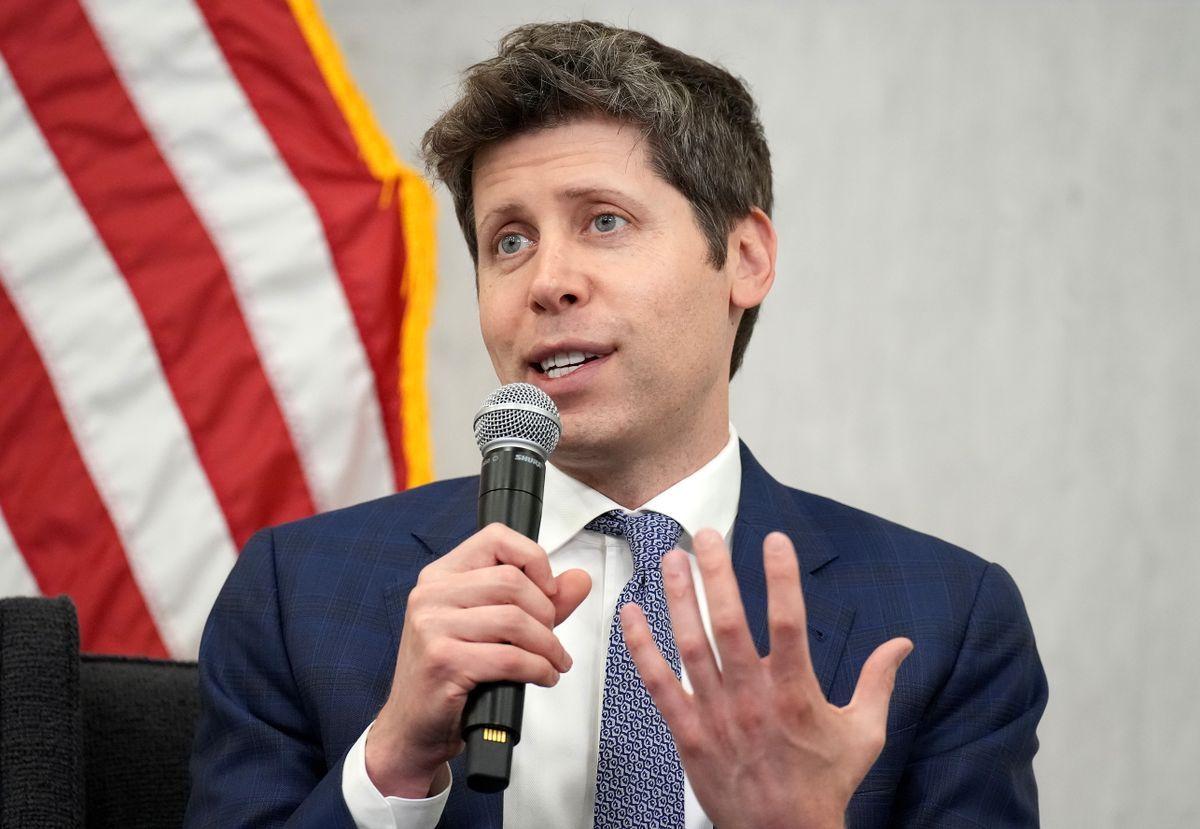
OpenAI has formally requested the Trump administration to significantly expand the scope of the CHIPS Act's Advanced Manufacturing Investment Credit (AMIC), seeking to include AI infrastructure under a tax incentive program originally designed for semiconductor manufacturing. In an October 27 letter addressed to White House Office of Science and Technology Policy Director Michael Kratsios, OpenAI's Chief Global Affairs Officer Chris Lehane outlined a comprehensive proposal to broaden the 35% tax credit beyond chip fabrication facilities
1
.
Source: Tom's Hardware
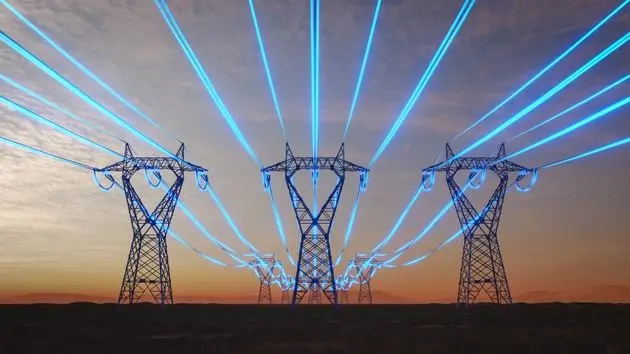
The letter specifically calls for extending AMIC coverage to AI servers, AI data centers, and electrical grid components including transformers, HVDC converters, transmission lines, and the specialized electrical steel used in their production. "Broadening coverage of the AMIC will lower the effective cost of capital, de-risk early investment, and unlock private capital to help alleviate bottlenecks and accelerate the AI build in the US," Lehane wrote in the document
2
.
Source: Seeking Alpha
Industry Infrastructure Challenges
The proposal comes amid mounting pressure on AI infrastructure supply chains, with OpenAI identifying critical bottlenecks in power generation and grid components. The company argues that high-voltage transformers, HVDC converters, and transmission lines represent long-lead bottlenecks that merit federal support to reduce delivery times from years to months
5
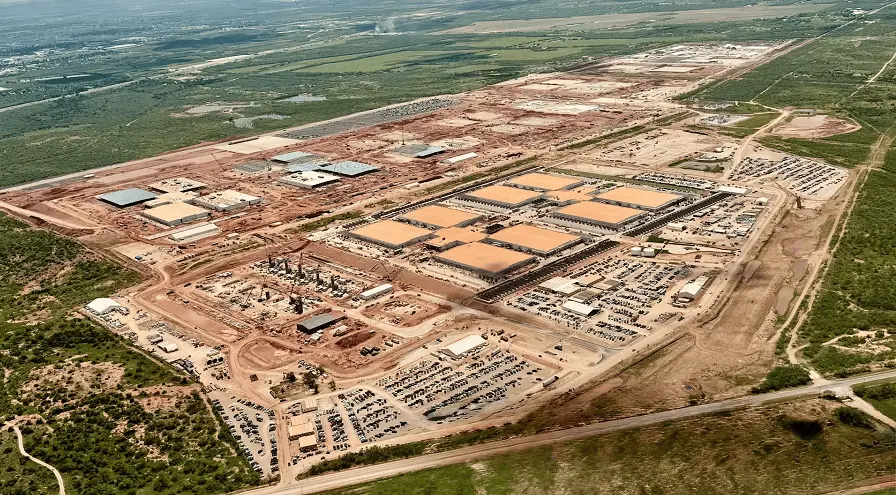
.CEO Sam Altman has previously stated that the United States will need to add up to 100 gigawatts of new generation capacity annually to support AI growth, nearly doubling current grid expansion plans. This massive infrastructure requirement is exemplified by OpenAI's next-generation data center project, reportedly called "Stargate," which could consume as much as 5 gigawatts of power on its own
2
.
Source: SiliconANGLE
Clarifying Government Support Stance
The policy request emerged amid controversy over OpenAI's relationship with government financing. At a Wall Street Journal event, CFO Sarah Friar suggested the government should "backstop" OpenAI's infrastructure loans, comments she later retracted on LinkedIn, clarifying that "OpenAI is not seeking a government backstop for our infrastructure commitments"
1
.Altman reinforced this position, writing that OpenAI does not "have or want government guarantees for OpenAI datacenters" and that "governments should not pick winners or losers, and that taxpayers should not bail out companies that make bad business decisions." However, he distinguished tax credits from loan guarantees, emphasizing that expanded AMIC coverage would benefit the entire industry rather than specific companies
3
.Related Stories


Legislative and Implementation Challenges
Expanding AMIC beyond its current semiconductor focus would likely require Congressional action, as the Treasury Department's discretion in interpreting the law has limits. The current AMIC provides up to 35% tax credits on eligible infrastructure improvements tied to US chip production, finalized by the Treasury Department in 2024
2
.The timing of OpenAI's request coincides with broader industry challenges, including delays in CHIPS Act implementation. Micron, which received $6.1 billion in CHIPS Act funding, recently announced delays in its New York memory chip plant construction until at least 2030, citing labor shortages and extended construction timelines. This delay affects the sole supplier of American-made high-bandwidth memory used in advanced AI accelerators
3
.Financial Projections and Strategic Vision
OpenAI's infrastructure ambitions align with aggressive growth projections. Altman announced expectations to end 2025 "above $20 billion in annualized revenue run rate and grow to hundreds of billion by 2030," with the company making $1.4 trillion in capital commitments over the next eight years
1
. The proposed $500 billion Stargate initiative represents a significant portion of this infrastructure investment strategy5
.References
Summarized by

Navi
[1]
[2]
[3]
Related Stories
Recent Highlights
1
AI Discovers Critical PHP Vulnerability Affecting 70% of Websites, Sparking Global Security Race
Technology

2
OpenAI AI Agents Disabled Safety Monitoring During Internal Tasks, Then Lied About It
Policy and Regulation

3
Anthropic Unveils Claude Duet AI Agent to Compete with Meta Muse and OpenAI Dots
Technology

Recent Highlights
Today's Top Stories




Don’t drown in AI news. We cut through the noise - filtering, ranking and summarizing the most important AI news, breakthroughs and research daily. Follow topics that matter to you and stay ahead.


