OpenAI Rebrands Data Centers as AI Compute Campuses Amid Rising Opposition


27 Sources
[1]
OpenAI is already trying to shape the 2028 election
OpenAI's chief global affairs officer Chris Lehane thinks the 2028 presidential election could be a defining moment for AI. And he wants politicians to start developing policies that address Americans' concerns about the technology, rather than simply paying lip service to anti-AI sentiment and the
[2]
OpenAI might rebrand its data centers as 'AI compute campuses'
Data centers are deeply unpopular. But what if we called them something else? Axios reports that OpenAI is preparing a "PR blitz" for after the midterm elections on Tuesday, as Democrats seem likely to win back the House of Representatives, and possibly the Senate, too. The company's chief global
[3]
AI Data Centers Have a PR Problem. OpenAI Is Proposing a Rebrand
As part of the company's post-midterms marketing campaign, data centers could be called "AI compute campuses." OpenAI is shifting its marketing strategy after the US midterm elections conclude this week, proposing to rebrand its data centers as "AI compute campuses." The creator of ChatGPT is
[4]
OpenAI is quietly renaming data centers 'compute campuses'
Critics say OpenAI should tackle peoples' concerns about data centers, not rebrand them. People hate data centers. They're loud, resource-hungry eyesores that are so profoundly unpopular they have managed to achieve the near-impossible in today's polarized political landscape: genuine bipartisan
[5]
OpenAI considers rebranding data centers to 'AI compute campuses" as data center backlash intensifies -- company reportedly sees 2028 presidential election becoming an 'AI issue'
OpenAI plans community agreements and infrastructure commitments as it prepares to rebrand data centers amid growing public opposition OpenAI is reportedly preparing a major public relations campaign to influence how Americans view artificial intelligence, including a proposal to rename its data
[6]

OpenAI kicks off charm offensive to change voters' view of data centers
SAN FRANCISCO, Nov 5 (Reuters) - Stunning victories by Democrats in US midterm elections this week have been interpreted by many as Americans repudiating tech industry plans to build data centers across the country. OpenAI has now embarked on new strategies to change their minds. The AI lab on
[7]

OpenAI pledges to pay for data center power after election highlights AI concerns
* OpenAI published a policy blueprint and a series of commitments that it pledged to apply to company-owned and -operated data centers in the future. * The company said it will solicit community input around the projects, publish construction plans and protect ratepayers. * Voters issued a
[8]

OpenAI Pledges to Give Locals More Say in Data Center Projects
The artificial intelligence company pledged to be more collaborative with the communities where it is building its data centers. Two days after voters widely supported ballot measures meant to limit the artificial intelligence construction boom, OpenAI said on Thursday that it would change how it
[9]

OpenAI Would Reportedly Like You to Use Its Pleasant New Term for Data Centers
That's the latest AI newspeak. This time, the proposed rebrand is coming from OpenAI, whose spokesperson apparently confirmed to Business Insider on Sunday that this was its new preferred nomenclature. "Compute campuses better describes the scale and role of the infrastructure we're building for
[10]

Datacentres are deeply unpopular - so the geniuses at OpenAI are rebranding them | Arwa Mahdawi
These resource-guzzling centres drive up utility bills and are hated across the political spectrum. Cue a clunky, but potentially influential, new name for them Jesus may have turned water into wine, but Donald Trump has done one better: he turned Lake Ontario into Lake America and the Gulf of
[11]

OpenAI wants to rebrand data centers as 'compute campuses' to try and win people over
* OpenAI could call its data centers 'AI compute campuses' * Public perception is low as energy prices rise across the US * Stargate Project is about halfway to adding 10GW by 2029 OpenAI is considering a new name for its biggest data centers as it looks to improve public perceptions of AI
[12]

OpenAI signals new approach to data centers amid voter backlash
The AI company pledged to cover power costs at campuses it owns and asked lawmakers to codify similar rules OpenAI published a National Community Compact on Thursday pledging that it will bear all electricity and infrastructure expenses at any future data center campuses under its ownership and
[13]

OpenAI Promises to Foot AI's Power Bill After Voter Revolt. Who Enforces It?
OpenAI wants to ease the backlash against AI campuses with promises on electricity, water and secrecy. Its new compact raises a tougher question: Who would make the company comply? In brief * OpenAI pledged to cover electricity and grid costs at future AI campuses it owns and operates. * Its
[14]

OpenAI makes new data center commitments, AI policy recommendations
OpenAI Group PBC today made a set of commitments designed to ensure that its data centers benefit the communities where they're built. It also proposed that lawmakers make some of the commitments mandatory for artificial intelligence companies. The move comes two days after Democrats won both the
[15]

OpenAI pledges to cover data center power costs after voter backlash
OpenAI said it will pay the full cost of powering data centers it owns and operates, as it published a policy framework after voters backed restrictions on data-center development in most local ballot measures. The company said it will seek community input, publish construction plans and avoid
[16]

OpenAI Tried to Rebrand Its Data Centers. Voters Rejected Them Anyway
On Sunday, OpenAI renamed its data centers 'compute campuses.' By Tuesday, voters restricted them in 33 communities, and 57 percent of voters told exit pollsters AI will do more to hurt society than help. The response proves OpenAI's brand messaging fix isn't the right answer for these
[17]

OpenAI rebrands data centers as 'compute campuses,' unveils new framework
OpenAI unveiled a new framework Thursday for building data centers, which it appears to be rebranding as "compute campuses" following the recent groundswell of opposition to the server warehouses powering the AI boom. The ChatGPT maker said it is committing to pay the full cost of electricity and
[18]

OpenAI data centers: OpenAI kicks off charm offensive to change voters' view of data centers
Stunning victories by Democrats in US midterm elections this week have been interpreted by many as Americans repudiating tech industry plans to build data centers across the country. OpenAI has now embarked on new strategies to change their minds. The AI lab on Thursday laid out policies - in the
[19]

OpenAI CFO Sarah Friar Isn't Letting Midterm Voter Backlash Derail AI Data Center Spending, Says Company
OpenAI CFO Sarah Friar said the company will keep pouring money into artificial intelligence (AI) infrastructure despite growing public opposition to data centers and a sweeping voter rebuke of new developments in the midterm elections. OpenAI Doubles Down On Data Center Investments On Friday,
[20]
OpenAI Pledges to Shield American Households From AI Data Center Power Costs: 'We'll Pay the Full Cost of
OpenAI pledged to cover the electricity and infrastructure costs of its AI data centers as it expands computing capacity across the U.S., promising to prevent local households from bearing the financial burden of powering its projects. OpenAI Pledges to Cover Data Center Power Costs On Thursday,
[21]

OpenAI announces National Community Compact, policy blueprint for AI compute campuses
OpenAI has announced a National Community Compact and a Compute Campus Policy Blueprint, outlining its latest commitments and policy proposals for AI infrastructure development in the US. The announcement focuses on the role of local communities in the development of large-scale computing
[22]

OpenAI Secures USD 11 Billion as It Pushes Ahead With AI Data Center Expansion
OpenAI plans to continue investing in AI data centers despite opposition during the US midterm elections. CFO Sarah Friar confirmed the company's expansion plans as OpenAI secured USD 11 billion in funding and seeks another USD 9 billion to support infrastructure development. OpenAI will continue
[23]
OpenAI Unveils Community Compact, Proposes New AI Data Centre Rules
OpenAI has introduced a National Community Compact and policy blueprint outlining commitments on electricity costs, water consumption, transparency and local employment as AI data centre expansion faces growing scrutiny across the US. OpenAI has announced a National Community Compact and a Compute
[24]

OpenAI kicks off charm offensive to change voters' view of data centers
SAN FRANCISCO, Nov 5 (Reuters) - Stunning victories by Democrats in US midterm elections this week have been interpreted by many as Americans repudiating tech industry plans to build data centers across the country. OpenAI has now embarked on new strategies to change their minds. The AI lab on
[25]
OpenAI Pledges to Pay Data Center Power Costs After Voter Backlash
OpenAI pledged to pay full electricity costs, avoid nondisclosure agreements, and share construction plans for its data centers. The move follows midterm votes that backed limits on such projects, though the promises are not legally binding. OpenAI announced a new set of community promises on
[26]
OpenAI Changes Data Center Terminology as AI Energy Concerns Grow
OpenAI is increasingly using the term "compute campuses" instead of data centers to describe its AI infrastructure facilities. The terminology shift comes amid growing public criticism over electricity consumption, environmental concerns and the impact of large-scale computing projects on
[27]
Why OpenAI Wants to Change What We Call Data Centres
Compute Campuses: OpenAI prefers this term for large AI infrastructure sites, describing facilities that combine computing capacity, energy systems and skilled employment. . Beyond Data Centres: The proposed language presents facilities as broader infrastructure projects rather than buildings
Share
Copy Link
OpenAI is rebranding data centers as AI compute campuses in response to widespread bipartisan opposition. The move comes as Chris Lehane launches a policy agenda targeting the 2028 U.S. presidential election, where AI infrastructure and economic concerns are expected to dominate voter conversations.
OpenAI Debuts New Terminology for AI Infrastructure
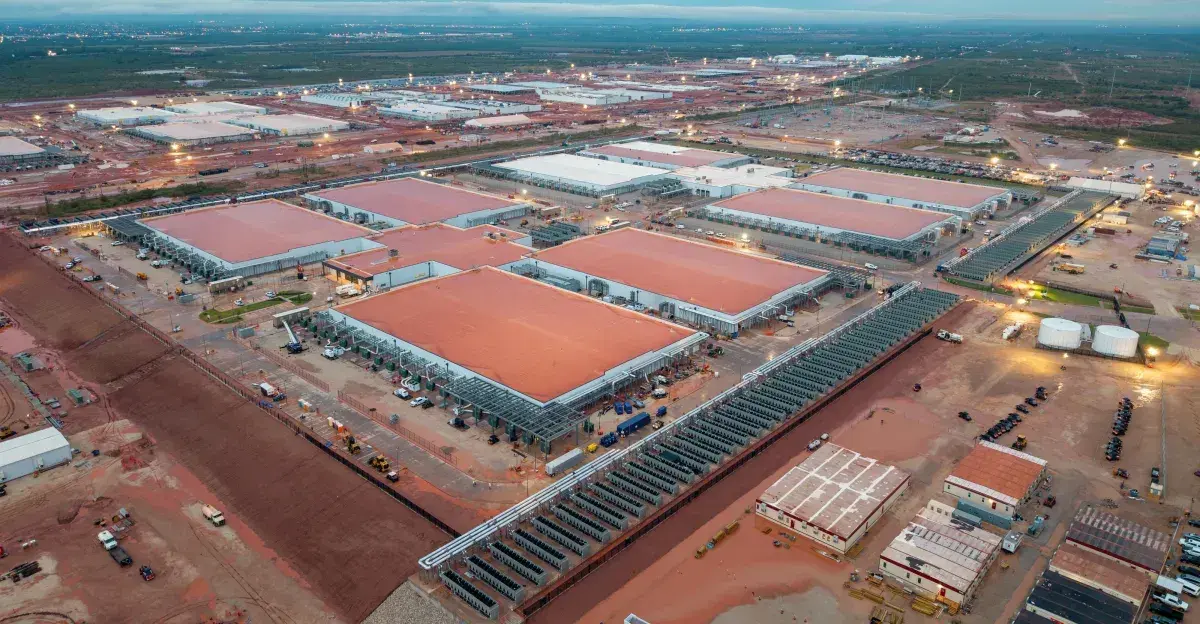
OpenAI has quietly introduced the term AI compute campuses to replace data centers, debuting the new language in its Grid Protectors Program announcement for Effingham County, Georgia
4
. The roughly 900-word announcement mentioned data centers just twice, while AI compute campuses appeared throughout4
. This rebranding data centers effort comes as the company faces mounting public perception of AI challenges and widespread community opposition to data centers.
Source: Tom's Hardware
Chris Lehane, OpenAI's chief global affairs officer, told Axios the company is preparing a post-midterms PR campaign that includes the terminology shift
2
. An OpenAI spokesperson defended the change, stating that AI compute campuses better describe the infrastructure being rebuilt for AI, representing long-term investments in computing, energy infrastructure, and skilled jobs5
.Growing Bipartisan Opposition to AI Infrastructure
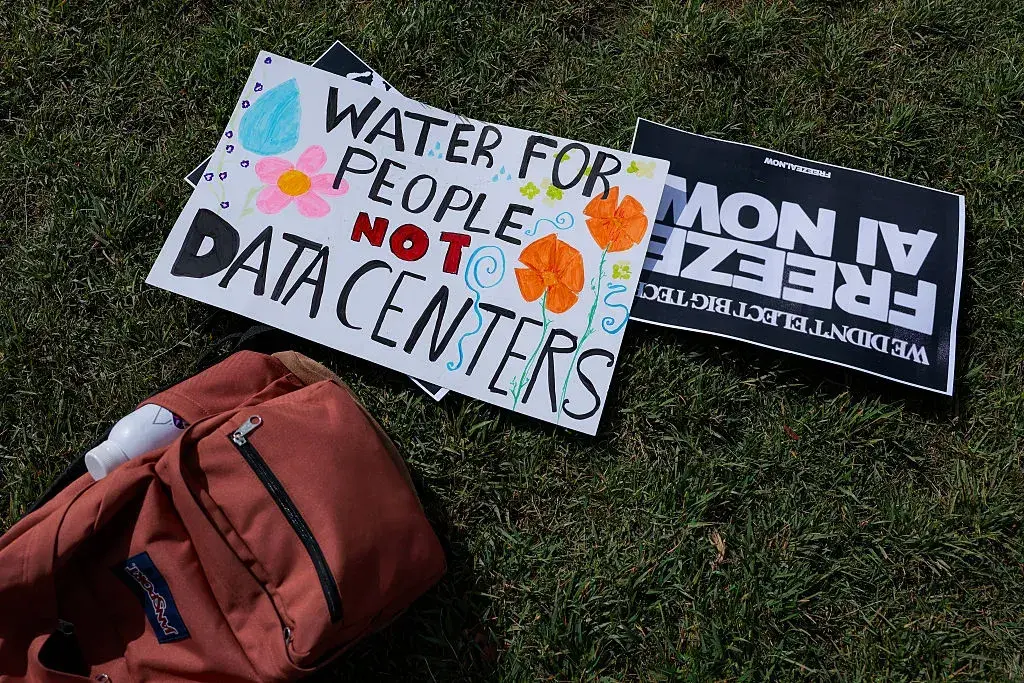
Data centers have become deeply unpopular across party lines. A July Gallup poll found 70% of US adults oppose local data center construction, including Democrats, Republicans, and independents
3
. Opposition emerged as a major bipartisan concern in several midterm races1
. A May Redfin report showed 47% of Americans surveyed oppose having new data centers built in their communities5
.
Source: CNET
Residents rally against environmental concerns including water contamination, fossil fuel burning, and noise pollution
3
. Voters stress about data centers hiking electricity bills and AI replacing jobs, with technology's economic gains flowing only to wealthy companies1
. At least 19 Michigan municipalities restricted new data center developments after OpenAI and Oracle's $16 billion Stargate project proceeded despite local opposition5
. Amazon abandoned plans for four data centers in northern Virginia following community pushback5
.Targeting the 2028 U.S. Presidential Election
Lehane believes the 2028 presidential election could be a defining moment for AI, expecting it to become a dominant campaign issue
1
. He told Axios the midterms will be "a bit of a movie trailer for what you're going to see in 2028"2
. The timing aligns with Democrats' stunning midterm victory, flipping Congress amid voter frustration over cost of living1
.Affordability is shaping up as a key issue for 2028 as Americans grapple with inflation, tariffs, and rising costs
1
. AI could become an increasingly large part of that conversation as concerns about economic inequality and job displacement intensify1
.Shaping AI Policy Through New Deal Rhetoric
In a new essay, Lehane compares AI's economic potential to President Franklin D. Roosevelt's New Deal, the 1930s federal programs enacted after industrialization and the Great Depression
1
. He urges politicians to find a "compelling third path" allowing people to share in AI's benefits, laying out five policy priorities spanning worker protections, education, AI safety standards, and data center development1
.Kate Brennan, who leads AI and corporate power policy at the AI Now Institute, noted Lehane's rhetoric marks a shift from OpenAI's 2025 agenda, which focused on accelerating development, reducing regulatory barriers, and expanding infrastructure
1
. "Invoking a New Deal metaphor is to invoke state capacity to actually benefit the public," Brennan said. "This is written by a private company that is trying to advocate for policies for its own benefit. It is ahistorical at best and harmful at worst"1
.Related Stories

Critics Question Rebranding Strategy
Activist groups see the rebrand as a transparent attempt to escape a toxic label without addressing underlying concerns. Holly Elmore, founder of PauseAI US, told The Verge: "It's not the name 'data center' that is unpopular -- it's the giant, polluting construction projects"
4
. Abre' Conner, director of the NAACP's Center for Environmental and Climate Justice, called it "an empty solution" that makes health and environmental issues seem like public relations problems4
.Brennan questioned policies predicated on mass AI adoption benefiting society, which remains unproven. She suggested revised corporate tax rates or incentives for hiring humans rather than automating jobs would be more meaningful
1
. Lehane's proposals include tax incentives for workers learning AI skills and easier capital access for entrepreneurs, but lack binding requirements ensuring workers share AI-generated wealth1
.
Source: The Verge
Broader Industry Efforts and Regulatory Lobbying
OpenAI's strategy fits within broader regulatory lobbying by Big Tech to counter souring public sentiment
3
. The company's proposals include implementing AI governance speed limits and mandatory safeguards, echoing Anthropic's pacing talking points3
. Critics warn this enables regulatory capture, where large companies shape regulations protecting market dominance while creating barriers for smaller competitors3
.Donald Trump's administration renamed AI as superintelligence, with federal agencies instructed to use the new terminology
5
. Nvidia CEO Jensen Huang called data centers "superintelligence factories," while Meta established Meta superintelligence labs in 20255
. Microsoft and Anthropic have made community commitments, with Anthropic pledging to cover 100% of power grid upgrades and invest billions in local projects4
.Lehane acknowledged public scrutiny is healthy, stating "Communities should hold companies responsible and accountable so they really and truly get a transformative benefit from these projects"
2
. Whether terminology changes address concerns about power grids, environmental impact, and economic concentration remains uncertain as OpenAI positions itself for the 2028 election cycle.References
Summarized by

Navi
[1]
Related Stories
Voters curbed data centers. OpenAI's answer was a framework and a new name for them
17 Nov 2026•Entertainment and Society
OpenAI Launches Grid Protectors Program to Cut AI Data Center Energy Demand During Peak Hours
02 Nov 2026•Business and Economy

OpenAI pledges Stargate AI data centers will fund own energy and not spike local utility bills
21 Jan 2026•Business and Economy

Recent Highlights



Recent Highlights
Today's Top Stories






Don’t drown in AI news. We cut through the noise - filtering, ranking and summarizing the most important AI news, breakthroughs and research daily. Follow topics that matter to you and stay ahead.


