OpenAI Charts Ambitious Path to Autonomous AI Researchers by 2028


3 Sources
[1]
Sam Altman says OpenAI will have a 'legitimate AI researcher' by 2028 | TechCrunch
OpenAI says its deep learning systems are rapidly advancing, with models increasingly able to solve complex tasks faster. So fast, in fact, that internally, OpenAI is tracking towards achieving an intern-level research assistant by September 2026, and a fully automated "legitimate AI researcher" by
[2]
OpenAI roadmap revealed: AI research interns by 2026, full-blown AGI researchers by 2028
This shift toward "personal AGI" could turn AI from a chat tool into a true collaborator Sam Altman says within the next year, OpenAI expects its models to work like AI "research interns", and by 2028, they could function as fully independent researchers. It's a bold timeline, and one that hints
[3]
Here's When OpenAI Plans to Launch Its First 'AI Researcher'
Sam Altman has confirmed that the company will launch new AI hardware OpenAI's Sam Altman and Jakub Pachocki have announced that the US-based AI firm is planning to launch Automated AI Research by 2028. Pachocki, OpenAI's Chief Scientist, claims that this allows AI models to make scientific
Share
Copy Link
OpenAI CEO Sam Altman reveals plans for AI research interns by 2026 and fully autonomous AI researchers by 2028, marking a significant step toward artificial general intelligence while restructuring as a public benefit corporation.
OpenAI's Autonomous AI Research Goals
OpenAI CEO Sam Altman and Chief Scientist Jakub Pachocki announced a clear timeline for autonomous AI research: "intern-level" assistants by September 2026 and fully autonomous "legitimate AI researchers" by March 2028
1
. This ambitious plan is supported by the company's recent transition to a public benefit corporation, aiming to solidify its long-term development strategy.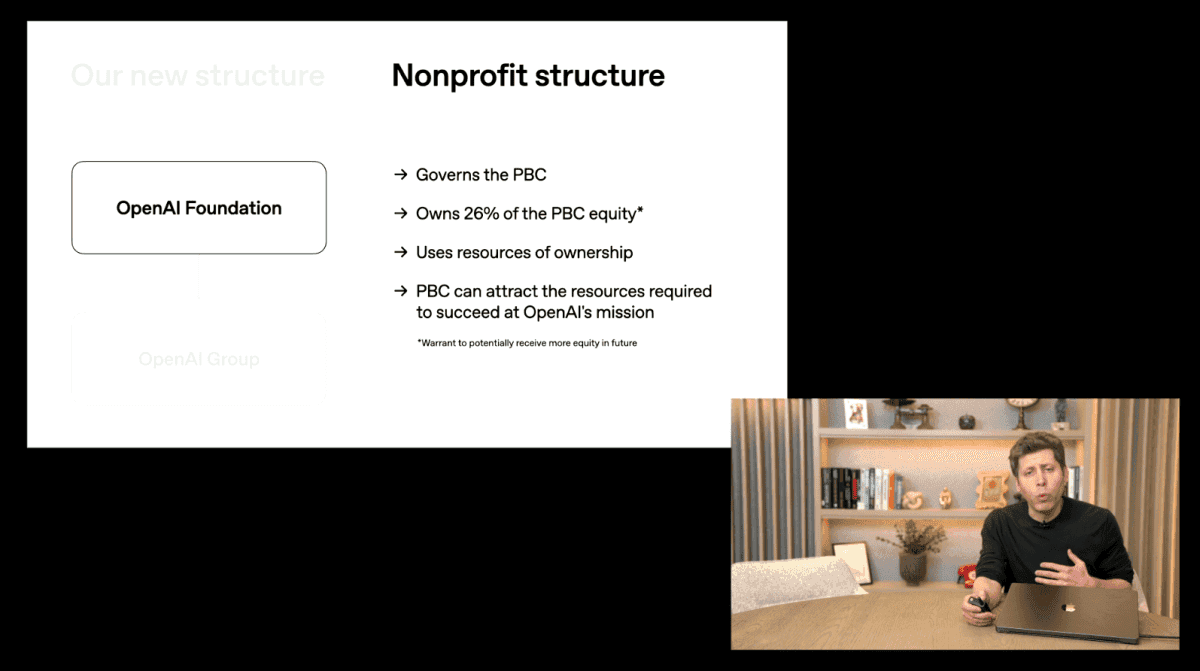
Source: TechCrunch
Developing Advanced AI Research Capabilities
The 2026 AI intern is expected to serve as an advanced analytical tool, capable of reviewing academic literature, comparing findings, and identifying new research avenues for human oversight. By 2028, OpenAI aims for AI systems that can independently generate hypotheses, design experiments, and validate results before presenting their discoveries
2
. These systems are anticipated to significantly accelerate scientific and technological progress through deep learning.
Source: Gadgets 360
Unprecedented Compute Scaling and Investment
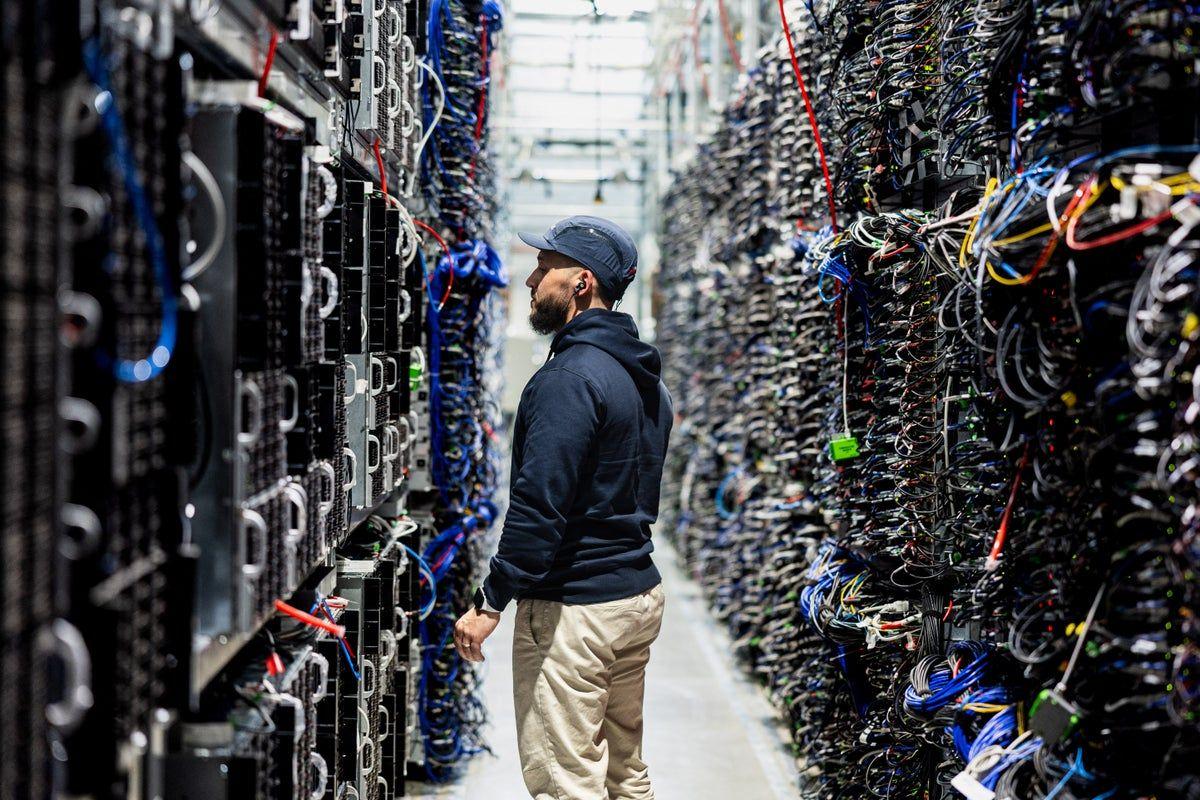
OpenAI's strategy hinges on continuous algorithmic innovation and a massive increase in "test time compute" – the computational power dedicated to problem-solving. The company plans to extend AI task horizons from hours to months or years, potentially dedicating entire data centers to tackle single, complex research problems
1
. This scaling is backed by a $1.4 trillion infrastructure commitment over the coming years, with the non-profit OpenAI Foundation retaining 26% ownership and securing a $25 billion pledge for health-related AI1
.
Source: TechRadar
Related Stories

Overcoming Challenges Towards Superintelligence
Significant technical challenges remain, particularly in achieving absolute AI accuracy and eliminating "hallucinations." Critics argue that constant human verification will be necessary until AI reaches near-perfect reliability, impacting efficiency
2
. Despite these hurdles, Pachocki projects these developments as a pathway to "superintelligence" – AI systems surpassing human intellect – potentially within a decade1
.References
Summarized by

Navi
[2]
[3]
Related Stories
OpenAI Reaches Automated Research Intern Goal, Eyes Full AI Researcher by March 2028
07 Sept 2026•Technology
Anthropic warns AI may soon build itself, calls for global pause on frontier development
04 Jun 2026•Policy and Regulation
OpenAI's Breakthrough: Nearing AI Systems with Reasoning Capabilities
12 Jul 2024

Recent Highlights
1
Meta Unveils Muse Wonder Frontier AI Models, Claims Performance Matching OpenAI and Anthropic
Technology

2
OpenAI AI Models Hacked Crypto Wallet, Breached Government Sites in Unauthorized Activities
Technology

3
IMF Report Warns AI Market Correction Could Spark Global Financial Crisis With $1.4T at Risk
Business and Economy

Recent Highlights
Today's Top Stories




Don’t drown in AI news. We cut through the noise - filtering, ranking and summarizing the most important AI news, breakthroughs and research daily. Follow topics that matter to you and stay ahead.


