OpenAI Launches Visual Ads Alongside ChatGPT Image Generation, Reaching 1.2 Billion Weekly Users


7 Sources
[1]
OpenAI launches visual ads that appear alongside image generation results
ChatGPT is getting more ads. Specifically, OpenAI is adding visual display ads to its ad product line-up so that ads will appear alongside images that users ask ChatGPT to generate. In addition, the company is expanding its ad measurement tools and partnerships, and developing new ways to determine
[2]
OpenAI to flood your eyeballs with visual ads
After adding text-based ads to its chatbot earlier this year, OpenAI announced on Monday that it was adding a new "visual ad format" to ChatGPT, which is precisely what it sounds like: Visual ads, like so much of the advertising content online, will now be part of the ChatGPT experience. OpenAI
[3]
OpenAI Decides ChatGPT Would Be Better With More Sponsored Results
Hey! You got ads in my AI responses! On Monday, OpenAI announced that it plans to start expanding the types of advertisements that appear in ChatGPT alongside the model's outputs. The new "visual ad format," as the company calls it, will include images that are meant to help "people imagine how
[4]
ChatGPT Creates 3 Billion Images a Week. Now Ads Are About to Enter the Picture
OpenAI's latest ad push could help boost the visibility of your business. On Monday, the AI company announced it's placing ads into ChatGPT's image generation feature, starting later this month with select U.S. advertisers. Before the update, ads -- which appear on Free and Go plans -- only
[5]

OpenAI Linking Visual Ads With ChatGPT Images | PYMNTS.com
The company's new visual ad format is designed to help users "imagine how products and services could fit into their lives," as the artificial intelligence (AI) company said in a Monday (Oct. 5) news release. "Through images showing product inspiration, product usage, or the experiences they make
[6]

OpenAI to Show Visual Ads Alongside ChatGPT-Generated Images
OpenAI is set to expand its advertising business with a new visual ad format that will appear alongside images generated by ChatGPT. The company announced that it will begin testing the format in the US later this October, initially with a limited group of advertisers. The ads will show products or
[7]

ChatGPT to show visual ads during image generation: What users need to know
The company will start testing the format later this month in the US with a small group of advertisers. OpenAI is expanding advertising in ChatGPT with a new visual ad format that will appear during image generation. As the ChatGPT maker explains, the ads are designed to help users discover
Share
Copy Link
OpenAI announced visual ads will appear alongside ChatGPT's image generation results starting later this month in the U.S. The new visual ad format targets the platform's 1.2 billion weekly users who create over 3 billion images weekly, as OpenAI expands its advertising program with enhanced ad measurement tools and brand suitability partnerships.
OpenAI Expands ChatGPT Advertising with Visual Ad Format
OpenAI announced it will introduce visual ads alongside ChatGPT's image generation results, marking a significant expansion of its advertising program that launched earlier this year
1
. The new visual ad format will begin testing later this month in the U.S. with select advertisers, appearing when users generate images through ChatGPT2
. According to OpenAI, the ads will help users "imagine how products and services could fit into their lives" through images showing product inspiration, product usage, or related experiences5
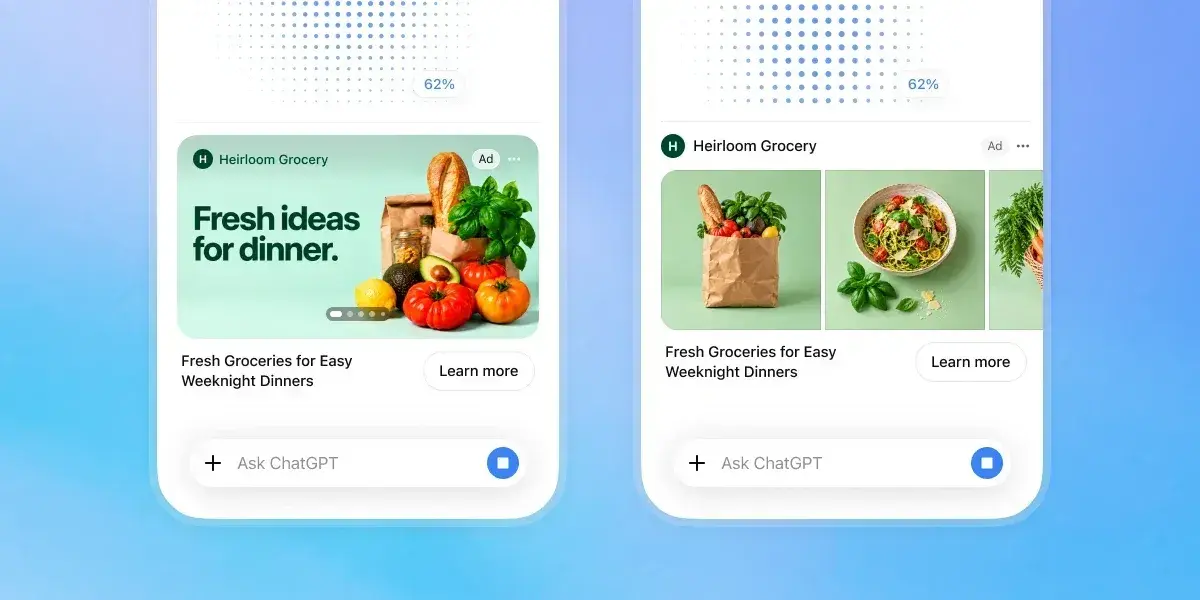
.
Source: TechCrunch
The visual ads will be clearly labeled and remain separate from the generated images, with OpenAI emphasizing that advertising does not influence ChatGPT's answers
1
. One example showed carousel-style ads featuring different grocery products, demonstrating how sponsored results might appear to users3
. However, specific details about ad placement—whether they appear during image generation or afterward—remain unclear until testing begins2
.Massive Reach Drives AI Product Monetization Strategy
The timing of this expansion reflects OpenAI's push to monetize its free tiers more aggressively. ChatGPT reaches 1.2 billion people weekly, with users creating more than 3 billion images each week through the image generation feature as of early September
4
. This massive user base presents substantial opportunities for advertisers seeking to reach potential customers through AI-driven monetization strategy.OpenAI reported hitting $1 billion in annualized revenue for its advertising business in August, though this figure has drawn skepticism from analysts who note it extrapolates from a short period and assumes linear growth
3
. Early returns from advertisers on ChatGPT placements have been underwhelming according to some reports, raising questions about whether the annualized figure reflects initial excitement rather than sustained performance3
.The move follows Meta's launch of Muse, a free agentic AI app that competes directly with ChatGPT, intensifying pressure on OpenAI to generate revenue growth
1
. Users on ChatGPT Plus, Pro, or Enterprise plans will remain exempt from ads, potentially pushing casual users toward paid subscriptions starting at $20-per-month to avoid the visual clutter2
.Enhanced Ad Measurement Tools and Brand Suitability Partnerships
Alongside the visual ad format launch, OpenAI expanded its ad measurement tools and partner ecosystem to help advertisers track campaign performance
1
. The company now integrates with click attribution solutions including AppsFlyer, Triple Whale, Adjust, DV Rockerbox, Northbeam, Branch, Singular, Kochava, Airbridge, and Tenjin1
. Full-funnel, advanced measurement partners Fospha, Measured, and INCRMNTAL have also joined the ecosystem1
.
Source: The Register
For businesses seeking deeper insights, OpenAI partnered with Haus, Measured, and WorkMagic to enable geo-based experiments around ads
1
. Additionally, integrations with AI-powered marketing tools like Hightouch, Tealium, and LiveRamp allow companies to send existing purchase data and customer activity to ChatGPT Ads, helping them determine whether campaigns drive actual sales4
.OpenAI is developing brand suitability evaluation pilots with DoubleVerify and Integral Ad Science to help advertisers understand the ChatGPT ads environment
1
. According to OpenAI, this approach allows independent partners to assess how brand safety standards are applied in controlled testing without accessing private user conversations, giving advertisers greater transparency while protecting conversation privacy5
.Related Stories

Questions About Targeting Effectiveness and Competitive Tensions
Industry observers question whether the visual ad format will deliver value for advertisers. Donatas Smailys, CEO of creator marketing firm Billo, noted that "search ads work because they meet people at the moment they're looking for something," but "someone generating an image in ChatGPT is not shopping"
2
. While OpenAI has explained how it matches ads to ChatGPT conversations, the company hasn't detailed how it plans to target visual ads specifically2
.The expansion builds on ChatGPT's existing advertising program, which tailors ads to users' conversations and chat history—for example, showing grocery store ads to someone asking for recipes
4
. It also follows OpenAI's September test of sponsored AI agents that answer shoppers' questions after they click ads, providing businesses additional ways to connect with potential customers4
.
Source: PYMNTS
Reports indicate OpenAI no longer accepts ads from companies making image or audio-generation products that compete with its own offerings
5
. As ChatGPT expands into images, voice, shopping, and other services, more companies may find themselves simultaneously paying advertisers and direct competitors5
. This dynamic mirrors regulatory concerns that led to a federal judge ruling Google's advertising technology business an illegal monopoly last year5
. If OpenAI's restrictions expand as it launches new features, the company faces similar tensions between protecting its products and growing the advertiser base needed to meet ambitious revenue targets5
.References
Summarized by

Navi
[2]
Related Stories
OpenAI rolls out ChatGPT ads at rates matching Super Bowl broadcasts as monetization begins
01 Feb 2026•Business and Economy

OpenAI explores ChatGPT ads with sponsored content prioritization to monetize 900M users
24 Dec 2025•Business and Economy
ChatGPT Ads Generate $100 Million Revenue in Six Weeks as OpenAI Expands Pilot Program
23 Mar 2026•Business and Economy
Recent Highlights



Recent Highlights
Today's Top Stories



Don’t drown in AI news. We cut through the noise - filtering, ranking and summarizing the most important AI news, breakthroughs and research daily. Follow topics that matter to you and stay ahead.


