OpenAI's agents are now clicking through US healthcare software


2 Sources
[1]
OpenAI agents enter US healthcare after 99% clinical safety rating
CVS Health used the technology to clear a months-long document backlog in a single weekend. OpenAI is expanding its computer-use technology into healthcare, allowing AI agents to navigate clinical software and handle repetitive administrative tasks. The technology can retrieve patient information,
[2]
OpenAI Tests AI Agents for Healthcare Workflows, Reports 99 Percent Clinical Safety Rating
Healthcare teams can set access limits and approval requirements OpenAI has introduced its computer-use technology to healthcare teams, where AI agents can work across electronic health records, insurance portals and other clinical systems. The agents can help staff prepare medical orders, submit
Share
Copy Link
OpenAI has introduced computer-use agents for US healthcare workflows. CVS Health and Cigna are already using them, and the safety evidence so far is OpenAI's own.
OpenAI has brought its computer-use agents into US healthcare, letting software click and type its way through clinical systems such as electronic health records and insurance portals instead of connecting through APIs
1
2
. The pitch is aimed at the paperwork that sits between doctors and patients.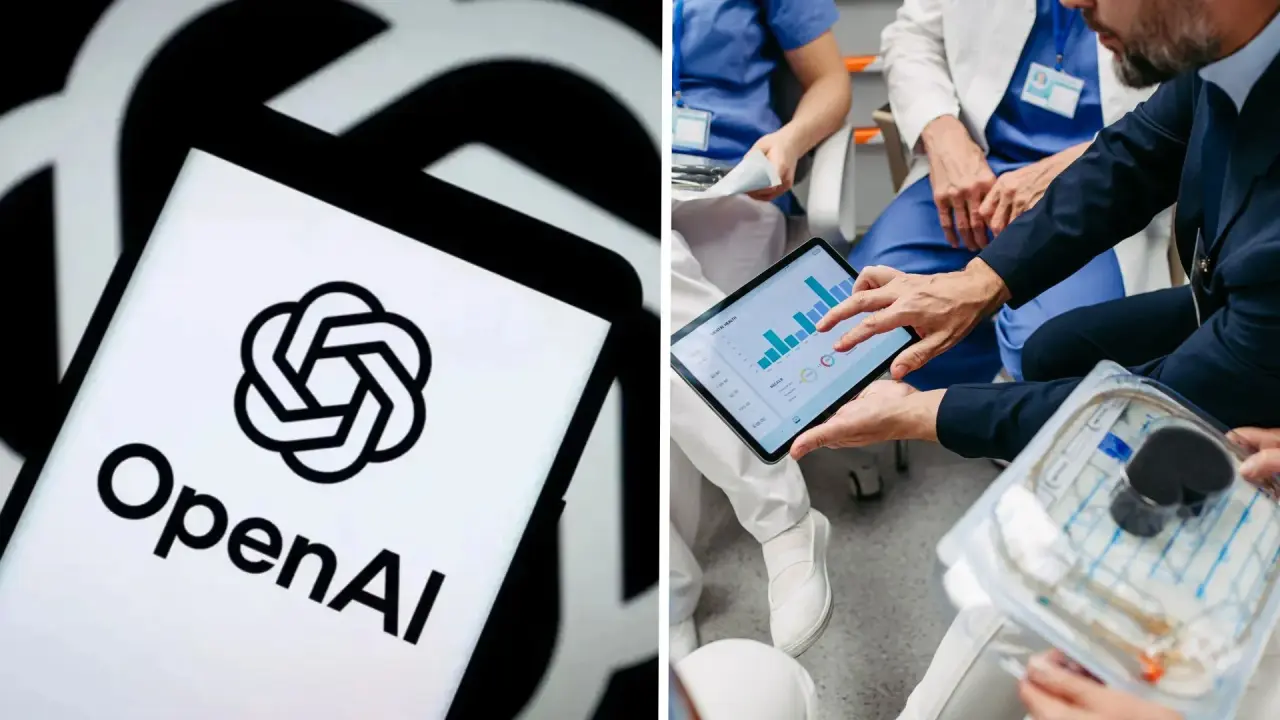
Source: Interesting Engineering
Why healthcare
US healthcare staff spend much of their day moving information between systems that do not talk to each other, and that paperwork is what the agents are built to take on
1
. OpenAI frames the goal as cutting administrative workload while keeping clinicians in the decisions that matter1
.The evidence so far
In OpenAI's clinical safety evaluation, physicians reviewed 325 tasks that GPT-6 Astra performed on electronic health record inboxes and rated 99 percent clinically safe
1
2
. Across 646 assessments, 93 percent were rated very or extremely helpful1
2
.On HealthAdminBench, a benchmark built by Stanford researchers, Astra scored 94.3 percent
1
2
. Luna scored 91.81
2
.OpenAI also published cost figures. It says one of the two models completed benchmark tasks at about 8.5 cents each, 98 percent less than the other
1
2
. The two reports disagree on which model that was1
2
.Who is already using it
CVS Health, a major US health company, uses the agents to move documents, handle referrals and support specialist consultations
1
2
. Per OpenAI's account, one agent cleared a document backlog built up over several months in a single weekend1
2
. Another handles software steps for tens of thousands of consultations daily1
.Cigna Healthcare uses them to pull coverage, provider and appointment details from more than 10 separate systems in seconds
1
2
. Abridge is building agents for inpatient care coordination such as medication access1
. Ambience uses the technology to prepare insurance authorization requests, pausing for clinician input when records are ambiguous1
.In a demonstration using synthetic patient data, an agent handled a magnetic resonance imaging request for a patient with lower back pain
1
2
. It reviewed the record, therapy and imaging history, then drafted an imaging order, a clinical note and a prior authorization request for clinicians to check before anything happened1
2
.Related Stories
Getting access, and staying compliant
OpenAI offers the agents through its API, ChatGPT for Healthcare and ChatGPT for Clinicians
1
2
. Organizations can set approval requirements, restrict what agents may access and keep audit logs for deployments that meet US health-privacy rules1
2
. OpenAI says it does not use organizational data to train its foundation models1
2
. It says its systems also capture screenshots and action records so staff can verify what the agents actually did1
.
Source: Gadgets 360
Both sets of results are figures OpenAI reported from its own evaluation; the sources provide no independent verification
1
2
.References
Summarized by

Navi
[1]
Related Stories
OpenAI launches ChatGPT for Clinicians, claims AI outperforms human doctors on clinical tasks
23 Apr 2026•Technology

AI Diagnosis Outperforms Emergency Room Doctors in Harvard Study, Raises Questions on Patient Care
30 Apr 2026•Science and Research

AWS launches Amazon Connect Health AI agent platform to automate healthcare administrative tasks
05 Mar 2026•Technology

Recent Highlights


Recent Highlights
Today's Top Stories












Don’t drown in AI news. We cut through the noise - filtering, ranking and summarizing the most important AI news, breakthroughs and research daily. Follow topics that matter to you and stay ahead.


