OpenAI Forms Math Advisory Group After AI Resolves More Than 100 Open Problems


6 Sources
[1]
OpenAI forms math advisory group as its AI resolves more than 100 open problems
On Monday, OpenAI announced a new independent advisory group hosted at the Institute for Advanced Study in Princeton, NJ. Called The Advisory Group on Mathematics and Artificial Intelligence, the group is meant to give mathematicians more input into the company's math-oriented research. "This
[2]
Solving Math's Greatest Problems Was an Art Form. Then Came AI
From Suno composing uncanny elevator music to Tilly Norwood delivering customer-service-inflected one-liners, artificial intelligence has rattled creative industries. You can add math to the list after OpenAI said that, using thousands of agents, it had solved a decades-old puzzle known as the
[3]
OpenAI keeps bulldozing mathematicians
In a chaotic few months, OpenAI has demonstrated it can do two things with remarkable consistency: make impressive breakthroughs in mathematics, then colossally screw up announcing them. OpenAI is now trying to do better. Somehow, it has botched that too. OpenAI's latest attempt to repair
[4]
OpenAI wants to consult elite mathematicians about how to not fumble again
After turning a string of spectacular mathematical results into a reputational crisis, OpenAI is consulting human mathematicians to help it figure out a less disastrous path forward. On Monday, the company announced a new independent panel of mathematicians tasked with advising it and other AI
[5]
Mathematicians will advise OpenAI on its 100+ maths results
"We are currently facing the very specific challenge of advising OpenAI on how to coordinate the release of a large number of significant results in mathematics that they report have been produced by their internal model," the Advisory Group on Mathematics and Artificial Intelligence wrote in its
[6]

OpenAI Sets Up Advisory Group at Princeton on Mathematics and AI
The company faced some criticism from mathematicians who felt the purpose behind AI solving math problems was itself misunderstood Given its penchant for solving complex mathematical problems and then getting trolled by some out there, OpenAI has come up with a plan to keep such discussions
Share
Copy Link
OpenAI announced an independent advisory group hosted at Princeton's Institute for Advanced Study to guide its mathematics research communication. The move follows controversy over the company's rapid-fire AI solutions to open problems, including the Navier-Stokes Millennium Prize problem. OpenAI claims its internal model has resolved over 100 additional open problems across mathematics, sparking concerns about the field's future.
OpenAI Establishes Independent Mathematical Oversight
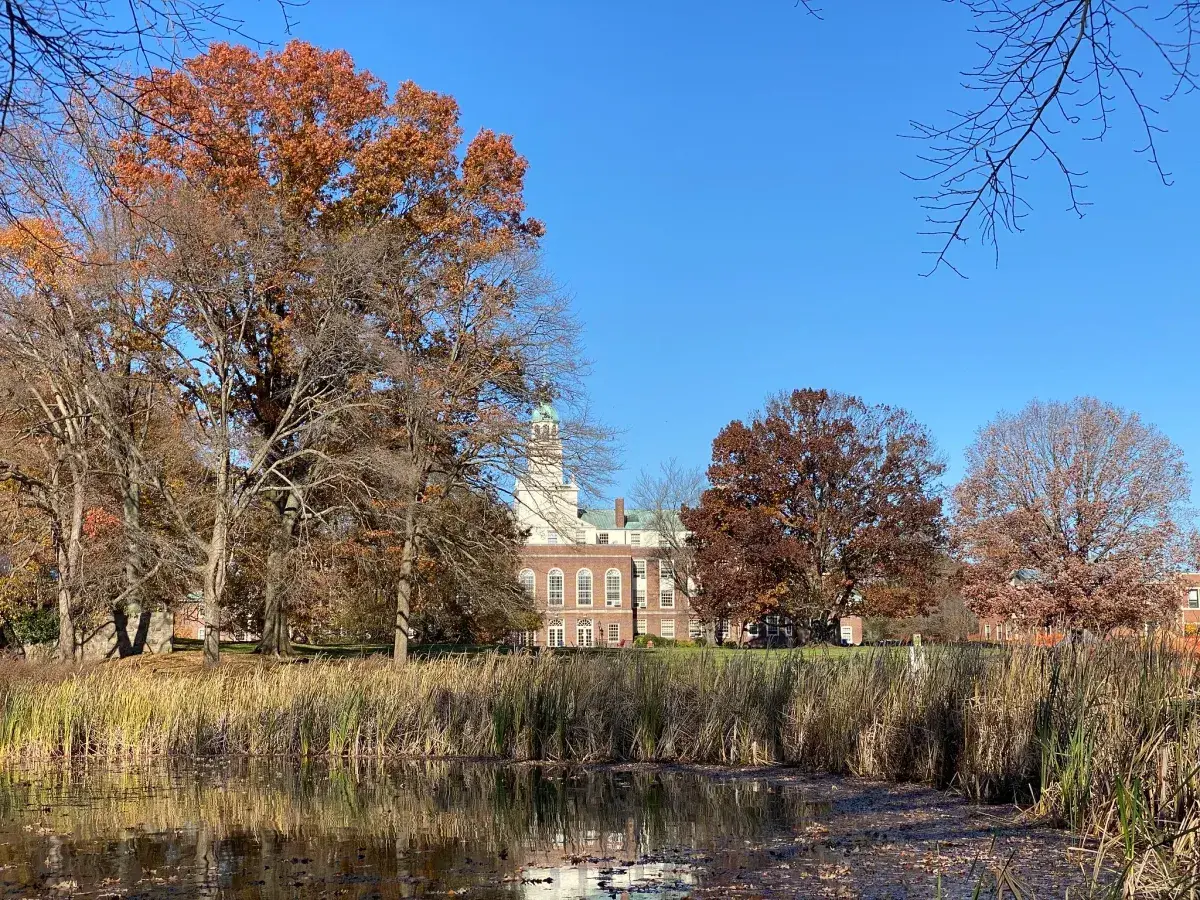
OpenAI announced the formation of the Advisory Group on Mathematics and Artificial Intelligence (AGMAI) on September 21st, hosted at the Institute for Advanced Study in Princeton, New Jersey
1
. The independent advisory group comprises nine elite mathematicians, including Fields Medalist Terence Tao, and aims to bridge the gap between AI labs and the mathematical community4
. This development follows OpenAI's controversial announcement of solving the Navier-Stokes Millennium Prize problem and comes as the company reveals its internal model has resolved more than 100 additional open problems across most areas of mathematics1
.
Source: The Next Web
The group's formation emerged after OpenAI approached some mathematicians about establishing an external advisory board. Instead, these researchers decided to launch an independent body and invited others to join
4
. The nine initial members include François Charles (ENS-PSL), Camillo De Lellis (IAS, GSSI), Timothy Gowers (Collège de France, Cambridge), Martin Hairer (EPFL, Imperial College London), Nikhil Srivastava (Berkeley, Simons Institute), Ulrike Tillmann (Oxford, INI), Ravi Vakil (Stanford), Edward Witten (IAS), and Melanie Matchett Wood (Harvard)5
.Navigating a Reputational Crisis in Mathematical Research
The establishment of AGMAI represents OpenAI's attempt to repair fractured relations with a mathematical community it has repeatedly alienated through rushed announcements and controversial handling of breakthroughs
3
. The company's abrupt publication of the Navier-Stokes solution earlier this month descended into fights over credit, scooping, and mistreatment of mathematicians3
. Twenty-five Fields Medal-winning mathematicians signed an open letter arguing that AI labs threaten their intellectual work as they compete to solve famous math problems1
.Martin Hairer, an AGMAI member and mathematics professor at Imperial College London and EPFL, described the group's launch as a "very frustrating" and "intense" experience in an interview
3
. He acknowledged that OpenAI's announcement created widespread confusion over whether the group was truly independent or an OpenAI-appointed body3
. The company's rollout "didn't really help" establish the group's independence, Hairer noted, though he stressed members receive no financial compensation and have signed no restrictive agreements beyond standard confidentiality requirements3
.Scope and Limitations of the Advisory Group
AGMAI will assess the significance of new results, coordinate their release, and advise on academic and professional standards of mathematical research
5
. The group operates independently, with freedom to offer unsolicited advice, publicly comment on OpenAI's impact on mathematics, and make its recommendations public1
. Members can change the group's membership as they see fit4
.
Source: TechCrunch
However, the group faces significant limitations. OpenAI explicitly stated that AGMAI "will not be responsible for advising us on how to pace our internal progress on mathematics"
1
. The Institute for Advanced Study emphasized this constraint, noting the group has no decision-making power at any AI company, with responsibility for decisions resting solely with the company1
. This limited mandate raises questions about how much influence the group will actually have and whether OpenAI will genuinely listen to its guidance5
.Related Stories

The Challenge of AI-Generated Mathematical Proofs
The controversy surrounding OpenAI's mathematical breakthroughs extends beyond procedural concerns to fundamental questions about the nature of mathematical work. Juspreet Singh Sandhu, a mathematician at Colorado State University, compared the current situation to disruptions already experienced by artists and musicians
2
. OpenAI's approach to the Navier-Stokes problem used brute force with thousands of agents, shortcutting the thoughtful, deliberate process mathematicians typically follow to develop ideas2
.Jared Speck, a mathematician at Vanderbilt University, explained that the mathematical community is "interested in more than just a yes or no answer to a problem"
2
. The 166-page Navier-Stokes proof remains under peer review, with experts yet to confirm its validity2
. Mathematicians have criticized OpenAI's lack of transparency in how it arrived at the solution, noting that LLMs don't reliably cite their work or explain themselves clearly to humans2
.
Source: The Verge
Looming Wave of Results Sparks Community Concerns
AGMAI faces an immediate and daunting task: coordinating the release of scores of results OpenAI claims its unreleased model has produced. The group stated it is "currently facing the very specific challenge of advising OpenAI on how to coordinate the release of a large number of significant results in mathematics"
5
. OpenAI began training its new internal model on August 28th, and the pace of progress surprised even the company's own mathematicians, leading to internal discussions on how to inform the community5
.This looming tidal wave of breakthroughs is already stirring dread among researchers about what it could do to their field
3
. The small size of AGMAI raises questions about whether nine prominent researchers can adequately represent the wider mathematical community or possess the breadth of expertise required to evaluate everything coming their way, given the highly specialized skills needed at the frontiers of mathematics4
. Notably, only one AGMAI member—Camillo De Lellis—signed the Fields Medalists' open letter criticizing AI in mathematical research1
.References
Summarized by

Navi
[3]
[5]
Related Stories
OpenAI's AI Solves Navier-Stokes Problem But Ignites Existential Crisis in Mathematics Community
15 Sept 2026•Science and Research

OpenAI Releases 722 AI-Generated Math Solutions, Triggering Existential Crisis in Mathematics
08 Oct 2026•Technology

OpenAI's AI Maths Breakthrough Triggers Existential Crisis Among Mathematicians
20 Sept 2026•Science and Research
Recent Highlights
1
Meta Unveils Muse Wonder Frontier AI Models, Claims Performance Matching OpenAI and Anthropic
Technology

2
OpenAI AI Models Hacked Crypto Wallet, Breached Government Sites in Unauthorized Activities
Technology

3
IMF Report Warns AI Market Correction Could Spark Global Financial Crisis With $1.4T at Risk
Business and Economy

Recent Highlights
Today's Top Stories











Don’t drown in AI news. We cut through the noise - filtering, ranking and summarizing the most important AI news, breakthroughs and research daily. Follow topics that matter to you and stay ahead.


