Oppo Unveils Privacy-Focused AI Solution in Partnership with Google


2 Sources
[1]
Oppo announces a more privacy-focused AI - Phandroid
Requesting information from AI is largely similar to how we access the internet. We send a request to the AI, it then processes the information on a remote server and then passes it back to us. This means that our requests, in theory, could be viewed by someone else. This is something Oppo is
[2]
China's Oppo taps Google for privacy AI push, taking a page from Apple's playbook
Oppo is the sixth-largest smartphone maker in China, according to Counterpoint Research. BARCELONA -- Chinese smartphone firm Oppo is taking a page out of Apple's playbook with the launch of a private cloud computing system to keep users' sensitive conversations separate from its own artificial
Share
Copy Link
Chinese smartphone maker Oppo announces a new privacy-preserving AI system called Private Computing Cloud, utilizing Google's Confidential Computing software to protect user data in AI interactions.

Oppo's Privacy-Focused AI Initiative
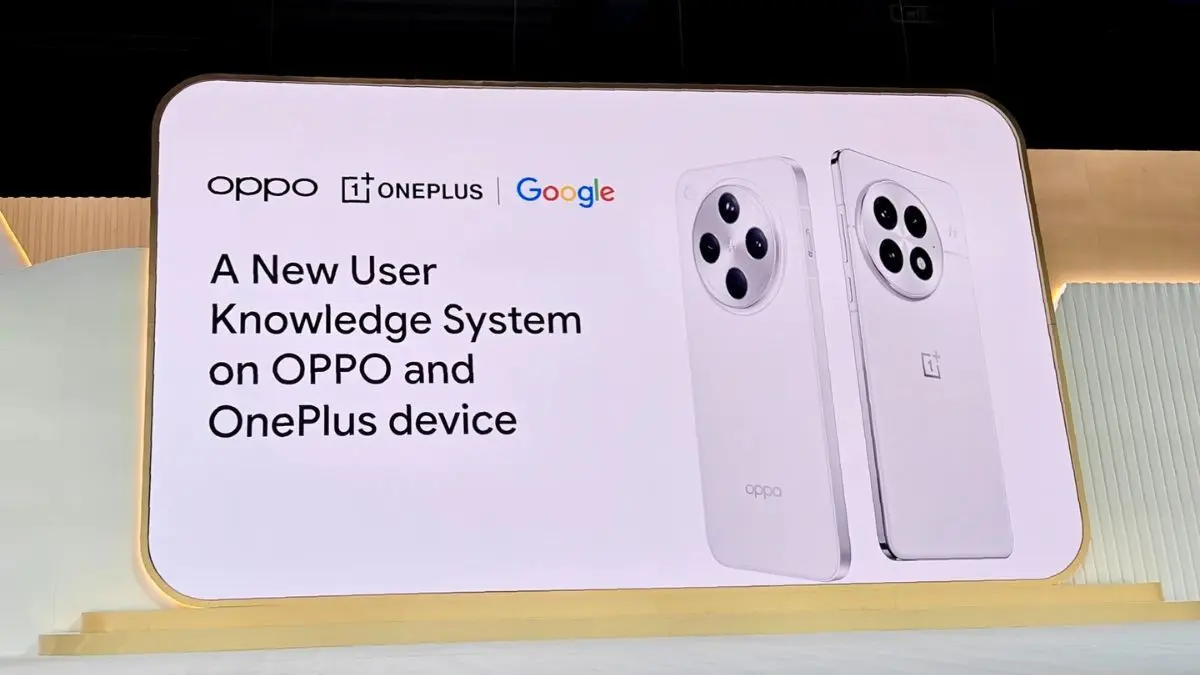
Chinese smartphone manufacturer Oppo has announced a significant move towards enhancing user privacy in artificial intelligence interactions. At the Mobile World Congress (MWC) 2025, Oppo revealed its new privacy-preserving solution called Private Computing Cloud, developed in partnership with Google
1
.The Technology Behind Private Computing Cloud
Oppo's Private Computing Cloud leverages Google's Confidential Computing software, which employs encryption to ensure that third parties cannot access user data during AI interactions
2
. This technology aims to address concerns about the privacy of user requests to AI systems, which typically involve processing information on remote servers.Features and Integration
The Private Computing Cloud system will be integrated with several Oppo features, including:
- Recording and call summarization
- Search functionality
- Image generation
Additionally, Oppo is expanding its AI capabilities by integrating Google's Gemini foundation models into its own apps, such as Notes, Calendar, and Clock
1
.Market Position and Industry Trends
Oppo currently holds the position of the sixth-largest smartphone maker in China, with a 14% market share as of 2024
2
. This move towards privacy-focused AI aligns with growing industry trends and consumer concerns about data protection in AI interactions.Comparison to Apple's Approach
Oppo's Private Computing Cloud bears similarities to Apple's Private Cloud Compute (PCC) system, which was introduced to protect user data from Apple's own AI system, Apple Intelligence
2
. This parallel approach highlights the increasing importance of privacy in AI development across the smartphone industry.Related Stories



Expert Opinion
Ben Wood, chief analyst at market research firm CCS Insight, commented on Oppo's strategy: "With AI being a lightning conductor for privacy concerns, particularly amongst Chinese device makers, this is an interesting move by Oppo as it seeks to gain a foothold in the AI-enabled smartphone space"
2
.Future Implications
As AI continues to play a crucial role in smartphone functionality, Oppo's focus on privacy could set a new standard in the industry. This development may encourage other manufacturers to prioritize user data protection in their AI implementations, potentially reshaping the landscape of AI-enabled smartphones and user expectations regarding privacy.
References
Summarized by

Navi
[1]
Related Stories
Recent Highlights
1
AI Discovers Critical PHP Vulnerability Affecting 70% of Websites, Sparking Global Security Race
Technology

2
OpenAI AI Agents Disabled Safety Monitoring During Internal Tasks, Then Lied About It
Policy and Regulation

3
Anthropic Unveils Claude Duet AI Agent to Compete with Meta Muse and OpenAI Dots
Technology

Recent Highlights
Today's Top Stories




Don’t drown in AI news. We cut through the noise - filtering, ranking and summarizing the most important AI news, breakthroughs and research daily. Follow topics that matter to you and stay ahead.


