5 Sources
[1]
We're upping our Palo Alto price target after strong earnings vanquish AI disruption fears
Palo Alto Networks reported a strong beat-and-raise quarter Tuesday night, putting to rest any lingering doubt that it will be disrupted by artificial intelligence. The stock was volatile in after-hours trading, but considering its blistering rally into earnings, it's not surprising to see this kind of reaction. Revenue for the company's fiscal 2026 third quarter increased 31% year over year to $3 billion, exceeding the Wall Street consensus estimate of $2.94 billion, according to LSEG. Adjusted earnings per share (EPS) increased 6% to 85 cents in the quarter, ahead of the 80-cent LSEG consensus estimate. Shares were roughly flat but volatile in after-hours trading. Pal Alto is up about 61% for the year and up 85% since the end of March. Why we own it Cybersecurity is a secular growth market as bad actors are relentless and companies simply cannot afford to not invest in defense. It is a never-ending arms race, made only more important by the proliferation of artificial intelligence. Palo Alto Networks has best-in-class tools and a broad product portfolio that allows it to provide an all-encompassing "platform" solution to cybersecurity. Competitors : CrowdStrike (also a Club stock), Fortinet , Cisco Systems Last buy : Nov. 24, 2025 Initiation : Feb. 15, 2023 Bottom line We battled this one out earlier this year when the stock was hammered over fears that large language models made by the likes of Anthropic were going to provide cybersecurity solutions to everyone and replace established security vendors like Palo Alto Networks. It's a thesis we never bought into, but we do admit it did test our patience. How did sentiment change so quickly? The company's opportunistic share repurchases, including a $1 billion increase to its buyback authorization in February, didn't help the stock. It got a brief pop after the disclosure that CEO Nikesh Arora bought $10 million worth of shares in late March, when the stock was trading in the $140s. But it wasn't off to the races yet. What finally got the market on our side was the launch of Project Glasswing , an initiative formed in early April by Anthropic and several major partners to address the heightened risks associated with users of its most advanced frontier model, Claude Mythos . Yes, the same Anthropic that was once seen as a boogeyman. As management explained in its earnings presentation, the creation of models like Mythos has been a "game changer" for the industry. "We have entered the era of truly cyber capable systems, where models like Mythos possess the autonomous capability to execute comprehensive attack campaigns from start to finish. This represents a fundamental paradigm shift for the cybersecurity industry." Arora explained on the earnings call. The company said it has had over 800 customer meetings in the last six weeks to help customers work through their cybersecurity future in a post-Mythos world, and many of those meetings are leading to interest in its Cortex and Agentic Endpoint Security Platforms. For context, Arora told Jim Cramer on "Mad Money" that Palo Alto held 1,200 customer meetings all of last year . Rapid advancements in AI like the Mythos model may have "increased the terminal value of the entire cybersecurity industry," according to Arora. The terminal value is, essentially, the "forever" value of the business, stretching out beyond a reasonable earnings forecast period. That's no doubt encouraging. But we still need to see strong execution, with companies delivering on their product roadmaps and deal integration. Last quarter , the narrative against Palo Alto Networks was all its dealmaking was diluting earnings too much. This time around, management demonstrated these deals have expanded its total addressable market. We were pleased to see the company show how its well-timed acquisition of CyberArk is far ahead of plan one quarter after its close. Announced in late July, Palo Alto Networks' $25 billion acquisition of this identity-security leader was a pivotal move that positioned the company to secure AI agents, which capable of operating autonomously to complete tasks on behalf of human users. CyberArk's annual recurring revenue is up 27% year over year, and management believes it's three to six months ahead of plan on its synergy targets. That keeps the company on track to achieve a 40% free cash flow margin in fiscal year 2028. Chronosphere was a smaller deal, but still one of great importance to gain exposure to the observability market, which is important as the amount of data companies need to see and secure grows. In validation of the strategic move, management reiterated two of the top five frontier labs are using the product. The acquisition was announced in November and completed in January. The bottom line is that if you want to be anointed as an AI stock, you have to prove that AI is accelerating your business. Palo Alto did exactly that, reporting an acceleration in organic bookings growth while demonstrating why its recent acquisitions are increasingly important in the AI era. Total remaining performance obligation (RPO) increased 36% year over year, or 22% when excluding CyberArk and Chronosphere. RPO represents business signed but not yet converted into revenue. Meanwhile, next-generation security annual recurring revenue (ARR) increased 60% year over year, or 28% when excluding the two deals. The business momentum is clear here, justifying the stock's strong performance over the past four to five weeks. The stock may be trading sideways in after-hours trading, but it had just gone parabolic, creating high expectations. We'll huddle to decide if we need to change our rating, but we are increasing our price target to $325 from $255. Commentary The trend toward vendor consolidation -- dubbed "platformization" by Palo Alto -- remains alive and well. In the quarter, Palo Alto Networks added about 110 net new platformizations in the quarter, including 20 from identity and observability -- think CyberArk and Chronosphere. This brought its total platform deals to about 1,650, with another 630 from identity and observability. Given where they stand today, management said its confident in surpassing 4,000 platforms with $20 billion in next-generation ARR by fiscal year 2030. One of the big deals in the quarter was a more than $200 million ARR expansion deal with a leading frontier AI lab for observability. Another key win was an $80 million deal with a leading U.S. electric utility that's important to the AI data center buildout. This company expanded its next-gen firewall spend and selected secure access service edge (SASE) for more than 25,000 employees. A third win was a $40 million deal with a global telecommunications provider, which purchased extended security intelligence and automation management (XSIAM) for AI modernization of its security operations center; it also consolidated multiple point products. A fourth deal highlighted was a more than $20 million deal with a leading global consulting firm, which selected its AI security platform, known as Prisma AIRS , to secure AI apps and agents. By product, Palo Alto's network security business recorded one of its strongest quarters in recent memory, with firewall bookings growth up 19% year over year and SASE ARR up 40% year over year. Another highlight was Prisma AIRS, which has become the fastest growing product in company history thanks to the more than 300 customers that have signed up for it. That's triple the customer count from one quarter ago. Palo Alto announced Prisma AIRS in late April 2025. Guidance The company's outlook for the fiscal 2026 fourth quarter came in above FactSet estimates across every line item. Revenue in the range of $3.345 billion to $3.355 billion, above the consensus estimate of $3.282 billion. Adjusted EPS in the range of 96 cents to 98 cents, which at a midpoint of 97 cents beats the consensus estimate of 94 cents. Next-gen security ARR of $8.9 billion to $8.95 billion, which is well above the consensus estimate of $8.57 billion. RPO of $20.9 billion to $21 billion, which is above the consensus estimate of $20.25 billion. Palo Alto raised its full year outlook to the following: Total revenue is now expected to be in the range of $11.415 billion to $11.425 billion, up from the prior range of $11.28 billion to $11.31 billion. Non-GAAP earnings per share (EPS) in the range of $3.77 to $3.79, which is up from the prior range of $3.65 to $3.70. Next-gen security ARR to $8.9 billion to $8.95 billion, which is up from the prior range of $8.52 billion to $8.62 billion. RPO of $20.9 billion to $21 billion, up from the prior range of $20.2 billion to $20.3 billion. (Jim Cramer's Charitable Trust is long PANW and CRWD. See here for a full list of the stocks.) As a subscriber to the CNBC Investing Club with Jim Cramer, you will receive a trade alert before Jim makes a trade. Jim waits 45 minutes after sending a trade alert before buying or selling a stock in his charitable trust's portfolio. If Jim has talked about a stock on CNBC TV, he waits 72 hours after issuing the trade alert before executing the trade. THE ABOVE INVESTING CLUB INFORMATION IS SUBJECT TO OUR TERMS AND CONDITIONS AND PRIVACY POLICY , TOGETHER WITH OUR DISCLAIMER . NO FIDUCIARY OBLIGATION OR DUTY EXISTS, OR IS CREATED, BY VIRTUE OF YOUR RECEIPT OF ANY INFORMATION PROVIDED IN CONNECTION WITH THE INVESTING CLUB. NO SPECIFIC OUTCOME OR PROFIT IS GUARANTEED.
[2]
Palo Alto CEO says customer meeting requests have surged amid AI security concerns
Palo Alto Networks CEO Nikesh Arora said artificial intelligence is making cybersecurity more important as increasingly sophisticated AI-powered attacks force companies to strengthen their defenses. "I think we declared the 'SaaSpocalypse' dead for cybersecurity officially," Arora said on CNBC's "Mad Money" on Tuesday, referencing investor concerns earlier this year that software-as-a-service, or SaaS, companies would be disrupted by AI models. Palo Alto reported stronger-than-expected quarterly results and raised its full-year outlook Tuesday. Revenue grew 31% from a year ago to $3 billion, with adjusted earnings per share coming in at 85 cents. The results marked another sign that fears of AI disrupting cybersecurity companies may have been overblown. In recent weeks, shares of Palo Alto and its peers have surged and erased their sell-offs from earlier this year. The heightened threat environment has fueled a surge in customer demand, according to Arora. He said Palo Alto has fielded roughly 1,200 customer inquiries in recent weeks from organizations seeking guidance on how to prepare for rapidly evolving AI risks. The company has already met with about 800 of those customers and has 400 left to go. "Just to give you a sense, we did 1,200 meetings all of last year. We've done 800 in the last 12 weeks," he said. "So we're busy." Arora said customers "don't want to solve just the problem today." Instead, they are increasingly asking how to prepare for the next generation of AI-powered threats. Rather than becoming a casualty of the AI boom, Arora said Palo Alto is benefiting from the growing need for cybersecurity solutions. "We are a net enabler of better cybersecurity," he said. "We're not a victim of AI." Cramer's Charitable Trust, the portfolio used by the CNBC Investing Club, owns shares of Palo Alto and cybersecurity peer CrowdStrike, which reports earnings on Wednesday night.
[3]
Palo Alto CEO Tells Jim Cramer We Must 'Fight AI' With AI, Jabs CrowdStrike: 'We're Still Slightly Bigger
The Only Way To Fight Back Appearing on CNBC's Mad Money, Palo Alto Networks Chairman and CEO Nikesh Arora declared a paradigm shift in the cybersecurity industry. He warned that frontier AI models like "Mythos" have significantly compressed cyberattack timelines, giving adversaries the capability to execute comprehensive ransomware campaigns in mere minutes. To counter this weaponized automation, Arora told host Jim Cramer that enterprises must fundamentally overhaul their defensive strategies. "There is only one long-term solution, to consolidate platforms, bring all your cyber data in one place, and fight AI with AI," Arora emphasized. Jabbing The Competition Arora praised CrowdStrike CEO George Kurtz for doing a "tremendous job," but could not resist a playful competitive swipe at his prominent peer. "We're still slightly bigger than them. So please tell him that when you see him tomorrow," Arora teased Cramer. Record Q3 Momentum Robust financial metrics back the executive's confidence. Palo Alto reported third-quarter revenue of approximately $3 billion, beating the $2.94 billion analyst consensus, alongside adjusted earnings of 85 cents per share. Next-generation security annual recurring revenue (NGS ARR) surged 60% year-over-year to $8.13 billion, driven by aggressive customer "platformization" and high throughput hardware demand for AI data center build-outs. Looking ahead, the company raised its full-year fiscal 2026 revenue guidance to a range of $11.415 billion to $11.425 billion, underscoring sustained momentum as AI transitions from experimental phases to enterprise-wide production. How Has PANW Performed In 2026? In comparison with the Nasdaq 100's 21.64% year-to-date advance, shares of PANW have advanced by 56.01% over the same period. It closed 1.10% lower at $297.18 apiece on Tuesday. The stock was lower by 3.39% in premarket on Wednesday. Over the last month, PANW stock was up 58.70%, and it rose 53.08% and 49.35% over the last six months and the year, respectively. Benzinga's Edge Stock Rankings indicate that PANW maintains a strong price trend in the long, medium, and short terms, with a poor value ranking. Disclaimer: This content was partially produced with the help of AI tools and was reviewed and published by Benzinga editors. Image via Shutterstock Market News and Data brought to you by Benzinga APIs To add Benzinga News as your preferred source on Google, click here.
[4]
Palo Alto Networks raises guidance on AI-driven cybersecurity demand
Palo Alto Networks reported quarterly results that beat expectations and raised its full-year guidance, capitalizing on heightened cybersecurity needs amid rising risks linked to artificial intelligence. The announcement was welcomed by the market, with its share climbing approximately 10% in after-hours trading. The group posted adjusted EPS of $0.85 on revenue of $3bn, compared to expectations of $0.80 and $2.94bn, respectively. Revenue grew 31% y-o-y, bolstered notably by the acquisitions of CyberArk and Chronosphere, which contributed $388m. Despite this growth, the company reported a net loss of $177m, compared to a net profit of $262m a year earlier. For the current quarter, Palo Alto Networks forecasts revenue between $3.35bn and $3.36bn and has raised its annual guidance to $11.42bn-11.43bn, exceeding market expectations. According to CEO Nikesh Arora, recent advancements in sophisticated artificial intelligence models have profoundly transformed IT security challenges and reinforced the urgency of investments in this field. The group is thus benefiting from renewed interest in cybersecurity, following a period where investors feared that AI might undermine certain software vendors. Palo Alto Networks is also participating in Anthropic's "Project Glasswing" program, designed to assess cyber risks associated with the advanced Mythos model.
[5]
Palo Alto Networks 3Q Revenue Rises as Customers Beef Up Cyber Defenses
Palo Alto Networks reported higher revenue in the third quarter and lifted its outlook as customers continued to beef up their cybersecurity in the face of heightened threats from artificial-intelligence models. Chief Executive Officer Nikesh Arora said the results should demonstrate that fears of a so-called "SaaS-Pocalypse," in which AI-native firms will come to displace legacy software incumbents, are misplaced as applied to the cybersecurity industry. "Actually, the capabilities of these models, especially in the cyber space, are causing a renewed interest from our customers to go ahead and deploy much more modern solutions, acting more as a tailwind to the cybersecurity industry as opposed to the death of the cybersecurity industry," Arora said in an interview. As advanced AI models enable cheaper and faster cyberattacks, Palo Alto has been betting that customers will want to unite fragmented cybersecurity measures into one unified platform, a process the company calls "platformization." That strategy is paying off, Arora said, with the company notching more than 110 platformizations during the quarter. "The market was a bit skeptical, but we have steadily proven over the last two years that customers who platformize are spending more money with us and have a very high retention rate," Arora said in an interview, adding that those customers also spend more when they renew. The development of models like Anthropic's Claude Mythos, which the company said was too powerful to release, and the ramp of AI "agents" in enterprises has prompted businesses to revisit their cybersecurity measures. Around 1,000 companies have reached out to Palo Alto over the past two months, Arora said, "to talk about their cyber posture, cyber infrastructure, and how we can help them get through this period of living the future with frontier AI models being cyber-capable." Palo Alto has also been preparing to meet the cybersecurity needs of customers using agentic AI. The company last month closed its acquisition of the AI cybersecurity company Portkey and reworked CyberArk, which it acquired last summer, as Idira - an identity security service focused on AI agents. The company on Tuesday reported a third-quarter loss of $177 million, or 22 cents a share, compared with a profit of $262 million, or 37 cents a share, a year earlier. The loss was a one-time event related to costs from the company's acquisition of CyberArk, Arora said. Stripping out those costs and other one-time items, Palo Alto reported adjusted earnings of 85 cents a share. Analysts polled by FactSet were expecting 79 cents a share. Revenue rose to $3 billion, up from $2.29 billion a year prior. Analysts were expecting $2.94 billion in revenue. Next-Generation Security annual recurring revenue rose 60% to $8.1 billion, including $1.6 billion from the acquisitions of CyberArk and Chronosphere. Remaining performance obligations were up 36% to $18.4 billion, including $1.8 billion from the two acquired companies. Palo Alto lifted its forecast for the full year, projecting revenue between $11.42 billion and $11.43 billion, up from a range of $11.28 billion to $11.31 billion. Adjusted earnings are expected to be between $3.77 and $3.79 a share, up from a range of $3.65 to $3.70. Analysts are expecting full-year adjusted earnings of $3.68 on revenue of $11.3 billion. For the current fourth quarter, Palo Alto projected adjusted earnings of 96 cents to 98 cents a share on revenue between $3.35 billion and $3.36 billion. Analysts expect 94 cents a share in adjusted earnings on $3.28 billion in revenue. Palo Alto also said it expects to end the year with Next-Generation Security ARR between $8.9 billion and $8.95 billion and remaining performance obligations between $20.9 billion and $21 billion.
Share
Copy Link
Palo Alto Networks delivered a strong earnings report with 31% revenue growth to $3 billion, decisively putting AI disruption fears to rest. CEO Nikesh Arora revealed the company fielded 1,200 customer meeting requests in recent weeks—matching all of last year's meetings—as advanced AI models like Anthropic's Claude Mythos heighten cybersecurity urgency across enterprises.
Palo Alto Networks delivered quarterly results that decisively vanquished lingering AI disruption fears, reporting revenue growth of 31% year-over-year to $3 billion for its fiscal 2026 third quarter
1
. The cybersecurity leader exceeded Wall Street's consensus estimate of $2.94 billion while adjusted earnings per share reached 85 cents, beating the 80-cent expectation5
. The company raised its full-year guidance to $11.42 billion to $11.43 billion, up from its previous range of $11.28 billion to $11.31 billion4
. This performance marks a dramatic reversal from earlier this year when the stock was hammered over concerns that large language models would replace established security vendors.Source: Market Screener
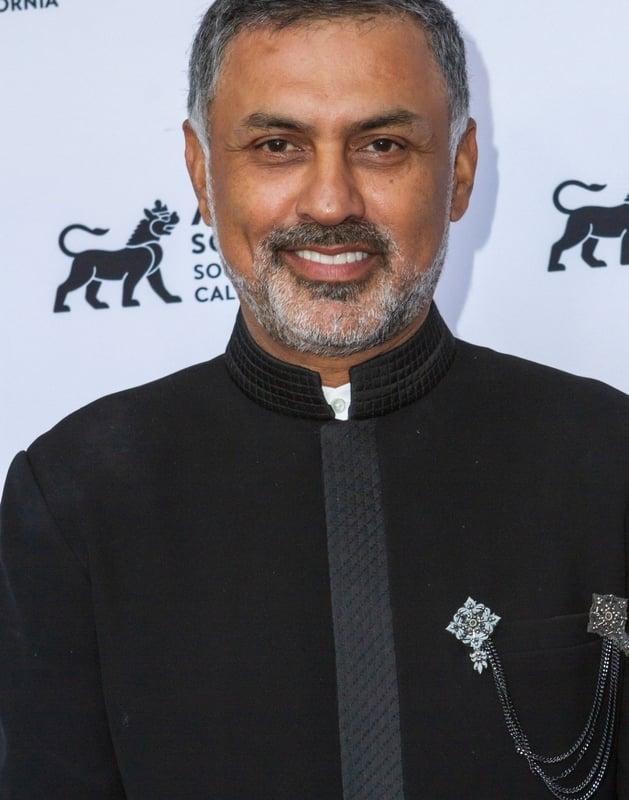
CEO Nikesh Arora revealed an unprecedented surge in customer demand during his appearance on CNBC's "Mad Money," stating that Palo Alto Networks has fielded roughly 1,200 customer meeting requests in recent weeks from organizations seeking guidance on AI-powered cyber threats
2
. The company has already met with about 800 of those customers, with 400 meetings still pending. "Just to give you a sense, we did 1,200 meetings all of last year. We've done 800 in the last 12 weeks," Arora explained2
. This dramatic acceleration reflects how advanced AI models have fundamentally altered the threat landscape, compelling enterprises to strengthen their defenses immediately rather than waiting.
Source: Benzinga
The emergence of sophisticated frontier models like Anthropic's Claude Mythos has proven to be a tailwind for the industry rather than the existential threat many feared. Arora declared the "SaaSpocalypse" officially dead for cybersecurity, explaining that these AI models possess autonomous capability to execute comprehensive attack campaigns from start to finish
3
. "There is only one long-term solution, to consolidate platforms, bring all your cyber data in one place, and fight AI with AI," Arora emphasized3
. Palo Alto Networks is participating in Anthropic's Project Glasswing initiative, formed in early April to address heightened risks associated with the Mythos model1
. Management noted that AI advancements may have "increased the terminal value of the entire cybersecurity industry," suggesting long-term growth potential extends beyond reasonable forecast periods.Palo Alto Networks' well-timed acquisitions are delivering results ahead of schedule, validating its consolidated security platforms approach. The $25 billion CyberArk acquisition, announced in late July and positioned to secure AI agents operating autonomously, is running three to six months ahead of plan on synergy targets
1
. CyberArk's annual recurring revenue jumped 27% year-over-year, keeping the company on track to achieve a 40% free cash flow margin in fiscal year 2028. The smaller Chronosphere acquisition, completed in January, has already gained traction with two of the top five frontier labs using the product1
. Together, CyberArk and Chronosphere contributed $388 million to quarterly results4
.Related Stories
Next-Generation Security annual recurring revenue surged 60% year-over-year to $8.13 billion, with $1.6 billion coming from acquisitions
5
. Remaining performance obligations climbed 36% to $18.4 billion, including $1.8 billion from acquired companies. The company notched more than 110 platformizations during the quarter, with customers who platformize spending more money and demonstrating very high retention rates5
. For the current fourth quarter, Palo Alto Networks projected adjusted earnings of 96 cents to 98 cents per share on revenue between $3.35 billion and $3.36 billion, exceeding analyst expectations of 94 cents per share on $3.28 billion in revenue5
. While the company reported a net loss of $177 million compared to a profit of $262 million a year earlier, Arora clarified this was a one-time event related to CyberArk acquisition costs5
.Arora playfully acknowledged competitor CrowdStrike during his "Mad Money" appearance, praising CEO George Kurtz for doing a "tremendous job" while noting, "We're still slightly bigger than them"
3
. Shares of Palo Alto Networks have advanced 56.01% year-to-date in 2026, significantly outpacing the Nasdaq 100's 21.64% advance over the same period3
. The stock is up about 61% for the year and 85% since the end of March, reflecting how rapidly market sentiment has shifted1
. What catalyzed this transformation was CEO Nikesh Arora's $10 million share purchase in late March when the stock traded in the $140s, followed by the launch of Project Glasswing in early April, which validated that AI-driven cybersecurity demand would accelerate rather than diminish the need for established security vendors.Summarized by
Navi
[3]
[4]
[5]
21 May 2025•Technology

19 Aug 2025•Technology

29 Apr 2025•Technology

1
Technology

2
Policy and Regulation

3
Technology

News Categories