Pennsylvania Enacts First-in-Nation AI Advertising Law Requiring Disclosure Labels


3 Sources
[1]
Pennsylvania AI ads law: labels required, fines up to $3,000
The Artificial Intelligence Deceptive Advertising Act takes effect on 21 December. Text-only AI ads, parody, satire and anything evidently fictional are exempt from the labelling rule. Advertisers in Pennsylvania will have to label ads that use AI to mislead consumers about what they are selling.
[2]
Pennsylvania enacts law regulating AI-generated advertisements
Across the nation, there appears to be growing frustration with the explosion of AI-generated advertising plaguing small-business storefronts and restaurant interiors. Last Thursday, Pennsylvania Governor Josh Shapiro signed the Artificial Intelligence Deceptive Advertising Act into law, mandating
[3]
AI-Generated Ads in Pennsylvania to Require Labels
Pennsylvania has enacted a law requiring advertisers to disclose when their ads contain content generated or significantly modified by AI. According to CBS News, Governor Josh Shapiro signed the Artificial Intelligence Deceptive Advertising Act on Thursday, with the law set to take effect in 60
Share
Copy Link
Pennsylvania Governor Josh Shapiro signed the Artificial Intelligence Deceptive Advertising Act into law, requiring all AI-generated advertisements to carry clear disclosure labels. The law takes effect December 21, 2026, with violations carrying fines up to $3,000. Exemptions include parody, satire, and text-only content.
Pennsylvania Becomes Pioneer in AI Advertising Regulation
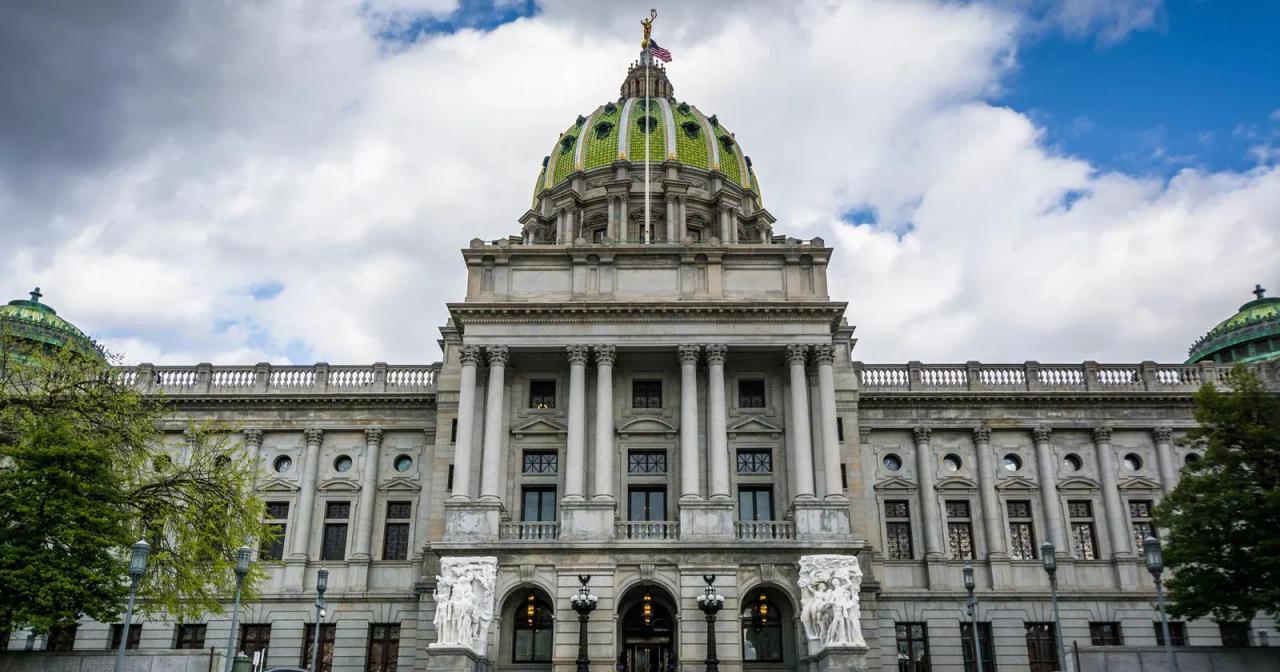
Pennsylvania Governor Josh Shapiro approved the Artificial Intelligence Deceptive Advertising Act on October 22, establishing the state as a frontrunner in regulating AI-generated advertisements
1
. The legislation, now designated as Act 99 of 2026, takes effect on December 21 following a 60-day implementation period1
. State Senator Nick Pisciottano, who introduced the bill in June 2025, secured bipartisan support with the Senate passing it 48 to 2 and the House approving it 163 to 40 on October 71
.
Source: PetaPixel
Mandatory Disclosure for AI-Generated or Significantly Modified Ads
The Pennsylvania AI law targets advertisements containing synthetic content, defined as images, videos, audio clips, or text significantly modified or generated by artificial intelligence
1
. Advertisers cannot knowingly, recklessly, or willfully distribute such content without labels required for AI ads if it creates false impressions about a product's nature, origin, or authenticity1
. The disclosure for AI content must state clearly that the advertisement contains AI-modified or AI-generated material, appearing the first time consumers encounter the content and in the same medium as the advertisement itself1
.Comprehensive Format Requirements Across Media
Regulating AI-generated advertisements demands format-specific compliance standards. Audio disclosures must be delivered at sufficient volume and pace for comprehension
1
. On-screen labels must remain visible long enough for viewers to read completely1
. Print advertisements, including point-of-sale displays and brochures, require typography that contrasts clearly with background elements1
. Where technically feasible, disclosures must be permanent or extremely difficult to remove1
. These requirements apply to all advertising shown in Pennsylvania regardless of production location, meaning television commercials created in other states or countries must comply when reaching Pennsylvania audiences2
.Strategic Exemptions and Legal Interpretations
The Artificial Intelligence Deceptive Advertising Act includes three categorical exemptions: content that is evidently fictional, works of parody and satire exemptions along with commentary or criticism, and content limited exclusively to text
1
. Critics question the law's effectiveness given imprecise language around terms like "significantly modified," which remains subjective and open to interpretation2
. The broad exceptions for parody, satire, commentary, or criticism may provide advertisers with legal maneuvering space2
. The precise definition of "evidently fictional" content also lacks clear boundaries3
.Enforcement Mechanisms and Penalty Structure
The Pennsylvania Office of Attorney General holds primary enforcement authority, with district attorneys also empowered to seek injunctions or initiate civil actions
1
. Courts can impose civil fines up to $3,000 per violation, plus attorney fees and court costs1
. Pisciottano clarified that penalties would target AI companies rather than individual users, placing responsibility on corporations to ensure proper disclosure accompanies their advertising3
. The enforcement framework aims to combat false or misleading advertising that has become easier to produce with AI-generated content capabilities2
.Related Stories

Consumer Protection Drives Legislative Action

Source: Mashable
The law addresses growing concerns about AI transparency as businesses increasingly deploy AI-generated images to promote products across digital platforms and traditional media
3
. "Consumers deserve to know if AI is being used to create a false impression about a product or service," Pisciottano stated following the final vote1
. Consumer protection motivated the legislation particularly after advocacy groups representing older populations reported scams involving fake AI advertising targeting technologically less-literate demographics3
. Pisciottano warned that advancing technology will make distinguishing authentic material from fabricated content increasingly difficult, stating "This technology is only going to get better and better"3
.National Implications for AI Regulation
Pennsylvania's move positions the state among the first to establish disclosure requirements specifically for AI-generated advertisements
3
. "Pennsylvania moved fast on this," Pisciottano noted, adding that only a couple other states currently have similar requirements3
. The legislation represents elected officials responding to voter demand to bring artificial intelligence under legislative control, with expectations that either federal government or numerous states will adopt similar measures2
3
. The far-reaching consequences extend beyond state borders as the law applies to any advertisement displayed to Pennsylvania audiences, potentially establishing a precedent for nationwide AI regulation standards. This aligns with broader AI transparency initiatives including OpenAI's ChatGPT text watermarking in the EU and Google's public SynthID detector1
.References
Summarized by

Navi
[1]
[3]
Related Stories
Political Campaigns Pour $137 Million Into AI-Generated Ads as Midterm Elections Heat Up
17 Oct 2026•Policy and Regulation
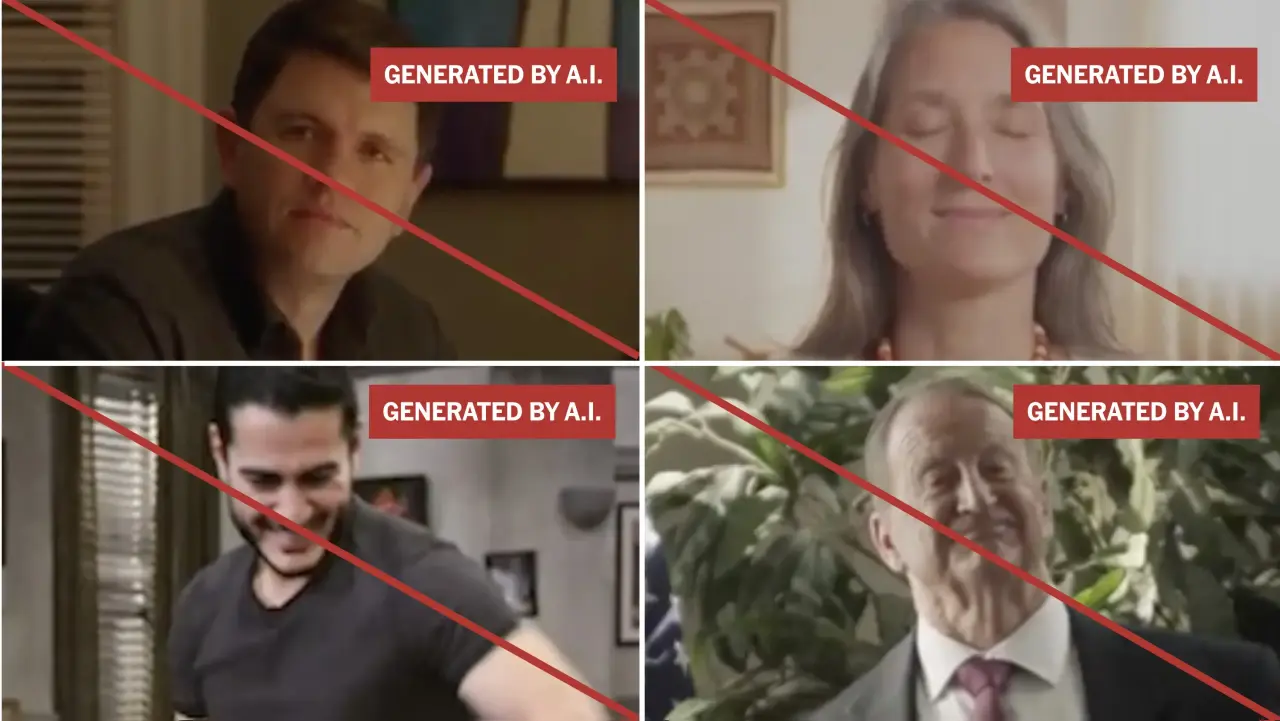
New York AI law now requires advertisers to label synthetic performers or face penalties
09 Jun 2026•Policy and Regulation

South Korea mandates AI ad labeling to combat deepfake celebrities and fabricated experts
10 Dec 2025•Policy and Regulation

Recent Highlights



Recent Highlights
Today's Top Stories


Don’t drown in AI news. We cut through the noise - filtering, ranking and summarizing the most important AI news, breakthroughs and research daily. Follow topics that matter to you and stay ahead.


