EU AI Act Transparency Rules Take Effect: Companies Must Label AI-Generated Content Starting August 2


17 Sources
[1]
Europeans Are About to Find Out How Entrenched AI Is in Their Daily Lives
Advertisements, music recommendations, calendar management apps, and complaint hotlines -- if they use AI, Europeans will need to be told. Starting on Sunday, citizens of the European Union must be informed when they are interacting with an AI system or viewing content generated or altered by the
[2]
Europe's AI labeling and transparency rules are now in effect
The European Union has ushered in some additional rules that aim to make it easier for people to identify chatbots and AI deepfakes online. The new transparency obligations under the bloc's landmark AI Act came into effect on August 2nd, requiring companies to disclose when people are interacting
[3]
AI's 'cookie banner' moment: EU labels come for the bots
European companies are racing to label chatbots, deepfakes and AI-generated marketing material as Brussels prepares to enforce the first consumer-facing obligations under its landmark AI act. Online retailers, travel groups and advertising agencies are among the businesses overhauling websites and
[4]
EU announces new rules on AI transparency - Engadget
They are 'intended to foster trust and integrity in the information ecosystem.' The European Union has announced that it's new AI transparency rules are now in effect and enforceable across the bloc as of August 2nd. Article 50 of the AI Act requires content publishers to mark and label certain
[5]

EU will require companies to label AI-generated content starting Sunday
Serving tech enthusiasts for over 25 years. TechSpot means tech analysis and advice you can trust. The takeaway: Companies operating in the European Union are now subject to a new requirement: clearly label content created or altered by artificial intelligence. Beginning Sunday, the EU's latest
[6]
EU will mandate labels on authentic-looking AI content starting August 2 - Engadget
"It is a matter not only of customer protection, it's also a matter of democracy protection." The EU is mandating that companies stick a label on content that was AI-generated if it is attempting to look authentic, according to a report by The Guardian and others. These rules, which were devised
[7]

Celebrating the AI Act delay? The EU AI Act's chatbot and content rules apply this week
While high-risk AI penalties are on hold, Article 50 is now in effect, and SMEs need to be ready If your business celebrated the European Union's (EU) delay of high-risk AI penalties, don't open the champagne just yet. On August 2, 2026, Article 50 of the EU AI Act goes live, bringing new
[8]

EU to Require Labels on Realistic AI Images From Sunday
The EU's AI Act is being introduced in stages, and this coming Sunday any AI-generated content impersonating people or real events will be required to have a label. It means that tech companies, including social media giants, must now clearly mark a deepfake or else face heavy fines. Le Monde
[9]

AI-generated label becomes mandatory in the EU
Companies creating or using AI-generated content have to label it clearly for users to know, as part of an EU guideline implemented on Sunday. Deepfakes and other AI-generated content must be labelled from Sunday, as the European Union's sweeping artificial intelligence transparency rules kick
[10]
EU rules on AI models become enforceable. What's going to change?
EU AI Act rules on AI models become enforceable on 2 August, making Brussels the world's top AI regulator. Euronews breaks down what this all means for Europe and beyond. As of 2 August, the EU's rules on AI models become enforceable, cementing the European Commission's role as the world's most
[11]
No more hiding AI: EU deepfake and chatbot labelling rules start Sunday
Sunday marks the start of the AI Act's transparency rules, which require companies to disclose when chatbots, images or video have been generated or manipulated by artificial intelligence. Deepfakes and other AI-generated content must carry clear labels from Sunday, ensuring Europeans can
[12]

Explainer: EU gets new powers over powerful AI from Sunday
The EU has the world's most comprehensive digital rulebook covering social media, online retailers and search engines, with plans for more rules this year. In 2024, the EU adopted a sweeping AI law known as the "AI Act", but its rules have been introduced in stages. Brussels, Aug 01, 2026 -The
[13]

New EU rules set to aid transparency over artificial intelligence content
Brussels - Deepfakes and other AI-generated content must be labeled from Sunday in the European Union as sweeping artificial intelligence transparency rules kick in. The goal? To make sure Europeans immediately know whether the online content they see is real or fake. The EU's comprehensive AI
[14]

EU AI Act Transparency Rules Put Financial Institutions on Compliance Front Line | PYMNTS.com
While the EU recently postponed implementation of many of the AI Act's more onerous requirements for high-risk AI systems until late 2027, the law's transparency obligations spelled out in Article 50 took effect this week. They require organizations to disclose when customers are interacting
[15]
Made by AI? EU tells firms to stick a label on it from Sunday
European Union's new artificial intelligence rules mandate labeling of AI-generated content. These regulations aim to ensure users can distinguish real online material from synthetic creations. Companies face significant penalties for non-compliance with these transparency requirements. Major
[16]
The EU is forcing tech companies to label deepfakes. Will it work?
From this week, the EU AI Act requires deepfakes and AI-generated content to be labelled. Experts warn technical gaps and a lack of common standards could undermine enforcement. From this Sunday, AI companies will be subject to new obligations under the EU's AI Act requiring them to make deepfakes
[17]

EU AI Rules Begin: Deepfakes, Chatbots Face New Labels
The EU AI rules now require deepfake labels and chatbot disclosures across Europe from August 2, 2026. Companies must clearly identify AI-generated content and tell users when artificial intelligence handles conversations. The rules apply across the European Union under the AI Act and aim to reduce
Share
Copy Link
The European Union's landmark AI Act transparency obligations came into force on August 2, requiring companies to disclose when people interact with AI systems and label AI-generated content. Businesses face fines up to €15 million or 3 percent of global turnover for non-compliance, marking a significant shift in how AI is deployed across Europe.
EU Enforces Sweeping AI Transparency Rules Across 27 Member States
The European Union has activated the first consumer-facing provisions of its landmark AI Act, with AI transparency rules taking effect on August 2, 2024
1
2
. The European Union's Artificial Intelligence Act now requires companies to disclose when AI systems are used and to label AI-generated content across all platforms operating within the bloc. Citizens must be informed when they are interacting with an AI system or viewing content generated or altered by the technology, fundamentally changing how businesses deploy AI across Europe1
.
Source: PYMNTS
The AI labeling and transparency rules apply to both providers who develop and market AI systems, and deployers who use those systems on their platforms
2
. Companies like Meta and SpaceXAI are classified as both. Providers must design AI systems to explicitly notify users when they're dealing with AI instead of a human, unless this is obvious, and include machine-readable marks on synthetic audio, image, video, and text so it can be detected as artificially generated2
.Strict Requirements to Combat the Spread of Deepfakes and Misinformation
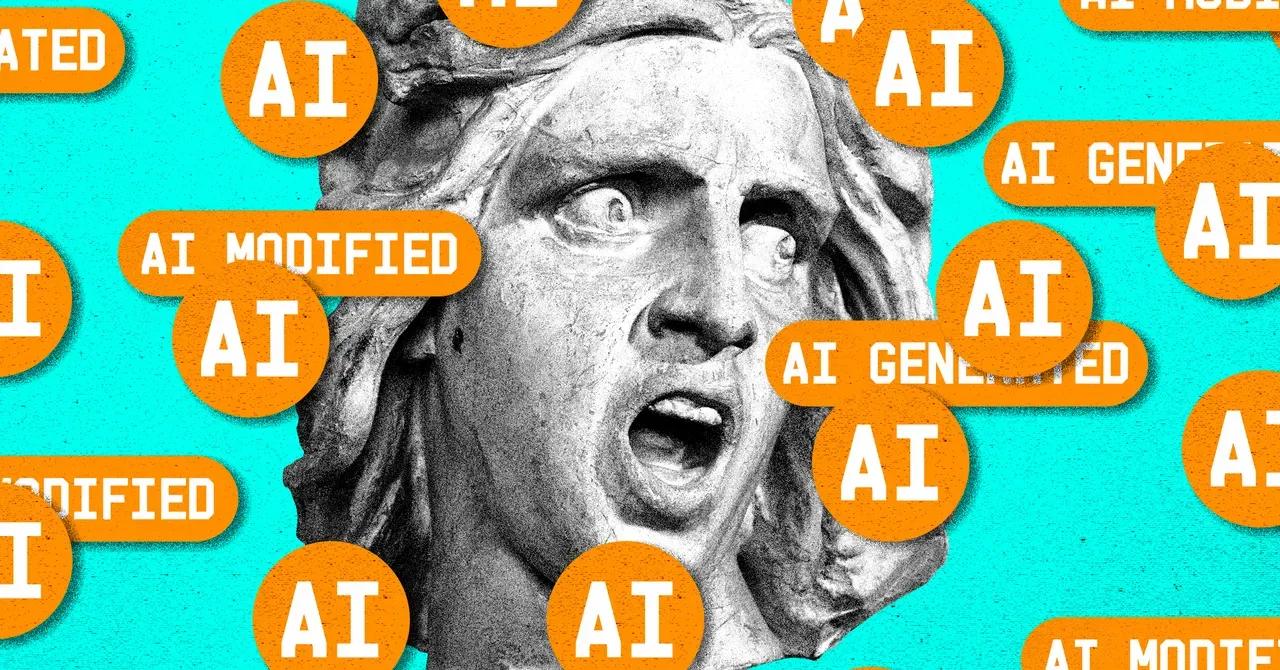
The new regulations target a wide range of AI applications. Advertisements or corporate social media posts using deepfakes will be slapped with labels stating they are AI-generated
1
. Chatbots and hotlines handling complaints must state clearly if they are AI-based. Call centers using machine learning to monitor caller emotions and detect frustration need to declare this at the start of calls1
.
Source: Wired
Even business-to-business interactions fall under scrutiny. Any commercial use of the technology, including scheduling appointments, handling correspondence, or negotiating contracts must be declared
1
. The European Commission developed AI disclosure labels that tech platforms can adopt, mirroring similar labels already introduced by TikTok, Instagram, and Facebook2
. While the EU-made icons are optional, the labeling requirements themselves are mandatory.Fines for Non-Compliance Reach €15 Million or 3 Percent of Global Turnover
Companies that fail to comply with these AI transparency rules face substantial financial penalties. Fines for non-compliance can reach up to €15 million or 3 percent of worldwide annual turnover, whichever is higher
1
2
4
. The European Commission can now begin imposing these fines on companies that fail to comply with the act3
. While new AI systems must comply immediately, models and services launched before August 2 have a four-month grace period until December 2 to meet the requirements2
5
.Industry Pushback and Implementation Challenges
The sweeping reach of the regulation has drawn criticism from industry groups and companies. Berlin-based online retailer Zalando, which uses AI to generate or enhance about 90 percent of its marketing material, said the European Commission's guidelines added another unnecessary layer of regulation
3
. The Commission published its guidance only weeks before the new rules started to apply, leaving companies with little time to adapt3
.Critics warn the reach of the new law could lead to information overload. Boniface de Champris, AI policy lead at the Computer & Communications Industry Association, warned that excessive labeling can cause banner blindness with endless notifications
1
. CCIA Europe argued the guidelines defined deepfakes so broadly that almost anything AI-generated needed a label, warning that burdensome requirements and questionable interpretations were a recipe for compliance paralysis, not innovation3
.Technical Requirements and Machine-Readable Marks
From a technical standpoint, the rules go beyond simple on-screen labels. Companies must implement systems using watermarks and metadata that can identify AI-generated content even after it has been shared or reposted
5
. Providers must include machine-readable marks on synthetic audio, image, video, and text so it can be detected as artificially generated or manipulated2
.The EU allowed for a transitional period until December for AI model providers to label synthetic content in a machine-readable format, clearly recognizing the technical challenge of implementing this
1
. Major tech companies have already been moving in this direction. TikTok has required creators to label AI-generated content for several years, with more than 3 billion pieces of content tagged using its detection tools5
. Google has signed on to the EU's voluntary code of conduct on AI transparency and is working with companies including Nvidia, OpenAI, and Apple on digital tagging standards5
.Scope Extends Beyond Consumer-Facing Applications
Source: Euronews
Model developers will also be subject to the new law and monitored by the European Commission's recently established AI Office
1
. This includes companies beyond the obvious examples of OpenAI, Anthropic, and Google DeepMind. Technology and data lawyer Thibau Duquin pointed to firms like Spotify, which uses AI-powered recommendations, or Adobe for its AI editing features in Photoshop1
. Organizations providing general-purpose AI models will be required to document information, publish training data summaries and implement copyright policies, with non-compliance subject to enforcement by national authorities4
.Related Stories



Balancing Innovation with Fundamental Rights Protection
The regulations are intended to foster trustworthy AI in Europe by reducing deception and manipulation, helping people make informed choices
1
4
. The European Commission stated that the rapid development of generative and interactive AI systems is making it increasingly difficult to distinguish AI interactions and AI-generated content from human-created and authentic content2
. EU tech chief Henna Virkkunen argued the new rules are important in ensuring AI content, agents and chatbots are more transparent and trustworthy for consumers3
.Risto Uuk, head of EU policy and research at the Future of Life Institute, emphasized that these are systems being inserted into millions of people's lives and livelihoods, often by a handful of big corporations, and the public deserve to know what they're dealing with, what AI can do and what risks come with it
3
. The new legislation echoes the EU's GDPR privacy law, which came into force in 2018 and introduced ubiquitous cookie-consent pop-ups1
. Patrick Van Eecke, a lawyer at Cooley, stated this will be a cookie banner moment for AI3
.Enforcement Challenges and Varied Implementation Across Member States
The bloc's 27 member countries are at different stages of setting up their supervisory frameworks, meaning enforcement might not be as immediate or uniform as expected
1
. Rosie Nance, a data and AI regulatory lawyer at Norton Rose Fulbright, cautioned that we're not necessarily going to see consistent enforcement straight away1
. Other compliance deadlines within the act have been delayed, as the European AI Office has taken longer than expected to produce key compliance guidelines1
.What Companies Should Watch For
The sweeping reach of the regulation will eventually be a gamechanger for companies, according to Duquin
1
. Businesses must decide whether they will be comfortable with labeling their AI use, or whether they will go back to using systems that are not AI-based or do things manually. Some companies like Booking.com view transparency as good business practice, noting that customers increasingly expect to know whether they're talking to an AI assistant or a human agent3
. The company's director of product AI, Pranav Pathak, stated they've seen that objectively being transparent about the fact that you're talking to an AI leads to better customer service outcomes3
. As enforcement tightens after December 2, companies operating in Europe must prepare for significant operational changes in how they deploy and disclose AI systems.References
Summarized by

Navi
Related Stories
Recent Highlights



Recent Highlights
Today's Top Stories






Don’t drown in AI news. We cut through the noise - filtering, ranking and summarizing the most important AI news, breakthroughs and research daily. Follow topics that matter to you and stay ahead.


