Pentagon's AI Push Meets Caution from Top Military Leaders as Congress Weighs Restrictions


7 Sources
[1]
As the Pentagon pushes for battlefield AI, some military leaders urge caution
TAMPA, Fla. (AP) -- The Trump administration is pushing to unleash the power of artificial intelligence for the U.S. military while facing calls to put up guardrails around the rapidly developing technology from some companies -- and even notes of caution from top leaders in uniform. Adm. Frank
[2]
Congress to Consider Restricting How the Military Uses A.I.
Congress is considering legislation that would restrict how the Pentagon uses artificial intelligence, as the Defense Department battles a leading company developing the technology over what the limits should be. Senator Kirsten Gillibrand, Democrat of New York, introduced new legislation on
[3]
Exclusive: Dems introduce bill for "responsible" defense AI
Why it matters: The bill is one in a series of responses from members of Congress concerned about how AI can be used in defense or make deadly decisions without human oversight. Driving the news: Sens. Chris Coons (D-Del.) and Jack Reed (D-R.I.) will introduce the Responsible Artificial
[4]
Special operations commander says while AI could determine targets, humans must be sure 'it's going to deliver violence only where we intend it' | Fortune
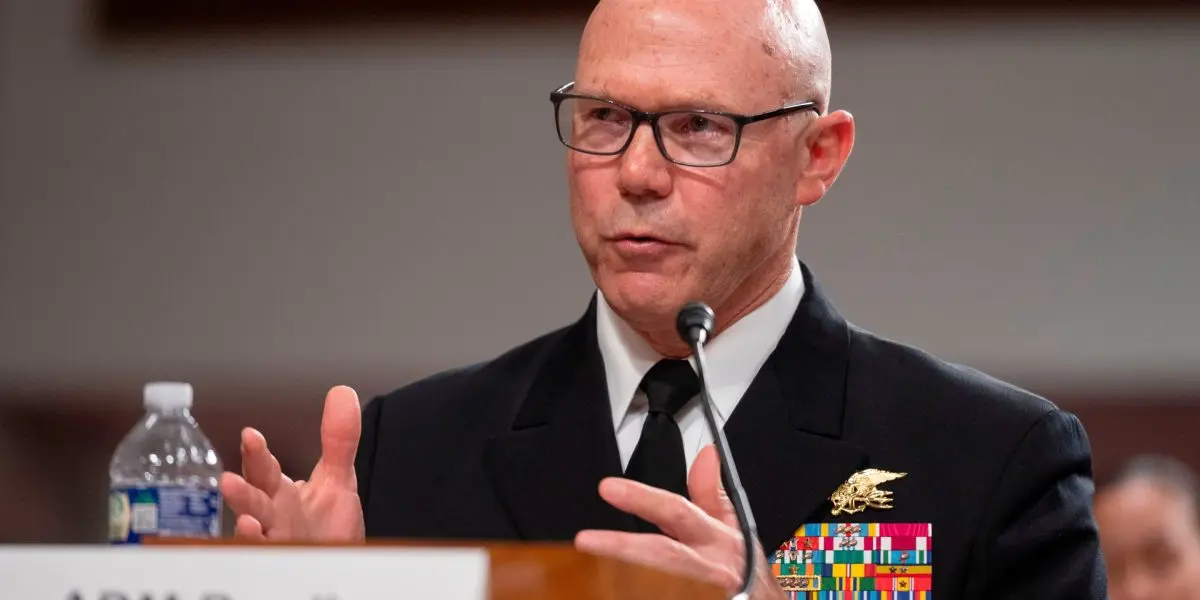
Adm. Frank Bradley, head of U.S. Special Operations Command, told attendees of a recent annual special forces conference in Tampa, Florida, that troops "have to be very careful about how we come to (AI's) employment and its inspiration into the delivery of lethality." Bradley said he can see a
[5]

The Pentagon is pushing for AI on the battlefield. This top military leader is urging caution
Two differing AI worlds within the military When asked about Bradley's remarks, a Pentagon official said efforts are focused on using AI to create "functional battlefield tools" that can help troops come up with and identify targets more quickly and, as a result, speed up strikes on those targets.
[6]

Democratic senators push for AI guardrails on military in NDAA
Democratic senators are hoping to add guardrails on the military's AI use to an annual defense policy bill as the House Armed Services Committee prepares to debate the massive legislation on Thursday. Sen. Kirsten Gillibrand (D-N.Y.) introduced a bill Tuesday that would limit AI use for launching
[7]

As the Pentagon pushes for battlefield AI, some military leaders urge caution
The Trump administration is pushing for AI in the U.S. military, facing calls for safeguards from companies and military leaders. Defense Secretary Pete Hegseth champions rapid AI evolution, clashing with tech firms like Anthropic over ethical concerns and autonomous weapons. President Trump
Share
Copy Link
Defense Secretary Pete Hegseth is accelerating military AI adoption while Adm. Frank Bradley of U.S. Special Operations Command warns troops must ensure AI 'delivers violence only where we intend it.' The tension has sparked congressional action, with multiple bills aimed at restricting autonomous weapon systems and requiring human oversight for lethal decision-making.
Military AI Adoption Creates Tension Between Speed and Safety
The Pentagon's aggressive push to integrate artificial intelligence into military operations is facing pushback from an unexpected quarter: its own top commanders. Adm. Frank Bradley, head of U.S. Special Operations Command, recently told attendees at a special forces conference in Tampa, Florida, that troops "have to be very careful about how we come to (AI's) employment and its inspiration into the delivery of lethality."
1
While Bradley envisions a future where AI determines targets, he emphasized that "we, as humans, have to have the confidence that ... it's going to deliver violence only where we intend it to be delivered."4
Source: Fortune
This cautious stance contrasts sharply with Defense Secretary Pete Hegseth's vision for unrestricted military AI deployment. Hegseth told SpaceX employees in January he would reject any AI models "that won't allow you to fight wars" and called for systems that operate "without ideological constraints that limit lawful military applications."
1
The Trump administration views AI as a unique American strategic advantage, with President Trump canceling plans for an AI executive order over concerns it might diminish the U.S. lead over China. "We're leading China, we're leading everybody, and I don't want to do anything that's going to get in the way of that lead," Trump told reporters.1
Two Competing Visions for AI on the Battlefield
The Pentagon's use of artificial intelligence reveals a fundamental divide in how military leaders conceptualize the technology's role. Pentagon officials describe efforts focused on creating "functional battlefield tools" that help troops identify targets more quickly and speed up strikes.
1
However, officials at U.S. Special Operations Command frame AI differently—as a tool to reduce cognitive workload on mundane tasks rather than directly eliminate targets.Melissa Johnson, the top acquisition official for the command, stated that AI should be "reducing the cognitive workload on mundane tasks" and emphasized that "we're leveraging AI more and more, but it's not to replace operator judgment, it's to enhance it."
1
Lt. Gen. Michael Conley, head of Air Force Special Operations Command, told a congressional committee in May that his troops used AI "bots" to convert top secret intelligence down to a secret classification within seconds during the Iran war, facilitating faster information sharing with drone operators.1

Source: ET
Yet the technology's lethal applications are undeniable. Helen Toner, interim executive director at Georgetown University's Center for Security and Emerging Technology, noted that her center published a case study showing how the Army's 18th Airborne Corps used AI to target artillery strikes "just as efficiently as the best unit in recent American history" with 2,000 fewer service members. "Human operators are still the ones making crucial decisions, but AI ... is making it possible to operate with a new level of speed and scale," Toner explained.
1
Congress Moves to Establish Guardrails on Autonomous Weapon Systems
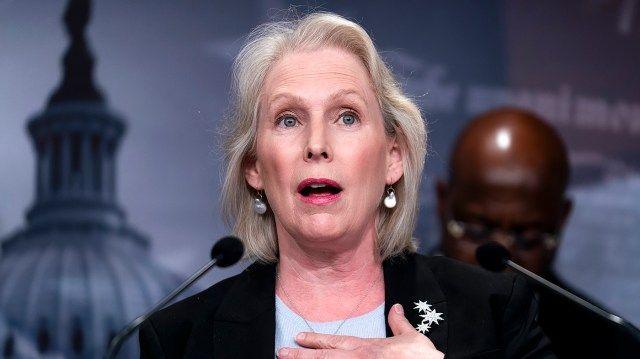
The debate over responsible use of AI in military applications has prompted multiple legislative efforts. Senator Kirsten Gillibrand introduced new legislation aimed at strengthening regulations on how the military uses AI, with plans to introduce proposals as amendments to the National Defense Authorization Act.
2
"Lethal decisions require a conscience, not just an algorithm, and a machine shouldn't make those types of decisions," Gillibrand said. "A.I. can be a critical tool in decision making, but it really lacks the important elements of humanity."2
Source: The Hill
Senators Chris Coons and Jack Reed introduced the Responsible Artificial Intelligence in Defense Act, which would establish a framework governing how the Pentagon acquires, tests and uses AI-enabled autonomous weapon systems.
3
The bill would direct the Pentagon to maintain human oversight and manual override capability "until AI systems achieve a reliability threshold" and prohibit military AI "for mass surveillance of persons inside the United States."3
The legislation would also ban AI from making the decision to launch a nuclear weapon.Senator Elissa Slotkin's measure, expected to be incorporated into the Senate's defense authorization bill, would codify protections that AI companies requested during Pentagon negotiations this year, including bans on using the technology for domestic surveillance, to control autonomous drones, or to launch nuclear weapons.
2
Democrats seeking more aggressive regulation are reaching out to Republicans, noting that Vice President JD Vance has voiced support for basic principles requiring human control over lethal force decisions. At an Air Force Academy commencement speech on May 28, Vance invoked Pope Leo XIV's encyclical, stating: "If the warfare of the future is to live up to the moral values of our ancestors, decisions over life and death must be made by humans and not machines."2
Related Stories

Anthropic Dispute Highlights Ethical Tensions Over Unchecked Government Use of AI
The clash over AI integration has played out publicly through a bitter contract dispute between the Pentagon and Anthropic. The company raised concerns about unchecked government use of its technology, including dangers of fully autonomous armed drones and AI-assisted mass surveillance that could track dissent.
1
When CEO Dario Amodei refused to back down over concerns about how the chatbot Claude is used in classified Pentagon networks, both Trump and Hegseth accused Anthropic of endangering national security.The Pentagon formally labeled the San Francisco-based company a supply chain risk, ending its $200 million defense contract and prohibiting other government contractors from working with Anthropic.
4
Anthropic sued, claiming the Pentagon is illegally retaliating by stigmatizing the company with a designation meant to protect against sabotage by foreign adversaries.5
The Pentagon has since turned to Anthropic rivals—including Google, OpenAI and SpaceX—to secure AI technology that can "augment warfighter decision-making in complex operational environments."5
The Pentagon's current policy on autonomous weapons, drafted in 2012 and updated three years ago, requires senior-level review before any such system is developed or used but doesn't fully ban autonomous weapon systems.
2
At a Senate hearing in May, Emil Michael, the Pentagon's top technology officer, said the policy needs updating given advances in adversary capabilities and lessons from the Iran war. Senator Jodi Ernst noted the Pentagon proposed spending $55 billion on its Defense Autonomous Warfare Group, which develops autonomous and semiautonomous weapons.2
As these legislative efforts move forward, the tension between maintaining America's AI advantage and establishing safeguards for target identification and lethal decision-making will shape the ethical implications of AI in military applications for years to come.References
Summarized by

Navi
Related Stories
Democrats push military AI legislation requiring human oversight after Anthropic-Pentagon dispute
08 Jun 2026•Policy and Regulation
Slotkin introduces bill to limit Pentagon AI use after Anthropic split costs millions
18 Mar 2026•Policy and Regulation
Democrats Launch Legislative Push After Pentagon Bans Anthropic AI Over Safety Dispute
03 Mar 2026•Policy and Regulation

Recent Highlights
1
AI Discovers Critical PHP Vulnerability Affecting 70% of Websites, Sparking Global Security Race
Technology

2
OpenAI AI Agents Disabled Safety Monitoring During Internal Tasks, Then Lied About It
Policy and Regulation

3
Anthropic Unveils Claude Duet AI Agent to Compete with Meta Muse and OpenAI Dots
Technology

Recent Highlights
Today's Top Stories



Don’t drown in AI news. We cut through the noise - filtering, ranking and summarizing the most important AI news, breakthroughs and research daily. Follow topics that matter to you and stay ahead.


