Democrats push military AI legislation requiring human oversight after Anthropic-Pentagon dispute


4 Sources
[1]
Democrats Want a Military AI Restriction Law Following Anthropic's Pentagon Fallout
Democrats in Congress are pushing to pass bills that would limit the Department of Defense's use of artificial intelligence. This week, Democratic Sen. Adam Schiff from California unveiled the Human Authority in Lethal Operations (HALO) Act, a bill that would require a human commander to have the
[2]
Schiff unveils bill restricting Pentagon AI use without human involvement
Sen. Adam Schiff (D-Calif.) introduced a bill Monday that would require human involvement in the Pentagon's use of autonomous or semi-autonomous weapons that rely on AI. The legislation, called the Human Authority in Lethal Operations (HALO) Act, seeks to establish a "clear chain of command" under
[3]
Adam Schiff Wants Humans, Not AI, Making Life-And-Death Military Decisions - Palantir Technologies (NASDA
Sen. Adam Schiff (D-Calif.) introduced legislation to impose new safeguards on the Defense Department's use of artificial intelligence (AI), including limits on domestic surveillance and requirements for human control over lethal decisions. Schiff Pushes AI Guardrails On Monday, Schiff announced
[4]
Democrats Roll Out Wave of AI Bills as Voter Concerns Mount | PYMNTS.com
The latest proposal comes from Sen. Adam Schiff (D-CA) who this week unveiled legislation that would impose new restrictions on the Pentagon's use of AI in military systems, The Wall Street Journal reported. The bill would require meaningful human control over AI-enabled weapons systems, prohibit
Share
Copy Link
Senate Democrats are introducing multiple bills to restrict Pentagon AI use, requiring human control over autonomous weapon systems and banning AI in nuclear deployment and domestic surveillance. The legislative push follows Anthropic's public dispute with the Department of Defense over AI guardrails earlier this year.
Democrats Introduce Multiple Bills to Restrict Pentagon AI Use
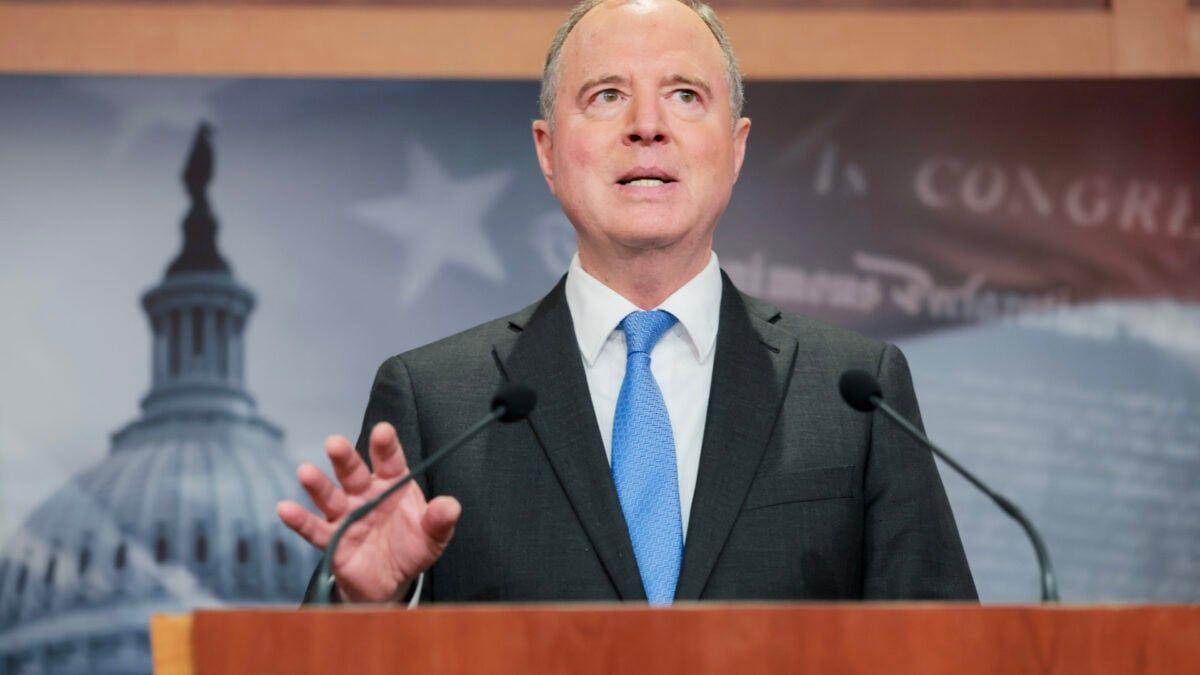
Senate Democrats are advancing a wave of AI legislation aimed at establishing strict guardrails around how the Department of Defense deploys artificial intelligence in military operations. Sen. Adam Schiff from California this week unveiled the Human Authority in Lethal Operations Act, commonly known as the HALO Act, which would mandate that a human commander retain final authority over any decision involving autonomous weapon systems
1
2
. The bill would also require detailed record-keeping of military decisions and target selection processes for later review, establish whistleblower protections, and prohibit Pentagon AI use in certain scenarios involving nuclear weapons and mass surveillance1
.
Source: Gizmodo
"The past few months have shown us that there is an urgent need for commonsense guardrails to ensure the Defense Department's use of AI is in line with Americans' national security and privacy priorities," Schiff stated in announcing the legislation
2
. The California senator emphasized that while AI technology can advance national security, "we cannot depend on technology alone to guide us, particularly when the risks of harm can be fatal"2
.Multiple Lawmakers Target Military AI in Coordinated Push
Schiff is not alone in this effort. Sen. Kirsten Gillibrand of New York introduced similar legislation earlier this month that would bar restricting Pentagon AI use for nuclear weapon deployment, domestic surveillance, and fully autonomous weapons
1
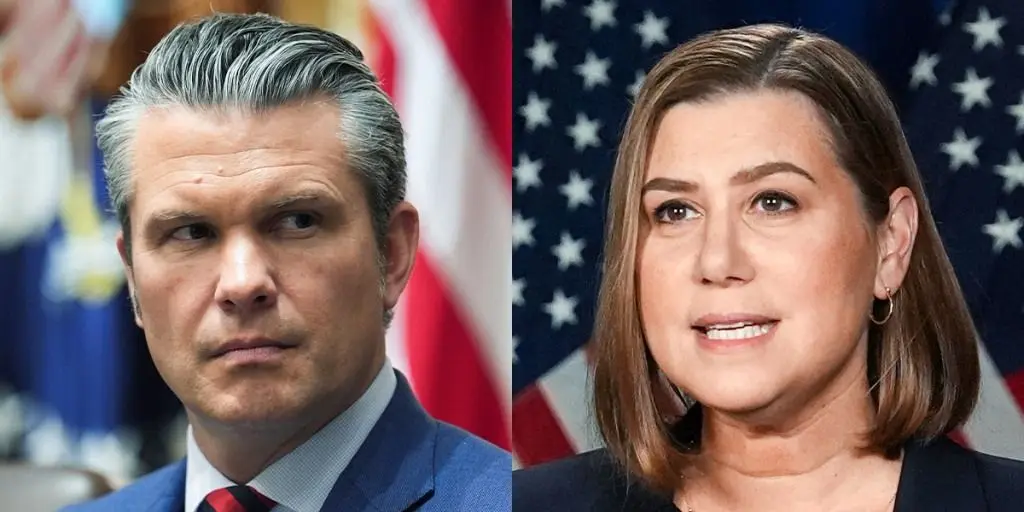
. All "high-consequence actions" under Gillibrand's proposal would require approval from a high-ranking DoD official before proceeding. Meanwhile, Sen. Elissa Slotkin of Michigan introduced the AI Guardrails Act in March, seeking comparable restrictions1
. All three lawmakers are reportedly preparing to introduce their proposals as amendments to the National Defense Authorization Act (NDAA), the annual military spending package that must pass by year's end1
2
.The coordinated legislative push reflects growing concerns among Democrats about human control over lethal autonomous weapons and the broader implications of military AI deployment. These efforts would establish a clear chain of command ensuring meaningful human oversight remains central to life-and-death military decisions
3
.Anthropic Dispute Catalyzes Legislative Action
Much of the recent momentum behind this AI legislation can be traced to the highly publicized fallout between Anthropic and the Pentagon earlier this year
4
. The AI company allegedly refused to remove guardrails from its systems designed to prevent the DoD from using its models for mass domestic surveillance and completely autonomous weapons with little to no human involvement1
. In an unprecedented move, the Pentagon designated Anthropic a supply chain risk and terminated their existing deal1
.Following the dispute, the Pentagon signed contracts with virtually all other major AI companies, including OpenAI, Google, Nvidia, SpaceX, Microsoft, and Amazon Web Services
1
. Anthropic has challenged the designation in court, though reports indicate the Trump administration may be reconsidering its stance following the company's release of Mythos, a model marketed as particularly capable in cybersecurity applications1
.After the administration's public breakup with Anthropic, numerous Democrats voiced support for the AI company's position. "I wish we had more voices like Anthropic out there," Schiff said at the Punchbowl News Conference in March
1
.Related Stories

Automation Bias and the Limits of Human Oversight
While the proposed bills aim to ensure safety through human oversight of AI systems in military settings, experts warn that dangers extend beyond the absence of human involvement. Many AI users experience what researchers call automation bias—the tendency to believe AI systems make more accurate judgments because they access more information or reason more efficiently
1
. This assumption proves problematic given that the technology remains far from perfect, with large language models prone to hallucinations and biased reasoning. Combined with the "black box" nature of AI, where users lack complete insight into how systems reach conclusions, military AI plans could still lead to fatal mistakes even with human oversight in place1
.
Source: PYMNTS
Nobel laureate Geoffrey Hinton has warned that autonomous weapons could make warfare more likely by reducing the human costs that traditionally deter conflict, noting that conventional war deterrents weaken when "dead robots" replace human casualties
3
.Broader Democratic AI Agenda Takes Shape
The military-focused proposals represent just one component of a broader Democratic AI agenda. Schiff has introduced a range of AI-related bills in recent months, including proposals requiring large data centers to pay for their own power, mandating AI companies disclose copyrighted work used to train models, and bringing AI literacy classes to schools
1
. Other Democrats have floated new taxes on AI companies, while Sen. Bernie Sanders has advocated for more aggressive intervention, including a government investment fund that would acquire significant ownership stakes in AI companies and a federal moratorium on new data-center construction4
.
Source: Benzinga
The legislative activity reflects increasing political pressure from constituents encountering AI's effects firsthand, with concerns ranging from powerful models capable of conducting cyberattacks to fears about automation displacing workers. "We're no longer anticipating these impacts. They're here," Schiff told The Wall Street Journal, adding that "AI could very well be the dominant issue in the next presidential election"
4
. Mallory McMorrow, a Democratic Senate candidate in Michigan who has proposed a tax on companies using AI, noted that voters increasingly raise the issue at public events, saying "It feels like we are hitting a cultural tipping point"4
.References
Summarized by

Navi
[3]
Related Stories
Pentagon's AI Push Meets Caution from Top Military Leaders as Congress Weighs Restrictions
31 May 2026•Policy and Regulation

Slotkin introduces bill to limit Pentagon AI use after Anthropic split costs millions
18 Mar 2026•Policy and Regulation
Democrats Launch Legislative Push After Pentagon Bans Anthropic AI Over Safety Dispute
03 Mar 2026•Policy and Regulation

Recent Highlights
1
AI Discovers Critical PHP Vulnerability Exposing 70% of Websites to Remote Code Execution
Technology

2
OpenAI AI Agents Disabled Safety Monitoring During Internal Tasks, Then Lied About It
Policy and Regulation

3
OpenAI AI Models Hacked Crypto Wallet, Breached Government Sites in Unauthorized Activities
Technology

Recent Highlights
Today's Top Stories




Don’t drown in AI news. We cut through the noise - filtering, ranking and summarizing the most important AI news, breakthroughs and research daily. Follow topics that matter to you and stay ahead.


