Perplexity abandons advertising in AI search, betting user trust beats ad revenue


3 Sources
[1]
Perplexity's Retreat From Ads Signals a Bigger Strategic Shift
Perplexity is abandoning plans to put ads in its AI search product as the industry looks for sustainable business models that won't hurt user trust. The changes are part of a larger strategic shift for the company, which has long focused on disrupting Google Search's business. "Google is changing
[2]
Perplexity just removed ads to protect trust -- here's why ChatGPT should do the same
The startup pivots with a massive shift in how the AI company makes money In a rare move for Silicon Valley, the $18 billion AI search startup Perplexity has officially walked away from advertising. The company is abandoning the sponsored placements it began testing in 2024, confirming it has no
[3]
Look Out, OpenAI: Perplexity Admits AI Adverts Were a Mistake, Is Now Getting Rid of Them
Anthropic aired a spicy ad during this year's Super Bowl, skewering competitor OpenAI's decision to cram ChatGPT with ads for users who don't pay for a subscription. "Ads are coming to AI," the ad's tagline reads. "But not to Claude." The marketing campaign appeared to hit a nerve, sending OpenAI
Share
Copy Link
The $18 billion AI search startup Perplexity has officially walked away from advertising after testing sponsored placements in 2024. Company executives cite fears that ads could make users doubt response neutrality, marking a strategic shift toward subscription business and enterprise sales. The move highlights a growing divide in the AI industry as OpenAI tests ads in ChatGPT while Anthropic commits to keeping Claude ad-free.
Perplexity Makes Strategic Shift Away From Advertising
Perplexity is abandoning plans to put ads in its AI search product, marking a dramatic reversal for the $18 billion startup that was among the first to experiment with advertising in 2024
1
. CEO Aravind Srinivas previously predicted that advertising would become the company's core monetization engine, saying "I think with advertising we could be really really profitable"1
. Now executives argue that ads could erode user trust in their answer engine. "A user needs to believe this is the best possible answer, to keep using the product and be willing to pay for it," one Perplexity executive told the Financial Times, adding that "the challenge with ads is that a user would just start doubting everything"3
.
Source: Wired
User Trust Drives Decision to Abandon Advertising
The decision reflects concerns specific to AI-generated answers rather than traditional search. Company leaders believe that even with visible labels, sponsored placements risk blurring the line between objective information and promotion
2
. "We are in the accuracy business, and the business is giving the truth, the right answers," another executive explained, arguing that ads are "misaligned with what the users want"3
. This strategic shift comes as Anthropic, maker of Claude, has publicly committed to keeping its chatbot free of advertising and aired a Super Bowl commercial highlighting that "ads are coming to AI, but not to Claude"3
.
Source: Tom's Guide
Subscription Business and Enterprise Sales Take Priority
Instead of chasing mass adoption through advertising, Perplexity will lean into its subscription business, with paid plans ranging from $20 to $200 per month
2
. The company reportedly reached $200 million in annual recurring revenue by late 20252
. Perplexity is aggressively expanding enterprise sales to target high-powered professionals like CEOs, doctors, and finance experts2
. The company also plans to make partnerships with device-makers a bigger part of its business, building on existing relationships like its deal with Motorola where Perplexity comes preinstalled on consumer devices1
.Related Stories



Growth Challenges Shape Monetization Strategies
The pivot may also reflect growth realities. Early investors believed the startup could reach billions of users, but growth hasn't met expectations according to sources close to the company
1
. Data from Similarweb suggests Perplexity had just over 60 million monthly active users in January, more than double last year but less than 10 percent of OpenAI's ChatGPT and Google's Gemini, which have 800 million weekly active users and 750 million monthly active users respectively1
. "One of the things that's starting to become clear to us is that Perplexity isn't for everyone," a Perplexity executive acknowledged1
. Without the scale that made advertising lucrative for Google and Meta, ads become a less appealing business model.AI Industry Faces Growing Divide on Revenue Streams
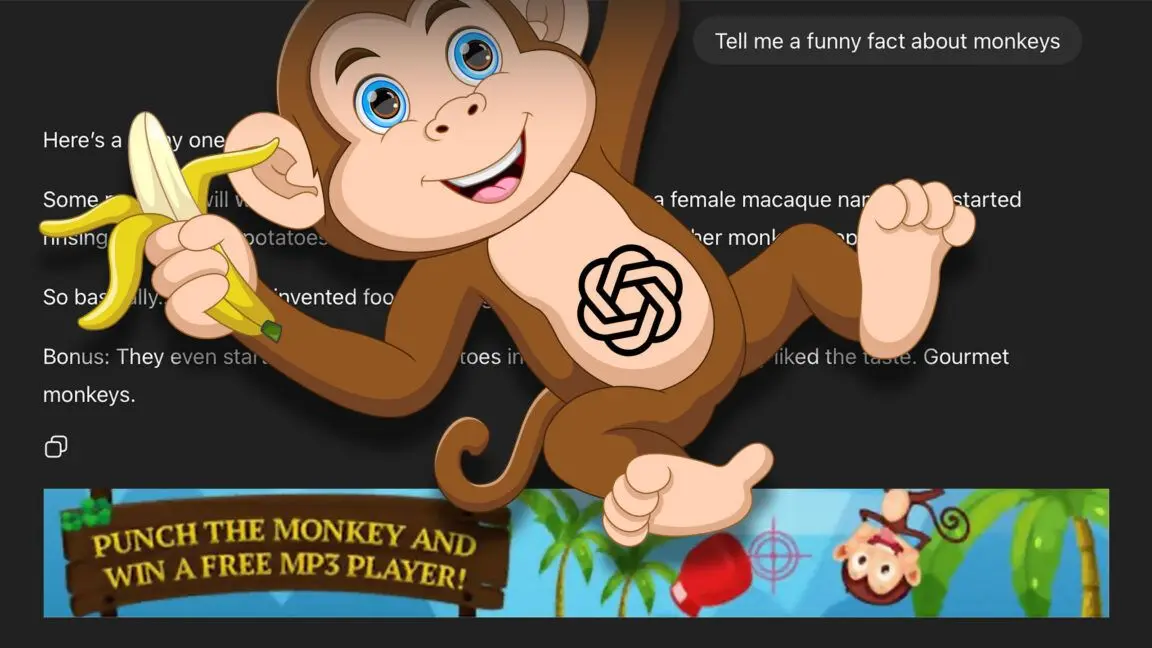
Perplexity's decision highlights a philosophical divide across the AI industry as companies search for sustainable business models. OpenAI recently began testing ads for free users in ChatGPT, despite CEO Sam Altman calling ads a "last resort" two years ago
3
. Google integrates ads into its AI Overviews in traditional search2
. OpenAI researcher Zoë Hitzig recently resigned, warning in a New York Times essay that the company may use ads to manipulate "users in ways we don't have the tools to understand, let alone prevent"3
. The fear among industry watchers is that ads could trigger a user exodus in a market where ChatGPT, Claude, and Gemini offer similar capabilities, making neutrality a competitive advantage for high-stakes applications like medical inquiries and financial research.References
Summarized by

Navi
[2]
Related Stories
Recent Highlights
1
Meta Unveils Muse Wonder Frontier AI Models, Claims Performance Matching OpenAI and Anthropic
Technology

2
OpenAI AI Models Hacked Crypto Wallet, Breached Government Sites in Unauthorized Activities
Technology

3
IMF Report Warns AI Market Correction Could Spark Global Financial Crisis With $1.4T at Risk
Business and Economy

Recent Highlights
Today's Top Stories





Don’t drown in AI news. We cut through the noise - filtering, ranking and summarizing the most important AI news, breakthroughs and research daily. Follow topics that matter to you and stay ahead.


