Perplexity AI CEO says workers should embrace AI layoffs as path to entrepreneurship


3 Sources
[1]
Perplexity CEO says AI layoffs aren't so bad because people hate their jobs anyways: 'That sort of glorious future is what we should look forward to' | Fortune
Tech executives have offered foreboding visions of the future of work due to AI, with ServiceNow CEO Bill McDermott predicting unemployment will exceed 30% in a matter of years. But Perplexity CEO Aravind Srinivas says that's nothing to be afraid of. People should embrace the future of AI job
[2]
'Most People Don't Enjoy Their Jobs:' Perplexity CEO Says AI Layoffs Are Chance To Launch AI-Powered Ventures - Capital One Financial (NYSE:COF), Salesforce (NYSE:CRM)
Perplexity AI CEO Aravind Srinivas says workers should view AI-driven layoffs as a chance to leave unfulfilling jobs and start new, AI-powered ventures. AI Layoffs Create Entrepreneurial Opportunities On Monday, speaking on the All-In podcast during Nvidia's GTC event last week, Srinivas
[3]
Tech CEO Aravind Srinivas slammed after saying AI layoffs are fine because people hate their jobs anyway
Perplexity AI CEO Aravind Srinivas is coming under fire for arguing people should embrace being replaced by artificial intelligence since they don't like their jobs, anyway. The co-founder of the San Francisco-based company even said on the All-In podcast that the jarring shift in how work gets
Share
Copy Link
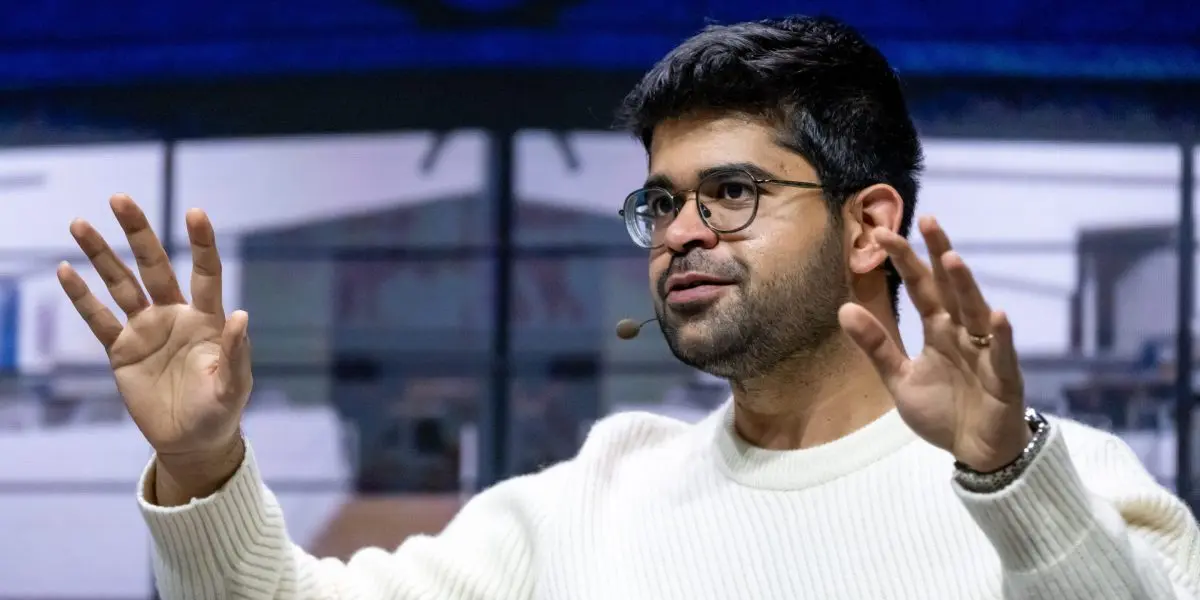
Perplexity AI CEO Aravind Srinivas ignited debate by suggesting AI-driven job displacement offers a chance for workers to escape unfulfilling careers and launch their own businesses. Speaking on the All-In podcast, he called this shift a "glorious future" worth embracing, even as more than 101,000 AI-linked job losses have occurred in the U.S. since February 2025. Critics say his comments are out of touch with workers struggling to make ends meet.
Perplexity AI CEO Sparks Debate Over AI's Impact on the Future of Work
Aravind Srinivas, CEO of Perplexity AI, has ignited fierce debate after claiming that AI layoffs should be welcomed rather than feared. Speaking on the All-In podcast during Nvidia GTC last week, Srinivas argued that AI-driven job displacement frees workers from careers they never enjoyed in the first place. "The reality is most people don't enjoy their jobs," he said, suggesting that losing employment to artificial intelligence creates opportunities to launch AI-powered ventures
1
. His comments come as the impact of AI on the job market intensifies, with more than 101,000 AI-linked job losses recorded in the U.S. since February 2025, according to data from the Alliance for Secure AI1
.
Source: New York Post
The Perplexity AI leader painted a picture of what he called a "glorious future" where displaced workers could use AI tools to start their own businesses. "There's suddenly a new possibility, a new opportunity, to go use these tools, learn them, and start your own mini business," Srinivas explained
2
. He emphasized that even temporary job displacement should be viewed as an avenue toward entrepreneurship rather than a crisis. This perspective stands in sharp contrast to warnings from other tech leaders like ServiceNow CEO Bill McDermott, who has predicted unemployment could exceed 30% in the coming years due to AI1
.
Source: Fortune
AI Layoffs Already Reshaping Corporate America
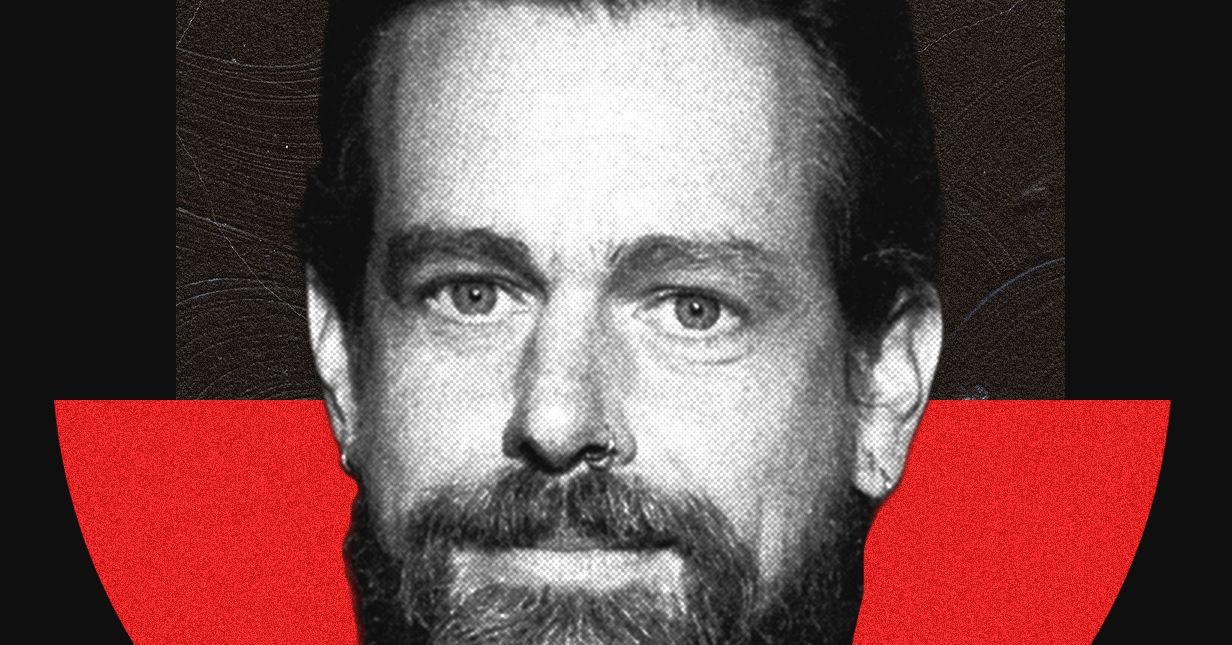
The wave of workforce reductions attributed to AI has already begun. Last month, Block CEO Jack Dorsey eliminated 40% of his staff—approximately 4,000 employees—stating that "intelligence tools have changed what it means to build and run a company"
1
. Executive coaching firm Challenger, Gray & Christmas reported that AI caused 11,039 job cuts in February in the tech sector alone, bringing the total to 33,330 in 2026—a 51% increase from the 22,042 tech job losses during the same period last year3
. Goldman Sachs economists noted that AI was responsible for up to 10,000 monthly net job losses in some domestic industries last year3
.However, some economists question whether companies are genuinely replacing workers with AI or simply "AI washing" by blaming technology disruption for workforce reductions they would have made anyway. Oxford Economics recently noted that companies "don't appear to be replacing workers with AI on a significant scale"
1
. Venture capitalist Bill Gurley from Benchmark argued that the AI boom mirrors previous technological shifts where the labor market ultimately adapts and stabilizes1
.Vision of One-Person Billion-Dollar Businesses Fuels Controversy
Srinivas suggested AI would democratize entrepreneurship by enabling startups and small businesses to operate with minimal staff and capital. He pointed to how AI eliminates the need to hire as many employees to jumpstart operations, making businesses more autonomous
1
. OpenAI CEO Sam Altman has long predicted AI would create the first one-person billion-dollar businesses, though Srinivas noted this hasn't happened yet because no AI-powered venture has increased U.S. GDP by $1 billion to truly create new value1
.
Source: Benzinga
Evidence of this shift is emerging. A Bank of America report found that business applications with clear plans to hire employees fell by 4.4% year-over-year in January, while "high propensity businesses" likely to hire jumped more than 15% in the same period
1
. TurboAI, an AI-powered flashcard tool created by Rudy Arora and Sarthak Dhawan with less than $300, now generates $1 million monthly with just 13 employees—a task that would have required over 100 workers two-and-a-half years ago1
.Related Stories

Public Backlash and Support Reveal Deep Divide
Srinivas faced immediate criticism for appearing out of touch with workers facing financial hardship. "A man worth millions just told the single mother who lost her job that she should be grateful because now she can start a business using his product and called her unemployment a glorious future," one commenter wrote
3
. Critics noted that losing a stable paycheck is painful for most people, and many workers cannot instantly become founders3
.Yet Srinivas also found supporters who agreed that people hate their jobs and that AI enables individuals to handle operations, marketing, support, and product development alone. Mark Cuban recently compared today's workforce challenges to those during the rise of personal computers in the 1980s, urging workers to adopt AI tools quickly to stay competitive
2
. Sam Altman noted in January that OpenAI was slowing its hiring pace because AI allowed companies to achieve more with smaller teams2
. As the AI boom continues, workers face mounting pressure to either adapt to new tools or risk being left behind in a rapidly transforming labor market.References
Summarized by

Navi
Related Stories
ClickUp slashes 22% of workforce while promising million-dollar salaries for AI-skilled survivors
19 May 2026•Business and Economy

Jack Dorsey cuts 4,000 jobs at Block, citing AI tools that 'can do more and do it better'
27 Feb 2026•Business and Economy

Block's 4,000-person layoff sparks debate: AI revolution or corporate cost-cutting in disguise?
05 Mar 2026•Business and Economy
Recent Highlights
1
Microsoft and Nvidia Launch Surface Laptop Ultra: A $2,599 AI-Ready PC With RTX Spark Chip
Technology

2
OpenAI Releases 722 AI-Generated Math Papers on GitHub, Igniting Fury Among Mathematicians
Science and Research

3
Trump Consulted Grok AI Before Ordering Venezuela Invasion and Capture of Nicolás Maduro
Policy and Regulation

Recent Highlights
Today's Top Stories









Don’t drown in AI news. We cut through the noise - filtering, ranking and summarizing the most important AI news, breakthroughs and research daily. Follow topics that matter to you and stay ahead.


