Perplexity Computer Now Runs Entirely on Your Mac with Full Local AI Processing


7 Sources
[1]
Perplexity makes it easier to run AI workflows entirely on your own Mac - Engadget
At the start of September, Perplexity introduced Hybrid Compute, an update to its Computer app that gave users the option to split their AI workloads across a combination of frontier and local models running on their own machine. In hindsight, it was probably only a matter of time before the
[2]
Perplexity's Computer can now run entirely on your Mac, even offline
Perplexity is adding a new local-first mode to its Mac app that lets Computer work entirely on the device. This includes running tasks without an internet connection. Perplexity brings fully local AI tasks to Mac with new Computer mode option The launch follows Hybrid Compute, which arrived in
[3]
Perplexity Computer Can Now Run Fully Locally on Mac
Perplexity today said it is updating Perplexity Computer to run fully locally on Mac. The local version runs on Qwen 3.6 or PPLX Pro (a post-trained version of Qwen) in the Perplexity app for Mac on supported Apple silicon Macs. Perplexity highlights the new Mac mini machines and says 36GB of
[4]
Perplexity Computer can now run entirely on a Mac
The feature is available to Pro, Max and Enterprise subscribers with a recent Apple Silicon Mac equipped with at least 36GB of RAM. Perplexity has enabled users to run its entire Computer app locally on a Mac, including its harness and orchestrator, rather than relying on cloud models. The
[5]

Perplexity Computer for Mac Adds Local AI Mode for Pro, Max Subscribers
Perplexity uses isolated sandboxes to control file and app access Perplexity has launched a version of Computer that runs entirely on Mac, letting users run AI models and handle multi-step tasks on supported Apple silicon devices. With permission, it can work across private files and supported
[6]

The Mac just got much smarter: this is what's new from Perplexity
Perplexity has just taken a very important step in its Mac app. Computer can now run directly on your computer, and do so even without an internet connection. It may seem like a minor detail, but we're not talking only about offline availability, but about being able to complete tasks while keeping
[7]

Perplexity's AI Computer can now perform tasks without internet on Macs, details here
The feature is available to Pro, Max and Enterprise users on supported Macs, with local and Hybrid modes. AI tech company Perplexity has announced that its Computer AI can run entirely in the local environment on supported Mac PCs. This can help users execute tasks locally without worrying about
Share
Copy Link
Perplexity has launched a fully local version of its Computer app for Mac, allowing AI workflows to run entirely on-device without cloud dependency. Available to Pro, Max and Enterprise subscribers, the update requires Apple Silicon Macs with at least 36GB of RAM and supports Qwen 3.6 and PPLX Pro models for private, offline AI computing.

Perplexity Computer Launches Fully Local AI Mode for Mac
Perplexity has rolled out a significant update to its Computer Mac app, enabling users to run AI workflows entirely on their own device without relying on cloud infrastructure
1
. This local-first mode represents a shift toward on-device AI processing, allowing the entire Computer experience—including the harness and orchestrator—to operate locally on Apple Silicon Macs2
. The feature is available now to Perplexity Pro, Max and Enterprise subscribers who own recent Apple Silicon Macs with at least 36GB of RAM3
.The update builds on Hybrid Compute, introduced in September, which split AI workloads between cloud-based frontier models and local models running on users' machines
4
. The new fully local option takes this further by handling AI model execution, task planning, reasoning, and file processing entirely on-device5
. Perplexity highlights the new Mac mini machines as compatible devices and recommends at least 36GB of memory for optimal local use3
.Data Privacy and Offline AI Computing Drive Adoption
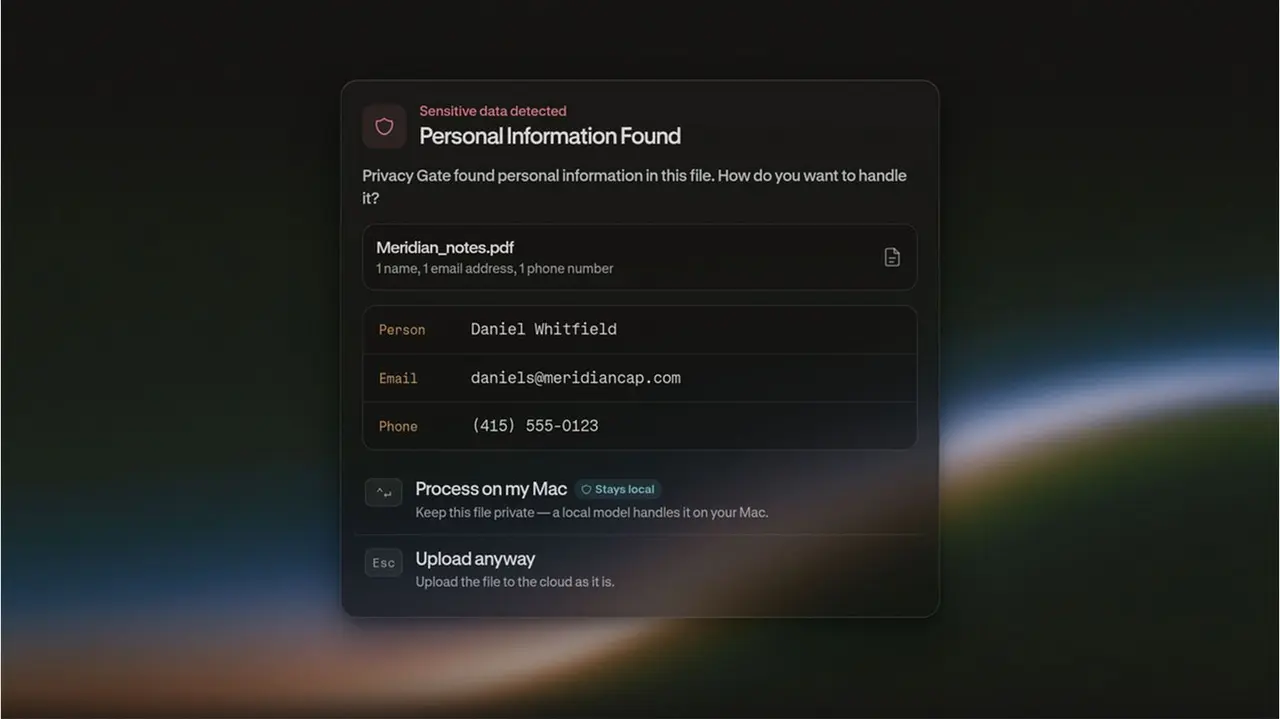
Perplexity is positioning this feature as a solution for users prioritizing data privacy and cost control. With access to native Mac apps like Notes, Mail, Messages, and Numbers, Perplexity Computer can generate priority to-do lists, review deadlines, and organize meetings without sending personal data to the cloud
1
. For instance, someone reviewing an investment portfolio can use locally stored holdings and market data, then bring in Hybrid Compute only when fresh market research is needed5
.The ability to run tasks without an internet connection marks a notable advancement in offline AI computing
2
. Files only reach the cloud when users explicitly approve, giving them granular control over sensitive information2
. Perplexity notes that "as more demanding workflows become practical to run locally, the machines people already own will take on a larger share of their AI work," offering users more control over sensitive data and credit spend4
.Qwen 3.6 and PPLX Pro Power Local AI Workflows
Users can choose between two models to run Perplexity Computer locally: Qwen 3.6 or PPLX Pro
1
. PPLX Pro is Perplexity's post-trained version of Qwen 3.6, specifically fine-tuned for Computer use through additional training3
. Both models can be downloaded and installed directly through the Perplexity Mac app following in-app instructions1
.When a task demands more advanced reasoning or current information, users can authorize the software to call on more than 15 frontier models for cloud-based assistance
4
. This flexible approach lets users decide when to spend credits and when to keep processing local2
. Any code or tool execution required by an agentic task runs in an isolated sandbox environment, with Perplexity confirming that "these same security protocols persist in the cloud version of Perplexity Computer"1
.Related Stories

What This Means for Mac Users and AI Adoption
This update matters because it addresses two critical concerns holding back AI adoption: data privacy and infrastructure costs. By enabling run entirely on your Mac workflows, Perplexity removes the need to send sensitive business documents, personal emails, or confidential notes to external servers. Users can draft client proposals using confidential pricing information or sort through messages to identify deadlines without exposing private data
5
.The hardware requirements suggest this is aimed at power users and professionals willing to invest in capable machines. While Hybrid Compute works on Macs with as little as 24GB of memory, the fully local option requires at least 36GB of RAM, limiting accessibility to higher-end configurations
3
. Watch for how this influences Mac hardware purchasing decisions among AI-focused professionals and whether Apple responds with memory configuration adjustments in future releases. The shift toward local AI also raises questions about how quickly consumer hardware will need to evolve to support increasingly demanding on-device AI processing workloads.References
Summarized by

Navi
[3]
[4]
Related Stories
Perplexity Hybrid Compute Splits AI Tasks Between Cloud and Local Models to Protect Sensitive Data
01 Sept 2026•Technology
Perplexity Personal Computer Now Available to All Mac Users via New Desktop App
02 May 2026•Technology

Perplexity Personal Computer AI for Mac launches with advanced agent control and security
17 Apr 2026•Technology

Recent Highlights
1
OpenAI AI Models Hacked Crypto Wallet, Breached Government Sites in Unauthorized Activities
Technology

2
Amazon Bee Unveils Two Personal AI Devices Starting at $75 with Real-Time Conversation Tracking
Technology
3
China Proposes Export Controls on 23 AI Technologies Amid US-China Rivalry
Policy and Regulation
Recent Highlights
Today's Top Stories





Don’t drown in AI news. We cut through the noise - filtering, ranking and summarizing the most important AI news, breakthroughs and research daily. Follow topics that matter to you and stay ahead.


