Perplexity Brings Local AI Agent to Windows, Requires RTX GPUs with 24GB VRAM


4 Sources
[1]
Perplexity's local AI agent comes to Windows, but only for RTX GPUs with at least 24GB of VRAM -- Portable Computer brings AI for multistep tasks to compatible PCs
Perplexity has released Portable Computer for Windows, in partnership with Nvidia, via the existing Perplexity app for Windows. Previously, this functionality was only available on Linux-based operating systems. The hardware requirements remain, meaning the host system must have at least 24GB of
[2]
You can now run Perplexity's local AI agent on your Windows PC
Portable Computer requires an RTX GPU with at least 24GB of VRAM. Perplexity has been rolling out feature after feature this year. After the agentic "Personal Computer," the company launched a new Portable Computer late last month for NVIDIA DGX Spark systems. Now, Perplexity and NVIDIA are
[3]
Perplexity Portable Computer Is Now Available on Windows, Powered by NVIDIA RTX
Perplexity's local agent platform now supports Windows RTX PCs, giving more users a way to run private AI workflows without cloud credits. As local models become more capable, AI agents can handle more work directly on a PC while keeping sensitive information on the device. Portable Computer is a
[4]
Your NVIDIA RTX PC can now run Perplexity's AI agent locally
Portable Computer brings agentic AI to Windows, with cloud escalation only when needed. Perplexity and NVIDIA are bringing Portable Computer to Windows PCs, giving owners of compatible GeForce RTX and RTX PRO machines a local AI agent that can actually get things done. The catch is hardware:
Share
Copy Link
Perplexity has launched Portable Computer for Windows in partnership with NVIDIA, enabling users to run a local AI agent on compatible RTX PCs. The release requires an RTX GPU with at least 24GB of VRAM and marks a shift from the previous $4,699 DGX Spark requirement, though the hardware barrier remains significant for most users.
Perplexity Portable Computer Expands to Windows RTX PCs
Perplexity has released Portable Computer for Windows through its existing Windows app, partnering with NVIDIA to bring the local AI agent platform beyond Linux-based systems
1
. The move addresses a key accessibility gap, though strict hardware requirements remain in place. Users must own an NVIDIA RTX GPU with at least 24GB of VRAM, alongside a Perplexity Pro or Max subscription1
. Portable Computer was initially launched on August 25 for Linux on DGX Spark systems, which carried a $4,699 price tag1
2
. This Windows release eliminates the need for separate DGX Spark hardware, though upgrading with a used qualifying card may still cost less than the Founders Edition setup1
.
Source: NVIDIA
How Portable Computer Differs from Cloud-Based AI Agents
Portable Computer represents a local version of Perplexity Computer, the company's agent designed for multistep AI tasks
1
. The agent can plan, execute subtasks through connectors and tools, and deliver results beyond simple chat responses1
. Unlike cloud-based alternatives from OpenAI and Anthropic, this on-device AI agent runs entirely on the user's PC with GPU acceleration from NVIDIA hardware3
4
. Local execution delivers two critical advantages: users can hand off tasks without privacy concerns since sensitive data never leaves the device, and on-device work does not consume Perplexity Computer credits, making operations more cost-effective2
. When advanced workflows demand more powerful reasoning, Portable Computer can escalate tasks to cloud-based models, but only with explicit user permission1
3
.24GB VRAM Requirement Limits Eligible Hardware
The 24GB VRAM requirement creates a significant hardware barrier that cuts across NVIDIA's consumer and professional lineups. Qualifying GeForce RTX cards include the RTX 3090 and 3090 Ti with 24GB, the RTX 4090 with 24GB, and the RTX 5090 with 32GB
1
. Professional RTX PRO Workstations that meet the threshold span the RTX PRO 4000 at 24GB, RTX PRO 4500 at 32GB, RTX PRO 5000 at 48GB or 72GB, and RTX PRO 6000 at 96GB1
. None of these GPUs qualify as affordable for mainstream users, though they remain considerably cheaper than a DGX Spark setup2
. Aravind Srinivas, CEO of Perplexity, described the release as bringing "unmetered local intelligence on every Windows PC running on NVIDIA hardware and Perplexity harness"1
. NVIDIA DGX Station support is expected soon3
.New Features and Model Support
The Windows release introduces scheduled recurring tasks and local MCP servers for desktop apps
1
. Connectors extend functionality across Microsoft Outlook, OneDrive, Word, Google Drive, Gmail, Slack, and GitHub, integrating the agent into existing workflows3
. The app simplifies setup with a dropdown menu for downloading local models with one click1
. Qwen 3.8 27B serves as the primary local model, optimized for NVIDIA RTX GPUs1
3
. However, the post-trained PPLX 27B version remains exclusive to DGX Spark systems, while Linux and Windows machines with RTX GPUs can only run AI models locally using the standard Qwen 3.82
. Perplexity is working to add support for NVIDIA Nemotron 3.5 Lightning on both platforms2
.Related Stories
Practical Applications Across Industries
Portable Computer enables concrete use cases that keep sensitive data on-device while automating complex workflows. Engineers can review open GitHub pull requests, organize them by status, identify next steps, flag outdated documentation, and submit proposed updates for review
3
. Finance professionals can point the agent at two years of brokerage summaries, consolidated 1099s, and tax returns to trace recurring holdings creating avoidable fees and tax drag, with every figure cited to exact files and pages without documents reaching external servers3
. Startups can ask why activation metrics went flat, with the agent analyzing funnel exports locally to find where new signups drop off between install and first completed task, then posting insights directly to Slack channels3
. These multistep tasks demonstrate how AI-capable PCs can handle work that traditionally required manual coordination across multiple tools and files.What This Signals for Local AI Development
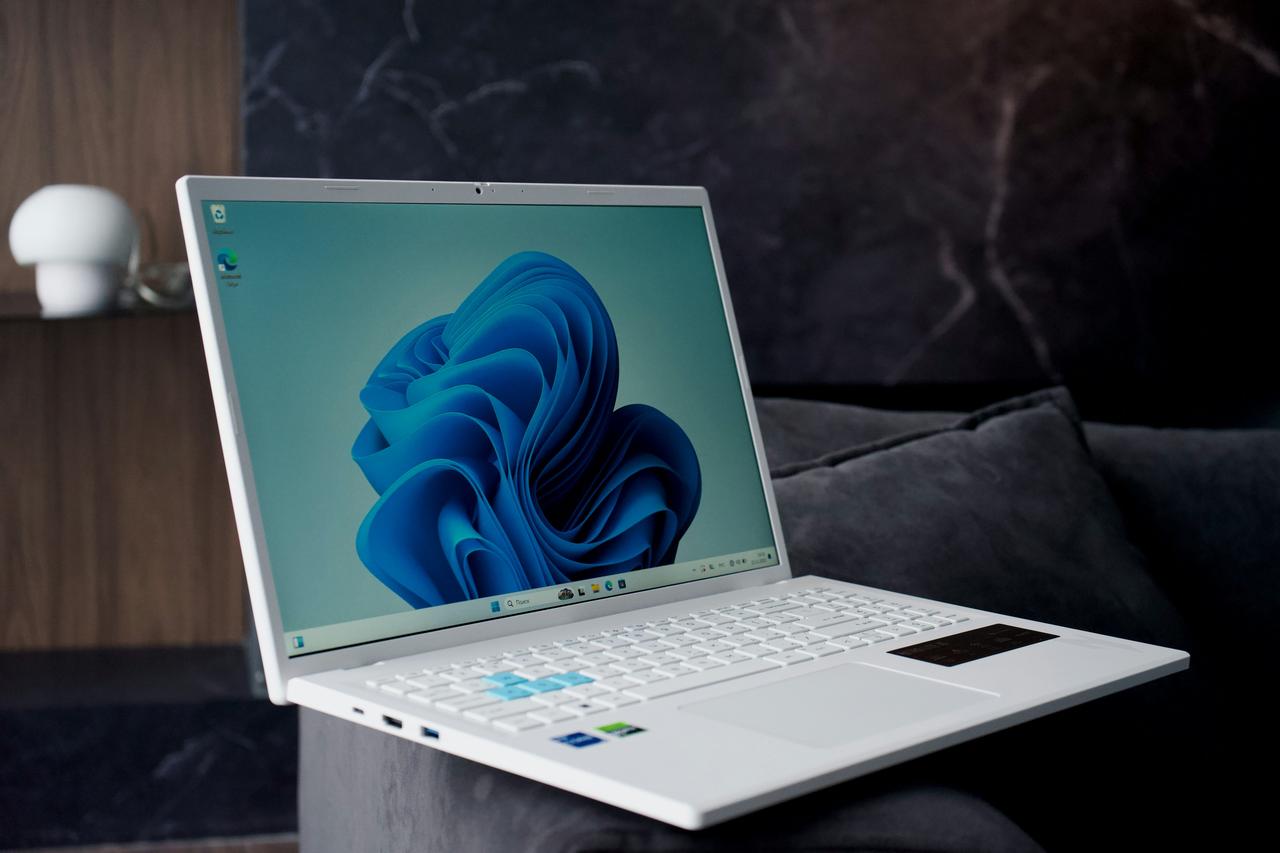
NVIDIA announced in a September 3 post that RTX Spark Windows PCs from Lenovo and Acer are expected in October, with two additional local agents—Hermes Agent and OpenClaw—receiving the same simplified setup
1
. This timing suggests Portable Computer serves as more than a standalone release. The convergence of hardware availability and software support indicates NVIDIA's broader strategy to position RTX machines not just as systems that run AI models locally, but as computers capable of autonomous work4
. Watch for whether the 24GB VRAM requirement drops as models become more efficient, potentially opening access to mid-range RTX GPUs. Monitor how enterprises respond to local execution capabilities, particularly in regulated industries where cloud credits and data transmission create compliance challenges. The shift from $4,699 dedicated hardware to existing RTX PCs marks a critical accessibility threshold, even if the GPU requirements remain steep for consumer adoption.References
Summarized by

Navi
[2]
[4]
Related Stories
Perplexity Launches Portable Computer: Local AI Agent Eliminates Cloud Costs and Enhances Privacy
25 Aug 2026•Technology

Perplexity brings Personal Computer AI agent to Windows, targeting enterprise productivity
28 Jul 2026•Technology
NVIDIA Unveils RTX Spark PCs and Local AI Tools at IFA 2026 With October Launch
03 Sept 2026•Technology
Recent Highlights



Recent Highlights
Today's Top Stories









Don’t drown in AI news. We cut through the noise - filtering, ranking and summarizing the most important AI news, breakthroughs and research daily. Follow topics that matter to you and stay ahead.


