Premium handhelds push AI gaming PC prices past $2,000 as MSI and OnexPlayer target niche buyers


2 Sources
[1]
The MSI Claw 8 EX AI+ costs $1,699 and that is gaming laptop money for a handheld
MSI's Claw 8 EX AI+ will launch on June 23 at $1,699, making it the most expensive handheld gaming PC ever sold at retail. The device is the first to ship with Intel's Arc G3 Extreme processor, built on the Panther Lake platform with 12 Xe3 GPU cores and a 14-core CPU. It is also $500 more than the
[2]
OnexPlayer X2 Mini Pro drops Ryzen AI Max+ 395 for 388, starts at $2,399 with fewer cores
OneXPlayer has launched its X2 Mini Pro on Indiegogo, listing the base configuration at $2,399. This is more than double the price of the Lenovo Legion Go 2. Upgrading to 64GB of RAM increases the price to $2,699, while the 64GB RAM with 2TB storage configuration lands at $2,799. A Liquid-Cooled
Share
Copy Link
MSI's Claw 8 EX AI+ debuts at $1,699 with Intel's Arc G3 Extreme processor, making it the most expensive retail handheld gaming PC ever. OneXPlayer's X2 Mini Pro pushes even higher at $2,399, though it quietly downgraded from a 16-core to 8-core Ryzen AI Max+ chip. Both devices face tough competition from gaming laptops at similar price points.
MSI Claw 8 EX AI+ Sets New Price Record for Handheld Gaming PC
The MSI Claw 8 EX AI+ launches June 23 at $1,699, establishing a new ceiling for retail handheld gaming PC pricing and positioning itself $500 above the Lenovo Legion Go 2, previously the market's most expensive option
1
. Listings appeared this week on Newegg and Best Buy at that figure, while MSI's own store lists the configuration at $1,799. The device ships as the first handheld gaming device with Intel's Arc G3 Extreme processor, built on the Panther Lake platform with 12 Xe3 GPU cores and a 14-core CPU. The spec sheet includes 32GB of LPDDR5X memory, a 1TB NVMe SSD, an 8-inch 1920×1200 120Hz IPS touch display, and an 80Wh battery—premium components that reflect the premium price.Intel's integrated Arc B390 graphics use the Xe3 architecture with hardware ray tracing support and XeSS 3, Intel's AI-powered upscaling technology that claims a 44 percent generational performance improvement over Lunar Lake at 1080p
1
. Early simulations suggest the chip maintains 60 frames per second in Spider-Man 2 at 900p medium settings and exceeds 60fps in Cyberpunk 2077 on Steam Deck graphics presets, both at a 25-watt power envelope. Hall Effect joysticks and triggers eliminate stick drift, while dual Thunderbolt 4 ports enable external GPU docking and Wi-Fi 7 provides multi-gigabit wireless connectivity. The device carries a Copilot+ PC designation, though the practical value for a portable gaming device remains unclear.OnexPlayer X2 Mini Pro Pushes AI Handhelds Past $2,000 Mark
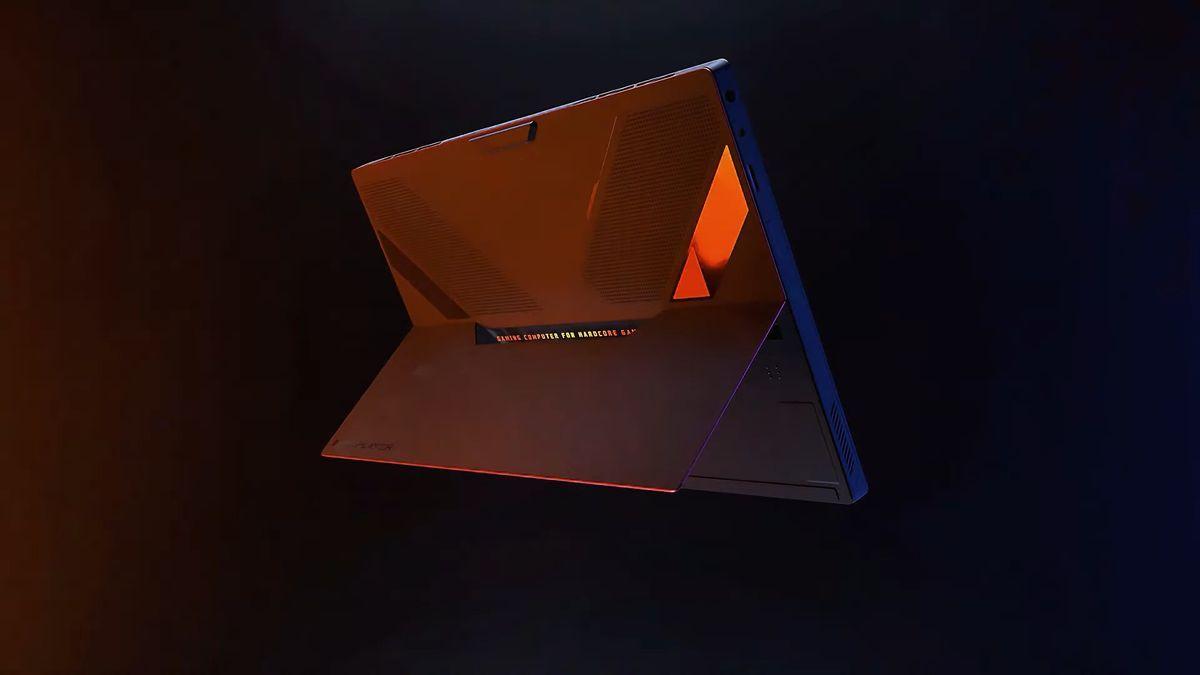
OneXPlayer launched its X2 Mini Pro on Indiegogo at $2,399 for the base configuration, more than double the Lenovo Legion Go 2's price
2
. Upgrading to 64GB RAM pushes the price to $2,699, while the 64GB RAM with 2TB storage configuration reaches $2,799. A liquid-cooled edition that connects to an external Frost Bay dock starts at $2,459.99 and tops out at $2,859.99. But that asking price doesn't deliver the initially promised hardware. OneXPlayer originally teased the device with AMD's Ryzen AI Max+ 395, a 16-core, 32-thread processor with 64MB of L3 cache and 5.1GHz boost clocks. The product page now lists the Ryzen AI Max+ 388 instead, cutting that down to 8 cores, 16 threads, 32MB of L3 cache, and a 5.0GHz boost clock—a significant downgrade made without announcement or explanation that has frustrated early backers.Both chips share the same Radeon 8060S integrated graphics with a 55W default TDP and a configurable range of 45W to 120W, so gaming performance should remain largely similar
2
. The X2 Mini Pro features an 8.8-inch 144Hz OLED display with variable refresh rate support, detachable controllers, a magnetic snap-on keyboard, and a user-replaceable 85Wh battery. Storage expands to 8TB with secondary mini SSDs and microSD cards. The Ryzen AI Max+ 388 provides 50 NPU TOPS, contributing to a total system performance of 118 TOPS, which OneXPlayer positions for local AI workloads alongside gaming.Component Costs Drive Premium Handheld Pricing Higher
The surge in premium handhelds pricing stems from the same forces reshaping consumer electronics broadly. LPDDR5X memory prices surged 250 percent in the past year as Samsung, SK Hynix, and Micron redirected production toward AI data centers, while DDR5 prices in some markets rose over 400 percent
1
. The 32GB of LPDDR5X inside the Claw 8 EX costs substantially more today than 18 months ago. Valve raised Steam Deck OLED pricing on May 27, pushing the 512GB model from $549 to $789 and the 1TB model from $649 to $949. The ASUS ROG Ally X launched at $999. Apple killed its $599 Mac Mini because the DRAM shortage made that price point impossible.But component costs only partially explain a $1,699 price tag for the MSI Claw 8 EX AI+. At that figure, the device competes not with other handhelds but with gaming laptops offering 15-inch or 16-inch displays, full keyboards, upgradeable storage, dedicated cooling systems, and often more powerful discrete GPUs. A $1,699 gaming laptop from ASUS, Lenovo, or MSI's own lineup will outperform the Claw 8 EX in every metric except portability
1
. MSI asks buyers to pay a premium for portability at a price where portability competes directly with performance.Related Stories
Market Implications for AI Handhelds and Portable Gaming
The handheld gaming market grew rapidly since Valve launched the original Steam Deck at $399 in 2022, proving portable PC gaming could be mainstream
1
. Four years later, the category's flagship devices cost more than four times as much. The technology has improved enormously, but the market these manufacturers target with $1,699 to $2,799 handhelds is narrow. Intel Arc G3 Extreme-powered handhelds from Acer and others are coming, with early hands-on testing suggesting competitive performance to Strix Halo chips at lower prices, making the X2 Mini Pro's positioning harder to justify2
.Watch for independent benchmarks of the Arc G3 Extreme chip, as Intel has not published verified results and simulated performance frequently overstates real-world outcomes. The practical value of AI features like NPU TOPS and local AI workloads on handheld gaming devices remains to be proven. Buyers should also monitor whether premium features like Hall Effect controls, Thunderbolt 4 connectivity, and OLED displays justify the price premium over established options. The MSI Claw 8 EX AI+ is available for pre-order now with shipping beginning June 23, while the OnexPlayer X2 Mini Pro campaign runs on Indiegogo.
References
Summarized by

Navi
Related Stories
Intel Arc G-Series chips target handheld gaming with XeSS 3 and ray tracing capabilities
28 May 2026•Technology

OneXFly F1 Pro: World's First Ryzen AI 300-Powered Gaming Handheld Unveiled
26 Nov 2024•Technology

MSI Unveils Next-Gen AI-Powered Gaming Handhelds: Claw 8 AI+ and Claw 7 AI+
01 Dec 2024•Technology

Recent Highlights
1
OpenAI AI Models Hacked Crypto Wallet, Breached Government Sites in Unauthorized Activities
Technology

2
IMF Report Warns AI Market Correction Could Spark Global Financial Crisis With $1.4T at Risk
Business and Economy

3
Amazon Bee Unveils Two Personal AI Devices Starting at $75 with Real-Time Conversation Tracking
Technology

Recent Highlights
Today's Top Stories










Don’t drown in AI news. We cut through the noise - filtering, ranking and summarizing the most important AI news, breakthroughs and research daily. Follow topics that matter to you and stay ahead.


