4 Sources
[1]
Intel's Arc G-Series chips will power a new generation of gaming handhelds - Engadget
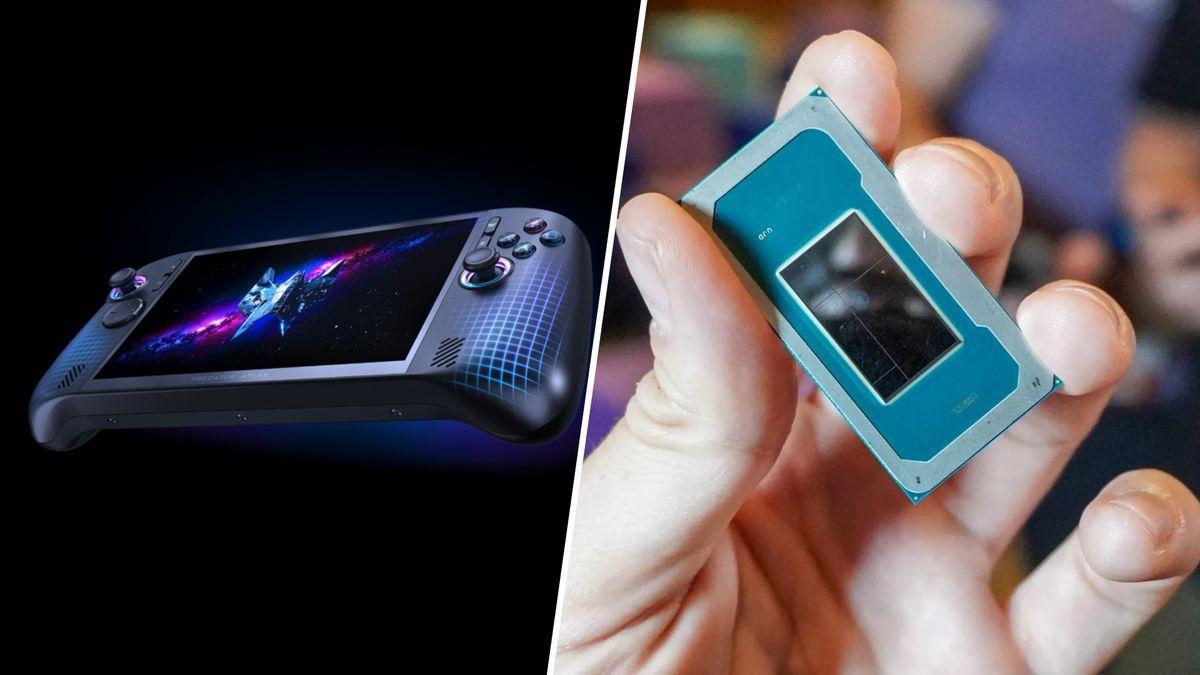
Intel isn't ready to give up on gaming handhelds just yet, despite the blow to the category from yesterday's Steam Deck price increase. At Computex today, Intel unveiled its new Arc G-Series chips, a family of hardware built on its existing Core Ultra 3 lineup. The Arc G3 and G3 Extreme chips will feature up to Intel's Arc B390 GPUs, giving them the real-time ray tracing and AI upscaling capabilities fro the company's XeSS 3 technology. Intel says the chips will appear in devices in the coming months, including the Acer Predator Atlas 8, MSI Claw 8 EX AI+, and OneXPlayer. The company hasn't spilled many technical details on the Arc G-Series chips just yet, but broadly, they'll feature two performance cores, eight efficiency cores and four low-power efficiency cores. Since these are essentially modified versions of Core Ultra 3 chips, they'll also be built on Intel's new 18A process. You can expect to see support for Wi-Fi 7 R2, Thunderbolt 4 and dual Bluetooth 6 connectivity. As for features, Intel says the chips will be optimized for Windows 11's full-screen Xbox mode. That means you should hopefully spend less time dealing with the standard Windows interface, which is notoriously clunky on handhelds. The company also says "select" games will launch faster using Intel Precompiled Shaders, which delivers optimized shaders from the cloud, instead of rendering them on your device. Supported games currently include Black Myth: Wukong, Call of Duty: Black Ops 6 and 7, as well as The Outer Worlds 2.
[2]
I just tested the MSI Claw 8 EX AI+ -- Intel Arc G3 is a breakthrough for handheld gaming, but at what cost?
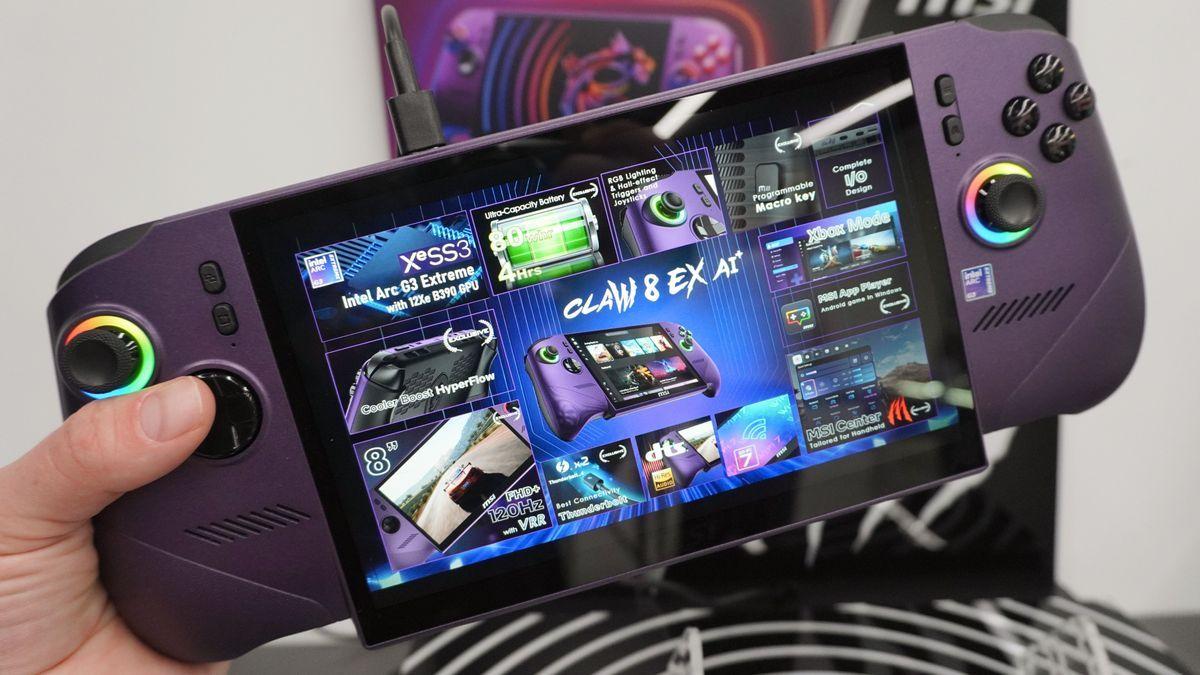
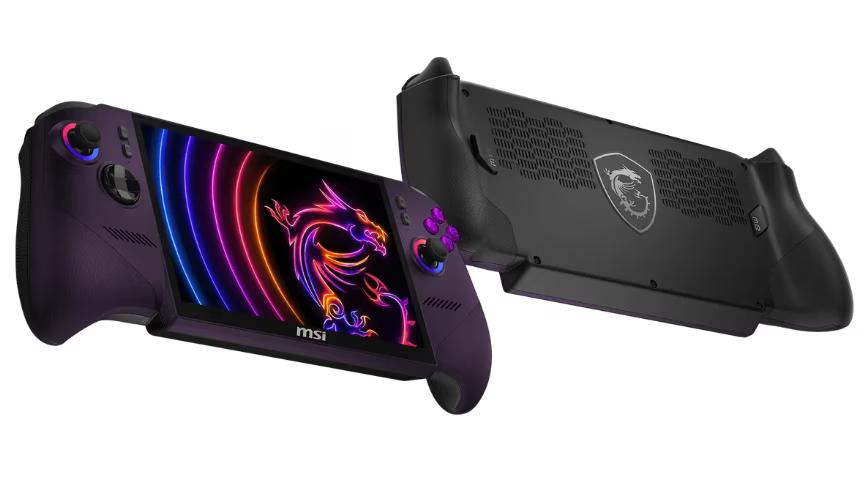
The Team Blue comeback story packed into a great piece of hardware Intel Arc G3 handhelds are the talk of the town here at Computex 2026, and I just got an early hands-on with the MSI Claw 8 EX AI+. In short, believe the hype -- this is the next generation of gaming on-the-go unlike anything you've seen before. Of course, a lot of this comes from that new silicon, which copies a lot of Panther Lake's homework including that monster integrated GPU with XeSS 3 support to deliver some blistering frame rates (more on those later) while being much more power efficient than any AMD-filled handheld I've tested. But the secret sauce here is MSI's DNA -- learning from previous Claws and dramatically upgrading the design, vastly improving airflow to keep it cool, bringing a gorgeous new display, tweaking the ergonomics and tactility of the vibration, and making it even easier to upgrade. What's the price? I asked MSI and the answer was "stop asking about it," which does make me nervous in the current state of RAMageddon, but I can't deny this is utter brilliance. MSI Claw 8 EX AI+ specs Raiders of the lost Arc The key ingredient is that shiny new Panther Lake chip: Intel Arc G3 Extreme. This is tailored more to a gaming-centric workload with a reduced amount of CPU cores while maintaining that same Arc B390 integrated GPU with the 12 Xe3 cores. This GPU ticks off a lot of the boxes of what I wanted to see come to the handheld space: a wide versatility of power settings from the 17W endurance mode all the way up to 45W, native ray tracing support and all the XeSS 3 AI trickery goodness. And the results are...well if you've been used to seeing AMD handhelds getting good frame rates, you ain't seen nothing yet. I can't give you specifics with benchmarks, but here's what I got from the 3 games I was allowed to test. And this is kept cool by MSI's new Cooler Boost HyperFlow tech -- based on two fans and two pipes to deliver five watts higher cooling and 25% higher pressure for the fans. That keeps those temperatures nice and well maintained in the various scenarios, including two that are often overlooked but significant. First, I'm talking about the Switch's bread and butter in docked mode. You already saw a bit of this with Panther Lake laptops being able to offer a fantastic experience on a massive screen. XeSS 3 is the key to that fluid big screen gameplay with minimal ghosting, and you're getting the exact same thing here. F1 25 at 4K with XeSS 3 set to performance mode (so upscaled from 1080p) ran at a silky smooth 90 FPS in my time testing. Throw in the better cooling too, and you can pump a massive 45 watts of power through this tiny shell, which gets you some speedy, smooth gameplay on the big screen when plugged in. And the second scenario is one of the main reasons why I love my gaming PC: being able to play but also get stuff done. With the dual Thunderbolt 4, you're able to have your own mini PC setup that can multitask effectively between pretty intense apps like Photoshop and many Chrome tabs. Of course, these technically are possible on AMD handhelds, but nowhere near at the levels of performance and power efficiency you're seeing on-board here. Feeling great in your hands I could go on about the chip inside, but there's a whole handheld built around it, and it's looking gorgeous in this Void Purple finish. And as you can tell, there are some significant changes being made here to the One of the most noticeable upgrades you'll feel is in the ergonomics. Whereas previous claws had a slightly flatter, more blocky appearance, the grips have much more definition and curvature to them to fit nicely into your hands. MSI set on a mission to achieve the same level of ergonomics as the Xbox controller, and it shows with that dot texture eliminating any slip, the flared design of the grips and huge button upgrades. Triggers and analog sticks are hall effect now, and now the D-Pad + ABXY buttons feel a lot snappier without any spongeyness like previous Claws thanks to being based on a metal dome. But the biggest change you'll feel is in the haptics. There's a new 6-axis IMU vibration motor running on a new software algorithm to deliver what is called HD Haptics -- allowing them to simulate much finer details like different textures of surfaces you walk on. It's hard to explain, but MSI's basically done for gaming handhelds what PS5 DualSense did for controllers. It feels truly phenomenal. Not forgetting the fundamentals But of course, a PC handheld like this has more to nail than just performance and design. MSI's ticking off these boxes nicely here with a vivid, bright, smooth screen, surprisingly beefy speakers and quiet operation. That 8-inch 1200p touchscreen may be IPS (so no OLED color waterfalls here), but it's still decently colorful. And with a variable refresh rate from 48 all the way up to 120Hz, gameplay feels more reactive here. Dual speakers on here have a surprising amount of bass and don't distort at all at max volume, and alongside this, the cooling system doesn't get loud at all! A pricey upgrade? I can't deny that this is a fantastic handheld -- one of the best I've ever tried. Intel Arc G3 is the key to unlocking some stellar performance, with XeSS 3 being almost like a cheat code to frame rates unlike anything you've seen in a portable device like this. Throw in a gorgeous screen and a real attention to the ergonomics, then you're onto a winner here. But just like a lot of companies here at Computex, price is the terrifying question, as the entire market is fluid based on RAM prices. Speaking to MSI, they are targeting $1,500 for this machine (less than the $2,000 rumor that panicked us all). But Intel and MSI's confidence is well-placed here, as this is an incredible piece of hardware. Follow Tom's Guide on Google News and add us as a preferred source to get our up-to-date news, analysis, and reviews in your feeds. Subscribe to Tom's Guide on YouTube and follow us on TikTok. Finally, you can visit our dedicated Tom's Guide Savings Squad hub for expert help on getting the best products for less.
[3]
Intel reveals Arc G-series processors, hoping it will power your next Windows 11 gaming handheld
Acer, MSI, and OneXPlayer are already lining up for Arc G-series chips After years of going head-to-head with AMD for PC gaming supremacy, Intel now appears determined to challenge Team Red's dominance in the Windows 11 gaming handheld market. The company has just unveiled the Intel Arc G3 and Arc G3 Extreme processors, both based on the Panther Lake architecture used in Intel Core Ultra Series 3. Intel says the chips are tuned for handhelds, with 2 performance cores, 8 efficiency cores, 4 low-power efficiency cores, and graphics based on its latest Xe3 architecture. The top configuration uses Intel Arc B390 graphics, with support for real-time ray tracing, XeSS 3, Multi-Frame Generation, Xe Low Latency, and AI-based upscaling. Intel wants a slice of the handheld pie It was about time that Intel gave handheld gaming a real shot. AMD has dominated most mainstream gaming handhelds so far. Valve's Steam Deck uses a custom AMD APU, while Asus' ROG Ally X and Lenovo's Legion Go use AMD Ryzen Z1 Extreme chips. Newer premium handhelds are also moving toward AMD's Ryzen Z2 family, including the ROG Xbox Ally X with the Ryzen AI Z2 Extreme. Intel is now trying to push into that same category with OEM partners already lined up. According to Intel, Arc G-Series handhelds will begin rolling out from June 2026, with broader availability through the year. The first confirmed systems include Acer's Predator Atlas 8, MSI's Claw 8 EX AI+, and OneXPlayer devices. Acer's Predator Atlas 8 will be available with both Arc G3 and Arc G3 Extreme, while the OneXPlayer 3 has been confirmed with the G3 Extreme chip and an 8.8-inch OLED display. The MSI Claw 8 EX AI+ was earlier spotted at an Australian retailer with the G3 Extreme, suggesting that a healthy number of handhelds could launch this year with Intel's new chips. Specs alone will not settle the fight On paper, the Arc G3 Extreme appears to be Intel's answer to the Ryzen AI Z2 Extreme, while the regular Arc G3 looks closer to a Ryzen Z2 rival. The comparison will come down to more than clock speeds or graphics architecture. Handhelds need stable performance within tight power and cooling limits, so battery life, thermals, driver support, and lower-wattage gaming will be key. Recommended Videos Intel is preparing Day-0 driver support and precompiled shaders to reduce launch delays and shader stutter in select games. Still, Arc G-Series will need real-world testing before it can be judged against AMD's more established platform.
[4]
Intel Arc G3 is here to shake up handheld gaming, and AMD should be terrified -- here's why
In all my time testing Panther Lake, it's been clear that Intel Core Ultra Series 3 chips are huge for gaming -- packing a beasty internal GPU with all that XeSS 3 AI trickery to boost frame rates to unseen levels in anything outside of a dedicated Nvidia RTX 50-series gaming laptop. Team Blue knew they were onto something, and confirmed a different version of this chip with that same GPU will be coming to gaming handhelds. And now at Computex 2026, it's finally happening. Meet the Intel Arc G3 and Arc G3 Extreme processors -- you can expect full testing and a deep dive from me soon, but for now, here's everything you need to know. Intel Arc G3: Specs comparison The deep dive A lot more details (and hands-on time) will be shared at Computex, and you'll see these handhelds start to roll out in June, with broader availability "throughout the year." Translation: expect to see Arc G3 and Arc G3 Extreme handhelds launch sometime in August. These chips take that breakthrough integrated GPU from the Core Ultra X series chips -- the 10-core Arc B370 for the G3, and the 12-core Arc B390 for the G3 Extreme -- and stuff them into a handheld with a lower wattage. The result? I predict shockingly good gameplay on the go with power efficiency at its heart (thanks to that improved power management and the new efficiency cores being able to take on more of the load). But the advantages over AMD keep coming. Intel is able to precompile in-game shaders using cloud servers (no more waiting ages for your cloud shaders). Oh, and XeSS 3 is the big thing here, with AI-based resolution scaling, multi-frame generation up to 4X, and low-latency tech to ensure those AI frames don't bog down your gameplay responsiveness. What handhelds will pack Arc G3? At the moment, we know of three. Acer Predator Atlas 8 As the name suggests, it's an 8-inch handheld that sports this new silicon to support ray tracing alongside all that XeSS 3 AI-powered goodness. To keep it cool, there's the Predator AeroBlace thermal management with the first metal fan in a handheld for up to 10% better airflow. "Handheld gamers want PC-class performance without being tied to a desktop or charger," Jim Johnson, SVP and General Manager of Client Computing at Intel, commented. "With Intel Arc G-Series processors and Acer's Predator Atlas 8, we deliver smooth, high-fidelity gameplay with exceptional battery life in a form factor you can take anywhere." Speaking of not being tied to a charger, the Atlas 8 sports an 80Wh battery (for the G3 Extreme -- the G3 gets a 60Wh cell), and games are sure to look pretty on that 1920 x 1200 panel with 120Hz refresh rate and a variable refresh rate. As for the ergonomics, you've got full-size analog sticks, and (what looks like) well-placed buttons directly alongside them, as well as Hall Effect triggers for all your pressure variations in racing games (plus a micro-switch mode to make them instant clicks for shooters). The others However, when Intel made the announcement on stage at CES 2026, other brands were connected to it, and Team Blue has confirmed the MSI Claw 8 EX AI+ and OneXPlayer will be launching too. So all eyes are on Computex as more are inevitably revealed in Taipei! I'll update this piece when we know more. Intel Arc G3 vs AMD Ryzen Z2 Extreme On paper, if you were to look at the specs table, the numbers on that GPU are bigger on AMD's silicon. But as I found out testing Panther Lake, it's not about what you have, it's about how you use it. XeSS 3 has already blown my mind in a laptop, to the point that I begged Intel way back in October to bring this tech to the handheld space. The secret sauce is that resolution scaling and 4x multi-frame generation that extracts so much more performance-per-watt out of these machines. I tested it (in a laptop) against Nvidia's DLSS 4, and my mind was blown. At 1080p, there's definitely a gap in frame rates, but nowhere near the kind of gap you'd expect in integrated vs dedicated graphics. To get something akin to this on something as small as a handheld is going to be a truly generational shift. Throw in the fact that you're only getting 44ms of latency on Intel vs Nvidia in-game, and you start to see just how earth-shaking this could be. Now, what about AMD? Well, the Ryzen Z2 Extreme was a minor uplift over the Ryzen Z1 Extreme -- it uses an RDNA 3.5 architecture, and at the moment, its own FSR resolution scaling and frame generation doesn't hold a candle to XeSS. That being said, Team Red did recently say that its latest AI-fueled FSR upscaling 4.1 will be coming to RDNA 3 GPUs. In July, this will be limited to just the desktop-class RX 9700 card, but given the cores are the same, this is AMD's big chance to keep up. Bottom line You can expect more hands-on testing from me in the very near future as I head to Computex. But for now, it's fair to say that if you've been waiting for an actual next-generation handheld (maybe you've been holding onto that Steam Deck for a few years now), it's happening now. Intel Arc G3 and G3 Extreme are really bringing the heat in terms of a monstrous integrated GPU and XeSS 3 to deliver what will be one of the best handheld gaming experiences you can get. One thing we don't know is price, and given the massive price increase of Steam Deck recently, that makes me nervous. But time will tell on this around whether the price-to-performance is still there. Follow Tom's Guide on Google News and add us as a preferred source to get our up-to-date news, analysis, and reviews in your feeds. Subscribe to Tom's Guide on YouTube and follow us on TikTok. Finally, you can visit our dedicated Tom's Guide Savings Squad hub for expert help on getting the best products for less.
Share
Copy Link
Intel unveiled Arc G3 and Arc G3 Extreme processors at Computex 2026, bringing XeSS 3 AI upscaling and real-time ray tracing to gaming handhelds. The chips will appear in devices from Acer, MSI, and OneXPlayer starting June 2026. Built on Panther Lake architecture with Arc B390 GPUs, the processors promise improved power efficiency and performance that could challenge AMD's long-standing dominance in the handheld gaming market.
Intel has officially entered the competitive handheld gaming market with its new Intel Arc G-Series processors, announced at Computex 2026
1
. The family includes two variants—Intel Arc G3 and Intel Arc G3 Extreme—both built on the Panther Lake architecture from Intel's Core Ultra Series 3 lineup3
. These chips feature up to Arc B390 GPUs with 12 Xe3 cores, delivering real-time ray tracing and XeSS 3 AI upscaling capabilities that promise to transform the on-the-go gaming experience1
. The processors will power devices from Acer Predator Atlas 8, MSI Claw 8 EX AI+, and OneXPlayer, with availability starting June 20263
.
Source: Engadget
The Intel Arc G-Series chips are configured with 2 performance cores, 8 efficiency cores, and 4 low-power efficiency cores, designed specifically for gaming-centric workloads in portable form factors
1
. Built on Intel's 18A process, these processors support Wi-Fi 7 R2, Thunderbolt 4, and dual Bluetooth 6 connectivity1
. The Arc G3 Extreme variant offers a versatile power range from 17W endurance mode up to 45W for maximum performance2
. This wide power envelope allows for extended battery life during portable play while maintaining the capability to deliver desktop-class performance when docked. Early hands-on testing revealed F1 25 running at 90 FPS at 4K with XeSS 3 set to performance mode, upscaled from 1080p2
.The standout feature enabling this new generation of gaming handhelds is XeSS 3 AI upscaling technology, which combines AI-powered resolution scaling with multi-frame generation up to 4X and low-latency optimization
4
. This technology extracts significantly more performance-per-watt from the hardware, crucial for battery-powered devices4
. Testing showed only 44ms of latency, ensuring AI-generated frames don't compromise gameplay responsiveness4
. Intel also introduced Precompiled Shaders functionality for select games including Black Myth: Wukong, Call of Duty: Black Ops 6 and 7, and The Outer Worlds 2, which delivers optimized shaders from the cloud instead of rendering them locally1
. This approach reduces shader compilation stutter and accelerates game launch times.
Source: Tom's Guide
The Acer Predator Atlas 8 will be available with both Arc G3 and Arc G3 Extreme configurations, featuring an 8-inch 1920 x 1200 display with 120Hz variable refresh rate
4
. The device includes Predator AeroBlace thermal management with the first metal fan in a handheld, delivering up to 10% better airflow4
. Battery capacity differs between models, with the G3 Extreme version sporting an 80Wh cell while the G3 gets a 60Wh battery4
. The MSI Claw 8 EX AI+ demonstrates substantial improvements over previous iterations, with enhanced ergonomics designed to match Xbox controller comfort levels2
. MSI implemented Cooler Boost HyperFlow technology using two fans and two pipes, delivering five watts higher cooling capacity and 25% higher fan pressure2
. The device features hall effect triggers and analog sticks, metal dome-based buttons for improved tactility, and a new 6-axis IMU vibration motor with HD Haptics that simulates fine surface textures2
. OneXPlayer has confirmed a device with the G3 Extreme chip and an 8.8-inch OLED display3
.Related Stories

Source: Tom's Guide
Intel's entry directly challenges AMD's dominance in the Windows 11 gaming handheld space, where Ryzen Z1 Extreme and the newer AMD Ryzen Z2 Extreme processors have powered most mainstream devices
3
. Valve's Steam Deck uses custom AMD APUs, while Asus ROG Ally X and Lenovo Legion Go rely on AMD silicon3
. While AMD's Ryzen Z2 Extreme features more GPU cores on paper, early testing suggests Intel's XeSS 3 technology delivers performance advantages that raw specifications don't reveal4
. The Ryzen Z2 Extreme's RDNA 3.5 architecture and FSR upscaling currently lag behind XeSS capabilities, though AMD plans to bring FSR 4.1 AI-powered upscaling to RDNA 3 GPUs starting in July with the desktop RX 9700 card4
. Intel's chips are optimized for Windows 11's full-screen Xbox mode, reducing reliance on the standard Windows interface that has proven clunky on handheld devices1
.The success of Intel Arc G-Series in gaming handhelds will depend on real-world performance metrics beyond controlled demonstrations. Battery life, thermal management under sustained loads, driver stability, and lower-wattage gaming performance will determine whether these chips can compete with AMD's established platform
3
. Intel promises Day-0 driver support to address launch compatibility concerns3
. Pricing remains uncertain, with MSI declining to disclose costs for the Claw 8 EX AI+ amid ongoing memory price volatility2
. Jim Johnson, SVP and General Manager of Client Computing at Intel, stated: "Handheld gamers want PC-class performance without being tied to a desktop or charger. With Intel Arc G-Series processors and Acer's Predator Atlas 8, we deliver smooth, high-fidelity gameplay with exceptional battery life in a form factor you can take anywhere"4
. The dual Thunderbolt 4 ports enable docked desktop replacement scenarios, allowing users to connect multiple displays and peripherals for productivity tasks alongside gaming2
. Broader availability is expected throughout 2026, with August anticipated as the primary launch window for most devices4
.Summarized by
Navi
[2]
[3]
1
Business and Economy

2
Technology

3
Policy and Regulation