7 Sources
[1]
This startup is betting India's gig economy can train the world's robots | TechCrunch
In the last few years, India's online food delivery market has grown significantly, with both Zomato and Swiggy going public and an increase in the number of cloud kitchens. Meanwhile, startups working on home services, such as on-demand household staffing platforms, including Urban Company, Snabbit, and Pronto, have gained popularity. Silicon Valley-based start-up Human Archive is tapping into this trend, partnering with these companies to have workers wear special caps with cameras to collect egocentric (first-person point of view) video data of everyday tasks that could be used to train robots. Without naming specific partners, the startup said it is working with companies in the home services, hostel, and restaurant sectors to collect egocentric data, and it says it has more than 1,000 active headsets deployed across multiple locations. On the back of that traction, Human Archive said Tuesday it has raised $8.2 million in funding from Wing Venture Capital, NVP Capital, Y Combinator, and angels from OpenAI, Nvidia, Google, Mercor, AfterQuery, BAIR, SAIL, Brad Boa, and Meta. The startup was founded by two Berkeley and two Stanford students -- Samay Mani, Rushil Agarwal, Shloke Patel, and Raj Patel, the latter two being cousins. All four have research backgrounds spanning robotics, hardware, and tactile data. The company's founding is a direct bet on where the AI industry is heading. As robotics labs and frontier AI companies race to build machines that can perform physical tasks in the real world, they face a critical bottleneck -- a shortage of high-quality, real-world training data showing humans doing everyday work. Human Archive's bet is that the workers staffing India's booming gig economy represent an untapped and scalable source of exactly that data. While Human Archive is working with multiple partners, the startup said it was rejected by many Indian home services companies, including Pronto and Urban Company, for a collaboration. The company's rejection by major players became public fodder last weekend, when Indian outlet Entrackr reported that Pronto is actively seeking partnerships to collect worker data for robotics training, and that Snabbit had held early discussions with Human Archive before the project fell apart. Urban Company CEO Abhiraj Singh Bhal responded on X, stating the company would not engage in such arrangements -- prompting Patel to fire back that Urban Company would soon be forced to reconsider or risk losing relevance to customer churn. Co-founder Rushil Agarwal was blunter still, posting that Pronto founder Anjali Sardana had laughed at him and called him "stupid" when he raised the idea of a data partnership. Pronto acknowledged the conversations but said it chose not to move forward. Across the country, other startups are collecting egocentric data from different work environments, including factory floors. To differentiate itself, Human Archive is using and developing additional devices, such as tactile gloves, a full-body motion capture suit, and wrist cameras to capture data including motion, and tactile force, synchronously aligned with RGB-D (color imagery paired in real time with depth information), to sell to AI labs. The startup believes that video data alone is not sufficient, but that pairing it with other sensor data makes it significantly more valuable. Raj Patel told TechCrunch that while showing the project to other researchers, they came across egocentric data and wanted to combine video with tactile force data. The founders began talking to different labs and realized that the market for egocentric and sensor-based data was just heating up, and decided to build a company around that. Initially, Human Archive used makeshift setups or off-the-shelf rigs to capture the data. Now, it is working on custom hardware that works together and captures different kinds of data. It already has more than 50 different devices deployed to collect different data points. "To capture data, we started with iPhones, then we built our own custom rigs and caps. Now we have more than seven different hardware products that we use interchangeably across different modalities. After data collection from different devices, we worked on synchronizing data from all these different sources," he said in a call. The company said it is developing ways to fine-tune AI models with its own data and test them on robots to evaluate task effectiveness. By doing this, the startup can demonstrate the quality of its data to potential customers and post-train internal models. Zach DeWitt, a partner at Wing VC, said the startup has a unique advantage in collecting data from multiple sensors. "No one else in the world has been able to synchronize and collect headset RGB-D, force feedback, full-body motion capture, and synchronized chest and wrist camera data at scale. They've been doing internal model training on this data, and every major lab and university is interested in running experiments on it due to the novelty of the sensors and the scale of the new dataset they are releasing soon," he told TechCrunch. Despite rejection from notable players in the home services industry, Human Archive teamed up with smaller startups to offer discounted services to customers. When a worker arrives at a home, consumers are offered a choice through the app: pay a discounted price in exchange for consenting to data collection, or pay the full price for an unrecorded visit. Raj Patel mentioned that customers have been happy to opt for the former, as disputes about service quality are common, and video recordings can help resolve them. The company pays workers a base rate of $1 per hour for participating in egocentric data collection. A report from the Economic Times suggests that other companies pay ₹250-₹400 per hour (roughly $2.63-$4.20). Patel said competitors pay more than Human Archive, but its on-the-ground presence in India allows it to keep compensation lower. "Human Archive's network provides immediate, flexible earning opportunities globally, lowering the barrier to participating in the AI economy. We see this as a critical bridge that funds immediate livelihoods while building the infrastructure for a safer, more productive future," DeWitt said. Beyond wage payment, there are privacy concerns around data collection via video recording. It is not clear what information Human Archive gives workers about how their footage is used. The company said that its commercial contracts are compliant with India's Digital Personal Data Protection (DPDP) Act, as it displays a privacy policy notice, along with consent information detailing the purpose of data collection and how it is processed. The company said all data is anonymized, and faces are blurred from recordings. Last week, Moneycontrol reported that India's Ministry of Electronics and Information Technology is looking into the consent mechanisms and data collection practices of startups collecting egocentric data through home service workers. While Human Archive largely collects data in India, it has started expanding into Southeast Asia and the U.S. The company is also building a platform for anyone to participate in data collection and earn money. It also wants to offer customers in the U.S. services like cleaning or cooking in exchange for data collection by participating workers -- though these programs are just in an early pilot stage. Multiple well-funded startups are racing to build physical AI. Doing so requires massive amounts of training data showing humans at work -- and Human Archive is one of the players competing to serve that demand. Whether its approach can scale will hinge on the partnerships it strikes and the uniqueness and volume of the data it can collect to satisfy the appetite of physical AI labs.
[2]
India's privacy laws may not be ready for in-home physical AI
The concerns gained urgency after controversy around startup Pronto's in-home recording pilot sparked wider questions over how "physical AI" systems may learn from people's routines, conversations, movement patterns and behaviour inside private spaces. India's privacy laws, built largely around conventional personal data processing, may not be equipped to regulate continuously learning artificial intelligence systems operating inside homes, legal experts warn, noting such systems could retain or memorise behavioural insights even after raw data is erased. The concerns gained urgency after controversy around startup Pronto's in-home recording pilot sparked wider questions over how "physical AI" systems may learn from people's routines, conversations, movement patterns and behaviour inside private spaces. While India's privacy laws are largely built around conventional personal data processing, lawyers said the new regulatory challenge goes beyond collection or deletion of recordings because AI memory may retain behavioural intelligence, predictive insights and model improvements derived from such interactions. "The concern is not merely surveillance in the traditional sense, but the gradual creation of highly sophisticated behavioural ecosystems capable of mapping routines, habits, preferences, conversations and emotional patterns," said Hardeep Sachdeva, partner at AZB & Partners. Unlike traditional AI models trained largely on internet data, physical AI systems learn from real-world human activity and interactions. As companies increasingly look for such behavioural data to train AI models, lawyers point to legal grey areas around surveillance, profiling, consent and AI memory. "The real legal complexity lies in the fact that even if raw recordings are deleted, the AI system may continue to retain behavioural patterns, spatial intelligence, predictive insights and model improvements extracted from that data," Sachdeva said. "Current law does not clearly distinguish between deletion of raw data and retention of intelligence derived from it." Supratim Chakraborty, partner at Khaitan & Co, said while India does not yet have a standalone law specifically governing AI systems, existing legal frameworks could still apply through consent, purpose limitation and consumer protection principles. "Concerns are likely to intensify where in-home AI systems engage in persistent monitoring, create long-term behavioural profiles or repurpose interaction data for downstream AI training without sufficiently clear disclosures and user awareness," he said. Unlike digital platforms, home-based AI systems may operate in a "persistent and context-aware" manner inside highly private spaces, while also incidentally collecting information relating to family members, children, guests or domestic workers present in the household, Chakraborty said. At present, such systems are governed through a combination of the Information Technology Act, the IT Rules on sensitive personal data, consumer protection provisions and the Digital Personal Data Protection (DPDP) Act, which are largely designed around identifiable personal data and conventional data processing models, experts said. Some of them called for safeguards specifically for AI systems operating inside homes, including limits on continuous recording and clearer controls to allow users to switch off listening or monitoring features when needed. They pointed to a growing legal grey area around AI-generated inferences and learnings that may not always qualify as personally identifiable data under current laws. "To the extent that inferences or improvements are not personally identifiable, their continued retention or processing may be permissible from a privacy standpoint," said Arun Prabhu, partner at Cyril Amarchand Mangaldas. "That said, other issues like benefit sharing, ownership and potential harms will need to be addressed with greater clarity." Prabhu drew a distinction between anonymised service improvement and deeper behavioural profiling inside homes. "Profiling, or processing of interpersonal interactions, with a view to deriving insights or monetisation may be difficult to justify," he said. As AI companies increasingly seek real-world behavioural data beyond internet content, homes and other private spaces could gradually become large-scale AI training grounds if regulations fail to keep pace with the technology, experts warned.
[3]
Experts flag data spills as house-help platforms bring physical AI home
Recent data-gathering pilots by on-demand service platforms Pronto and Snabbit have drawn a spotlight on India's emerging physical AI ecosystem - and put safety regulators on edge. Sources told ET that the Ministry of Electronics and Information Technology (MeitY) has taken note of recent developments, especially Pronto's in-home recording pilots. Recent data collection experiments by on-demand service platforms Pronto and Snabbit have drawn attention to the emerging physical AI ecosystem in India, with safety experts raising concerns about how such data is collected, processed and shared in the absence of clear safeguards. Sources told ET that the Ministry of Electronics and Information Technology (MeitY) has taken note of recent developments, particularly around Pronto's in-home recording pilots. Detailed queries sent to MeitY on whether the government will consider mandatory audit requirements for companies collecting sensitive real-world activity data through wearables or AI systems remained unanswered until the publication of this report. Lightspeed-backed Snabbit conducted a pilot in April with Y Combinator-backed Human Archive. A Snabbit spokesperson told ET that the company had evaluated a preliminary proposal within a controlled training-centre environment but did not proceed further. The developments underscore growing interest among Indian entrepreneurs and investors in physical AI, an emerging category focused on training AI systems to understand movement, physical environments and real-world tasks. Legal experts, however, warned that AI-enabled wearable devices and recording systems expose gaps in current privacy frameworks by creating risks beyond traditional forms of data collection. While India has a legal foundation through the Digital Personal Data Protection (DPDP) Act, 2023, the Information Technology Act and constitutional privacy principles, AI-linked recordings inside homes raise concerns around "continuous observation, behavioural profiling and inferential analysis," according to Anushkaa Arora, principal and founder of New Delhi-based ABA Law Office. She said "targeted regulations specifically addressing AI-assisted surveillance, retention of recordings and accountability mechanisms" would provide greater legal clarity. Points of collection Several startups including Human Archive, Humyn Labs, Aura ML, Build AI and FPV Labs are working on egocentric data collection and processing. The global physical AI market is projected to grow to $15.24 billion by 2032 from $1.50 billion in 2026, according to a MarketandMarkets report. "The wave of robotics is the next big thing in AI. Startups need to partner with organisations and companies to get access to data which is essential for training. We don't know how much adoption will happen in India due to the safety concerns," said an investor who has backed one of these service startups. A person in the data collection industry said many firms are trying to sell such datasets to AI labs in the US, where physical AI is more advanced. "Earlier, companies could get rates in the range of $10-15 per hour for such datasets. But now the market has become crowded, so rates have dropped to around $3-4 per hour," the person said. How it works A Bengaluru-based physical AI lab said it sources data from agri-farms, kitchens and industrial manufacturing sites depending on customer requirements. Another startup said it is working with garment factories in Gujarat to collect tailoring-related data. "I think the appetite for this kind of data is going to be huge because almost nothing exists today, even for something as simple as folding a cloth. You need a massive amount of human-generated data for these systems to learn," a founder at an AI lab said, requesting anonymity. The footage being collected spans routine activities such as shopping and home organisation, as well as skilled tasks including soldering and assembly work, helping train AI systems across varied scenarios while reducing errors and hallucinations. The videos are typically captured through wearable devices worn by workers or professionals, recording tasks from a first-person perspective. "The Pro (professional) wears a camera that faces outward at the work itself. We also have a system in place to automatically blur any personally identifiable information before footage is ever uploaded," Pronto said in a statement. Data collection challenge Unlike software AI, where internet text and images can be scraped at scale, physical AI requires real-world data that is significantly harder and more expensive to collect because models must understand movement, physics and environmental unpredictability. Humyn Labs founder and former Nazara Technologies CEO Manish Agarwal, had told ET in April, "We are collecting the raw data, processing it for subjective validations, sending it for labelling and annotation, and then putting it through system quality checks." Humyn Labs announced a $20 million investment in physical AI infrastructure in April. While the US remains its primary customer market, the Global South acts as the supply side, Agarwal had said. Manav Robotics, founded by former Ola executives Suvonil Chatterjee and Slokarth Dash, is also building humanoid robotics systems deployed in factories. " "Our robots work inside live factories, so they will naturally see workers, ID cards, machine names, logos. We anonymise everything end-to-end and obfuscate all personal identity information before any data leaves the site. That's contractually built into every partnership," Chatterjee said. He added that the firm directly works with its partner companies on both deployment and joint technology development, owning the full data pipeline in-house.
[4]
Smile! Your chores are going viral in a global robotics lab
Companies such as HumynAI Labs, Egodata, Neo Cambrian, XP Robotics, and Objectways have deployed people on the ground starting early this year. They are collecting data on everything from household chores like washing dishes and folding laundry to the manufacturing sector. India is rapidly emerging as a data services hub in the era of artificial intelligence, with startups and thousands of people across the country collecting and annotating data for global robotics companies on the back of rising demand, cheaper cost and large pool of labour available in the country. Companies such as HumynAI Labs, Egodata, Neo Cambrian, XP Robotics, and Objectways have deployed people on the ground starting early this year. They are collecting data on everything from household chores like washing dishes and folding laundry to the manufacturing sector. A massive demand for data to train robots has resulted in an influx of companies entering the arena. On-demand domestic services provider Pronto reportedly deployed workers to record video with consent for 0.1% of its customers. This has caused a controversy with a section of the industry and customers alleging breach of privacy. These companies are either working directly with robotics research labs or third-party players such Encord that have partnered with large AI firms. A quick search on job-hunting platforms such as Indeed and Naukri reveals that there are hundreds of jobs open for data annotation across companies in India, including for physical data collection. Vineet Saraogi, cofounder of physical AI data collection company XP Robotics, called this the "new age back office for AI" where the data collected from here would be used for training AI models. He likened this to the British-era cotton industry, where the British used cheap cotton sourced from Indian farmers and sold high-value garments made from this raw material in the Indian market. "We are seeing a similar trend playing out in AI as well," he said. Back office again India has historically been a supplier of raw materials, said A Damodaran, adjunct faculty and former professor at Indian Institute of Management-Bangalore. "The division of labour had always pushed us to low-value-added contributions and the place where things got processed." In the internet era, Kedar Vishnu, associate professor of Economics at Manipal Academy of Higher Education, said Indian companies were largely offering back-office operations for global firms, before moving up the value chain. A similar pattern is playing out in the AI era, now with Indian companies getting into data processing, collection and annotation. "This is a transition that has happened. But if you ask, are we getting any benefits from the work we were doing? No. We are working for the companies and not becoming like them," Vishnu said. While there is innovation, he said given the scale of India, it is still small. Unlike countries like the US, the gap between industry and academia is huge, he added. India, even now, is largely a consumer economy that lacks serial innovation, said Damodaran. "We were a controlled economy for long since the 1950s. In the last 25 years, we have shifted to high-octane consumerism. There is little appetite for long-drawn R&D projects in high tech, even when funds are available," he said. Multiple founders ET spoke with said India lacked research muscle necessary to build frontier technologies and is going back to the services mindset. China is leading in the robotics space, largely funded by the government, while the US has a strong research foundation and capital, said a founder, adding: "But India has neither. That is the core of the problem." India ranked 38 in the 2025 Global Innovation Index, trailing the US, Europe and several Asian countries. Beyond services Vishnu said services-driven growth would not be enough and India must focus on how AI can be used in sectors such as agriculture and manufacturing. Damodaran pointed out that for India, opportunity also lies in shifting quickly to human-in-the-loop systems amid the rapid adoption of the technology. "But guardrails need to be strong," he added. HumynAI Lab founder Manish Agarwal, in an earlier interaction, told ET that they are not just looking to collect data, but actually adding value through processing and moving up the value chain.
[5]
Why Pronto Is Recording Inside Homes to Train Physical AI
Pronto, a Bengaluru-based home services startup, has been sending camera-equipped workers into customers' homes to collect footage for training physical AI and robotics systems. The Ministry of Electronics and Information Technology (MeitY) has taken cognisance of the matter and is looking into it, government sources told Moneycontrol. Competitor Snabbit has since confirmed it signed a mutual Non Disclosure Agreement (NDA) with robotics data startup Human Archive over similar discussions, suggesting the practice extends beyond Pronto. What the investor memo revealed: An internal memo from Glade Brook Capital, one of Pronto's investors, states that the company is "seeking to formalise India's vast informal labor markets and, in the process generate data to help train physical AI and robotics." It further says that Pronto is already "piloting real-world training data with leading physical AI labs" and is "developing a data business leveraging its workforce to capture real-world household data for robotics labs." The memo adds that early partnership interest has been "encouraging" and that the company is "moving quickly to commercialize the strategy." The memo was first reported by Entrackr. "There was no pilot, no customer-home rollout, no operational deployment, and no transfer of customer-home footage or service data," Snabbit told Entrackr. The existence of a signed NDA suggests the discussions had moved beyond casual conversations into areas involving confidential commercial or technical information, despite both companies describing the engagement as exploratory. Neither answered questions about what data, if any, was generated during the assessment. What Human Archive's Raj Patel claimed: Human Archive co-founder Raj Patel posted on X claiming Urban Company would be "forced to change your mind soon or Urban Company will no longer exist" as competitors offering subsidised-for-recording services grow. "Everyone told us to fuck off. So we did it ourselves," Patel said, referring to home services companies that declined Human Archive's approach. Human Archive is a US-based, YC-backed robotics data startup that collects human behaviour datasets for training AI systems. What Urban Company said: Urban Company co-founder and CEO Abhiraj Singh Bhal posted on X: "In light of recent reports regarding recordings inside customers' homes by one of our competitors, many people have asked whether @urbancompany_UC engages in anything similar, or intends to do so in the future. The answer is clear and unequivocal: we do not. We are in the business of trust, and we take customer trust and privacy extremely seriously. We do not engage in any such activities, have never done so in the past, and have no plans to do so in the future. Our customers' privacy is paramount to us, and we remain fully committed to upholding the highest standards of confidentiality, safety, and trust." The account restriction allegation: Aditi Shrivastava, co-founder of The Arc and former Stellaris VP, alleged that Pronto restricted her account after she raised privacy concerns. A screenshot she posted showed the message: "Your account is restricted, please reach out to [email protected]." Her response: "Dear Pronto. Nothing says 'we respect privacy concerns' like restricting accounts raising them... Well done." Shrivastava had earlier called the practice "scary" and said she was "suddenly feeling relieved that Pronto cancelled my booking last min." What is Pronto: Pronto sends trained, background-verified workers to customers' homes for everyday chores: mopping, utensil cleaning, laundry, and cooking assistance, promising dispatch within 10 minutes. The startup was founded in April 2025 by Anjali Sardana. What is physical AI: Physical AI refers to AI systems built to operate in the real world: robots that fold laundry, wash dishes, or navigate kitchens. Large language models like ChatGPT learned from text scraped off the internet. Physical AI cannot learn from text. It needs first-person video of real people performing real tasks in real environments: hands washing dishes, arms folding clothes, and bodies moving through actual homes. That data does not exist at scale on the internet. Labs must physically collect it inside real homes. A home services startup whose workers already enter thousands of homes to perform exactly these tasks is therefore extraordinarily valuable to physical AI labs. Pronto gives labs something no synthetic dataset can replicate: legitimate, recurring access to the inside of people's homes at scale.
[6]
Pronto Faces Privacy Backlash Over Alleged AI Training Inside Homes
Home services startup Pronto has landed in controversy after reports claimed the company may be using footage recorded inside customer homes to train physical AI and robotics systems. The allegations emerged after investor documents reviewed by media platform Entrackr reportedly revealed that the company aims to formalize India's informal labor market while also generating data to train 'physical AI and robotics'. The documents further claimed Pronto had already started 'piloting real-world training data with leading physical AI labs'. The report triggered immediate concern online, with users questioning how and in-home recordings were being handled.
[7]
Pronto could be using your house to train AI: Here's how consumers and competitors reacted
Seeing the situation, rival Urban Company CEO publicly denies any recording inside customer homes. If you have been working with AI tools, I'm sure you're aware of the basics of how they work. These tools work best when they have enough datasets to draw on, and as a result, companies that are heavily leaning into AI are now actively training their AI models. A few weeks back, we saw DoorDash using its delivery partners to try training AI data by letting them complete tasks. Now, it looks like Indian companies are also following in the same footsteps, as recently, an Indian-based startup, Pronto, has been accused of using training AI via their services. A report has raised serious concerns about the home services startup potentially using footage collected inside customers' homes to train physical AI systems. Ever since the report got out, the backlash towards the company on the platform has been swift. Heck, even the rival Urban Company's founder had to distance his platform from any such malpractices publicly. Let's take a look at what's going on. Also Read: This company's delivery drivers are being paid to help train AI, here's how According to a report by Entrackr, the Pronto may have quietly been building something far greater on the side, which is much different from the usual home services they offer. This comes after the investor documents of the company were reviewed by Entrackr. In an internal memo, Glade Brook Capital states that "Pronto is seeking to formalise India's vast informal labour markets and in the process generate data to help train physical AI and robotics", adding that the company also stated that they are already "piloting real-world training data with leading physical AI labs". After the issue got a bit more widespread, the company acknowledged the issue and released a statement on their X handle saying, "Unless you have opted in and paid for the program personally, the Pro doesn't come to the house with a camera." Further stating, "By default, there is no camera involved, and when there is, it's impossible to miss. The pilot reaches 0.1% of customers and we spent months to ensure full DPDP compliance. And we are not the only company in the space doing this". After the report was released, it triggered immediate concern among users, with many questioning whether other home services platforms operate similarly. The response is understandable given that having a camera inside your home raises real questions about consent, governance, and privacy. An X user, @AditiS90, shared her concern, asking the company for a response. While the company did give out a response, later on, they also restricted her Pronto account. As per the user, the account was working fine before; it got restricted after the tweet started going viral. Pronto isn't the only company that is currently serving the home service market. A popular competitor includes the likes of Urban Company, which does compete in the same market. Seeing the outrage, the Urban Company co-founder and CEO, Abhiraj Singh Bhal, moved quickly to address the concerns related to the services they offer. In a post on X today, he stated that Urban Company does not engage in any such recording activities, has never done so, and has no plans to do so. "We are in the business of trust," he wrote, adding that customer privacy is "paramount" and that the company remains committed to "the highest standards of confidentiality, safety, and trust".
Share
Copy Link
Silicon Valley startup Human Archive has raised $8.2 million to deploy camera-equipped headsets on Indian gig workers, collecting first-person video of everyday tasks to train robots. The initiative has sparked controversy as home services platforms like Pronto pilot in-home data recording, prompting India's IT ministry to take notice while legal experts warn existing privacy laws may not adequately address AI systems learning inside private spaces.
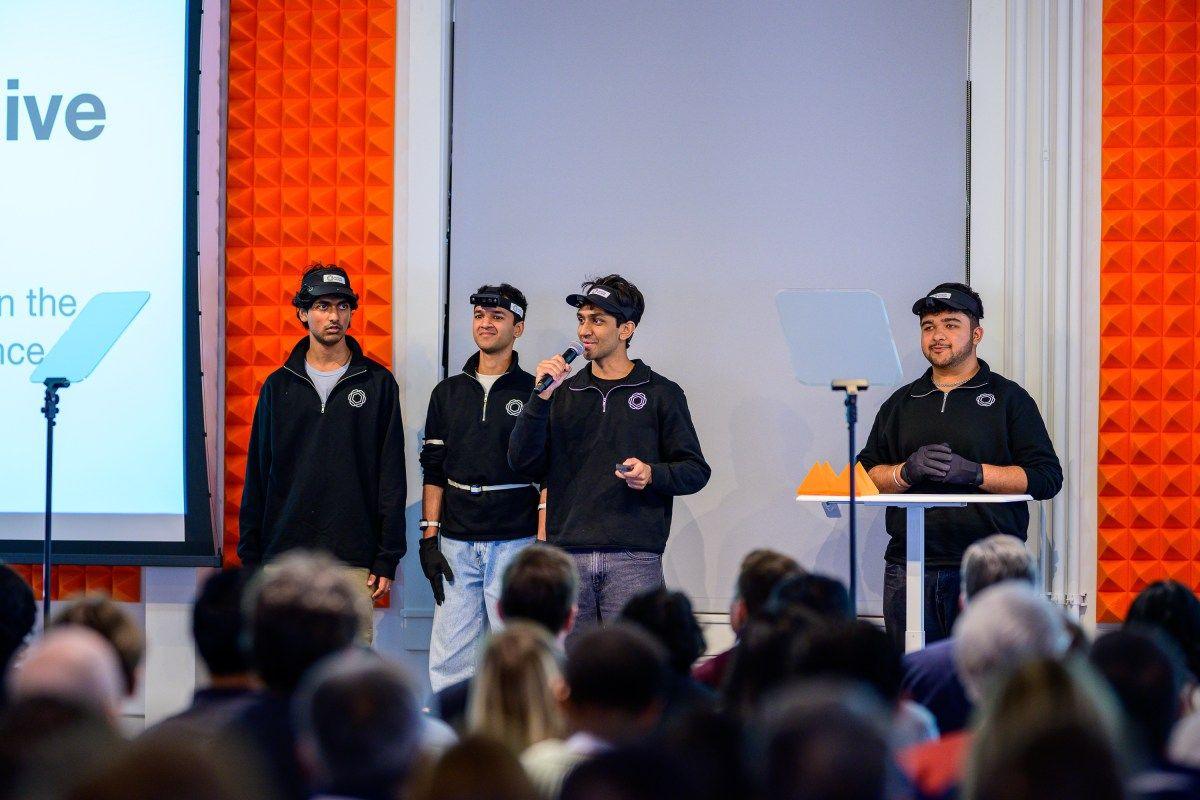
Silicon Valley-based startup Human Archive has raised $8.2 million from Wing Venture Capital, NVP Capital, Y Combinator, and angels from OpenAI, Nvidia, Google, and Meta to expand its operations collecting real-world data for physical AI systems
1
. Founded by four students from Berkeley and Stanford—Samay Mani, Rushil Agarwal, Shloke Patel, and Raj Patel—the company is betting that India's gig economy represents an untapped source of AI training data needed to teach robots how to perform everyday tasks. Unlike large language models that learn from internet text, physical AI requires first-person footage of real people performing real tasks in actual environments, data that simply doesn't exist at scale online5
.
Source: TechCrunch
The startup partners with companies in home services, hospitality, and restaurant sectors, equipping workers with camera-equipped caps to capture egocentric video data—first-person point of view footage of tasks like washing dishes, folding laundry, and cooking
1
. Human Archive currently has more than 1,000 active headsets deployed across multiple locations and over 50 different devices collecting various data points. To differentiate from competitors, the company is developing additional wearable devices including tactile gloves, full-body motion capture suits, and wrist cameras that synchronize RGB-D imagery with depth information, motion, and tactile force data1
.India's booming on-demand services market, exemplified by platforms like Zomato, Swiggy, and Urban Company, provides Human Archive with access to workers who already perform the exact tasks robotics labs need to replicate
1
. The global physical AI market is projected to grow from $1.50 billion in 2026 to $15.24 billion by 2032, according to MarketandMarkets3
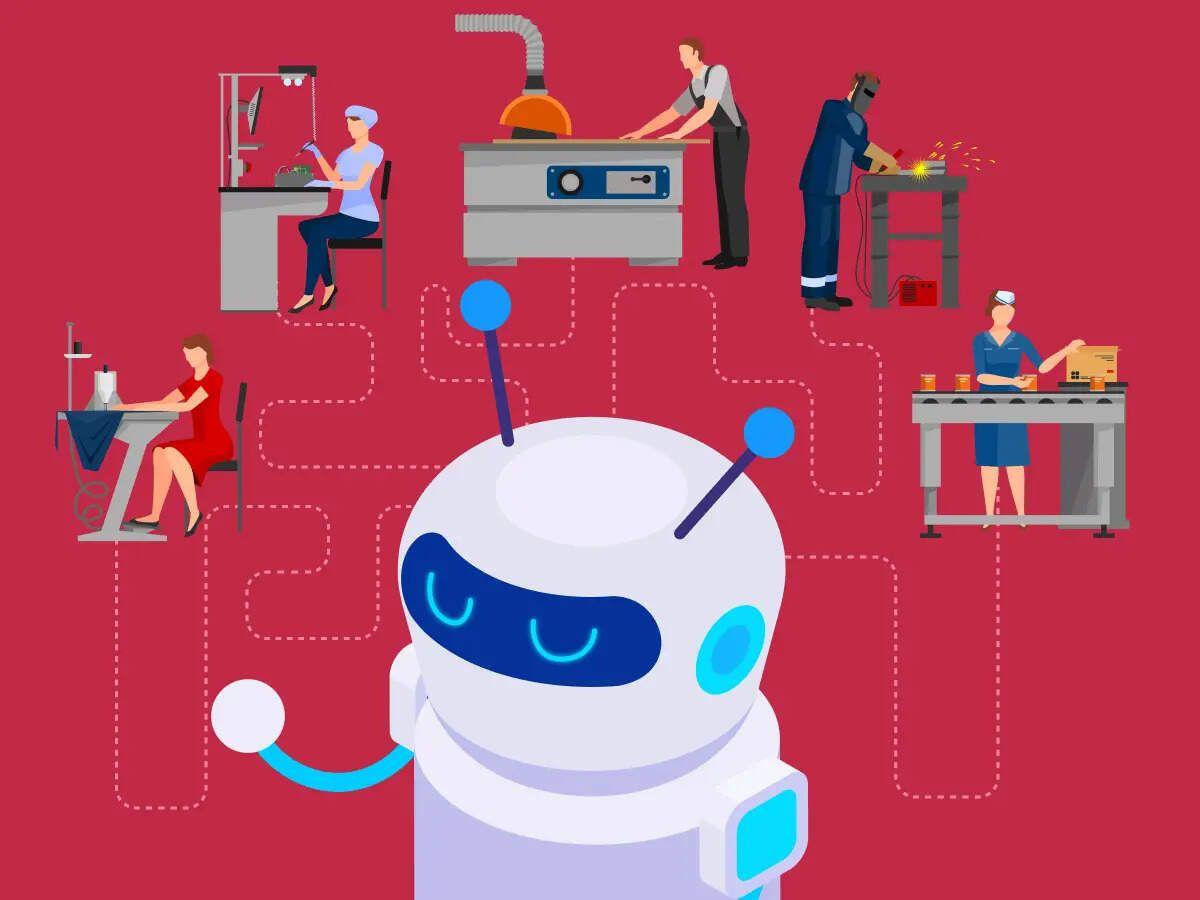
. Companies collecting this real-world data for AI are emerging across India, including HumynAI Labs, Egodata, Neo Cambrian, XP Robotics, and Objectways, which gather footage from household chores to manufacturing tasks4
.
Source: ET
Data collection industry sources indicate that firms are selling these datasets to AI labs in the US, where physical AI development is more advanced. While companies previously commanded rates of $10-15 per hour for such datasets, increased competition has driven prices down to around $3-4 per hour
3
. One AI lab founder noted that appetite for this kind of data is enormous because almost nothing exists today, even for tasks as simple as folding cloth, requiring massive amounts of human-generated data for AI models to learn effectively3
.The data collection push has sparked significant controversy after home services startup Pronto reportedly deployed camera-equipped workers into customers' homes to collect footage for training robotics systems. An internal memo from investor Glade Brook Capital revealed that Pronto is "piloting real-world training data with leading physical AI labs" and "developing a data business leveraging its workforce to capture real-world household data for robotics labs"
5
. The Ministry of Electronics and Information Technology (MeitY) has taken note of these developments, particularly around Pronto's in-home data recording pilots, though detailed queries about potential audit requirements remained unanswered .
Source: Digit
Competitor Snabbit confirmed it conducted a pilot in April with Human Archive, evaluating a preliminary proposal within a controlled training-center environment before deciding not to proceed further
3
. Urban Company CEO Abhiraj Singh Bhal publicly stated his company would not engage in such arrangements, emphasizing that customer privacy is paramount1
. Human Archive co-founder Raj Patel responded sharply on X, suggesting Urban Company would be forced to reconsider or risk losing relevance, while co-founder Rushil Agarwal claimed Pronto founder Anjali Sardana had called him "stupid" when he raised the partnership idea1
.Related Stories
Legal experts warn that India's privacy laws may not adequately regulate continuously learning AI systems operating inside homes. Hardeep Sachdeva, partner at AZB & Partners, noted that the concern extends beyond traditional surveillance to "the gradual creation of highly sophisticated behavioural ecosystems capable of mapping routines, habits, preferences, conversations and emotional patterns"
2
. The real legal complexity lies in the fact that even if raw recordings are deleted, AI models may continue to retain behavioral patterns, spatial intelligence, predictive insights, and model improvements extracted from that data2
.Supratim Chakraborty, partner at Khaitan & Co, explained that while India lacks standalone AI legislation, existing frameworks including the Digital Personal Data Protection Act, Information Technology Act, and consumer protection provisions could apply through consent and purpose limitation principles
2
. However, home-based AI systems may operate in a "persistent and context-aware" manner inside highly private spaces, potentially collecting information about family members, children, guests, or domestic workers present in households2
. Anushkaa Arora, founder of ABA Law Office, called for "targeted regulations specifically addressing AI-assisted surveillance, retention of recordings and accountability mechanisms"3
.India is rapidly emerging as a data services hub for AI, with thousands of gig workers and data annotation jobs proliferating across the country
4
. Vineet Saraogi, cofounder of XP Robotics, called this the "new age back office for AI" where data collected from India would train AI models globally. Some experts draw parallels to historical patterns where India supplied raw materials while value-added processing happened elsewhere4
. India ranked 38 in the 2025 Global Innovation Index, trailing the US, Europe, and several Asian countries, with multiple founders noting that India lacks the research muscle necessary to build frontier technologies4
. As AI companies increasingly seek real-world behavioral data beyond internet content, homes and private spaces could become large-scale AI training grounds if regulations fail to keep pace with technology, experts warned2
.🟡 waving, wearing headphones, or appearing to be in a staged corporate setting. The blurred audience adds authenticity to the scene without distracting from the main subjects. This makes the image highly relevant to the context of a startup securing funding and presenting its innovative data collection methods.) The image directly supports the content about Human Archive's operations and funding.ar-140298 (The image illustrates a central robot (representing AI) connected by dotted lines to various human workers performing tasks like data entry, sewing, operating heavy machinery, welding, and packaging. This visually represents how AI systems integrate with and gather data from different real-world human activities in various work environments.) This image effectively illustrates how AI systems are integrated with and gather data from various human activities, aligning with the "Training Robots Through India's Gig Workers" section and the concept of physical AI.
ar-140220 (An image displaying three mobile phone screens showcasing the Pronto application interface. The central phone shows the "Hourly Services" booking page with options for 1 hr, 1.5 hrs, and 2 hrs, along with a promotional image of a person holding cleaning supplies and the text "One visit. Everything handled. BOOK NOW." The left phone displays a list of various "All house help services" like Bathroom Cleaning, Fridge Cleaning, Utensils, and Kitchen Prep. The right phone shows a "My Cart" screen with a scheduled booking and options for payment.) This image directly references the Pronto application, which is a central point of the "Pronto Controversy Triggers Government Scrutiny" section. It visually grounds the discussion about the company and its services.
Summarized by
Navi
1
Policy and Regulation

2
Business and Economy

3
Technology