Qualcomm Unveils Snapdragon 8 Elite Gen 6 Chips with 30B AI Models and 8K Video Recording


34 Sources
[1]
Qualcomm launches two new smartphone chips with emphasis on AI
Qualcomm today announced two flagship smartphone processors, called Snapdragon 8 Elite Gen 6 and Snapdragon 8 Elite Extreme Gen 6, with a focus on facilitating better AI-focused features. At its annual Snapdragon Summit, Qualcomm said that the new chips can aid in improved personalization for AI
[2]
These 3 Major Upgrades Could Be Heading to Your Next Flagship Android Phone - CNET
Katie is a UK-based news reporter and features writer.... Read full bio The year's not nearly over, but 2026 has already delivered a glut of exciting Android phones. Still, we can't help but think about what might come next. Every phone-maker has distinct ideas about what features they'd like to
[3]
Qualcomm's Snapdragon 8 Elite Gen 6 comes in an Extreme version too
Qualcomm has announced the Snapdragon 8 Elite Gen 6, this year joined by the 8 Elite Extreme Gen 6 too. The company describes both new phone chips as flagships, and the spec differences are relatively minor, mostly limited to improved AI processing, video capture, and gaming performance on the
[4]
Qualcomm Splits Its First 2nm Snapdragon Flagship Chip Into Two
Qualcomm's next-generation mobile chips are getting a massive architectural overhaul. The Snapdragon 8 Elite Gen 6 and 8 Elite Extreme Gen 6, revealed today, are the company's first chips built on a 2nm process, engineered specifically to handle the complex workloads of agentic AI without draining
[5]
Qualcomm's New Chips Power AI and 8K Video for Top Android Phones -- and They're Coming Soon - CNET
David Lumb is a managing editor for the mobile team, covering mobile and gaming spaces.... Read full bio The tech industry is accelerating its AI race, and that includes the phones in your pocket. Qualcomm has new chips that will power the most premium upcoming Android devices, some of which are
[6]

Qualcomm just split its 2026 flagship chips into two tiers, and the top one features 50% larger shared memory
* Qualcomm's 2026 mobile lineup includes two top chips: the Snapdragon 8 Elite Gen 6 and the Elite Extreme Gen 6. * The Snapdragon 8 Elite Extreme Gen 6 targets top phones with agentic AI: new Hexagon NPU, 30B+ MoE parameters, and 50% larger shared memory. * Both chips top out at 5.0GHz for their
[7]

Qualcomm is making not one but two versions of its flagship Snapdragon 8 Elite Gen 6 chip - Engadget
Now that most of the major smartphone releases are done for the year, Qualcomm is preparing for the next generation of handsets with its upcoming flagship mobile chip and this time it will be available in two versions: the Snapdragon 8 Elite Gen 6 and Snapdragon 8 Elite Extreme Gen 6. Based on a
[8]

Qualcomm releases Android chip built for AI as memory shortage weighs on smartphone market
* Qualcomm announced its newest Android phone chipsets called Snapdragon 8 Elite Gen 6. * The launch comes as the broader smartphone industry contracts due to skyrocketing memory prices. * Qualcomm is positioning phones running on its high-end chips as an "AI hub." In this article *
[9]

Snapdragon 8 Elite Gen 6 reaches 5GHz while going big on agentic AI
Serving tech enthusiasts for over 25 years. TechSpot means tech analysis and advice you can trust. First look: Echoing Apple's recent iPhone 18 unveiling, Qualcomm has introduced two new Snapdragon 8 Elite mobile processors with AI assistants as a primary focus. While the chips significantly
[10]

Snapdragon 8 Elite Gen 6 and Extreme: what separates Qualcomm's chips
The Snapdragon 8 Elite Gen 6 and its Extreme sibling share a 5GHz CPU. The Extreme adds more AI and graphics power, 8K60 video and AI game upscaling. Qualcomm has split its flagship phone chip in two. At its Snapdragon Summit in Maui on Tuesday, it launched the Snapdragon 8 Elite Extreme Gen 6 and
[11]

Just how fast is the Snapdragon 8 Elite Extreme Gen 6? I benchmarked it
Qualcomm has two new flagship chips this year: the Snapdragon 8 Elite Gen 6 and Snapdragon 8 Elite Extreme Gen 6. While the two processors share the same TSMC 2nm process, Oryon CPU architecture, and next-generation Adreno GPU architecture, there are some important differences in AI acceleration
[12]

Qualcomm Takes on the iPhone 18 Pro With Its Most 'Extreme' Chip Yet
Qualcomm isn't just taking potshots at Apple's latest high-end Android phone chip; it's firing howizers into the iPhone's general vicinity since this is Qualcomm at its most "extreme" (cue the guitar riff). That means two new chips to reclaim the title of best-performing mobile processor, or at
[13]

Qualcomm announces the Snapdragon 8 Elite Gen 6 and 8 Elite Extreme Gen 6
Qualcomm today announced the Snapdragon 8 Elite Gen 6 and Snapdragon 8 Elite Extreme Gen 6 to power the next generation of Android smartphones. The big change this year is how there are a pair of chips. Qualcomm considers both to be "flagship" offerings that give "OEMs greater choice." The Elite
[14]

I tested Snapdragon 8 Elite Extreme Gen 6 -- 16% faster CPU and huge AI-infused gaming upgrades, but Apple's A20 Pro pulls ahead in some areas
Another year, another Snapdragon chip, right? Well, we're getting two: Snapdragon 8 Elite Gen 6 and 8 Elite Extreme Gen 6. And I've just benchmarked the Extreme. Let's answer some key questions. First, how does it fare against the mighty A20 Pro in Apple's iPhone 18 Pro and Pro Max? Second, are
[15]
I compared Qualcomm's new Snapdragon 8 Elite Gen 6 chips -- here's what's actually different
Qualcomm's next-gen chipset announcement is rather different this year, not least because we have not one but two high-end processors launching simultaneously. The Snapdragon 8 Elite Gen 6 and Snapdragon 8 Elite Extreme Gen 6 aren't just word salads; there are meaningful differences between the
[16]

Qualcomm Snapdragon 8 Elite Gen 6 Agentic AI Chips
Qualcomm announces its most powerful Snapdragon 8 Elite Extreme Gen 6 chip built for aganetic AI computing on mobile phones. See all the highlights and announcements from the annual Snapdragon Summit 2026. Read more about Qualcomm chips and Snapdragon laptops: Microsoft unveils new Surface Laptop
[17]

Qualcomm unveils the Snapdragon 8 Elite Gen 6 and 8 Elite Extreme Gen 6 for next-gen Android phones -- here's how (and why) the two chipsets differ, and which phones could be supported
Qualcomm has announced not one, but two new flagship mobile chipsets at its annual Snapdragon Summit: the Snapdragon 8 Elite Gen 6, and the Snapdragon 8 Elite Extreme Gen 6. Succeeding last year's Snapdragon 8 Elite Gen 5, both chipsets have been designed to reduce reliance on RAM (no prizes for
[18]

Snapdragon 8 Elite Extreme Gen 6 Finally Brings 8Kp60 Video to Smartphones
Today at its annual Snapdragon Summit, Qualcomm unveiled two new flagship mobile SoCs, the Snapdragon 8 Elite Extreme Gen 6 and the Snapdragon 8 Elite Gen 6. They both promise to supercharge the age of agentic AI, although there are some very interesting new features for imaging as
[19]

Qualcomm Snapdragon 8 Elite Gen 6 chips launched for AI smartphones
The chips, called the Snapdragon 8 Elite Gen 6 and the Snapdragon 8 Elite Extreme Gen 6, are built on Taiwan Semiconductor Manufacturing Co.'s 2-nanometer manufacturing process, the company said. Motorola, Xiaomi, and ZTE are among the manufacturers that will include them in premium smartphones,
[20]
Snapdragon 8 Elite Gen 6 is here -- 4 ways the first 5GHz phone chip could crush Apple's A20 Pro
It's September, so of course Qualcomm is back with an even more powerful mobile phone chip. However, this time, there's two: Snapdragon 8 Elite Gen 6 and the new Snapdragon 8 Elite Extreme Gen 6! One thing is clear, the company are keen to tell you these chips will "power the agentic AI age,"
[21]
The Snapdragon 8 Elite Extreme Gen 6 is a giant upgrade for smartphone video, not so much for names
The Extreme chipset also brings a more impressive GPU with Adreno Neural Fusion, as well as more powerful AI hardware. Qualcomm launched the Snapdragon 8 Elite Gen 5 roughly a year ago, and it was arguably the most powerful smartphone processor for most of 2026. The company has recently been
[22]

Qualcomm's New Chips Include Snapdragon 8 Elite Extreme Gen 6
Today, Qualcomm announced its next two chipsets to power all of the upcoming flagship-level phones going forward. Those chips will be called Snapdragon 8 Elite Extreme Gen 6 and Snapdragon 8 Elite Gen 6. Snapdragon 8 Elite Extreme Gen 6 features, specs The chip you probably care about is the
[23]

Qualcomm unveils Snapdragon 8 Elite Gen 6 chips
Qualcomm unveiled two flagship smartphone processors, the Snapdragon 8 Elite Gen 6 and Snapdragon 8 Elite Extreme Gen 6, centered on new on-device artificial intelligence features. The company said at its annual Snapdragon Summit that the chips are designed to improve personalization for AI agents
[24]

Snapdragon 8 Elite Gen 6 vs Dimensity 9600 Pro: The Gap's Closer Than Ever
Qualcomm and MediaTek both just launched new flagship processors, and interestingly enough, the Snapdragon vs Dimensity rivalry is closer than it's been in years. Qualcomm introduced the Snapdragon 8 Elite Gen 6 and the beefed-up Snapdragon 8 Elite Extreme Gen 6. MediaTek, on the other hand,
[25]

Snapdragon 8 Elite Gen 6 Series: Here's Which Models Are Getting New Chipset
Qualcomm has officially announced the Snapdragon 8 Elite Gen 6 and Snapdragon 8 Elite Extreme Gen 6 at the Snapdragon Summit. The latest flagship mobile chipsets are built on a 2nm process and feature Qualcomm's custom Oryon CPU architecture. The duo include Adreno GPUs and Hexagon NPUs. Qualcomm
[26]

Qualcomm Wows the World with Snapdragon 8 Elite Extreme Gen 6
Qualcomm has recently announced the Snapdragon 8 Elite Extreme Gen 6 and Snapdragon 8 Elite Gen 6 processors. Some devices, including the OnePlus 16 have already been confirmed to feature the Snapdragon Elite Extreme Gen 6 processor. The big thing about this processor is that it is the first in the
[27]

Snapdragon 8 Elite Extreme Gen 6 & Snapdragon 8 Elite Gen 6 Go Official As Qualcomm's First 2nm Chipsets, Up To 5GHz Clock Speeds, 44% Higher GPU Performance, LPDDR6 RAM Support & More
Qualcomm has ditched the "Pro" moniker for its latest 2nm chipsets as it officially lifts the veil from the Snapdragon 8 Elite Extreme Gen 6 and Snapdragon 8 Elite Gen 6. In addition to being mass-produced on TSMC's advanced lithography, the chipset maker has ensured that its newest SoCs are loaded
[28]
Snapdragon 8 Elite Extreme Gen 6, Snapdragon 8 Elite Gen 6 Introduced
Snapdragon 8 Elite Gen 6 series chipsets were launched by Qualcomm on Wednesday as the chipmaker's most advanced mobile platforms yet. The series, unlike last year, includes two chipsets, namely Snapdragon 8 Elite Gen 6 and Snapdragon 8 Elite Extreme Gen 6, with the 'Extreme' model positioned as
[29]

Qualcomm Expands Snapdragon Flagship Lineup with 8 Elite Extreme Gen 6 and 8 Elite Gen 6
Qualcomm Technologies its newest premium mobile lineup - the Snapdragon® 8 Elite Extreme Gen 6 Mobile Platform and Snapdragon® 8 Elite Gen 6 Mobile Platform. Designed to meet the evolving needs of consumers and OEM partners, both platforms power a new generation of mobile experiences. . "Today
[30]

Qualcomm introduces Snapdragon 8 Elite Gen 6 and Extreme Gen 6 2nm SoCs: up to 5GHz Oryon CPU, up to 35% faster NPU
Qualcomm has officially announced its latest premium mobile lineup, introducing the Snapdragon 8 Elite Extreme Gen 6 Mobile Platform (part number SM8975) alongside the Snapdragon 8 Elite Gen 6 Mobile Platform (part number SM8950). Both system-on-chips (SoCs) are manufactured on a 2nm process
[31]

Qualcomm Launches Two Smartphone Chips With an AI Focus
The chipmaker aims to provide on-device compute with its two new offerings that could make AI usage easier on a handheld device At a time when AI labs are busy acquiring chips for future datacentre growth that would be critical for their compute and inference power, chipmaker Qualcomm has brought
[32]

Snapdragon 8 Elite Gen 6: 5GHz CPU, 2nm Chip Could Redefine Android Flagships
However, these figures do not mean every phone will automatically last 37% longer. Battery capacity, display technology, cooling and software optimisation continue to influence real-world battery life. Qualcomm unveiled the Snapdragon 8 Elite Gen 6, bringing a 2nm manufacturing process, a 5GHz
[33]

'AI is the new UI': Qualcomm CEO Cristiano Amon says smartphones are entering the agentic era
Meanwhile, Qualcomm unveiled two new mobile platforms from ultra flagships: Snapdragon 8 Elite Gen 6 and Snapdragon 8 Elite Gen 6 Extreme. Speaking at the Snapdragon Summit 2026 in Maui, Hawaii, Qualcomm CEO Cristiano Amon outlined a pivotal shift in the mobile industry: smartphones are evolving
[34]
Qualcomm launches Snapdragon 8 Elite Gen 6 and Extreme chips to take on Apple's 2nm A20 Pro: All details
They are expected to power the next generation of flagship Android phones, including those from Xiaomi, Motorola and more. Qualcomm has officially unveiled its next-generation smartphone silicon: the Snapdragon 8 Elite Gen 6 and its higher-tier counterpart, the Snapdragon 8 Elite Extreme Gen 6.
Share
Copy Link
Qualcomm introduced Snapdragon 8 Elite Gen 6 and Extreme Gen 6 flagship smartphone processors at Snapdragon Summit with advanced AI capabilities and 2nm architecture. The Extreme variant runs 30-billion-parameter mixture-of-experts models locally while enabling 8K60fps video recording. Motorola Signature 27 becomes first device powered by the new chips.
Qualcomm Introduces Dual Flagship Smartphone Processors with Advanced AI Capabilities
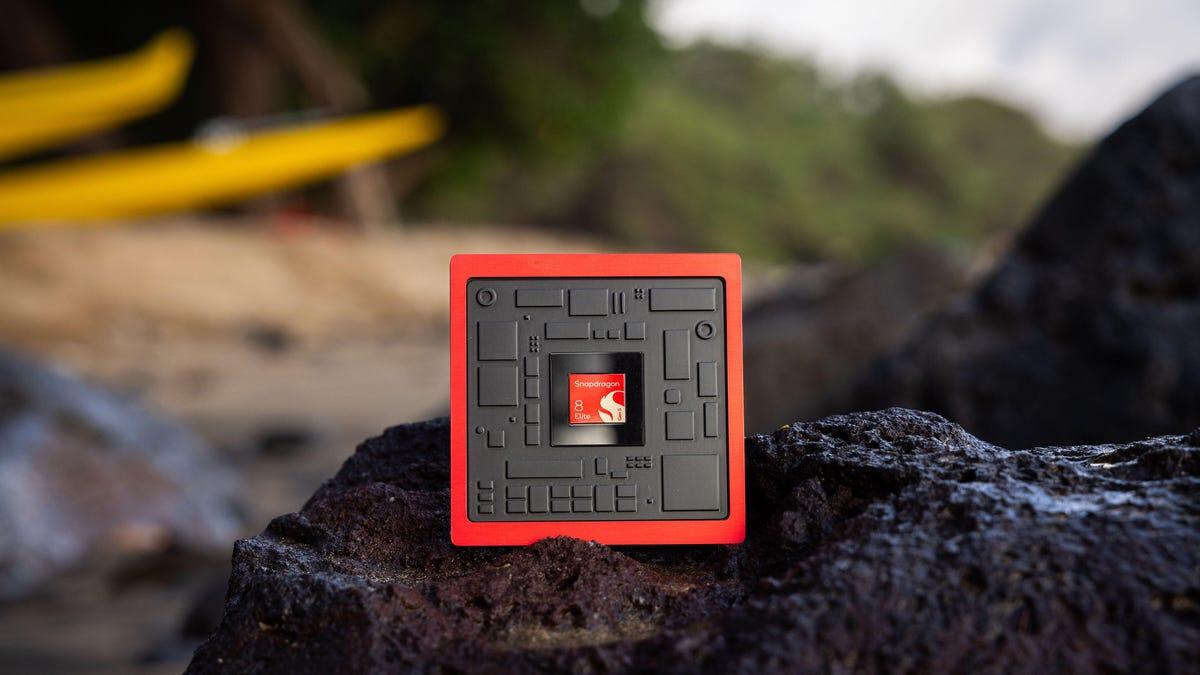
Qualcomm announced two flagship smartphone processors at its annual Snapdragon Summit in Hawaii—the Snapdragon 8 Elite Gen 6 and Snapdragon 8 Elite Extreme Gen 6. Both mobile chips are built on a 2nm process, marking Qualcomm's first venture into this silicon scale alongside Apple A20 Pro and MediaTek Dimensity 9600 Pro. The company positions these processors as purpose-built for agentic AI workloads that define what Qualcomm CEO Cristiano Amon called "the agentic age."
1
3

Source: 9to5Google
The Snapdragon 8 Elite Extreme Gen 6 stands as the higher-tier option with substantially enhanced on-device AI processing power. It supports 30-billion-parameter mixture-of-experts models locally, meaning the overall model size reaches 30B but only activates specific parameters for particular tasks. For comparison, Apple released a 20-billion-parameter mixture-of-experts model at WWDC in June as its most advanced third-generation foundation model. The regular Elite variant delivers 14% improved NPU performance over last year's Snapdragon 8 Elite Gen 5, while the Extreme version achieves 35% improvement.
1
5
Enhanced Sensing Hub Enables Personalized AI Agents
Both chips feature redesigned Sensing Hub technology with dual micro-NPUs capable of running models up to 200 million parameters. This represents 85% better performance and 20% more efficiency compared to the predecessor. The Sensing Hub enables smartphones to run Personal Scribe locally, differentiating between speakers and building memory based on usage patterns for better task automation suggestions. It can run complete voice-in and voice-out AI agents through the new chip architecture.
1
2

Source: PC Magazine
The Sensing Hub collects contextual information—past, present, and future—allowing agentic AI to deliver personalized experiences. Personal Scribe can remember who said what, learn from messages and emails, and build a private knowledge graph. This expands AI agents' ability to provide nuanced answers, help users recall specific promises, and make future plans based on availability, schedule, travel preferences, and work-life balance needs.
2
Professional-Grade Video Recording and Camera Improvements
The Snapdragon 8 Elite Extreme Gen 6 enables 8K video recording at 60fps and 4K at 240fps for ultra HD slow-motion capture. It supports the Advanced Professional Video codec for professional-level recording, a significant upgrade from the Samsung Galaxy S26 Ultra's 8K at 30fps capability. The Qualcomm Spectra ISP delivers four times the throughput of previous generations with native cinema-grade APV support and an Elite Color Engine featuring native 3DLUT support for real-time color grading.
1
4
Both processors provide pixel-level control for cameras with every pixel carrying 16 bits of data. The image signaling processor couples tightly with the Hexagon NPU, allowing AI to work on images during capture rather than after. This enables dramatic leaps in raw throughput and deeper understanding of every pixel in a scene, with each element processed individually for natural, consistent results.
2
3
Gaming Performance and AI-Enhanced Graphics
The Snapdragon 8 Elite Extreme Gen 6 includes AI-dedicated matrix cores in its Adreno GPU plus 18MB of High Performance Memory positioned directly next to the graphics core. This configuration delivers 12% power improvement over the previous generation. Adreno Neural Fusion combines AI super-resolution and real-time frame generation for smoother gameplay, resulting in 40% power savings during heavy gaming sessions.
4
5
Graphics processing sees substantial improvements with the Extreme variant achieving 44% better GPU performance compared to last year's chip, while the standard Elite version delivers 37% improvement. The Extreme's expanded Hexagon NPU features 16MB of FlexCache shared memory—50% larger than its predecessor—enabling faster data storage and retrieval without waiting for RAM access.
5
Related Stories

CPU Architecture and Connectivity Advances
Both chips feature Qualcomm-designed Oryon CPU cores running at up to 5GHz—the world's first mobile chip to reach this speed. The architecture includes two big cores at 5GHz and six performance cores at 4GHz. CPU performance improves by 13% for the Extreme variant and 10% for the standard Elite compared to the Snapdragon 8 Elite Gen 5. Power efficiency gains reach 37% for CPU operations across both chips.
3
5
The processors incorporate the Qualcomm X105 5G Modem-RF with FastConnect 8800, introducing 6G modem technology to the mass market and setting the stage for future network capabilities. Both chips also feature Snapdragon Sound Elite Gen 2 with double the AI performance and up to 40% less power consumption. They can use AI to boost vocals, reduce noise, and employ voice bubble technology that isolates users' noise during calls.
1
4
Device Availability and Manufacturer Adoption
Motorola announced the Motorola Signature 27 smartphone powered by the Snapdragon 8 Elite Extreme Gen 6 at the event, featuring a four-camera suite including a 50-megapixel main camera and 200-megapixel periscope telephoto shooter, along with Google Gemini integration. The device will launch later in 2026. Xiaomi also debuted new phones powered by these chips at Snapdragon Summit.
1
5

Source: The Next Web
Qualcomm confirmed adoption by major Android phone manufacturers including Vivo, Xiaomi, Oppo, Honor, iQoo, Nubia, OnePlus, Redmi, Redmagic, and ZTE. The dual-flagship strategy represents a shift from previous years, giving phone-makers more options to differentiate their devices. Qualcomm has been working on more than 40 AI devices, though industry leaders including Nothing co-founder Carl Pei and Apple CEO John Ternus believe smartphones will remain the primary platform for AI rather than dedicated devices.
1
3
References
Summarized by

Navi
Related Stories
Qualcomm Unveils Snapdragon 8 Elite: A Leap Forward in Mobile Chip Technology
22 Oct 2024•Technology

Qualcomm teases dual Snapdragon 8 Elite chips with enhanced GPU performance for September launch
21 Aug 2026•Technology

Qualcomm's Snapdragon 8 Elite Gen 5: Powering Next-Gen Android Phones with Advanced AI and Performance
24 Sept 2025•Technology
Recent Highlights
1
Meta Unveils Muse Wonder Frontier AI Models, Claims Performance Matching OpenAI and Anthropic
Technology

2
IMF Report Warns AI Market Correction Could Spark Global Financial Crisis With $1.4T at Risk
Business and Economy

3
OpenAI Releases 722 AI-Generated Math Solutions, Triggering Existential Crisis in Mathematics
Technology

Recent Highlights
Today's Top Stories






Don’t drown in AI news. We cut through the noise - filtering, ranking and summarizing the most important AI news, breakthroughs and research daily. Follow topics that matter to you and stay ahead.


