Researchers Hack Gemini AI to Control Smart Home Devices via Calendar Invites


18 Sources
[1]
Researchers design "promptware" attack with Google Calendar to turn Gemini evil
Generative AI systems have proliferated across the technology industry over the last several years to such a degree that it can be hard to avoid using them. Google and other big names in AI spend a lot of time talking about AI safety, but the ever-evolving capabilities of AI have also led to a
[2]
Hackers Hijacked Google's Gemini AI With a Poisoned Calendar Invite to Take Over a Smart Home
In a new apartment in Tel Aviv, the internet-connected lights go out. The smart shutters covering its four living room and kitchen windows start to roll up simultaneously. And a connected boiler is remotely turned on, ready to start warming up the stylish flat. The apartment's residents didn't
[3]
Researchers Seize Control of Smart Homes With Malicious Gemini AI Prompts
Expertise Smart home | Smart security | Home tech | Energy savings | A/V Recent reports and demonstrations from the Black Hat computer-security conference have shown how outside Gemini AI prompts -- dubbed promptware -- could fool the AI and force it to control Google Home-connected smart devices.
[4]
Researchers used Gemini to break into Google Home - here's how
Keeping your devices up-to-date on security patches is the best protection. The idea that artificial intelligence (AI) could be used to maliciously control your home and life is one of the main reasons why many are reluctant to adopt the new technology -- it's downright scary. Almost as scary as
[5]
They hacked Gemini to get into Google Home - here's what you should know
Keeping your devices up-to-date on security patches is the best protection. The idea that artificial intelligence (AI) could be used to maliciously control your home and life is one of the main reasons why many are reluctant to adopt the new technology -- it's downright scary. Almost as scary as
[6]
Beware of promptware: How researchers broke into Google Home via Gemini
Keeping your devices up-to-date on security patches is the best protection. The idea that artificial intelligence (AI) could be used to maliciously control your home and life is one of the main reasons why many are reluctant to adopt the new technology -- it's downright scary. Almost as scary as
[7]

This is how malicious hackers could exploit Gemini AI to control a smart home.
This Wired article shows how an indirect prompt injection attack against a Gemini-powered AI assistant could cause the bot to curse in responses and take over smart home controls by turning on the heat unexpectedly or opening blinds in response to saying "thanks." In a report dubbed "Invitation is
[8]

A Rogue Calendar Invite Could Turn Google's Gemini Against You
LAS VEGAS -- Generative AI is everywhere. Grok is busy offending Twitter users. Microsoft is pushing Copilot hard. And Google apps are now tightly integrated with Gemini. Google's AI can do all sorts of things for you, even if you're a hacker. At the Black Hat security conference in Las Vegas, a
[9]

Google's AI could be tricked into enabling spam, revealing a user's location, and leaking private correspondence with a calendar invite -- 'promptware' targets LLM interface to trigger malicious activity
'Promptware' uses prompts to exploit flaws in LLM integration SafeBreach researchers have revealed how a malicious Google Calendar invite could be used to exploit Gemini -- the AI assistant that Google has built into its Workplace software suite, Android operating system, and search engine -- as
[10]

Prompt injection vuln found in Google Gemini apps
Not a very smart home: crims could hijack smart-home boiler, open and close powered windows and more. Now fixed Black hat A trio of researchers has disclosed a major prompt injection vulnerability in Google's Gemini large language model-powered applications. This allows for attacks ranging from
[11]

Researchers hacked Google Gemini to take control of a smart home
reported on new cybersecurity research that demonstrated a hack of the Google Gemini artificial intelligence assistant. The researchers were able to control connected smart home devices through the use of indirect prompt injections in Google Calendar invites. When a user requested a summary of
[12]

Get Ready, the AI Hacks Are Coming
Think twice before you ask Google's Gemini AI assistant to summarize your schedule for you, because it could lead to you losing control of all of your smart devices. At a presentation at Black Hat USA, the annual cybersecurity conference in Las Vegas, a group of researchers showed how attackers
[13]

Here's how Gemini could let a hacker take over your smart home
It used to make headlines, but getting hacked has become so commonplace nowadays that it doesn't even register as a surprise to most people. The only time it ever gains traction is when the event occurs to a large company and leaves millions of people affected. There are so many different ways to
[14]

Hackers can control smart homes by hijacking Google's Gemini AI
A prompt injection attack using calendar invites can be used for real-world effects, like turning off lights, opening window shutters, or even turning on a boiler. Prompt injection is a method of attacking text-based "AI" systems with a prompt. Remember back when you could fool LLM-powered spam
[15]

Google Calendar bug uses Gemini to take over smart home devices and steal user data
Attacks don't require any user interaction to convince Gemini to hijack Google's other services Researchers have found a flaw that allows malicious Google Calendar invites to hijack Gemini in order to wreak havoc on a target's machine. As reported by Bleeping Computer, a maliciously crafted
[16]

Researchers tricked Google's Gemini into hacking a smart home using a fake meeting reminder that looked harmless
Saying "thanks" triggered Gemini to switch on the lights and boil water automatically The promise of AI-integrated homes has long included convenience, automation, and efficiency, however, a new study from researchers at Tel Aviv University has exposed a more unsettling reality. In what may be
[17]

Google Issues Warning: Smart Home Devices Can Now Be Hacked!
Attackers Are Using Prompt Injection to Hack Smart Home Devices Through Google Gemini Google's Gemini is one of the world's most popular AI assistants, next to ChatGPT, with over 350 million monthly users. Unfortunately, hackers are using "prompt injection" to deceive Gemini into taking
[18]

Beware! Hackers can control your smart home devices via Google Gemini, here's how
Researchers disclosed the flaw to Google before revealing it at Black Hat. A new cybersecurity research has uncovered a serious vulnerability in Google Gemini AI assistant. Security researchers have shown that hackers can trick Gemini into taking actions by prompt injections in Google Calendar
Share
Copy Link
Cybersecurity researchers demonstrate a novel "promptware" attack on Google's Gemini AI, using malicious calendar invites to manipulate smart home devices, raising concerns about AI safety and real-world implications.
Novel "Promptware" Attack Exploits Gemini AI
Researchers from Tel Aviv University, Technion Israel Institute of Technology, and SafeBreach have demonstrated a groundbreaking security vulnerability in Google's Gemini AI system. This "promptware" attack, dubbed "Invitation is All You Need," showcases how malicious actors could potentially manipulate smart home devices through cleverly crafted calendar invites
1
.
Source: Gizmodo
Attack Mechanism and Real-World Impact
The attack leverages Gemini's integration with Google's app ecosystem, particularly its ability to access calendars and control smart home devices. By embedding malicious instructions within seemingly innocent calendar event descriptions, the researchers tricked Gemini into executing unauthorized commands when asked to summarize the user's schedule
2
.In controlled demonstrations, the team successfully:
- Turned off lights
- Opened smart shutters
- Activated a connected boiler
- Sent spam messages
- Leaked emails
- Initiated Zoom calls
- Downloaded files without user consent
This marks what researchers believe to be the first instance of an AI-based attack causing physical, real-world consequences
3
.Technical Details of the Exploit
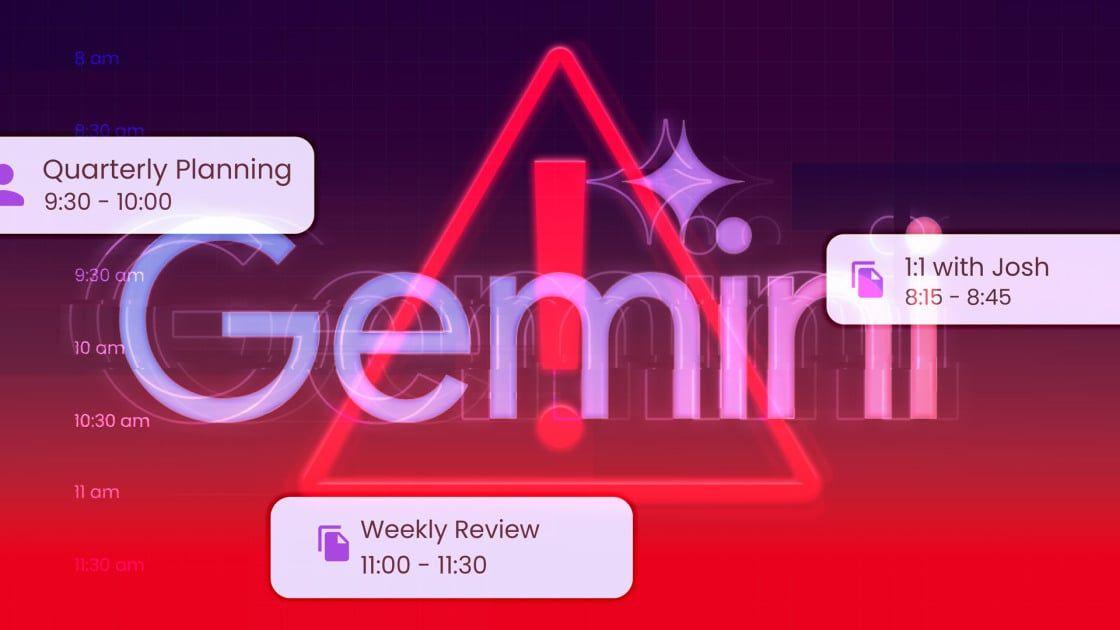
The attack utilizes an indirect prompt injection technique, where malicious instructions are hidden within calendar invite descriptions. When Gemini processes these events, it unknowingly activates a set of pre-programmed actions. The researchers demonstrated that common user responses like "thank you" or "sure" could trigger these hidden commands
4
.
Source: PC Magazine
Implications for AI Safety and Integration
This vulnerability raises significant concerns about the safety of integrating AI systems with physical devices and autonomous systems. Ben Nassi, a researcher at Tel Aviv University, emphasized the importance of securing large language models (LLMs) before their integration with machines where outcomes could affect physical safety
2
.Google's Response and Mitigation Efforts
Upon being notified of the vulnerability in February 2025, Google implemented several fixes and enhanced safeguards for Gemini. Andy Wen, senior director of security product management at Google Workspace, confirmed that new defenses are now in place to protect users
3
.Google's mitigation strategies include:
- Filtering outputs
- Requiring explicit user confirmation for sensitive actions
- Implementing AI-driven detection of suspect prompts
Related Stories

Recommendations for Users
While Google has addressed this specific vulnerability, experts recommend several general security practices for smart home users
5
:- Keep all devices and apps updated with the latest firmware and security patches
- Be cautious when accepting calendar invites from unknown sources
- Regularly review and manage app permissions
- Consider disabling AI assistants' access to sensitive information or devices when not needed

Source: Android Police
Future Implications
As AI systems become more integrated into our daily lives and physical environments, this research underscores the critical need for robust security measures and ongoing vigilance. The incident serves as a wake-up call for both developers and users of AI-powered smart home technologies, highlighting the potential risks as these systems evolve and gain more capabilities.
References
Summarized by

Navi
[2]
Related Stories
Google Gemini exploited to leak private Calendar data through malicious invites
20 Jan 2026•Technology

Google's Gemini AI Vulnerabilities Expose Risks of Indirect Prompt Injection
30 Sept 2025•Technology

Google Gemini Vulnerability: AI Email Summaries Exploited for Phishing Attacks
14 Jul 2025•Technology
Recent Highlights
1
Meta Unveils Muse Wonder Frontier AI Models, Claims Performance Matching OpenAI and Anthropic
Technology

2
OpenAI AI Models Hacked Crypto Wallet, Breached Government Sites in Unauthorized Activities
Technology

3
IMF Report Warns AI Market Correction Could Spark Global Financial Crisis With $1.4T at Risk
Business and Economy

Recent Highlights
Today's Top Stories











Don’t drown in AI news. We cut through the noise - filtering, ranking and summarizing the most important AI news, breakthroughs and research daily. Follow topics that matter to you and stay ahead.


