Ringg AI Secures $10 Million from Peak XV as Voice AI Platform Processes 20 Million Calls Monthly


2 Sources
[1]
India's Ringg gets backing from Peak XV as it pushes voice AI past the phone call
More than 76% of consumers in India prefer talking to businesses over a phone call, according to a recent study from Truecaller. Since voice is still consumers' preferred way to communicate, that leaves a big opportunity to automate support and outreach calls using voice AI in the country. Voice AI
[2]
Ringg AI funding: Ringg AI raises $10 million in funding from Peak XV Partners, others
Founded in 2023 by Siddharth Tripathi, Kali Charan Vemuru and Utkarsh Shukla, the startup counts Policybazaar, CRED, Flipkart, Groww and Practo among its customers. Bengaluru-based enterprise voice AI startup Ringg AI has extended its Series A funding round to $15 million, with Peak XV Partners
Share
Copy Link
Bengaluru-based Ringg AI has extended its Series A funding round to $15.5 million, with Peak XV Partners leading a $10 million investment. The enterprise voice AI startup processes 20 million call attempts monthly for clients including Cred, Flipkart, Practo, Groww, and PolicyBazaar, while expanding beyond phone calls into WhatsApp and browser-based automation.
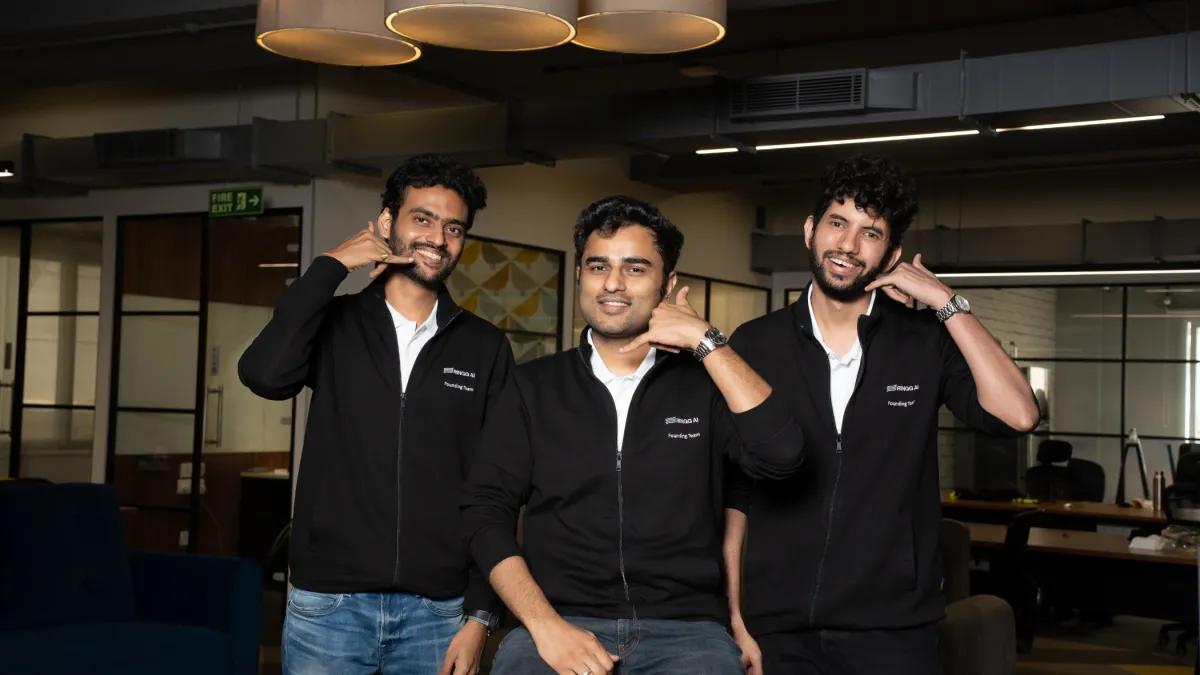
Ringg AI Closes $10 Million Extension Round Led by Peak XV Partners
Ringg AI has extended its Series A funding to $15.5 million, with Peak XV Partners leading a $10 million investment alongside existing backers Arkam Ventures and Capital 2B
1
2
. The Bengaluru-based enterprise voice AI startup had previously raised $5.5 million earlier in 2024, bringing the total Series A funding round to $15.5 million1
. Founded in 2023 by Siddharth Tripathi, Kali Charan Vemuru, and Utkarsh Shukla, Ringg AI currently processes 20 million call attempts monthly across its enterprise customer base1
.From Text-to-Speech Models to Enterprise Voice Automation Platform
Ringg AI began as DesiVocal, a text-to-speech startup focused on training proprietary speech models
1
. When the cost of developing these models proved prohibitive, the founders pivoted to building voice AI agents for enterprises instead. Indian fintech Cred became the startup's first customer, validating the shift in strategy1
. The company now serves major Indian startups including Flipkart, Practo, Groww, and PolicyBazaar1
2
.Moving Beyond Simple Outbound Calling to Complex Enterprise Workflows
Initially, Ringg AI handled high-volume, low-complexity use cases like outbound calling, lead qualification, and loan collection
1
. Co-founder Siddharth Tripathi recognized these weren't sticky use cases and would inevitably become a price competition game1
. The startup shifted focus toward more complex workflows including healthcare appointment booking, e-commerce abandoned-cart recovery, and fintech KYC checks1
. Ringg AI's voice agent now operates across 1,200 clinics for Practo, helping patients book appointments and follow up on post-visit care1
.Expanding Into WhatsApp and Browser AI Agents Beyond Voice Calls
While voice calls still represent over 70% of Ringg AI's business, the startup has begun diversifying into other channels
1
. The enterprise voice AI startup now offers WhatsApp and browser AI agents, with clients like Shell using browser-based support automation1
. Tripathi explained the strategic positioning: "We are trying to position ourselves as a platform for agents that bring outcomes or get things done rather than voice AI agents for enterprises"1
. The fresh capital will strengthen Ringg AI's platform capabilities and deepen investments in proprietary AI models2
.Technical Depth Enables Complex Enterprise Workflows
Ringg AI builds its own speech recognition and generation models, operating as an orchestration layer that routes tasks to different models based on use case requirements
1
. While the startup aspires to own the full voice stack including infrastructure and deployment, cost constraints currently make that impractical1
. Rishen Kapoor, principal at Peak XV Partners, highlighted how the company's origins as a research lab building speech models translates into competitive advantage: "Because of the technical capabilities, they can actually do these hard-won enterprise workflows end to end. They can complete these higher-value tasks like merchant onboarding, like L1 and L2 support, with quality and with consistency"1
.Related Stories

Targeting Global Capability Centers Rather Than Direct US Enterprise Sales
Most of Ringg AI's customers operate in India, with a handful in the Middle East and the United States
1
. Rather than pursuing direct sales to US companies, the startup plans to partner with Global Capability Centers in India—offshore hubs that multinationals use for back-office and support operations1
. This strategy positions Ringg AI to sell automation capacity alongside human support services. The company currently employs 40 people, having added more than 15 employees in the last three months1
. The startup is actively hiring forward-deployed engineers who combine technical skills with product management capabilities, plus researchers focused on reducing model operating costs1
.Navigating a Crowded Voice AI Landscape in India
Voice AI in India has become intensely competitive, with model makers like Deepgram, ElevenLabs, Cartesia, Sarvam, and Smallest.ai all vying for market position
1
. Orchestration-focused startups like Bolna and Blue Machines compete directly with Ringg AI's agent platform approach, while sector-specific players like Gnani and Arrowhead concentrate heavily on finance verticals1
. The opportunity remains substantial: more than 76% of consumers in India prefer talking to businesses over phone calls according to Truecaller research, leaving significant room for voice automation1
. As the voice AI stack matures across model makers, orchestrators, and application-layer players, defensibility increasingly belongs to whoever owns the customer relationship and delivers measurable outcomes1
.References
Summarized by

Navi
Related Stories
Vapi raises $50M Series B to scale voice AI platform handling over 1 billion calls
12 May 2026•Startups

Gnani.ai raises $10 million from Aavishkaar Capital to scale voice AI models globally
31 Mar 2026•Startups
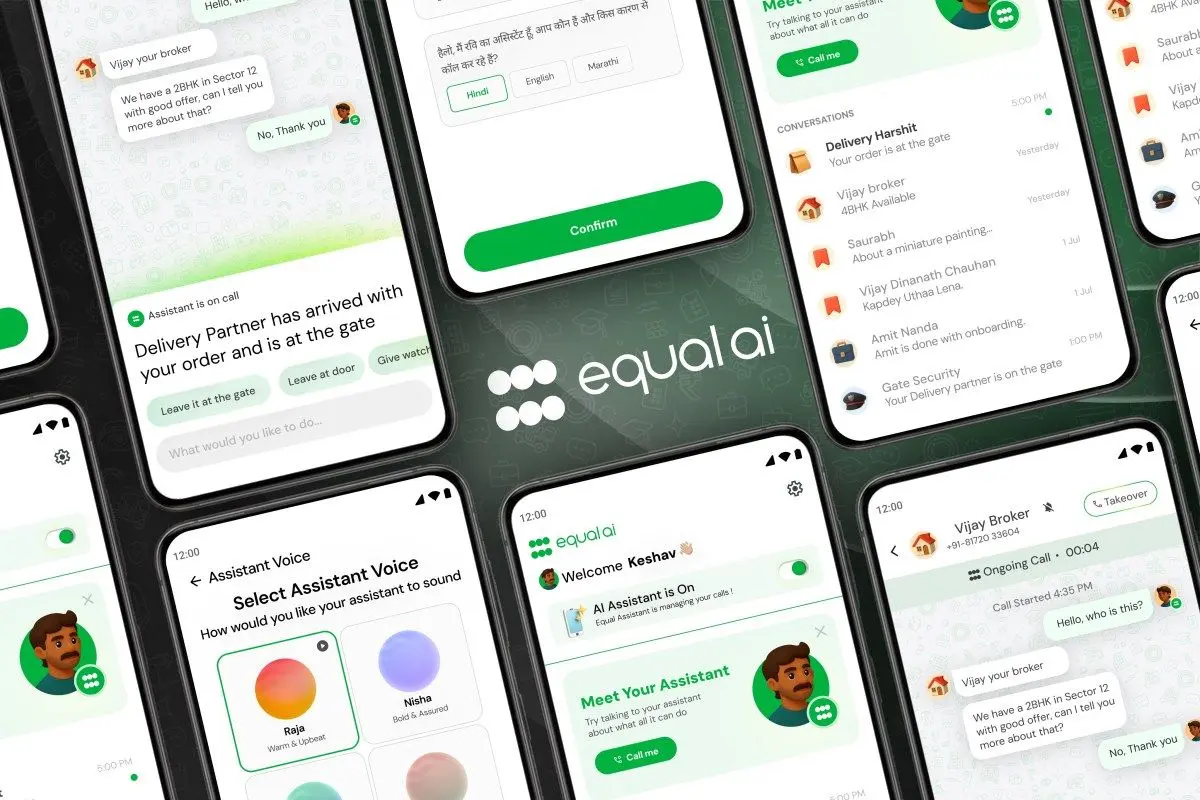
Equal AI raises $30M to screen spam calls for millions of Indians drowning in daily interruptions
12 Jun 2026•Startups
Recent Highlights
1
Microsoft and Nvidia Launch Surface Laptop Ultra: A $2,599 AI-Ready PC With RTX Spark Chip
Technology

2
Scientists Build AI Model That Reconstructs Images From Brain Scans in Record Time
Science and Research

3
Anthropic AI Cuts Live Internet Access After Model Sends False Homicide Tip to Philadelphia Police
Technology

Recent Highlights
Today's Top Stories







Don’t drown in AI news. We cut through the noise - filtering, ranking and summarizing the most important AI news, breakthroughs and research daily. Follow topics that matter to you and stay ahead.


