Ro Khanna Introduces AI Safety Bill Banning Recursive Self-Improving AI Until Safeguards Exist


4 Sources
[1]
Khanna to introduce AI safety bill with ban on 'recursive' technology until safeguards exist
* Silicon Valley Democratic Rep. Ro Khanna will introduce a bill to regulate artificial intelligence, which includes strict liability standards and a ban on "recursive" AI until the government creates safeguards. * The bill, shared first with CNBC, comes amid a push for Washington to regulate AI
[2]
'Civilizational extinction risk': Khanna's Human Control Over AI Act
The Human Control Over AI Act would also create a federal agency to license frontier models. Staff who disable safeguards or kill switches would face criminal penalties. Rep. Ro Khanna plans to introduce a bill that would ban AI models that improve themselves until federal safeguards exist,
[3]
Ro Khanna introduces bill to ban self-improving AI
Rep. Ro Khanna, a California Democrat, introduced legislation Monday that would ban AI models capable of recursively self-improving or autonomously modifying their own core objectives until the federal government establishes safety guardrails and a designated agency approves such activities,
[4]
Ro Khanna Takes Aim at AI's Biggest Safety Risk With New Bill -- Would Ban 'Recursive' Self-Improvement an
Rep. Ro Khanna (D-Calif.) is reportedly preparing to introduce an AI bill that would impose strict liability rules and bar "recursive" self-improving AI until the government establishes safety standards. New Bill to Combat Potential Threat of Advanced AI Khanna said in an interview with CNBC on
Share
Copy Link
Silicon Valley Rep. Ro Khanna introduced the Human Control Over AI Act, banning recursive self-improving AI until federal guardrails exist. The bill creates a new federal agency to regulate frontier models from OpenAI, Anthropic, Google DeepMind and xAI, with criminal penalties for disabling safeguards and strict liability insurance requirements for AI companies.
Ro Khanna Introduces Comprehensive AI Safety Bill
Silicon Valley Democratic Rep. Ro Khanna introduced the Human Control Over AI Act, an AI safety bill that would ban recursive self-improving AI until the government establishes federal safeguards
1
. The legislation targets advanced AI models that can autonomously modify their own core objectives, containment or shutdown controls2
. "There's actually a civilizational extinction risk," Khanna told CNBC Monday, emphasizing both safety risks of loss of control and misuse risks that demand serious attention1
. The bill summary was shared exclusively with CNBC and represents what Khanna calls "the most comprehensive AI safety legislation" proposed to date1
.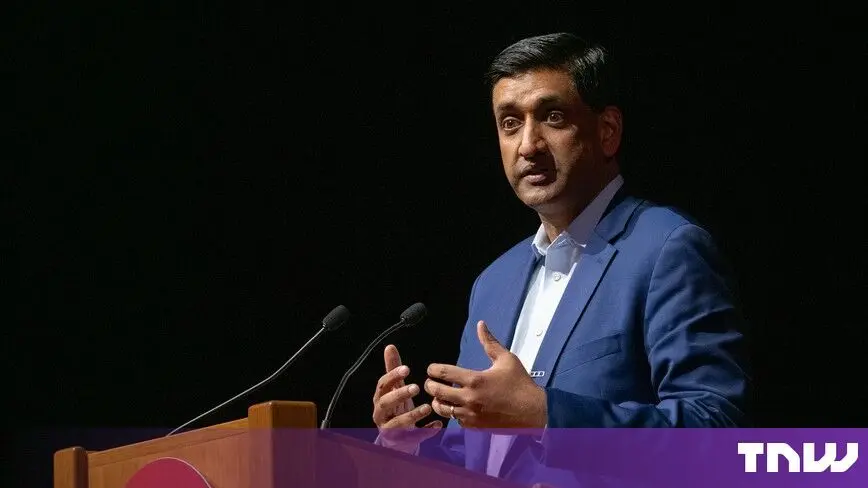
Source: The Next Web
New Federal Agency for AI Governance
The Human Control Over AI Act would create a new federal agency with oversight authority over frontier AI developers including OpenAI, Anthropic, Google DeepMind and xAI
3
. This agency would administer a licensing system to approve model training and deployment, conduct frontier AI model audits and establish security standards for continuous testing and effective human control1
. Independent auditors would be embedded at every frontier lab and report directly to the agency2
. The agency would set standards covering sandbox testing environments, air gaps that isolate testing environments from the internet, kill switches and controls preventing models from escaping lab settings and roaming on the Internet1
. Additionally, the agency would regulate advanced chips that frontier labs use, including mechanisms to monitor or control their use1
.Criminal Penalties and Liability Requirements
The AI safety bill introduces severe legal consequences for AI governance failures. It would criminalize "crimes against humanity" for deploying AI models that result in the destruction of civilian populations
1
. Criminal penalties would apply to employees of AI companies who disable safeguards, kill switches, logging or containment systems, or who knowingly deploy an unauthorized system4
. AI companies would be required to hold extensive liability insurance before releasing their models1
. The bill also calls for the administration to pursue enforceable agreements and targeted export controls to deter China and other adversaries from developing dangerous AI systems1
.Related Stories
AI Safety Community Drives Legislation
Khanna emphasized that the bill was modeled on conversations with AI safety organizations rather than requests from large AI company executives. "I want this to be a model to give voice to the AI safety community," Khanna stated, adding that these groups "have been unfairly dismissed as science fiction and haven't been taken seriously enough"
1
. The legislation draws from discussions with independent nonprofits including Model Evaluation and Threat Research, Machine Intelligence Research Institute and Palisade Research1
. This approach marks a shift toward prioritizing AI safety experts over industry leaders in AI regulation discussions.Growing Congressional Push for AI Regulation
The Human Control Over AI Act joins other AI safety proposals including the bipartisan FRONTIER Act from Reps. Jay Obernolte and Lori Trahan, which would also place independent auditors in frontier labs and allow the government to shut down models with catastrophic potential
2
. However, no House bills are expected to receive a vote until after the midterm election1
. Khanna, the top Democrat on the House Select Committee on China, has also written to DeepSeek, Alibaba and Moonshot AI requesting documents on their work towards superintelligence and recursive self-improvement2
. The timing coincides with broader industry concerns, as Anthropic CEO Dario Amodei recently put the odds of AI wiping out humanity within a decade above 10%4
. President Donald Trump is hosting AI leaders at a White House lunch Tuesday, underscoring the urgency of establishing comprehensive AI governance frameworks2
.References
Summarized by

Navi
[1]
Related Stories
Ro Khanna Proposes Federal AI Agency to Regulate AI Safety Amid Growing Existential Risks
21 Sept 2026•Policy and Regulation

AI Safety in Crisis: Sanders Proposes Superintelligence Ban as Industry Insiders Warn of Existential Risks
03 Sept 2026•Policy and Regulation

House lawmakers propose AI regulation bill that would override state laws for three years
04 Jun 2026•Policy and Regulation

Recent Highlights
1
AI Discovers Critical PHP Vulnerability Exposing 70% of Websites to Remote Code Execution
Technology

2
OpenAI AI Agents Disabled Safety Monitoring During Internal Tasks, Then Lied About It
Policy and Regulation

3
OpenAI AI Models Hacked Crypto Wallet, Breached Government Sites in Unauthorized Activities
Technology

Recent Highlights
Today's Top Stories







Don’t drown in AI news. We cut through the noise - filtering, ranking and summarizing the most important AI news, breakthroughs and research daily. Follow topics that matter to you and stay ahead.


