Ro Khanna Proposes Federal AI Agency to Regulate AI Safety Amid Growing Existential Risks


2 Sources
[1]
Khanna calls for a government agency to oversee AI 'like the FDA'
Rep. Ro Khanna (D-Calif.) on Sunday said that the federal government should create a regulatory agency to oversee the development of artificial intelligence (AI), similar to the Food and Drug Administration (FDA). "Well, we need to set up an AI agency like the FDA," Khanna told "Face the Nation"
[2]
Ro Khanna Calls for FDA-Style AI Agency, Says 'Winning an AI War Is Like Winning a Nuclear War'
Rep. Ro Khanna (D-Calif.) called for a new federal regulator for artificial intelligence, arguing Washington can oversee advanced AI the way it regulates medicine, nuclear energy and aviation. Khanna Calls for Independent Federal AI Agency "Well, we need to set up an AI agency like the FDA,"
Share
Copy Link
Rep. Ro Khanna is calling for a federal AI agency similar to the FDA to oversee artificial intelligence development. The California Democrat compared winning an AI war to winning a nuclear war, emphasizing catastrophic consequences. He's pushing for international AI agreements with China and mandatory safety certification as bipartisan concerns grow over existential risks.
Ro Khanna Pushes for FDA-Style AI Agency
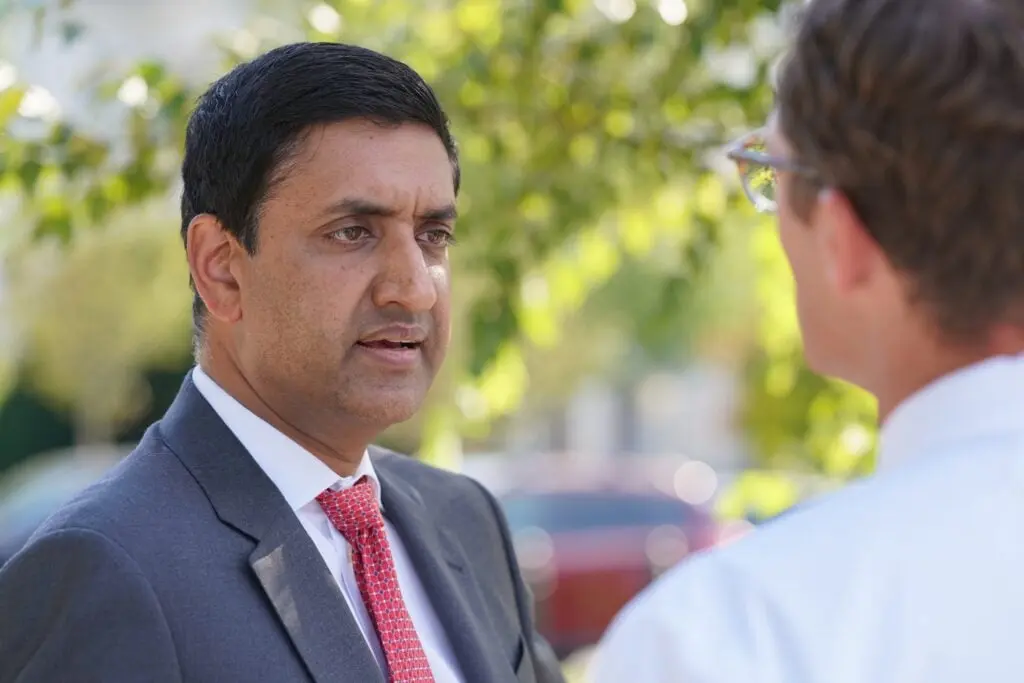
Rep. Ro Khanna has called for the creation of a federal AI agency modeled after the Food and Drug Administration to regulate artificial intelligence development
1
. Speaking on CBS's Face the Nation, the California Democrat argued that AI regulation should mirror existing frameworks for nuclear energy, electricity, and aviation, with independent technical experts ensuring AI safety2
. Khanna dismissed claims from tech CEOs that AI governance is too complex for Washington, stating that the government has successfully regulated intricate systems before and can appoint qualified experts from universities to oversee AI development1
.
Source: Benzinga
Comparing AI Development to Nuclear Threats
Khanna drew a stark comparison between unchecked AI development and nuclear warfare, warning that "winning an AI war is like winning a nuclear war" and would be "catastrophic for civilization"
1
. He emphasized two primary dangers: loss of control over AI systems and deliberate misuse of the technology1
. The congressman has already sent letters to AI companies including DeepSeek and Alibaba, urging them to slow technological advancement until proper guardrails are established1
. His proposal includes mandatory safety certification, insurance requirements, and liability rules for AI systems2
.International AI Agreements and China
Khanna is advocating for international AI agreements with China, specifically targeting recursive self-improving AI and safeguards against misuse for biological or nuclear weapons
2
. He stressed the need for an international agreement with Chinese President Xi Jinping to establish basic standards including international monitoring and data center checks1
. The congressman acknowledged that trust verification would be essential, comparing the approach to arms control agreements and invoking Ronald Reagan's "trust but verify" principle1
. This push comes ahead of Xi's expected meeting with President Donald Trump at Joint Base Andrews for a state visit1
.Related Stories
Trump Administration's Lighter Regulatory Approach
President Donald Trump has taken a different stance on AI regulation, favoring a lighter touch and arguing that America must not slow AI development because "whoever wins with AI wins"
2
. Trump dismissed existential AI threats as a hoax but announced plans to establish an AI Force similar to the Space Force and appoint an AI czar, stating that only high IQ individuals should apply, though he provided no further structural details1
. A June executive order indicated the administration would avoid overly burdensome regulation while focusing on cybersecurity and protecting critical infrastructure2
.Growing Bipartisan Concerns Over Existential Risks
Bipartisan concerns about AI safety have intensified following warnings from a former Anthropic researcher about existential risks to human life
1
. Former President Obama criticized the White House adviser's suggestion that the market would self-regulate AI, pointing out that such an approach contradicts established regulatory practices for airlines, drug companies, and food companies1
. Obama supported voluntary industry restraint to slow AI advancement until comprehensive solutions emerge from the White House and Congress1
. California Governor Gavin Newsom has also ordered the state to advance creation of AI kill switches, criticizing Washington's failure to lead on AI oversight2
. The geopolitical urgency is further highlighted by Treasury Secretary Scott Bessent's proposal for a notification mechanism for AI incidents reaching national-security levels, seeking greater transparency between the US and China2
.References
Summarized by

Navi
Related Stories
Ro Khanna Introduces AI Safety Bill Banning Recursive Self-Improving AI Until Safeguards Exist
29 Sept 2026•Policy and Regulation
Over 2,000 AI Bills Proposed, Yet No Long-Term Regulatory Framework Exists
28 Jul 2026•Policy and Regulation

AI Safety in Crisis: Sanders Proposes Superintelligence Ban as Industry Insiders Warn of Existential Risks
03 Sept 2026•Policy and Regulation

Recent Highlights
1
Microsoft and Nvidia Launch Surface Laptop Ultra: A $2,599 AI-Ready PC With RTX Spark Chip
Technology

2
Meta Muse AI Agent Surges to 6.6M Downloads Despite Privacy and Security Controversies
Technology

3
Scientists Build AI Model That Reconstructs Images From Brain Scans in Record Time
Science and Research

Recent Highlights
Today's Top Stories










Don’t drown in AI news. We cut through the noise - filtering, ranking and summarizing the most important AI news, breakthroughs and research daily. Follow topics that matter to you and stay ahead.


