Robinhood expands AI agents to crypto trading as CEO predicts they'll soon rival human traders


3 Sources
[1]
Robinhood to Launch AI Agent Feature For Crypto Trading
More than 70,000 agentic accounts have already been created by Robinhood equities and options traders since late May, when Robinhood launched a beta version of the product. Robinhood said eligible US-based customers will soon be able to connect third-party AI agents to make crypto trades on their
[2]
Robinhood CEO Predicts That AI Agents Will Catch Up to Human Traders 'Soon'
He said that consumer-facing AI agents are the way to deliver that sophistication to standard retail investors. AI agents, or AI that can carry out tasks on a user's behalf with minimal intervention, are about to occupy the same space as human traders on investing app Robinhood. Robinhood CEO
[3]
ai trading: Robinhood CEO says AI agents will soon rival human traders, manage portfolio
The company had in May unveiled tools that allow AI agents to trade stocks and make purchases on behalf of users. The company said its users can create a dedicated trading account, separate from their primary one, and have AI agents trade on their behalf. AI agents are on track to become as
Share
Copy Link
Robinhood is rolling out AI agents for crypto trading after launching the feature for equities in May, with over 70,000 agentic accounts already created. CEO Vlad Tenev predicts AI agents will soon match human trader capabilities, aiming to democratize access to sophisticated trading tools previously reserved for Wall Street institutions.
Robinhood Expands AI Agents to Crypto Trading
Robinhood announced that eligible US-based customers will soon be able to connect third-party AI agents to execute trades autonomously on their behalf in the cryptocurrency market
1
. This marks a significant expansion of the company's agentic trading initiative, which first launched as a beta product for equities and options traders in late May. The AI agent feature for crypto trading follows the creation of more than 70,000 agentic accounts by Robinhood equities and options traders since the initial rollout1
. While no specific launch date was provided for US crypto traders, Robinhood indicated that UK customers would be next in line to access the offering.AI Agents Will Soon Rival Human Traders, Says CEO
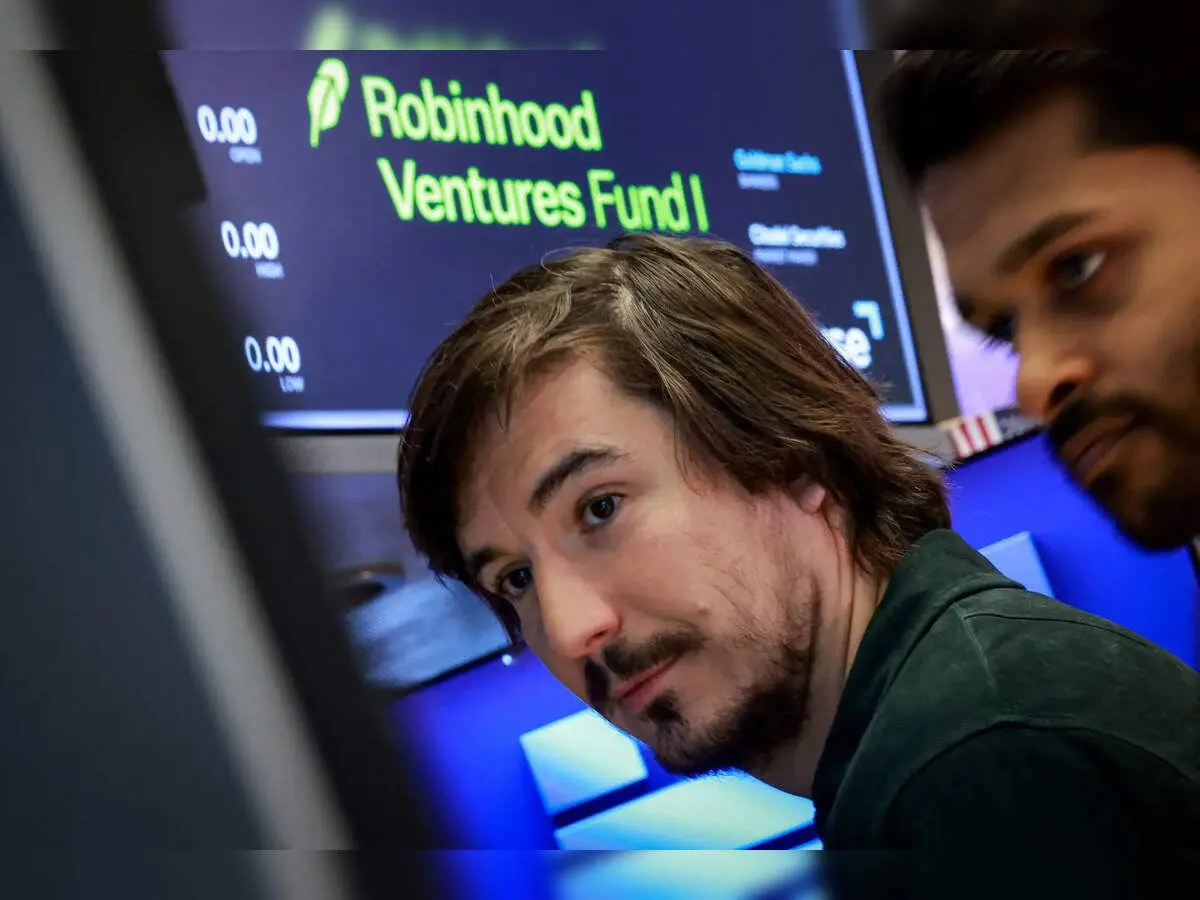
Source: ET
Vlad Tenev, Robinhood's CEO, told CNBC that AI agents will catch up to human traders "soon" rather than years down the road, with the long-term vision enabling autonomous AI systems to perform nearly every task a human trader can accomplish
2
3
. Drawing on his experience with programmatic trading before founding Robinhood, Tenev noted that a significant portion of trading activity is already AI-powered, but those tools have largely been reserved for Wall Street firms. "The end state of agentic trading at Robinhood is to give the everyday person access to the same tools, the same computation, the same power that institutional investors in high-frequency trading firms have been enjoying for several decades," Tenev stated, framing the initiative as the next step in the company's mission to democratize access to sophisticated trading tools2
.How AI Trading Works on Robinhood
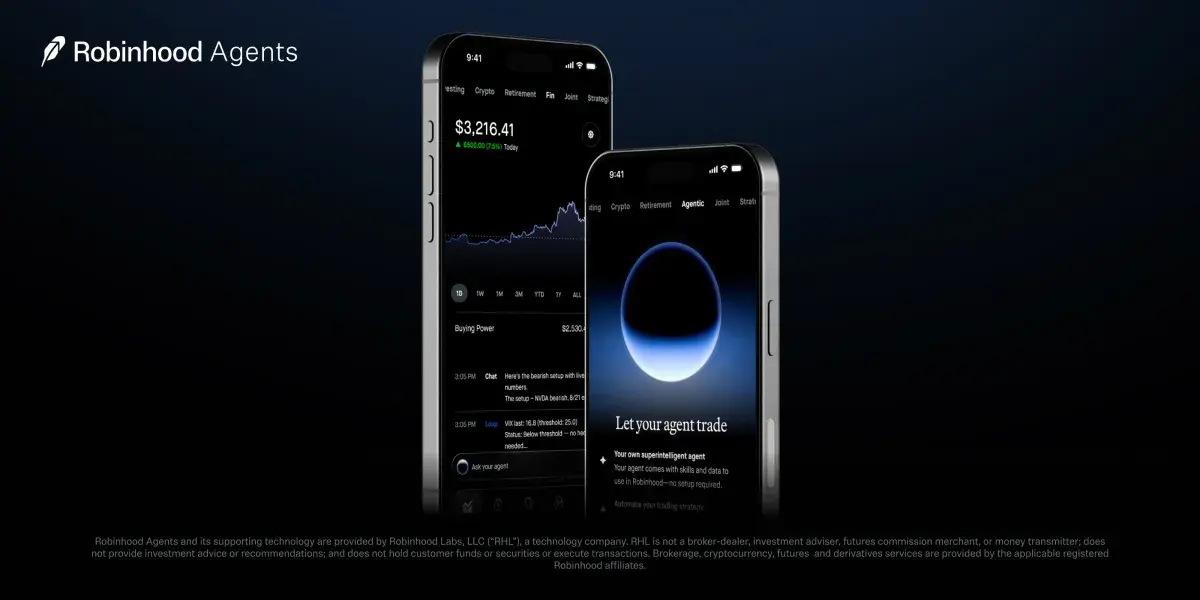
Users can create dedicated agentic trading accounts, separate from their primary accounts, and work with an agent to develop data-driven trading strategies with specific guardrails without constantly monitoring their portfolios
1
3
. Robinhood offers these agentic accounts through several third-party AI companies, including Anthropic, OpenAI, and SpaceX's Grok1
. The platform also enables eligible users to have credit card purchases made on their behalf by AI agents. Customers receive notifications whenever an agent trades or spends and can shut the agent off instantly or require manual approval for transactions to maintain human oversight2
.Related Stories

Leveling the Playing Field for Retail Investors
A Robinhood executive emphasized during a presentation that AI agents would enable retail investors to base trades on data they would have otherwise missed, stating, "This is another big step towards giving retail investors every advantage that institutional investors have enjoyed for decades"
1
. Tenev stressed that while AI trading capabilities are advancing rapidly, many traders love the craft of trading itself and there will "always be a human element to it" with human beings ultimately "calling the shots"2
.Broader Crypto Strategy and Recent Challenges

Source: Cointelegraph
The push for autonomous crypto trading adds to Robinhood's broader crypto strategy, which has primarily focused on real-world asset tokenization and the company's Ethereum layer 2 Robinhood Chain, which launched earlier this month
1
. Johann Kerbrat, Robinhood's senior vice president and general manager of crypto, said the new blockchain processed 17 million transactions from nearly 350,000 wallet addresses in its first week1
. However, Robinhood's April earnings miss underscored how dependent the brokerage remains on volatile crypto trading. For the first quarter of 2026, Robinhood reported net income of $346 million, or $0.38 per share, and revenue of $1.07 billion, both falling short of Wall Street forecasts2
. Crypto transaction revenue plunged 47% from a year earlier amid a digital asset slump. Last month, Robinhood laid off about 10% of its workforce, or roughly 290 employees, in what Tenev described as a workforce reduction aimed at maximizing "talent density"2
3
. Robinhood has nearly 28 million users across 38 countries and three continents2
.References
Summarized by

Navi
[1]
Related Stories
Robinhood opens platform to AI agents for stock trading and autonomous credit card spending
27 May 2026•Technology

Robinhood Launches AI Trading Agents and Weekend Trading for 29 Million Users
30 Sept 2026•Technology
Robinhood Plans AI Investment Fund to Give Retail Investors Access to Private AI Companies
10 Nov 2025•Business and Economy
Recent Highlights



Recent Highlights
Today's Top Stories




Don’t drown in AI news. We cut through the noise - filtering, ranking and summarizing the most important AI news, breakthroughs and research daily. Follow topics that matter to you and stay ahead.


