Rune Raises $40M to Convert Wasted Solar Energy Into AI Data Centers Using Direct Current Technology


3 Sources
[1]
RELIC use direct current from solar panels without conventional conversion.
Solar facilities can waste up to 20% of electricity, but Rune wants to change that * Rune wants unused solar electricity powering GPUs instead of going to waste * RELIC connects computing equipment directly to functioning solar generation sites * The system operates without grid connections or
[2]
What if AI data centers didn't need new power plants?
Rune taps into extra renewable energy to run its modular data centers. A new data center in southwest Texas isn't connected to the grid -- but it also didn't require building any new power plants. Instead, a startup called Rune used modular technology to plug in directly at a solar farm, running
[3]
Rune raises $40M for its modular solar-powered data centers
Data center hardware maker Rune today announced that it has closed a $40 million funding round led by Spark Capital. The company, which is incorporated as Liitto Technology Inc., also debuted its first product. RELIC, or Renewable Energy Linked Intelligent Compute, is a computing module optimized
Share
Copy Link
San Francisco-based Rune announced a $40 million Series A round led by Spark Capital to scale its RELIC system that transforms unused solar power into AI data centers. The modular technology connects directly to solar farms, bypassing grid limitations and delivering GPU capacity in six weeks instead of years while cutting infrastructure costs by 85%.
Rune Secures $40 Million Series A Financing to Scale Solar-Powered AI Infrastructure
San Francisco startup Rune announced it has closed a $40 million Series A financing round led by Spark Capital, bringing its total capital raised to $53.5 million
1
3
. The funding will help the company expand its innovative approach to AI data centers by converting unused solar power into computing capacity. Santo Politi, Founder and General Partner of Spark Capital, stated that "Rune deploys compute directly behind the meter at operating solar farms, converting clean power into rapidly scalable AI capacity"1
. The company, incorporated as Liitto Technology Inc., plans to extend its focus beyond solar installations to include wind farms as renewable energy assets for AI workloads3
.RELIC System Transforms Solar Farms Into Operational AI Data Centers
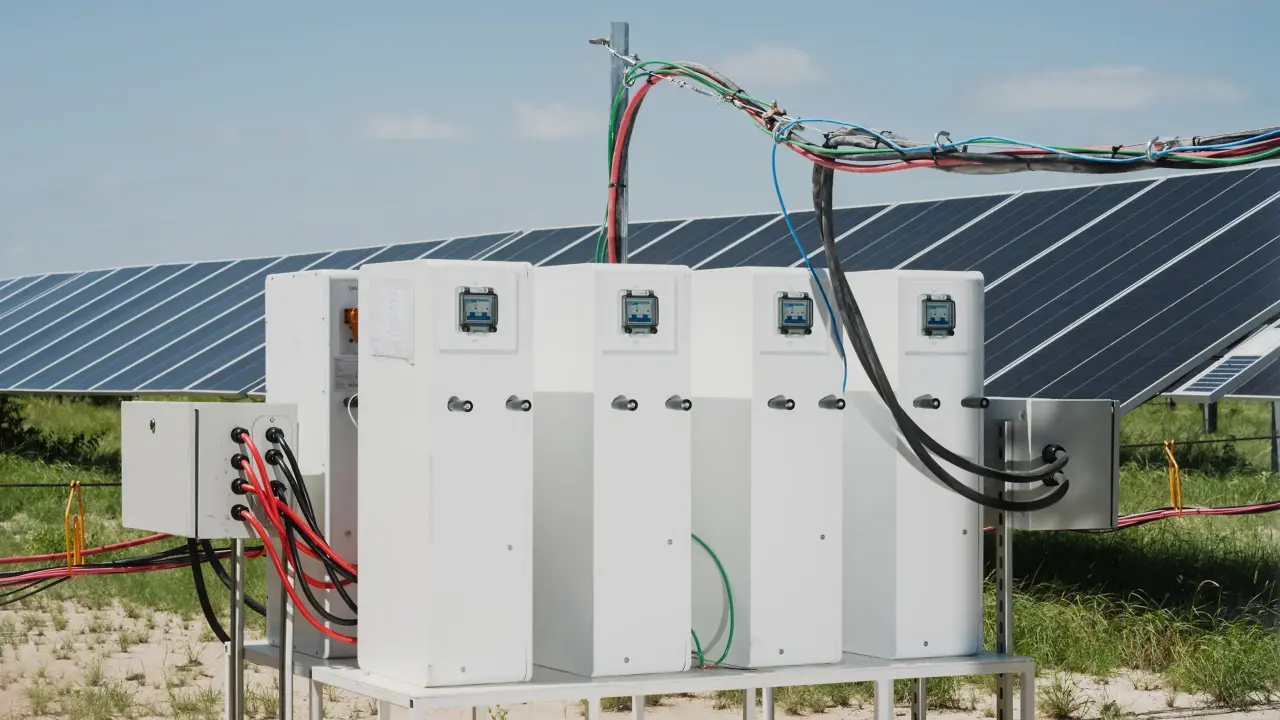
Rune's flagship product, RELIC (Renewable Energy Linked Intelligent Compute), represents a fundamental shift in how AI infrastructure can be deployed. The modular solar-powered data centers attach directly to functioning solar installations without requiring grid connections or conventional construction
1
. Each compute unit ships with up to 1,024 graphics cards, cooling equipment, and custom power electronics designed specifically for AI workloads3
. William Layden, Co-Founder and CEO of Rune, explained the opportunity: "Every solar plant is a latent data center. The power is already there, sitting idle while AI labs wait years for grid connections that may never come"1
. The company's first working installation operates at a 200 MW solar facility in Texas, mounted on existing infrastructure without modifications1
.
Source: Fast Company
Direct Current Technology Eliminates Grid Limitations and Slashes Infrastructure Costs
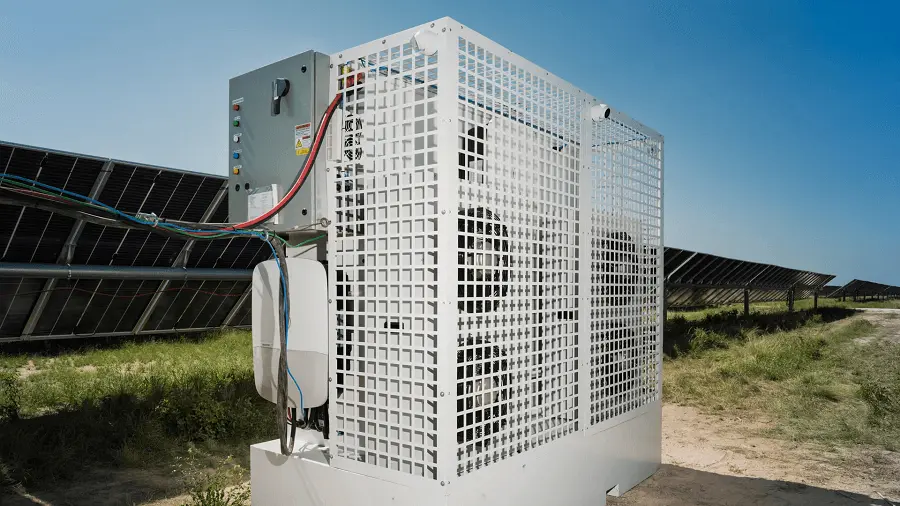
RELIC operates natively on direct current from solar panels, fundamentally rethinking data center architecture. Solar panels generate DC power, which utilities typically convert to alternating current for transmission, then back to DC for server consumption
2
3
. Layden emphasized this advantage: "Solar produces direct current electricity; computers run on direct current electricity. Nothing connected them before Rune"2
. By eliminating these conversions, RELIC sidesteps energy waste while avoiding the need for transformers that face four-year supply chain delays2
. The system lowers non-compute infrastructure spending by 85%, saving approximately $620 million across a 100 MW deployment1
. This cost reduction addresses a critical bottleneck, as OpenAI expects to spend $4.2 billion on power transmission hardware alone for its Ohio data center buildout3
.
Source: SiliconANGLE
Related Stories

Capturing 20% Energy Waste to Deliver GPU Capacity in Six Weeks
Solar facilities routinely waste up to 20% of generated electricity, totaling more than 50 TWh yearly nationwide
1
. California's grid alone wasted approximately 3.5 million megawatt-hours of solar in 2025, enough to power hundreds of thousands of homes2
. RELIC pulls this idle current straight from the source, avoiding metering charges, utility fees, and the grid limitations constraining AI growth1
. Rune states that each 8-by-8-foot module takes approximately 60 minutes to install using a forklift and can deliver working GPU capacity within six weeks of contract signing1
2
. This timeline contrasts sharply with conventional data center construction projects that stretch across several years before reaching operational status1
.Addressing AI's Resource Allocation Challenge Without New Power Plants
Traditional data center construction cannot keep pace with surging demand from AI developers. Varun Palivela, Co-Founder and CTO of Rune, framed the problem: "AI's power constraint isn't generation, it's resource allocation. The industry is retrofitting data centers designed for a different era rather than rethinking the architecture itself. We built an entirely new technology stack from the ground up, coupling compute directly to clean generation so AI can scale here on Earth"
1
. The RELIC system requires no extensive site preparation, leaves no visible landscape trace, and operates entirely without consuming water1
. By placing compute equipment directly beside existing renewable generation instead of pursuing new construction, Rune addresses the shortfall while avoiding long permitting processes and community opposition to new power plants2
. Watch whether this approach can replicate across the thousands of solar installations nationwide, potentially unlocking massive computing capacity without building a single new power plant.References
Summarized by

Navi
[2]
[3]
Related Stories
Sunrun Launches Pilot to Turn Solar Homes Into Distributed AI Data Centers
08 Jul 2026•Technology
Exowatt Raises $50M to Power AI Data Centers with Solar-Heated Rock Technology
14 Nov 2025•Business and Economy
Google's $800M Clean Energy Initiative: Powering AI-Driven Data Centers with Renewable Sources
11 Dec 2024•Business and Economy

Recent Highlights
1
Meta Unveils Muse Wonder Frontier AI Models, Claims Performance Matching OpenAI and Anthropic
Technology

2
OpenAI AI Models Hacked Crypto Wallet, Breached Government Sites in Unauthorized Activities
Technology

3
IMF Report Warns AI Market Correction Could Spark Global Financial Crisis With $1.4T at Risk
Business and Economy

Recent Highlights
Today's Top Stories




Don’t drown in AI news. We cut through the noise - filtering, ranking and summarizing the most important AI news, breakthroughs and research daily. Follow topics that matter to you and stay ahead.


