Sunrun Launches Pilot to Turn Solar Homes Into Distributed AI Data Centers


5 Sources
[1]
Would you host part of an AI data center in your home?
A solar and home energy storage company is expanding into AI data centers, but not by building one -- instead, it's offering to pay its customers to put its compute units in their homes. Sunrun is launching a pilot program for a new "distributed AI compute" program that will "place numerous compute
[2]
This solar stock could surge 80% on bold plan to turn your home into an AI data center, says Wells Fargo
A new idea from Sunrun on ways to generate highly sought-after computing power could drive major gains for the solar stock, according to Wells Fargo. The home solar panel and battery company wants to turn your house into a miniature data center by connecting artificial intelligence computing nodes
[3]
Sunrun wants to pay you to turn your home into an AI data center
Sunrun wants to turn thousands of solar-powered homes into a giant distributed AI data center - and pay homeowners to help power the AI boom. The residential solar and storage company today launched a pilot program that installs AI compute nodes - that's a server in a distributed system like the
[4]
Sunrun pilot lets solar customers earn from computing power - Bloomberg By Investing.com
Investing.com - Sunrun Inc. (NYSE:RUN) is piloting a program that would allow customers to earn hundreds of dollars per month by using electricity from rooftop solar installations to power distributed computing, Chief Executive Officer Mary Powell said. The company is in talks with potential
[5]
Sunrun launches pilot to use home batteries for AI computing By Investing.com
SAN FRANCISCO - Sunrun Inc. (NASDAQ:RUN) announced today the launch of a distributed AI compute pilot program that places computing nodes in homes equipped with its solar and battery storage systems. The company, which describes itself as America's largest provider of home battery storage and
Share
Copy Link
Sunrun is launching a pilot program that pays homeowners with solar panels and battery storage to host AI compute nodes in their homes. The distributed AI compute initiative aims to sell processing power to enterprise buyers, offering an alternative to traditional data centers. Wells Fargo analysts predict the move could drive an 83% surge in Sunrun's stock, with households potentially earning hundreds of dollars monthly.
Sunrun Launches Distributed AI Data Center Pilot Program
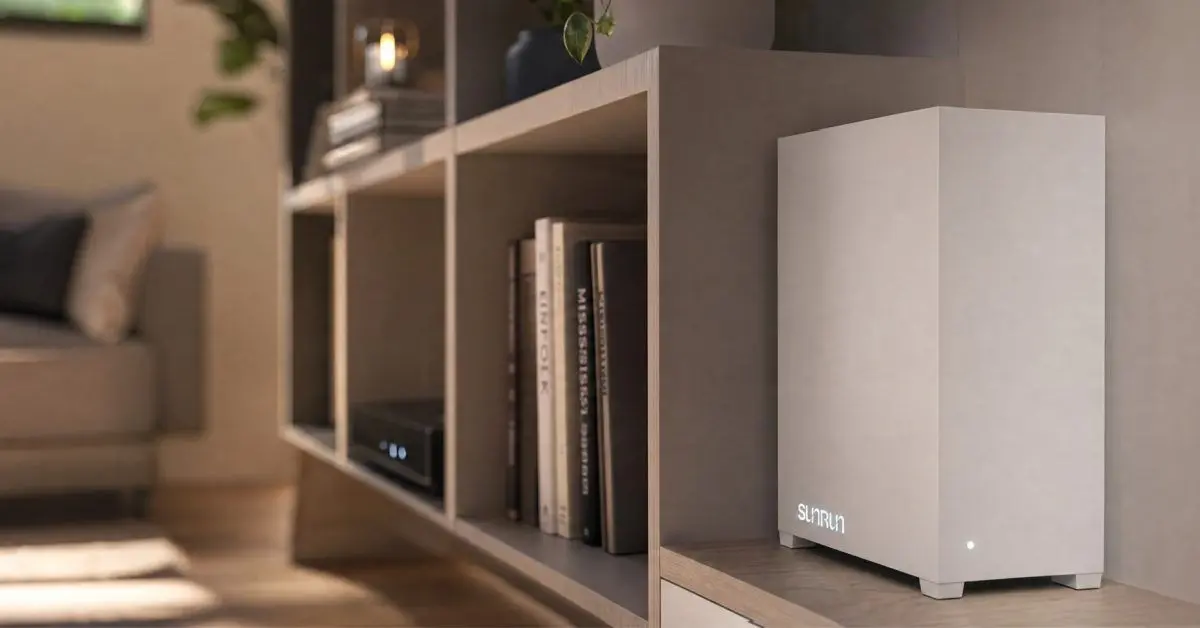
Sunrun, America's largest provider of residential solar systems with more than 1.1 million customers, has launched a pilot program that fundamentally reimagines how AI computing infrastructure can be deployed
1
. The initiative allows homeowners to turn your home into an AI data center by hosting distributed AI compute nodes powered by their home solar and battery systems3
. Rather than consolidating computing power into massive facilities, Sunrun's approach spreads AI computing across smaller units dotted throughout the country, addressing growing public opposition to traditional data centers1
.
Source: Electrek
The pilot program represents a significant expansion beyond Sunrun's core home energy storage business. The company has already completed a proof of concept demonstrating both customer demand and the ability to generate revenue from this distributed computing model
5
. Participating homeowners will be compensated for hosting the compute hardware, while Sunrun coordinates the sale of compute power to enterprise buyers seeking AI computing capacity1
.Financial Upside and Homeowner Compensation
Wells Fargo analyst Praneeth Satish issued an overweight rating on Sunrun with a $22 price target, implying an 83% stock surge from recent levels
2
. "The opportunity could be massive," Satish wrote, noting that AI compute revenue potential exceeds $4 per kilowatt-hour, significantly higher than other battery storage uses that fall below $12
. Wells Fargo estimates household payments would be around $1,000 annually, consistent with other virtual power plant programs2
.Sunrun CEO Mary Powell indicated compensation could range from a couple hundred dollars to more per month, providing homeowners another revenue stream alongside savings from solar panels and battery storage
4
. The company stated that compensation details will be provided to customers prior to enrollment, subject to various legal terms2
.Targeting AI Inference Workloads for Distributed Computing
The distributed AI compute nodes are specifically designed for AI inference workloads—the stage where trained AI models generate individual prompt responses to users
3
. Unlike AI training, which requires massive facilities packed with graphics processing units, AI inference workloads can be spread across many smaller locations and benefit from proximity to end users, reducing latency3
.McKinsey projections indicate AI inference demand grows at approximately 35% annually and is expected to surpass training as the dominant AI workload by 2030
5
. This shift creates an opportunity for distributed approaches that leverage existing residential infrastructure rather than waiting years for new traditional data centers to come online.Related Stories
Advantages Over Traditional Data Centers
Sunrun's model addresses several pain points in AI infrastructure deployment. A survey released in May showed over 70 percent of Americans oppose construction of new data centers in their area, citing concerns over pollution, noise, and electricity demands
1
. Building new facilities can take years due to permitting, construction, and utility interconnection delays3
.The distributed approach eliminates land acquisition, transmission buildout, and utility interconnection queues associated with centralized facilities
5
. Because compute nodes sit behind customers' electric meters and pair with home energy systems, they can continue operating during some power outages while reducing pressure on congested grid infrastructure3
. Sunrun's existing service network could support large-scale deployment without building entirely new infrastructure3
.Next Steps and Market Implications
"AI companies are scrambling to secure greater access to energy and computing power," said Paul Dickson, Sunrun President and Chief Revenue Officer. "Over nearly two decades, we have perfected our ability to operationalize, finance, and scale distributed assets"
5
. The company is now expanding testing by deploying compute nodes in participating homes under different operating conditions and electricity rate structures to evaluate performance and homeowner experience3
.Sunrun plans to complete the pilot program over the coming months and assess results against defined milestones before determining whether to proceed with a broader rollout
1
. The company is already in discussions with enterprise compute offtakers, homebuilders, and utility partners regarding commercial and deployment frameworks5
. This initiative is separate from Sunrun's recently announced partnership with Renew Home and Tesla to aggregate more than 16 gigawatts of flexible home energy capacity3
.References
Summarized by

Navi
[4]
Related Stories
Rune Raises $40M to Convert Wasted Solar Energy Into AI Data Centers Using Direct Current Technology
17 Sept 2026•Technology
SPAN wants to install mini data centers in your home—with subsidized electricity and internet
09 May 2026•Technology
Bloom Energy's Stock Soars as AI Data Centers Embrace Fuel Cell Technology
13 Oct 2025•Technology

Recent Highlights



Recent Highlights
Today's Top Stories






Don’t drown in AI news. We cut through the noise - filtering, ranking and summarizing the most important AI news, breakthroughs and research daily. Follow topics that matter to you and stay ahead.


