Saber Interactive CEO Apologizes to Writer Replaced by AI After Week-Long Public Meltdown


3 Sources
[1]
Saber's AI Rideshare Stimulator controversy almost closes on high note with CEO apology, then he calls Portal scribe who mocked him an 'unsuccessful writer'
The Rideshare Stimulator AI fiasco almost, but not quite came to a close today when writer Stella Sacco shared that she had received a private message from Saber Interactive CEO Matthew Karch, who apologized for his hurtful comments to the press regarding her employment and capabilities. In a
[2]
Saber CEO Apologizes To Lead Writer Replaced With ChatGPT
Saber Interactive CEO Matt Karch became an easy punching bag over the last few days. It followed a dizzying array of statements, backpedals and forward bounds regarding the use of AI in the upcoming game Rideshare "Simulator." While this kind of flame out from top brass has become increasingly
[3]
Saber's Matt Karch Claims Portal Writer's Viral Video Triggered Death Threats, Escalating the Already Ugly Rideshare Stimulator AI Writer Dispute
Saber Interactive has updated the Steam page for its upcoming driving satire Rideshare Stimulator with a detailed AI disclosure, capping off a chaotic week that saw CEO Matt Karch publicly feud with a former lead writer before ultimately apologizing to her. The controversy kicked off shortly after
Share
Copy Link
Saber Interactive CEO Matthew Karch privately apologized to former lead writer Stella Sacco after claiming she was replaced with ChatGPT on Rideshare Stimulator. But the controversy escalated when Karch publicly attacked Portal writer Chet Faliszek, calling him an unsuccessful writer and claiming the critic's 26-minute video triggered death threats.
Saber Interactive CEO Apologizes After Explosive AI Controversy
Saber Interactive CEO Matthew Karch sent a private apology to former lead writer Stella Sacco following a chaotic week-long controversy over AI in game development
1
2
. Sacco revealed she received a lengthy email where Karch "apologized unreservedly for the awful way he spoke about me in the press"2
. The dispute centered on Rideshare Stimulator, a driving satire game where Sacco claimed she was removed mid-development and replaced with ChatGPT3
. While Sacco accepted the apology, stating "Apologies are simply in too short a supply these days to spurn one when it's offered," she noted she needs time to determine what making things right actually means2
.
Source: Wccftech
How the AI-Driven Game Controversy Exploded
The fiasco began when Saber Interactive released the announcement trailer for Rideshare Stimulator. Lead writer Stella Sacco, who worked at the studio from July 2023 to July 2024, publicly claimed she was fired and her workload taken over by an LLM without disclosure on the Steam page
1
3
. Saber CEO Matthew Karch escalated the situation dramatically by telling press outlets "Stella who? I had to ask Claude because I have never spoken to her or seen her"2
. He added that he "would frankly in retrospect have been happy to replace her with AI"1
. The public backlash was swift and severe, with Giant Bomb even performing a dramatic reading of Karch's rant2
.Steam Page Updated with Detailed AI Disclaimer
Saber Interactive updated the Steam page for Rideshare Stimulator with comprehensive AI disclosure following the controversy
3
. The AI disclaimer reveals that while the main campaign story, characters, and dialogue are written entirely by human writers, AI-generated content appears elsewhere in the game3
. AI voice generation powers some character voices, select localization work uses AI tools, and the optional "Free Ride" mode features AI-generated passenger missions and dialogue separate from the core campaign3
. Additionally, certain in-game radio stations feature AI-generated music, clearly labeled as such3
. Karch defended the Free Ride mode specifically, noting it required adding two writers and multiple coders to work with AI tools, arguing the net cost ended up higher than simply leaving it out3
.Related Stories

Portal Writer Chet Faliszek Becomes New Target
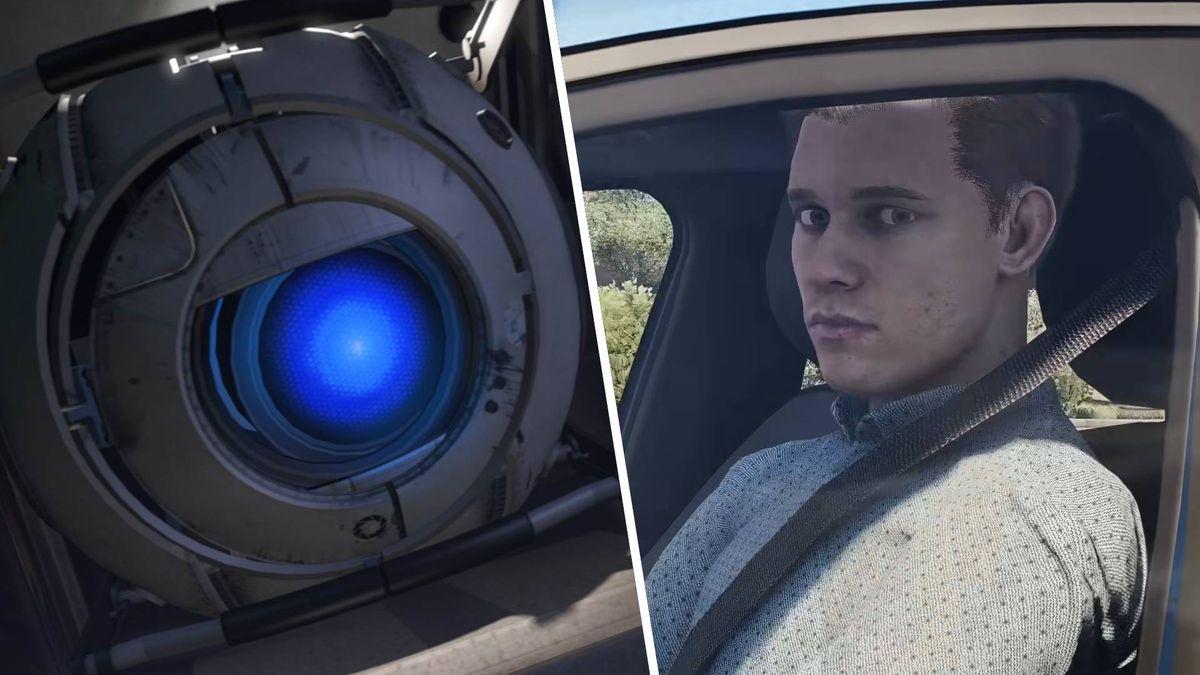
Just as the situation appeared to resolve, Karch reignited the controversy by attacking Chet Faliszek, a veteran writer whose credits include Portal, Left 4 Dead, and the Half-Life Episodes
1
. In a LinkedIn post, Karch called Faliszek an "unsuccessful writer" and criticized his 26-minute video titled "Who is the CEO of Saber Interactive?"1
. Karch wrote that the video "somehow concluded with personal remarks about my physical anatomy and encouragement to accost me," characterizing it as crossing a line from industry analysis into personal insults1
. Karch later claimed he received death threats as a result of Faliszek's video and accompanying commentary3
.
Source: PC Gamer
Ethical Implications of AI Surface in Gaming Industry
The writer replaced by AI controversy highlights growing tensions around AI-generated content in creative industries. Faliszek's primary argument was that Karch's statement to the press was a completely avoidable PR disaster that worsened the controversy
1
. Ironically, Karch's own conclusion in his LinkedIn post was that he should have said nothing and left it to the communication team1
. Yet he escalated again by providing identifying information about Faliszek's video, effectively expanding the story to "Saber CEO vs. Portal writer"1
. The ethical implications of AI in creative work remain unresolved, particularly around disclosure requirements and the treatment of human workers. Watch how other game studios respond to pressure for AI transparency on their Steam pages. The Rideshare Stimulator case may set precedents for how companies communicate AI use and handle public criticism when writers are replaced or supplemented by AI tools.References
Summarized by

Navi
Related Stories
Saber Interactive faces AI backlash over Rideshare Stimulator after writer claims ChatGPT replacement
12 Aug 2026•Entertainment and Society
Shift Up addresses AI controversy but defends using AI as a tool for game development
08 Sept 2026•Entertainment and Society

Arc Raiders Reignites AI Voice Controversy as Embark Studios Defends Text-to-Speech Technology
30 Oct 2025•Entertainment and Society
Recent Highlights



Recent Highlights
Today's Top Stories










Don’t drown in AI news. We cut through the noise - filtering, ranking and summarizing the most important AI news, breakthroughs and research daily. Follow topics that matter to you and stay ahead.


